 Sumas Window
 Windows in Clearbrook and the Weather They're Up Against
Clearbrook sits just north of the Sumas border crossing, close enough that homeowners there deal with the same weather patterns we see on our side of the line every day. That means driving rain off the Pacific pushing inland through the Fraser Valley, damp air that lingers for weeks at a time, and a moss and mold season that can stretch from late fall well into spring. Windows take the brunt of that. They're the part of the house with the most seams, the most moving parts, and the most exposure to wind-driven moisture, and they're usually the first thing to show wear when the weather has been working on a home for a decade or two.
We're a Sumas-based crew that also works the surrounding area, including Clearbrook and other nearby Fraser Valley communities. This page is here to give homeowners in that area an honest look at what the climate does to windows, what to watch for, and how we approach the work when we're called out.
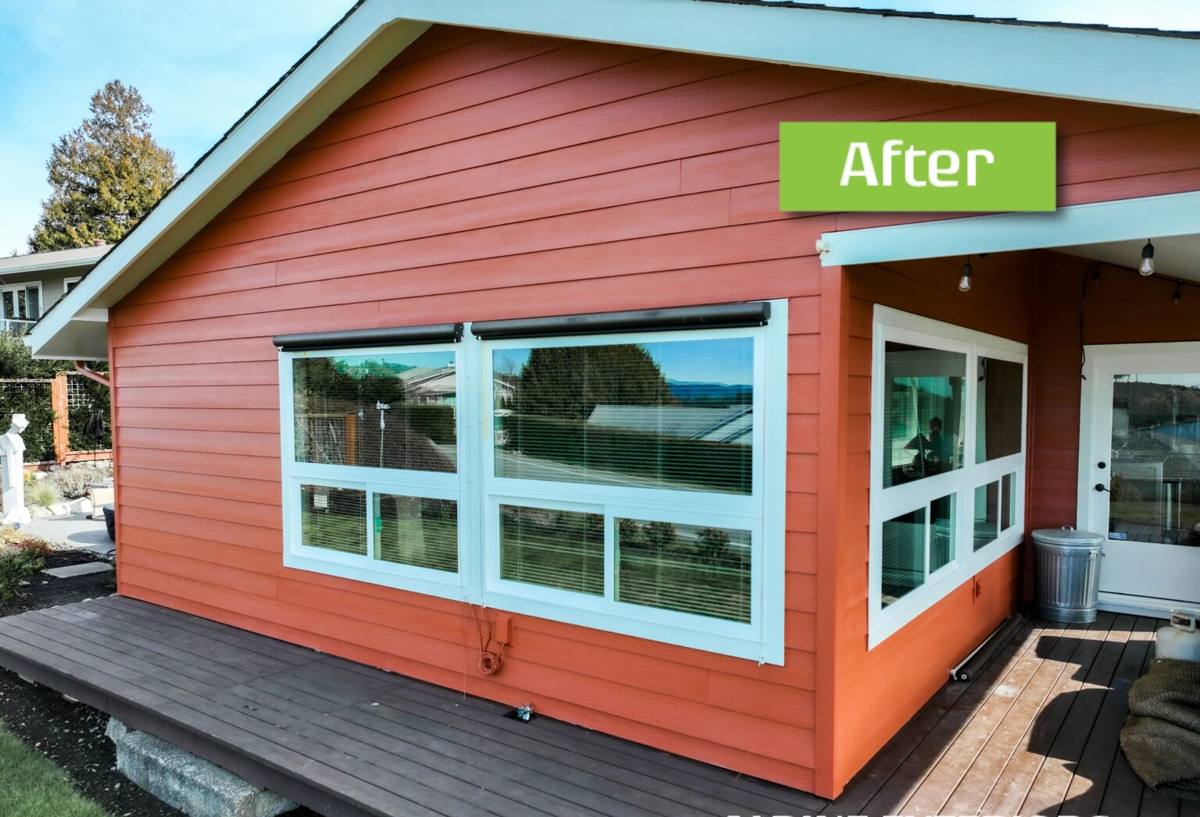
What the Fraser Valley Climate Does to Windows Over Time
Driving Rain and Wind-Driven Moisture
Rain that falls straight down is easy for a window to shed. Rain that comes in sideways, pushed by wind off the valley, is a different problem. It gets forced into gaps around the frame, under poorly sealed trim, and into any spot where old caulking has shrunk or cracked. Over years, that repeated moisture intrusion is what causes rot in wood-framed windows and corrosion in aluminum ones, usually starting at the bottom corners where water collects and has nowhere to go.
A Long Moss and Mold Season
The Fraser Valley's damp, mild winters are ideal growing conditions for moss, algae, and mold. On windows, that shows up as dark streaking on sills, green growth in shaded corners, and a musty smell around frames that never fully dry out between rain events. It's mostly cosmetic in the early stages, but sustained moisture and organic growth will break down caulking, wood, and even some vinyl components faster than people expect.
Temperature Swings and Condensation
Clearbrook and Sumas both see real temperature swings — cold, clear nights followed by damp, mild days, plus the occasional deep freeze. Older or poorly sealed windows respond to that with condensation between panes, fogging, and drafts that show up as higher heating bills. Condensation trapped inside a double-pane unit is a sign the seal has failed and the insulating gas has escaped; that's not something caulk or weatherstripping can fix.
Signs Your Windows Are Losing the Fight
Most window problems don't show up overnight. They build slowly, and homeowners often adjust to small drafts or a sticky sash without realizing it's a symptom of something bigger. Here's what we tell people to watch for:
- Fogging or a permanent haze between panes of glass (a sign the seal has failed)
- Soft or spongy wood at the sill or lower frame corners
- Windows that are hard to open, close, or lock, especially after damp weather
- Visible daylight or a draft around the frame when the window is shut
- Dark staining, green growth, or a persistent musty smell near the frame
- Paint that's peeling or bubbling on the interior sill, which often points to moisture getting in from outside
- A noticeable jump in heating costs without any other explanation
Any one of these on its own might just need attention. Several at once, especially on windows over 15-20 years old, usually means it's time to talk about replacement rather than another round of patching.
Repair vs. Replace: How We Think About It
We don't push replacement as the default answer. A lot of window problems are legitimately fixable, and there's no reason to spend money on new units when a repair will do the job for years to come. The table below is how we generally sort it out on a first look.
| Situation | Usual Approach | Why |
|---|---|---|
| Failed seal, frame still sound | Glass unit replacement | Frame is doing its job; only the insulated glass needs swapping |
| Minor rot at sill, structure intact | Repair and reseal | Localized damage can be cut out and rebuilt without a full replacement |
| Rot through the frame corners | Full window replacement | Once the frame's structural integrity is gone, repair won't hold |
| Single-pane or very old double-pane | Replacement recommended | Efficiency losses and ongoing maintenance usually outweigh repair cost over time |
| Hardware failure only (locks, hinges, balances) | Hardware repair | Cheapest fix; glass and frame condition unaffected |
The honest answer is that we can't tell which category a window falls into from a phone call. That's why we walk the property and look at each window individually rather than quoting a blanket "replace everything" job.
Our Window Installation Process
Assessment First
Before anything gets ordered, we look at the actual condition of the framing, the flashing, and the wall assembly around each opening. A new window installed into rotten or poorly flashed framing will fail again regardless of how good the window itself is, so that inspection step isn't optional.
Product Selection
We talk through material and glass options based on the home's exposure, budget, and how long the homeowner plans to stay in the house. A window on the rain-facing side of a home in Clearbrook's weather pattern needs different attention to sealing and flashing detail than one tucked under an eave on a sheltered wall, even if the units themselves are identical.
Installation and Flashing Detail
This is where most window jobs actually succeed or fail, and it has less to do with the window brand than with the crew doing the work. Proper flashing, correctly lapped house wrap, and sealant applied in the right places (and left out of the wrong places, so water that does get in can still drain out) are what keep a new window performing for decades instead of leaking again in five years.
Cleanup and Final Check
We test operation, check seals, and walk the finished openings with the homeowner before calling a job done. A window installation isn't finished until it opens, closes, locks, and seals the way it's supposed to.
Why We Skip Certain Products
Homeowners sometimes ask us about specific window products they've seen advertised, and occasionally we'll recommend against something. That's never because a product is "bad" in some general sense — it's because, in our experience with this specific climate, certain designs create maintenance burdens or moisture risks that aren't worth it. A few examples of how we think about trade-offs:
- Bare or unclad wood exteriors look great but need consistent repainting or resealing to hold up against driving rain; in a wetter climate that maintenance schedule is unforgiving if it slips.
- Ultra-low-end vinyl can work fine in a mild, dry climate but tends to show its limits faster here, particularly around seal longevity and frame flex in cold snaps.
- Complex custom shapes installed without matched flashing components increase the number of joints where water can find a way in, so we're careful about install detail on anything non-standard.
None of this is about steering people toward the most expensive option. It's about being straight with homeowners on what will actually hold up given what this area's weather does to a house over time.
Why a Local Crew Matters
Window problems in this region are regional problems. A crew that mostly works drier inland climates isn't going to instinctively flash a sill the way it needs to be flashed here, or catch the early signs of moss-driven deterioration before they become structural. Working the Sumas and Clearbrook area regularly means we see the same failure patterns repeat house after house, and that experience shapes how we install and repair. It also means we're not guessing at the local building conditions, drainage patterns, or typical exposure a home in this part of the valley deals with.
How Windows Fit Into the Bigger Picture
Windows rarely fail in isolation. A leaking window is often connected to what's happening with the siding or roofline right above it, and a deck built too close to a wall can trap moisture that eventually works its way toward window openings at the same level. Because we handle siding, roofing, windows, and decks, we can look at a moisture problem as a system rather than treating each symptom separately. If a window issue traces back to a roof flashing detail or a siding gap, we'll tell you that rather than just fixing the window and leaving the actual source of the problem in place.
What Affects the Cost of a Window Project
Every home is different, and we'd rather give a real number after seeing the job than a rough estimate that doesn't hold up. That said, these are the main factors that move a window project's cost up or down:
| Factor | Effect on Cost |
|---|---|
| Number of windows being repaired or replaced | More units generally lowers the per-window cost |
| Extent of rot or framing damage found on inspection | Hidden damage adds labor and material beyond the base quote |
| Window size and configuration (standard vs. custom shapes) | Custom sizes and shapes cost more to source and install |
| Glass and frame material chosen | Higher-performance glass and durable frame materials raise upfront cost, lower long-term maintenance |
| Accessibility of the opening (second story, tight setbacks) | Harder access adds labor time |
We'd rather walk a property and give an honest range than throw out a number that doesn't reflect what's actually going on with your windows.
A Practical Checklist Before You Call
If you're trying to figure out whether it's worth having someone look at your windows, run through this list first:
- Do any windows fog or stay hazy between the panes?
- Is there visible rot, soft wood, or paint failure at any sill?
- Do any windows stick, refuse to latch, or let in a draft when closed?
- Has your heating bill crept up without another clear cause?
- Is there dark staining, moss, or a musty smell near any frame?
- Are your windows original to a home built more than 20 years ago?
If you checked more than one or two of these, it's worth having a look before another wet season passes.
If you're in Clearbrook or anywhere nearby and want a straight answer on whether your windows need repair, replacement, or nothing at all right now, we're happy to come take a look. There's no pressure and no obligation — just a fill out the form below to request a free estimate.