 Sumas Window
 Working Across the Border in Huntingdon
Huntingdon sits right at the Sumas border crossing, close enough to our shop that it's practically part of our regular route. We've been doing exterior work in this corner of Whatcom County and the neighboring Fraser Valley for years, and the honest truth is the border doesn't change much about how a house needs to be built or maintained here. The weather doesn't stop at the checkpoint, and neither do the problems it causes. What changes is logistics — permits, code references, and who you call for warranty work — and that's exactly the kind of thing a crew that already works both sides of that line can help sort out.
For homeowners in Huntingdon, that local familiarity matters. You're not dealing with a company that has to look up where you are or guess at what your home is up against. We know this stretch of the valley, we know what the moisture does to siding and roofing over a few winters, and we show up with that context already built in.
What the Climate Does to Homes Here
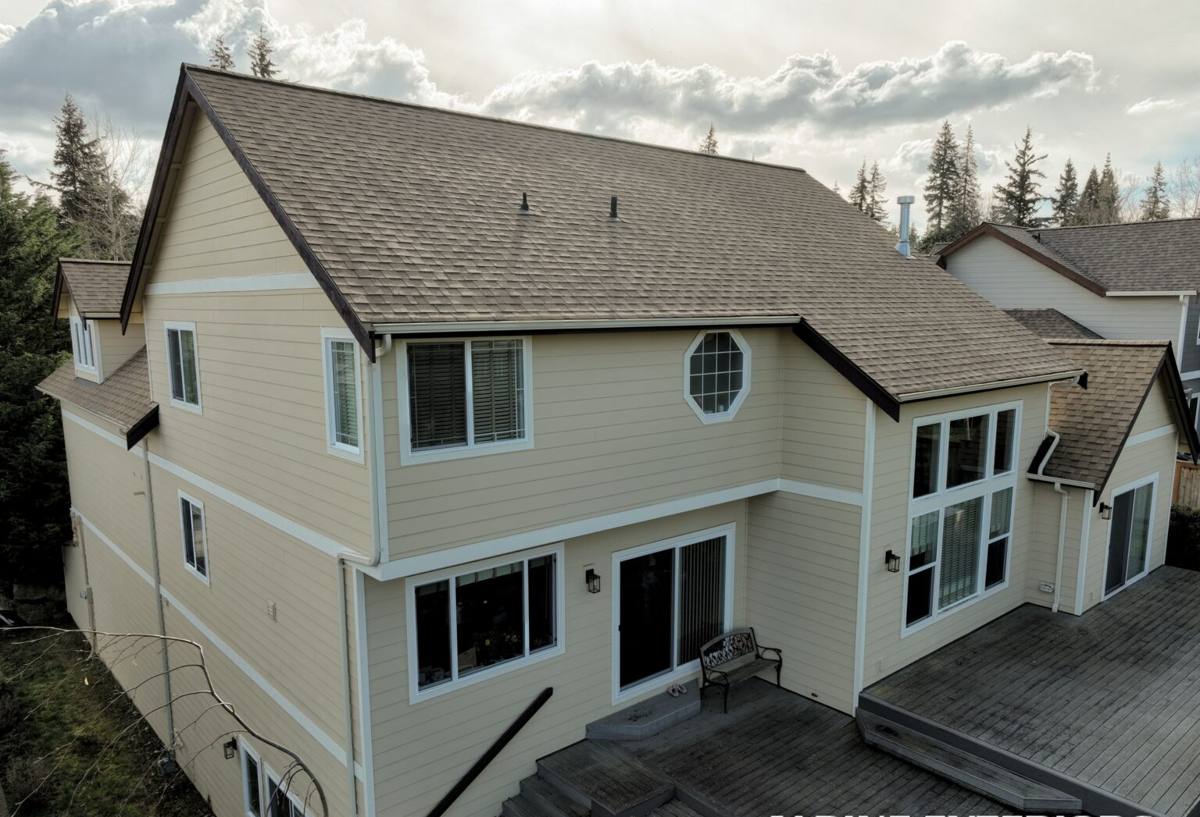
Huntingdon and the surrounding Fraser Valley/Whatcom lowland sit in a spot that gets hit from a few directions at once. You've got marine air pushing in off the Salish Sea carrying salt content, a wet season that runs long and heavy with driving, wind-blown rain, and enough shade and dampness in places to keep moss and algae established on roofs and siding almost year-round. None of this is unusual for the region — it's just the reality of building and maintaining a home here, and it's why exterior materials and installation details that work fine in a drier climate can fail early in this one.
Salt Air and Metal Components
Homes closer to open water or in exposed, windier spots can see accelerated corrosion on fasteners, flashing, gutters, and any exposed metal trim. It's usually gradual — a few seasons of pitting and staining before it becomes a real problem — but it's worth factoring into material choices and hardware selection rather than ignoring until something rusts through.
Driving Rain and Wind-Driven Moisture
Rain that comes in sideways finds every gap a straight-down rain would never reach. Poorly lapped siding, undersized roof overhangs, and window flashing that wasn't detailed correctly are the usual failure points. This is less about total rainfall and more about wind direction and exposure — a wall that stays dry on a calm day can still take on water during a storm if the flashing details aren't right.
Moss, Algae, and a Long Wet Season
Shaded roof sections and north-facing siding stay damp longer here than almost anywhere else in the country outside the immediate coast. Moss doesn't just look bad — it holds moisture against shingles and siding, works into seams, and lifts materials over time. A roof that's shedding granules early or siding that's staying green in the shady corners is usually a moss problem more than an age problem.
Siding: Built to Shed Water, Not Trap It
Siding failures around here rarely come from the material itself — they come from installation details that didn't account for wind-driven rain and long wet stretches. Proper lap overlap, correctly flashed windows and doors, and a drainage plane behind the siding (not just caulk and hope) are what actually keep water out over the long run.
- Fiber cement and quality vinyl both perform well here when installed with proper overlap and clearance from grade
- Rainscreen or drainage-gap installation gives moisture a way out instead of trapping it against the sheathing
- Caulking is a backup, not a strategy — it should never be the only thing keeping water out of a seam
- Trim and J-channel need enough slope and clearance to actually drain, not just look finished
We don't push a single siding brand as the answer to every home. The right call depends on your home's exposure, your budget, and how much upkeep you want to take on — we'll walk through the honest trade-offs rather than steering you toward whatever's easiest for us to install.
Roofing: Where Moss Season Does the Most Damage
A roof in this region works harder than the same roof would somewhere drier. It's not just about keeping rain out — it's about surviving months of damp shade, resisting moss colonization, and handling the occasional wind event without losing shingles or lifting flashing.
What We Look At on an Inspection
- Moss and algae growth, especially on north-facing or tree-shaded slopes
- Flashing condition around chimneys, vents, and roof-wall intersections — the most common leak points
- Granule loss and shingle brittleness from repeated wet-dry cycling
- Gutter and downspout function — undersized or clogged systems back water up under the roof edge
- Attic ventilation, which affects how fast a roof deck dries out between storms
A roof replacement here is also a good time to reconsider ventilation and ice/water shield placement at vulnerable areas, since those details matter more in a long wet season than they would in a milder one.
Windows: Sealing Out a Long Wet Season
Old or poorly installed windows are one of the most common sources of moisture intrusion and energy loss we see on homes in this area. It's rarely the glass itself — it's failed seals, degraded weatherstripping, or flashing that was never properly integrated with the wall's drainage plane in the first place.
| Sign | Likely Cause | Why It Matters Here |
|---|---|---|
| Fogging between panes | Failed insulated glass seal | Lost efficiency and eventually visible moisture damage to sills |
| Drafts or cold spots | Worn weatherstripping or poor frame fit | Higher heating costs through the wet, cool months |
| Staining or soft wood below the sill | Flashing gap allowing wind-driven rain in | Can rot framing before it's visible from inside |
| Difficulty opening/closing | Frame settling or swelling from moisture | Often a sign water's already gotten into the frame |
Replacement windows installed with correct flashing integration — tied properly into the siding's drainage plane, not just caulked at the edges — hold up far better against this region's rain patterns than a quick swap-and-caulk job.
Decks: Built for Wet Ground and Long Winters
Decks take a different kind of punishment here — constant dampness at ground level, algae growth on horizontal surfaces that don't dry out quickly, and freeze-thaw stress on fasteners and footings during cold snaps. Composite decking has become a popular option for homeowners who don't want to keep up with annual staining and sealing, though it comes with its own trade-offs around upfront cost and heat retention in direct sun. Wood decking is still a solid, less expensive choice if you're willing to stay on top of maintenance. Either way, the structural details — proper footing depth, joist spacing, and ledger flashing — matter more than the surface material when it comes to long-term durability in a wet climate.
Deck Maintenance Basics for This Climate
- Keep gaps between boards clear of debris so water and moss don't build up
- Check ledger board flashing where the deck attaches to the house — a common hidden rot point
- Re-seal or re-stain wood decking on a regular schedule rather than waiting for visible wear
- Watch for soft spots near posts and stairs, especially where they meet the ground
Cross-Border Practicalities for Huntingdon Homeowners
Working right at the border means we're used to the logistics that come with it — scheduling around crossing times, coordinating deliveries, and being upfront about which permits and code requirements apply on which side. If your property or project touches Canadian permitting requirements, we'll tell you plainly what falls inside our scope and where you'd need a BC-licensed contractor or local permitting office involved. We're not going to overstate what we can handle across the line — we'd rather be straight with you upfront than create a headache for you later.
Why a Local Crew Matters More Than It Sounds
Exterior work is one of those trades where local knowledge genuinely shows up in the final result. A crew that's worked this specific stretch of Whatcom County and the border area knows which siding details actually hold up against the wind patterns here, which roof slopes stay mossy no matter what shingle you put on them, and which window flashing methods have proven out over multiple wet seasons rather than just looking good on install day. That's not something you get from a general contractor passing through — it comes from doing the work here, repeatedly, and seeing how it ages.
Getting Started
Whether you're dealing with a roof that's holding moss no matter what you do, siding that's letting moisture in around the seams, windows that fog up every winter, or a deck that needs more than a coat of stain, we're happy to come take a look. If you're in Huntingdon or anywhere in that border area, reach out for a free, no-pressure estimate — we'll give you a straight read on what your home actually needs and what your options look like.