 Sumas Window
 Window Installation Built for Clearbrook's Wet Season
Clearbrook sits in the Fraser Valley just north of the Sumas border crossing, and it gets the same weather pattern that soaks Whatcom County to the south: long stretches of drizzle, hard driving rain off the Salish Sea, and short, humid summers that don't fully dry out older wood or aluminum window frames before the next system rolls in. A window that's a good fit for a drier inland climate often isn't the right call here. Correct installation for a Clearbrook home means paying close attention to how water moves around the opening, not just how the window looks once it's in.
We're based just across the line in Sumas, Washington, and we've done enough work in and around Clearbrook to know what this climate does to a window over ten or twenty years. That matters more than most homeowners expect, because a poorly flashed or poorly sealed window can look fine for years before a rot or mold problem shows up behind the wall.
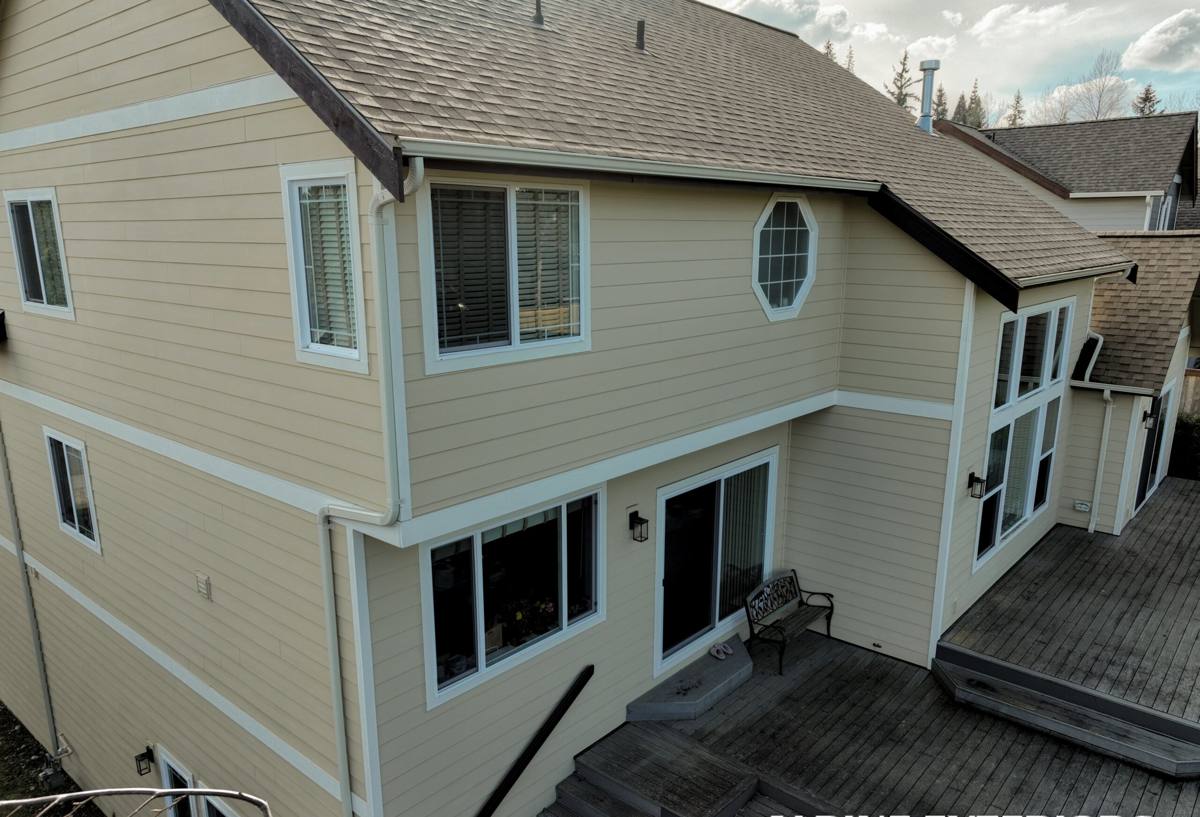
What the Local Climate Does to a Window Over Time
Moss and Organic Growth
The same damp, shaded conditions that grow moss on a roof will grow it in window tracks, sill corners, and around exterior trim. Once moss and algae get a foothold in a track or weep channel, they hold moisture against the frame and sash almost year-round. On wood-frame and wood-clad windows this speeds up rot. On vinyl and aluminum it's mostly cosmetic, but a clogged weep hole from moss buildup can turn a well-built window into one that traps water instead of draining it.
Driving Rain and Wind-Driven Moisture
Rain here doesn't always fall straight down. Wind off the valley pushes it sideways into south- and west-facing walls, which puts real pressure on the seal between the window frame and the rough opening. This is where most window failures actually start — not in the glass or the hardware, but in a flashing detail or a bead of sealant that wasn't done right the first time.
Marine Air and Metal Fatigue
Air moving inland off the Salish Sea carries a trace of salt with it, and over years that residue settles on hardware, screens, and exposed metal components. It won't ruin a window outright, but it accelerates corrosion on lower-grade hinges, locks, and balance systems faster than it would in a dry inland climate. It's one more reason we don't cut corners on hardware quality when we spec a window for this area.
What a Correct Window Installation Actually Involves
Removal and Structural Check
Pulling the old window is also the only chance to actually see the condition of the rough opening — the framing, the sill, and the sheathing around it. If there's been slow water intrusion behind an old window, this is where we find it, and it needs to be dealt with before a new window goes in, not covered up.
Flashing and Water Management
A window is only as good as the flashing around it. That means a proper sill pan to catch and direct any water that gets past the primary seal, correctly lapped flashing tape at the jambs and head, and a drainage path so water has somewhere to go instead of sitting against the framing. This step is invisible once the trim goes back on, which is exactly why it's the step that gets rushed on a bad installation.
Insulation, Air Sealing, and Finish
The gap between the new window frame and the rough opening needs to be insulated without over-packing it, which can bow the frame and cause the window to bind or not seal properly. Backer rod and a quality exterior sealant finish the job on the outside; interior trim and finish work close it out inside. Done right, you shouldn't feel a draft standing next to the window on a windy day.
Signs Your Current Windows Are Past Their Job
- Condensation or fogging between the panes — the seal has failed and the gas fill is gone
- Visible moss, algae, or black staining in the tracks or on the sill
- Wood trim that's soft, discolored, or bubbling near the window corners
- Drafts you can feel with your hand near the frame on a windy day
- Windows that are hard to open, close, or lock — a sign the frame has shifted or swollen
- Noticeably higher heating bills compared to similar-sized rooms in the house
- Paint or finish that's peeling faster on the window trim than on the rest of the siding
Choosing the Right Window for a Clearbrook Home
There isn't one "best" window material — the right choice depends on your home's age, your budget, and how much upkeep you want to take on. Here's how the common options stack up for this climate specifically.
| Material | How It Handles This Climate | Maintenance |
|---|---|---|
| Vinyl | Won't rot, resists moisture well, good value | Low — occasional cleaning |
| Fiberglass | Very stable in wet/dry cycles, holds paint well | Low to moderate |
| Wood | Best look for older or heritage-style homes, but needs protection from driving rain | High — regular repainting/sealing |
| Wood-clad (wood interior, metal or vinyl exterior) | Good compromise — protected exterior, warm interior look | Moderate |
| Aluminum | Durable but conducts cold and can show condensation without a thermal break | Low, but corrosion risk near marine air over decades |
For most Clearbrook homes, we lean toward vinyl or fiberglass for exposed, weather-facing walls, and reserve solid wood for sheltered elevations or homes where matching an existing wood-frame look matters more than minimizing upkeep.
Our Installation Process
- Site visit and assessment — we look at each opening, note water damage or structural issues, and take real measurements rather than working off assumptions
- Product recommendation — we walk through material, glass, and hardware options based on your home and budget, without pushing a single brand as the only answer
- Scheduling — for cross-border jobs we build in extra lead time for crossing logistics and materials, so a border delay doesn't stall your project
- Removal and prep — old windows come out, the opening is inspected and repaired if needed
- Install — proper flashing, sill pan, air sealing, and fastening, done to hold up to wind-driven rain
- Finish and walkthrough — interior and exterior trim, a full function check on every window, and a walkthrough so you know how to operate and maintain them
Why a Crew That Already Works Clearbrook, BC Matters
Being based in Sumas means our crew crosses into the Fraser Valley regularly — it's not a special trip for us, and that keeps scheduling realistic instead of guesswork. We're used to coordinating around border wait times and making sure any paperwork tied to a cross-border job is sorted ahead of your install date rather than discovered on the morning we're supposed to start.
We're also mindful that Washington and British Columbia don't run on the same code and permitting framework. If your job needs a permit, we make sure that's addressed with the appropriate local authority before work begins, so you're not the one caught in the middle of two systems. And because Canadian suppliers often spec hardware and rough openings in metric while U.S. product lines run imperial, we double-check those conversions before ordering — a small detail that causes real delays when it's missed.
Beyond the logistics, familiarity with this specific area helps. We've seen how homes here were built, what problems tend to show up first, and where the weather does the most damage. That's the kind of knowledge that doesn't come from a one-off job.
What Influences the Cost of a Window Installation
Every home is different, but these are the main factors that move the price up or down on a typical job.
| Factor | Why It Matters |
|---|---|
| Number and size of windows | Larger openings and full-house jobs cost more but bring better per-window pricing |
| Full-frame vs. insert replacement | Full-frame costs more but is often necessary when framing damage is found |
| Material choice | Vinyl is typically the most affordable; wood and wood-clad cost more |
| Glass package | Double vs. triple pane, low-E coatings, and gas fill all affect price and performance |
| Structural repairs needed | Rot or water damage found during removal adds cost but shouldn't be skipped |
| Access and site conditions | Second-story windows, tight access, or extra trim work take more labor time |
We give a broad honest range once we've actually looked at the job — not a number pulled off a general price list, since the condition of your existing openings usually matters more than the window itself.
Get a Straight Answer, Not a Sales Pitch
If your windows in Clearbrook are fogging, drafty, sticking, or just past their years, we're happy to come take a look and give you a straightforward, no-pressure estimate. Use the form below to get started — we'll tell you honestly what we see, what it'll take to fix it right, and what it's likely to cost.