 Sumas Window
 Roofing in Clearbrook, BC: A Climate That Doesn't Forgive Shortcuts
Clearbrook sits close enough to the Sumas border crossing that its roofs face the same weather pattern we deal with every day on the Washington side: long stretches of driving rain off the Fraser Valley, salt-laden air pushing in from the Strait, and a moss season that can run from early fall through late spring. None of that is unusual for a home in this corner of the Pacific Northwest, but it does mean an asphalt shingle roof here has to be installed and maintained differently than one going up somewhere dry and inland. A roof that would hold up fine in Spokane or Yakima can fail early in Clearbrook if it's built to a generic spec instead of a wet-climate one.
We're a Sumas, Washington crew, and Clearbrook is close enough to be part of our regular service area — not a special trip. That matters more than it sounds, and we'll get into why further down. First, here's what this climate actually does to an asphalt shingle roof and what a correct job looks like in response.
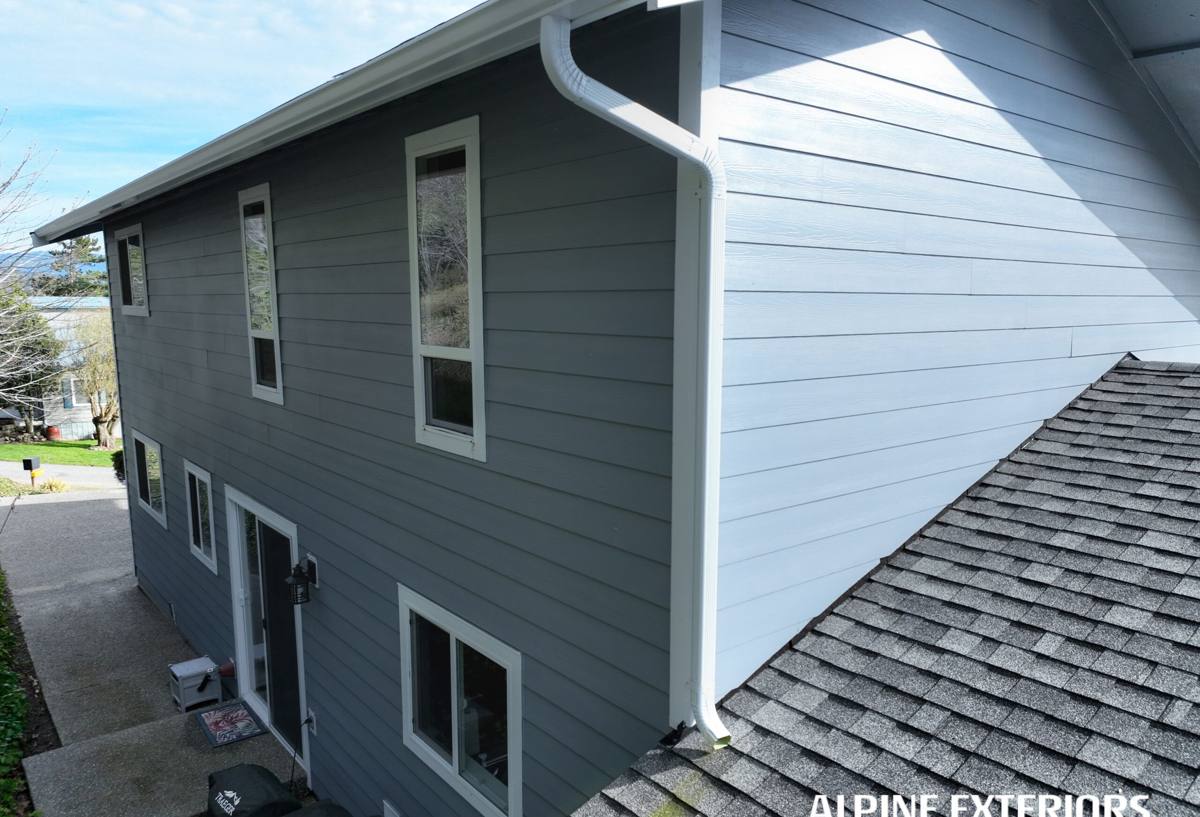
Choosing the Right Asphalt Shingle for This Climate
Asphalt shingles remain one of the most practical roofing choices for homes in and around Clearbrook — they're proven, repairable, and available in products built specifically to handle wet, mossy, coastal-influenced weather. The mistake we see most often isn't the material itself, it's picking the wrong grade of shingle for what the roof will actually face over the next 20-plus years.
Architectural vs. 3-Tab
Architectural (dimensional) shingles are heavier, thicker, and lie flatter against the deck than older-style 3-tab shingles. That extra mass and the way they seal down matters in a climate with sustained wind-driven rain — there's simply less surface area for water to find a way under a tab edge. We install architectural shingles on the large majority of Clearbrook-area roofs for this reason.
Algae and Moss Resistance
Most manufacturers now offer shingle lines with algae-resistant granules — typically copper-infused — that slow the black streaking and biological growth that shows up fast on a shaded, damp roof. In a moss-prone climate like this one, we treat that upgrade as close to standard rather than optional, because the alternative is a roof that looks stained and tired within a few years no matter how well it was installed.
| Shingle Type | Typical Lifespan (this climate) | Best Fit |
|---|---|---|
| 3-tab asphalt | 15–20 years | Budget re-roofs, secondary structures |
| Architectural / dimensional | 25–30 years | Most primary Clearbrook-area homes |
| Impact-rated architectural | 25–30 years | Homes wanting extra hail/debris resistance |
Signs Your Clearbrook Roof Needs a Closer Look
Roofs in this climate rarely fail all at once — they show warning signs for a season or two first. A homeowner who catches these early usually pays for a repair; a homeowner who waits usually pays for interior damage too.
- Granules collecting in gutters or at downspout outlets
- Dark streaking or thick moss patches, especially on north-facing or shaded slopes
- Shingle edges curling, cupping, or lifting at the tabs
- Soft spots or sagging when walked on (or visible sag from the ground)
- Daylight visible through the attic roof deck
- Water stains on interior ceilings, especially near valleys or chimneys
- Flashing that looks rusted, lifted, or gapped around vents and walls
If you're seeing two or more of these, it's worth having someone look at the whole roof system — not just patch the one spot that's visibly leaking.
What a Correct Installation Actually Involves
Asphalt shingles are a mature, well-understood product. Most failures we get called out to inspect aren't shingle failures — they're installation shortcuts that only show themselves a few wet seasons later. A correct job in this climate covers a few things that are easy to skip and hard to see once the roof is finished.
Tear-Off and Deck Inspection
We tear off down to the deck rather than layering over old shingles. That's the only way to actually see the plywood or OSB underneath, catch soft or delaminated sections before they become a bigger problem, and give the new system a flat, solid surface to seal to.
Underlayment and Ice-and-Water Protection
Synthetic underlayment goes down across the whole deck as the primary water barrier beneath the shingles. In valleys, around chimneys, at eaves, and anywhere water tends to pool or back up, we add a self-adhered ice-and-water membrane — the same detail used in colder climates for ice dams does double duty here against wind-driven rain intrusion.
Ventilation
A shingle roof with poor attic ventilation traps moisture underneath the deck, which shortens shingle life from below at the same time surface weather is working on it from above. We check intake (soffit) and exhaust (ridge or roof vents) balance on every re-roof — it's one of the most overlooked factors in how long a roof actually lasts here.
Flashing and Detail Work
Chimneys, skylights, sidewalls, and vent pipes are where the vast majority of leaks actually start — not the open field of shingles. Step flashing, counter-flashing, and pipe boots need to be installed correctly and sealed with the right materials, not just caulked over.
Moss Isn't Just Cosmetic — It's a Moisture Problem
A long moss season is one of the defining challenges of roofing in the Sumas–Clearbrook area, and it's worth treating as more than an appearance issue. Moss holds moisture directly against the shingle surface, keeps that section of roof wet long after the rest has dried, and over time can work under tab edges and granules. Left unaddressed for years, a heavily mossed roof deteriorates faster than one that's kept clean.
Zinc or copper strips near the ridge, algae-resistant shingles, and periodic gentle cleaning (never high-pressure washing, which strips granules) all help manage this. Trees that overhang the roof and keep sections shaded and damp are usually the root cause worth addressing too, where that's practical.
What Affects the Cost of a Clearbrook Re-Roof
Every roof is priced on its own specifics, but the factors that move the number are consistent. Most single-family asphalt shingle re-roofs in this region land somewhere in the broad range of roughly $8,000 to $20,000+, with the final number driven by the items below — an on-site look is the only way to get a real figure for your home.
| Factor | Why It Matters |
|---|---|
| Roof size and number of stories | More square footage and steeper access both add labor time |
| Roof pitch and complexity | Valleys, dormers, and multiple planes take more flashing and cutting |
| Layers of existing shingles | Tear-off of multiple old layers adds disposal and labor cost |
| Deck condition | Rotten or soft sheathing needs replacement before shingles go down |
| Shingle grade chosen | 3-tab vs. architectural vs. impact-rated changes material cost per square |
| Ventilation and flashing upgrades | Adding proper intake/exhaust venting or new flashing detail adds scope |
Our Process, Start to Finish
- On-site inspection and honest assessment of what the roof actually needs — repair, partial replacement, or full re-roof
- Written estimate covering material, labor, disposal, and any deck repair contingency
- Scheduling that accounts for the wet-season weather window, so shingles aren't installed in conditions that compromise the seal
- Tear-off, deck inspection and repair as needed, underlayment, and flashing detail work
- Shingle installation to manufacturer nailing and exposure specs
- Full site cleanup, including magnetic sweep for stray nails
- Final walkthrough so you know exactly what was done and what to watch for going forward
Why a Sumas-Based Crew That Already Works Clearbrook Matters
Clearbrook is close enough to Sumas that it's a normal part of our route, not a special-case trip that gets scheduled around everything else. That has practical benefits: we're already familiar with how this specific stretch of the Fraser Valley weather pattern behaves — the salt air, the rain direction, the length of the moss season — so we're not guessing at a wet-climate spec for the first time on your roof. It also means faster response if something needs a follow-up look after a storm, and a crew that isn't stretched thin across a huge, scattered territory.
Whatcom County and the immediate cross-border area share a lot of the same building stock and weather exposure, and a roof done right for one side of that line is generally done right for the other. What we won't do is cut a corner — skip ice-and-water membrane in a valley, skimp on ventilation, or reuse old flashing — just because it's not visible at handoff. Those are exactly the shortcuts that show up as a leak two or three winters later, and we'd rather do it right the first time than get called back.
If your roof is showing its age, was patched one too many times, or you just want an honest read on how much life it has left, we're glad to come take a look. The estimate is free, there's no pressure to sign anything on the spot, and you'll get a straight answer either way — use the form below to get started.