 Sumas Window
 Windows Built for Van Zandt's Weather, Not Just Any Weather
Van Zandt sits in a part of Whatcom County where the weather doesn't do things halfway. Homes here go through long stretches of steady rain, damp cold snaps, and short bursts of real heat in summer, all inside the same calendar year. That kind of cycle is hard on windows in ways that aren't always obvious until a homeowner is dealing with a stuck sash, a foggy double pane, or a sill that's gone soft. We've worked on enough houses in this corner of the county to know that what works for a dry-climate window install doesn't always hold up out here, and we build our approach around that reality rather than a generic install checklist.
This page is about window replacement and repair specifically for Van Zandt homes, but it's worth saying up front: we're a full exterior contractor, so we also handle siding, roofing, and decks. Windows rarely fail in isolation. A leaking window often points to a siding or flashing issue nearby, and a roof that's shedding water wrong can send moisture straight down a wall into a window frame. Having one crew that understands how all of those systems interact is a real advantage when you're trying to actually fix a problem instead of just patching the symptom you can see.
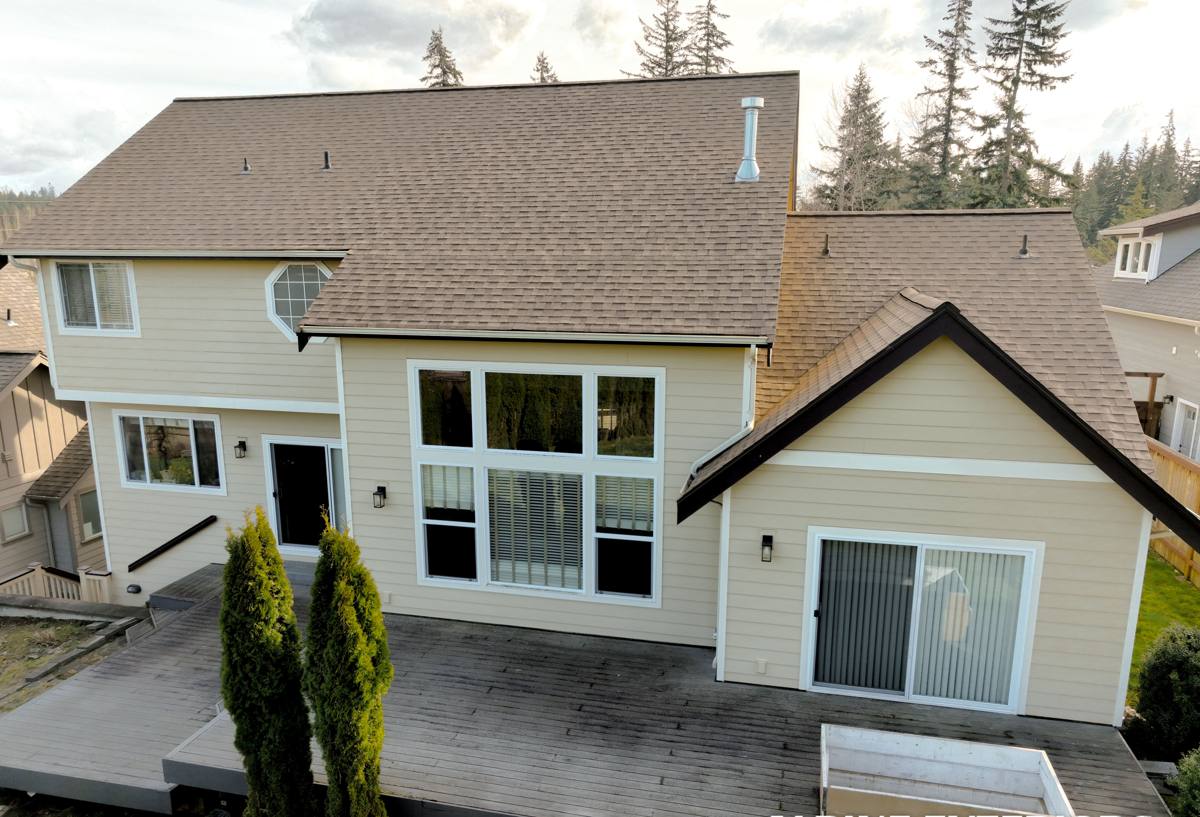
What the Local Climate Actually Does to Windows
Whatcom County weather is a mix of Pacific moisture, driving rain that comes in sideways more often than people expect, and long stretches of overcast, humid air that never fully dries things out. Add in the salt-laden air that moves through this part of Washington on weather systems off the Sound, and you get a slow but steady combination of moisture and mild corrosion working on anything exterior-facing, windows included.
A few specific ways this shows up on windows we inspect in the area:
- Driving rain intrusion — wind-blown rain that gets pushed past worn weatherstripping or aging caulk lines, especially on west- and south-facing walls that catch the brunt of incoming storms.
- Moss and algae buildup — the same damp, shaded conditions that grow moss on a roof will grow it in window tracks, on sills, and in corners where water sits instead of draining.
- Wood rot at sills and frames — older wood-frame windows, or newer windows with wood components that weren't properly sealed, take on moisture slowly over multiple wet seasons until the wood softens.
- Seal failure and fogging — insulated glass units rely on a sealed gas gap between panes. Constant humidity and temperature swings accelerate seal breakdown, which shows up as fog or condensation trapped between the panes.
- Hardware corrosion — metal latches, cranks, and balances exposed to salt-influenced, moist air can stiffen or corrode faster than in a drier inland climate.
None of this means windows in Van Zandt are doomed to fail early. It means the materials, sealing details, and drainage design matter more here than they would in a milder, drier region, and it's why we don't treat every install as identical regardless of location.
The Long Moss Season Deserves Its Own Mention
Whatcom County's moss season isn't a two-week nuisance — it's closer to eight or nine months out of the year where conditions favor growth. On windows, that means tracks and sills need drainage paths that actually work, and it means we pay close attention to how water is meant to exit a window assembly, not just how it's kept from entering. A window that keeps rain out but traps the moisture that does get in is often worse long-term than one with a well-designed weep system.
Signs a Van Zandt Home Needs Window Attention
Most homeowners don't think about their windows until something goes visibly wrong, but there are earlier signals worth watching for:
- Fogging or a cloudy haze between panes that doesn't clear when you clean the glass — a sign the seal has failed.
- Windows that are noticeably harder to open, close, or lock than they used to be.
- Visible gaps around the frame, or daylight you can see through when the window is closed.
- Soft, spongy, or discolored wood at the sill or lower frame corners.
- A noticeable draft near the window even when it's fully latched.
- Rising heating bills without an obvious cause, especially in an older home with original windows.
- Condensation forming on the inside of the glass regularly during cold, wet weeks.
Any one of these on its own might just mean a repair or a re-seal. Several at once, especially on an older home, usually points toward it being time to talk about replacement rather than continuing to patch individual symptoms.
Repair or Replace: How We Help You Decide
We don't default to recommending full replacement just because it's the bigger job. A lot of window problems in this area are legitimately fixable — failed weatherstripping, a worn balance mechanism, glazing that's pulled away from the sash, or hardware that needs adjustment or replacement. When a repair will genuinely solve the problem and the window's frame and structure are still sound, we'll say so.
Where we lean toward replacement is when the underlying frame material has started to fail (particularly wood sills with rot damage), when seal failure has affected multiple panes across the house, or when the window's age means its energy performance is well below what's available now. In a climate that runs damp and cool for most of the year, an efficient, properly sealed window makes a real difference in comfort and heating costs, not just curb appeal.
Window Material and Style Options
There's no single "best" window material — the right choice depends on the home's age, style, budget, and how much long-term maintenance a homeowner wants to take on. Here's a general comparison based on how these materials tend to perform in this region's wet, moss-prone climate:
| Material | Moisture Performance | Maintenance | Typical Cost Range |
|---|---|---|---|
| Vinyl | Very good — won't rot, resists moisture well | Low — occasional cleaning, no painting | Lower to mid |
| Fiberglass | Excellent — highly stable, minimal expansion/contraction | Low — durable finish, rarely needs attention | Mid to higher |
| Wood-clad | Good on exterior, but interior wood needs protection from moisture | Moderate — periodic finish upkeep on wood elements | Higher |
| Aluminum | Fair — durable but prone to condensation without thermal breaks | Low, but performance depends heavily on build quality | Varies widely |
For a lot of Van Zandt homes, vinyl or fiberglass windows offer the best balance of moisture resistance and low upkeep, which matters in a climate where wood surfaces are under near-constant humidity pressure. Wood-clad windows can still be the right call for homeowners who want that look and are willing to keep up with finish maintenance — we'll walk through the honest trade-offs for your specific home rather than pushing one material across the board.
Glass Packages Worth Knowing About
Beyond the frame material, the glass package matters just as much for comfort and energy performance:
- Double-pane, low-E glass — the standard baseline for this climate, balancing cost and performance well.
- Triple-pane — better insulation value, worth considering on north-facing walls or homes with higher heating costs, though it adds weight and cost.
- Argon or krypton gas fill — improves insulation between panes at a modest added cost.
- Impact-resistant or laminated options — less about local wind events and more useful for noise reduction or added security in some cases.
How a Window Project Works With Us
We keep the process straightforward and try not to make homeowners guess what's happening at each stage:
- On-site assessment — we look at the windows themselves, but also the surrounding siding, trim, and flashing, since window problems in this climate often connect to those systems.
- Honest recommendation — repair, partial replacement, or full replacement, explained in plain terms along with why.
- Material and style selection — matched to the home's age and your budget, with real trade-offs laid out rather than a hard sales push toward the most expensive option.
- Install with proper flashing and sealing — this is where a lot of window failures actually originate, so we pay close attention to how each window is integrated with the wall assembly around it, not just the window unit itself.
- Cleanup and walkthrough — so you know what was done and what, if anything, to watch for going forward.
Proper flashing and sealing deserves extra emphasis here. A high-end window installed with sloppy flashing will leak eventually in this climate. A modest, well-sealed window installed correctly will often outperform it. We'd rather get the installation details right than sell a premium product on a shortcut install.
Why a Local Crew Matters for This Kind of Work
Window work in a climate like this isn't the same job as window work in a dry region, and a crew that mostly works elsewhere may not build in the drainage and sealing margin this weather demands. Working throughout Whatcom County, including Van Zandt and the greater Sumas area, means we see how homes here actually age — which sills tend to rot first, which orientations take the worst of the driving rain, where moss builds up fastest — and that shapes how we approach every install and repair. It also means if something needs a follow-up visit, we're not far away and not booking around a long drive.
Windows Don't Exist in Isolation
Because we handle siding, roofing, and decks as well as windows, we're often able to catch related issues during a window visit that a windows-only company might miss. A window leak that traces back to a roof valley draining wrong, or siding that's failed at a corner near a window opening, gets flagged and explained rather than left for the next contractor to eventually find. For homeowners planning a broader exterior update — new siding alongside window replacement, for example — having one crew coordinate both means fewer scheduling headaches and less risk of one contractor's work undermining another's.
Keeping Windows Healthy Between Major Work
A little seasonal attention goes a long way in this climate. Some habits worth building into a routine:
- Clear moss and debris from window tracks and sills a couple of times a year, especially heading into the wetter fall and winter months.
- Check that weep holes (the small drainage openings at the base of window frames) aren't clogged with dirt or moss.
- Look at exterior caulk lines annually — cracked or shrinking caulk is an easy fix that prevents bigger moisture problems.
- Wipe down and lightly lubricate hardware if cranks or latches start feeling stiff, rather than forcing them.
- Watch for early condensation between panes, since catching a failing seal early can sometimes mean a single-unit glass replacement instead of a full window swap.
Getting Started
If your Van Zandt home has windows that are drafty, foggy, hard to operate, or just past their reasonable lifespan for this climate, we're glad to take a look and give you a straight assessment. We offer free, no-pressure estimates, so there's no cost or obligation to find out what your options actually look like. The form below is the easiest way to get that conversation started.