 Sumas Window
 Windows Built for the Laurel Climate
Laurel sits in a part of Whatcom County where the weather doesn't do anything halfway. Winters bring long stretches of driving rain pushed in off Bellingham Bay and the Strait of Georgia, spring and fall carry a heavy dose of moss-friendly damp, and even on dry days the air near the water holds enough salt to slowly work on anything metal or untreated. Windows sit right at the front line of all of it. They're one of the few parts of a house that has to seal out weather, hold up a wall opening structurally, and still open and close smoothly year after year. When any one of those jobs starts to fail, homeowners usually notice it first as a draft, a foggy pane, or a sill that never quite dries out.
We're a Sumas-based crew that works siding, roofing, windows, and decks across Whatcom County, and Laurel is regular territory for us. That matters because window problems here rarely show up alone — a leaking window head is often tied to flashing or siding detail behind it, and a rotted sill is often part of a bigger moisture story involving the roofline above it. Treating windows as an isolated fix, without looking at what's happening around them, is how the same problem comes back in two years.
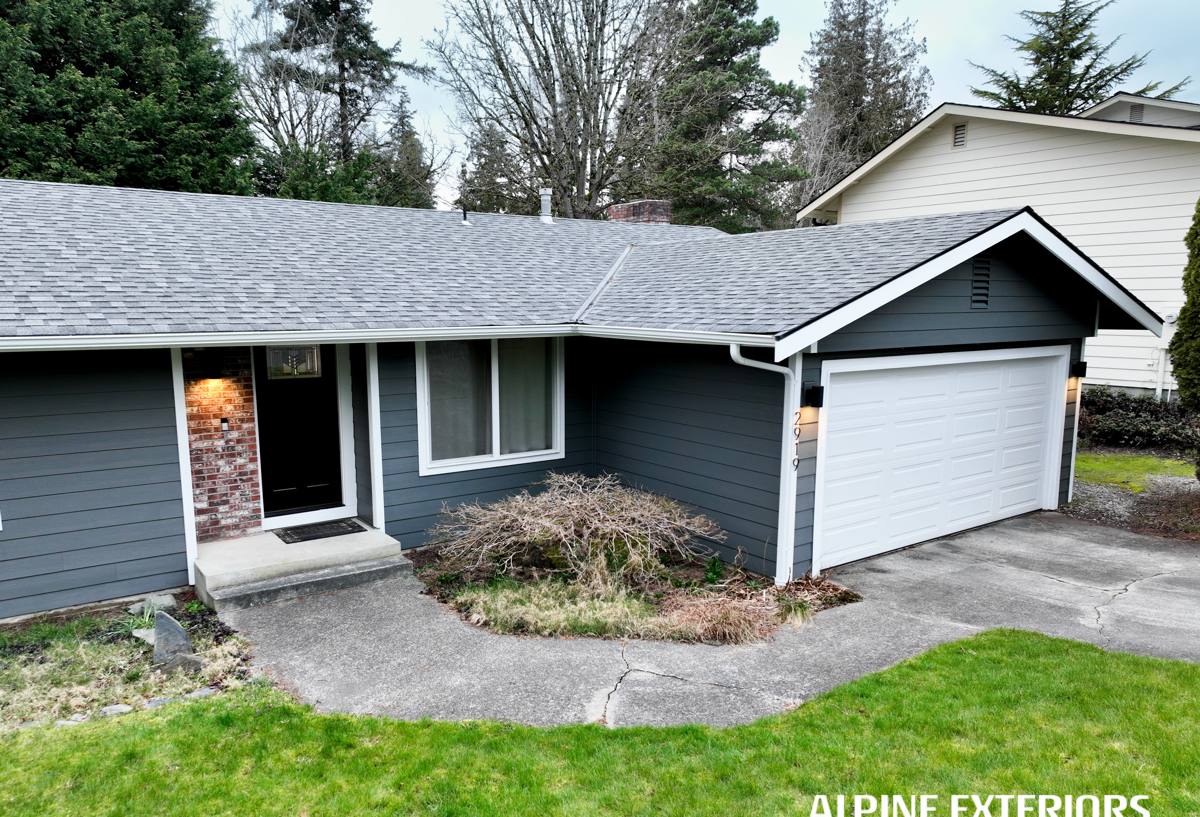
What Laurel-Area Homes Tend to Face
Laurel is a mix of older farmhouses, mid-century homes, and newer builds spread across a rural stretch of the county. The window issues we see track pretty closely with the age and orientation of the house:
- Original single-pane or early double-pane windows on older homes, often with wood frames that have taken decades of wet-dry cycling
- Condensation between the panes on aluminum or older vinyl units — a sign the seal has failed and the insulating gas has escaped
- Wood sills and trim that stay damp longer than they should because of poor drainage or missing flashing, leading to soft spots and eventual rot
- Moss and algae staining on north- and west-facing exteriors, which holds moisture against frames and trim longer through the wet season
- Hardware that's stiffened or seized from years of humidity, making windows hard to open even when the glass itself is fine
None of this is unusual for the area — it's just what driving rain and a long moss season do to a house over time. The difference is in how a home was built and maintained, and how soon problems get caught.
Signs Your Windows Are Losing the Battle
Most window failures give warning signs well before there's real damage to the wall behind them. Worth checking for:
- Visible fog or moisture trapped between panes of a double-pane window
- Drafts you can feel with a hand near the frame on a windy day
- Paint peeling or wood softening at the sill or bottom corners
- Windows that are hard to open, close, or lock — a sign the frame has shifted or swollen
- Visible gaps between the window frame and siding or trim
- A noticeable jump in heating costs with no other explanation
- Moss or dark staining building up on the sill or the wall just below the window
Any one of these on its own isn't an emergency. Several together, especially on the same window, usually means it's time to have someone take a real look rather than just re-caulking and hoping.
Why Waiting Costs More Here
In a drier climate, a failed seal or a small gap might sit for years without doing much harm. In Whatcom County's wet season, that same gap is an entry point for water almost every week of the year. Rot spreads into the framing lumber, insulation gets saturated, and what would have been a window replacement turns into a window-and-wall-repair job. Catching it early is the single biggest cost lever a homeowner has.
Choosing the Right Window Material for This Climate
There's no single "best" window material — the right choice depends on the home, the budget, and how much upkeep an owner wants to take on. Here's how the common options hold up under Laurel's conditions specifically:
| Material | How it handles driving rain and moisture | Maintenance | Typical trade-off |
|---|---|---|---|
| Vinyl | Won't rot or corrode; seals hold up well when installed correctly | Low — occasional cleaning | Fewer color/finish options than wood or fiberglass |
| Fiberglass | Very stable in wet/dry cycling, resists warping | Low to moderate | Higher upfront cost |
| Wood-clad | Good insulating properties; the clad exterior protects the wood, but any gap in that cladding lets moisture reach bare wood | Moderate — exterior finish needs monitoring | More installation-sensitive; a poor seal shows up as rot years later |
| Aluminum | Prone to condensation and, near salt air, gradual corrosion over time | Higher — finish and hardware need attention | We generally don't recommend it for this specific climate |
We don't install aluminum-frame windows on homes in this area as a matter of practice — not because it's a bad product everywhere, but because the combination of condensation risk and salt exposure this close to the water makes it a poor match for long-term performance here. Vinyl and fiberglass are our default recommendations for most Laurel homes; wood-clad is a strong option too, but it depends on flawless flashing and sealing at install, which is where a lot of wood-clad problems actually originate.
Installation Matters as Much as the Window Itself
A high-end window installed poorly will leak. A mid-grade window installed correctly, with proper flashing, a continuous moisture barrier, and correctly shimmed and sealed rough opening, will often outperform it. This is the part of the job that doesn't show up in a product brochure but determines whether a window lasts 10 years or 30.
What we check on every install
- Flashing tape and pan flashing at the sill, lapped correctly with the water-resistive barrier
- Proper shimming so the frame isn't under stress, which affects how well it seals and operates
- Correct sealant type and placement — not just caulk smeared around the trim
- Integration with the existing siding or trim so water is directed out, not trapped behind the window
- Interior air sealing, which affects both drafts and condensation risk
When we're already on-site for siding or roofing work, we can address window flashing as part of the same job — which is often more efficient and less disruptive than treating each system separately.
Cost Factors for Window Projects in Laurel
Every home is different, so we don't quote firm numbers without seeing the job, but the main factors that move a project's cost are consistent:
| Factor | Why it matters |
|---|---|
| Number and size of windows | Larger openings and specialty shapes cost more in materials and labor |
| Material choice | Vinyl is typically the most budget-friendly; fiberglass and wood-clad cost more upfront |
| Condition of the existing opening | Rot or framing damage found during removal adds repair work before a new window can go in |
| Access and home height | Second-story or hard-to-reach windows take longer and may need staging |
| Full-frame vs. insert replacement | Full-frame replaces down to the rough opening and flashing; inserts fit into the existing frame and cost less but don't address underlying frame issues |
If a sill or framing turns out to be soft once the old window is out, we'll always show you what we found before doing repair work — no surprise charges on the invoice for something you couldn't see beforehand.
Maintenance That Extends Window Life in a Wet Climate
Windows in Whatcom County work harder than windows almost anywhere else in the country, simply because of how much of the year they spend wet. A little seasonal attention goes a long way:
- Clear moss and debris from sills and tracks before it holds moisture against the frame
- Check caulk lines around trim each fall and touch up any cracks before the wet season sets in
- Operate every window at least a few times a year so hardware doesn't seize
- Watch for soft spots in wood trim or sills and address them before they spread
- Keep gutters and downspouts clear so roof runoff isn't sheeting down over window heads
None of this replaces a proper inspection every few years, but it does slow the wear that this climate puts on frames and seals.
How We Work in Laurel and the Surrounding Area
Being based in Sumas means we're not driving in from Seattle or Everett to look at a Laurel window job — we know the roads, the weather patterns, and the kind of houses out this way because we work on them regularly. That local presence matters for a few practical reasons: we can get out for an estimate without a long lead time, we're available if a problem shows up after the job is done, and we're already familiar with how Whatcom County's building conditions differ from the more sheltered inland areas.
Because we handle siding, roofing, windows, and decks as one company, we can also look at a window problem in the context of the whole exterior. If a leak is really a siding or flashing issue, or if a window's rot ties back to roof drainage, we'll tell you that directly rather than replacing the window and leaving the real cause in place.
Get a Free, No-Pressure Estimate
If you're dealing with drafty, foggy, or hard-to-operate windows in Laurel, or you just want an honest read on how much life is left in what you've got, we're happy to take a look. Use the form below to request a free estimate — no pressure, no obligation, just a straight assessment from a local crew that knows this climate.