 Sumas Window
 Windows Built for Lynden's Weather, Not Just Its Curb Appeal
Lynden sits in the heart of Whatcom County, a few miles south of the Canadian border and not far from our shop in Sumas. Homes here run the gamut from older farmhouses on the outskirts of town to newer builds in the neighborhoods that have filled in around downtown over the past couple of decades. What almost every one of them has in common is exposure to the same weather pattern: long stretches of steady rain, damp marine air rolling in off the Salish Sea, and short, low-sun winters that never quite dry things out. That combination is hard on windows in ways that don't show up overnight. It shows up five, ten, fifteen years in, as failed seals, soft trim, and energy bills that creep up every year.
We work on homes throughout Lynden and the surrounding county on a regular basis, and window replacement is one of the most common calls we get — usually not because a homeowner set out to remodel, but because they noticed fog between the panes, a draft by the sill, or trim that's starting to go soft.
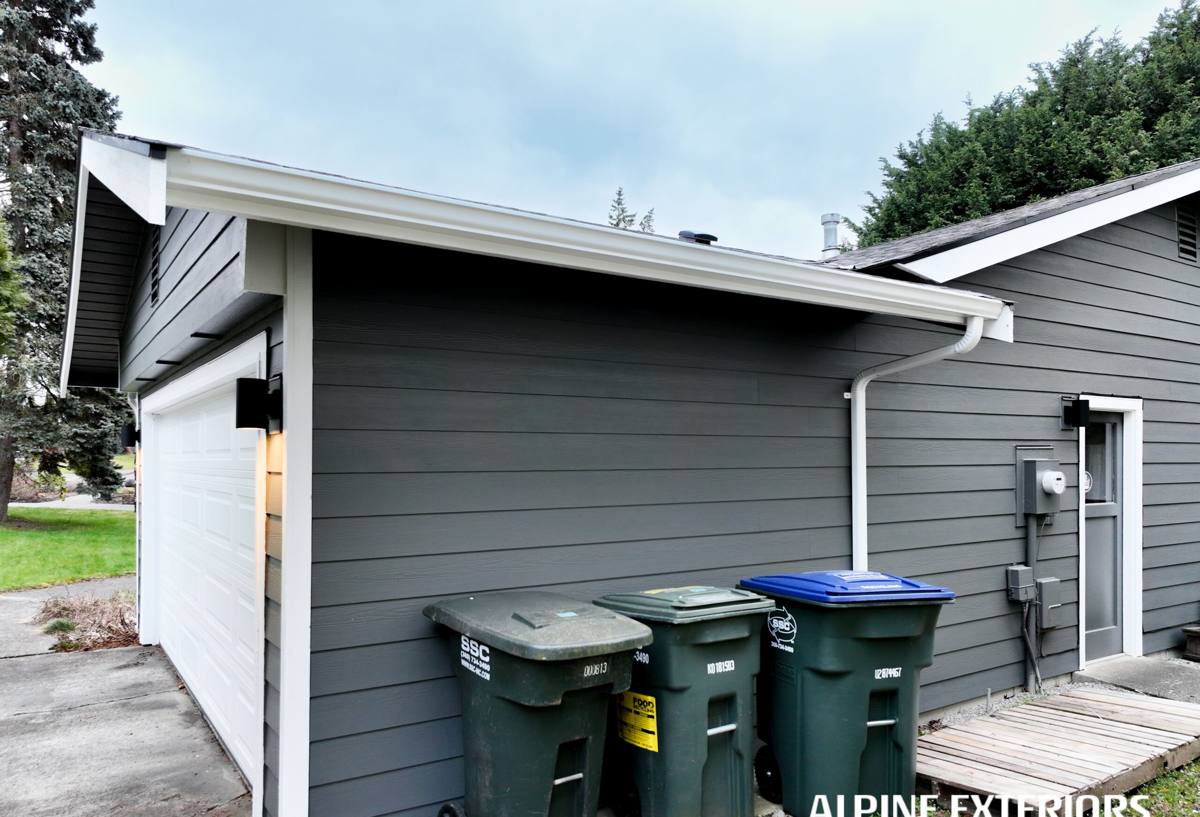
What Whatcom County Weather Does to Windows Over Time
Windows fail from the outside in, and moisture is almost always the root cause. A few things we see consistently on homes in and around Lynden:
- Condensation and fogging between panes — a sign the seal on an insulated glass unit has broken and moisture has worked its way inside, something that happens faster here than in drier climates because the glass is rarely given a chance to fully dry out.
- Moss and algae buildup on sills and frames — our long moss season isn't just a roofing problem. On horizontal surfaces like window sills, sun rarely reaches long enough to dry moss out, and it holds moisture against the frame material.
- Soft or swollen wood trim and sashes — older wood-frame windows that were never properly maintained with paint or sealant take on water at the joints first, and once rot sets in it spreads.
- Drafts and rising energy bills — as weatherstripping and old seals break down, conditioned air leaks out and cold, damp air pushes in, which your heating system then has to work overtime to compensate for.
None of this means every older window is a lost cause. Plenty of well-built windows just need better maintenance or targeted repair. But when the frame material itself has started breaking down, or when several windows in the same house are showing the same symptoms, replacement usually ends up being the more honest recommendation — both for your comfort and for your wallet.
Signs It's Time to Replace, Not Just Repair
Before we recommend a full replacement, we look for a few specific red flags. If you're seeing more than one or two of these, it's worth having someone take a look:
- Visible fog, haze, or moisture trapped between the glass panes
- Windows that are difficult to open, close, or lock properly
- Noticeable drafts near the frame even when the window is fully closed
- Soft, spongy, or discolored wood at the sill or bottom corners of the frame
- Paint that keeps peeling or bubbling in the same spots year after year
- Single-pane glass anywhere on the house, which offers little insulation value in this climate
- Noticeably higher heating costs compared to similar homes nearby
Frame Material Comparison for Our Climate
Material choice matters more here than in drier parts of the country, since whatever you install has to hold up to sustained moisture exposure for decades. Here's how the common options compare for a Whatcom County home:
| Material | Moisture Performance | Maintenance | Typical Lifespan |
|---|---|---|---|
| Vinyl | Won't rot; handles damp climates well | Low — occasional cleaning | 20-30+ years |
| Fiberglass | Excellent; very stable in wet/cold swings | Low | 30-40+ years |
| Wood (unclad) | Attractive but vulnerable without upkeep | High — regular painting/sealing | Varies widely with maintenance |
| Wood-clad (vinyl or aluminum exterior) | Good — exterior shell protects the wood core | Low to moderate | 25-35+ years |
We install a range of these depending on the home and the homeowner's priorities. Vinyl and fiberglass tend to be the practical choice for most Lynden homes because they don't depend on a paint or sealant schedule to stay watertight — a real advantage when a house sits under tree cover or gets minimal direct sun for months at a time. Wood and wood-clad options still have a place, especially on homes where matching a historic or architectural look matters, but we're upfront that they come with a higher maintenance commitment in this climate.
Installation Detail Matters More Than the Window Itself
A high-quality window installed poorly will leak and fail just as fast as a cheap one. In our experience, most window failures we get called out to inspect trace back to installation shortcuts, not the product itself — gaps in the flashing, missing or improperly lapped moisture barrier, or sealant used in place of proper flashing detail. In a climate that gets this much sustained rainfall, that kind of shortcut catches up with a house fast.
What we pay attention to on every install
- Proper flashing sequence so water sheds outward and never behind the barrier
- Correct integration with the existing weather-resistive barrier, not just caulk over the gap
- Level, square, properly shimmed installation so the window operates and seals correctly for its full lifespan
- Sill pans on ground-level and exposed installations for extra protection against wind-driven rain
- Interior and exterior sealant appropriate to the material and exposure
Why a Local Crew Makes a Real Difference
We're based in Sumas, so Lynden is well within our regular service area — not a stretch job we take once and never see again. That matters for a few practical reasons. We're familiar with how homes in this part of Whatcom County are typically built, what materials tend to hold up and what tends to fail early, and how the local permitting process works if your project needs a permit pulled. If a question comes up after the job is done, or a window needs a warranty adjustment, we're not far away and not hard to reach.
It also means we're seeing the same weather you are. When we recommend a certain flashing detail or frame material for a Lynden home, it's based on what we've watched hold up — and what hasn't — on houses just like it, not a generic recommendation pulled from a national playbook.
Our Window Replacement Process
- Free on-site estimate — we look at your existing windows, discuss what's failing and why, and talk through material and style options that fit your home and budget.
- Written proposal — a clear scope of work and pricing, no pressure to decide on the spot.
- Scheduling — we work around your timeline and give you a realistic install window.
- Installation — proper removal of old units, flashing and moisture barrier work done correctly, and careful attention to interior and exterior finish work.
- Final walkthrough — we check operation, sealing, and cleanup with you before we consider the job done.
Windows Are Part of a Bigger Picture
Windows rarely fail in isolation. If your windows are showing wear from years of moisture exposure, it's worth having your siding, roofing, and trim checked at the same time — they're all fighting the same climate. We handle siding, roofing, windows, and decks, so if a window replacement uncovers moisture damage in the wall assembly, or if your roof's moss buildup is contributing to water intrusion around upper-floor windows, we can address it as one project instead of you having to coordinate multiple contractors and figure out where one company's work ends and another's begins.
What Affects the Cost of a Window Project
Every home is different, so we don't quote prices without seeing the job, but a few factors consistently drive cost up or down:
| Factor | Effect on Cost |
|---|---|
| Number of windows being replaced | More windows typically lowers the per-unit cost |
| Frame material chosen | Fiberglass and wood-clad generally cost more than vinyl |
| Window size and configuration | Larger or custom-shaped windows cost more than standard sizes |
| Condition of the surrounding wall and trim | Hidden rot or moisture damage adds repair scope |
| Access and second-story work | Harder-to-reach windows add labor time |
As a general rule, homeowners in our area should expect a wide range depending on these factors — a single standard vinyl replacement window sits at the low end, while larger custom units or full-house replacements with wall repair sit considerably higher. We'll walk you through the specifics for your home during the estimate so there are no surprises.
Ready to Talk About Your Windows?
If your windows are fogging, drafting, or just past their useful life, we're happy to come take a look and give you an honest read on what's actually needed — repair, partial replacement, or a full window upgrade. There's no pressure and no obligation. Use the form below to request a free estimate, and we'll get in touch to schedule a time that works for your Lynden home.