 Sumas Window
 Maple Falls Homes Face a Specific Kind of Wear
Maple Falls sits up against the foothills of Mt. Baker, in the kind of terrain that changes how a house ages. You're closer to the tree line, closer to the elevation gain, and closer to the moisture that collects under a heavy forest canopy than homeowners a few miles down toward the valley floor. That combination is hard on the exterior of a house in ways that aren't always obvious from the street.
The biggest factor is water that doesn't leave. Whatcom County gets a long wet season generally, but wooded, shaded lots like the ones common around Maple Falls hold onto that moisture longer than open, sun-exposed properties. Shingles stay damp. Siding stays damp. North-facing window trim stays damp. That's exactly the environment moss and algae need to take hold, and once they do, they hold water against wood and painted surfaces even on the rare dry, sunny stretch.
Rain, Shade, and the Moss Problem
Driving rain off the foothills doesn't just wet a surface and run off — on a shaded roof or a north wall, it soaks in and stays. Over a few seasons that constant dampness breaks down caulking, softens window sills, and gives moss a foothold in roof valleys and along siding laps. Left alone, moss doesn't just look bad. It lifts shingle edges, traps water against fascia and trim, and works its way into any gap in a window's exterior seal.
Elevation and Temperature Swings
Homes up in the Maple Falls area also see more freeze-thaw cycling than lower-elevation properties closer to Sumas proper. Water that gets into a small crack in old window glazing or a hairline gap in siding can freeze, expand, and widen that gap — then thaw and let more water in next time. It's a slow process, but over ten or fifteen years it's usually what turns a minor drafty window into a window that needs full replacement.
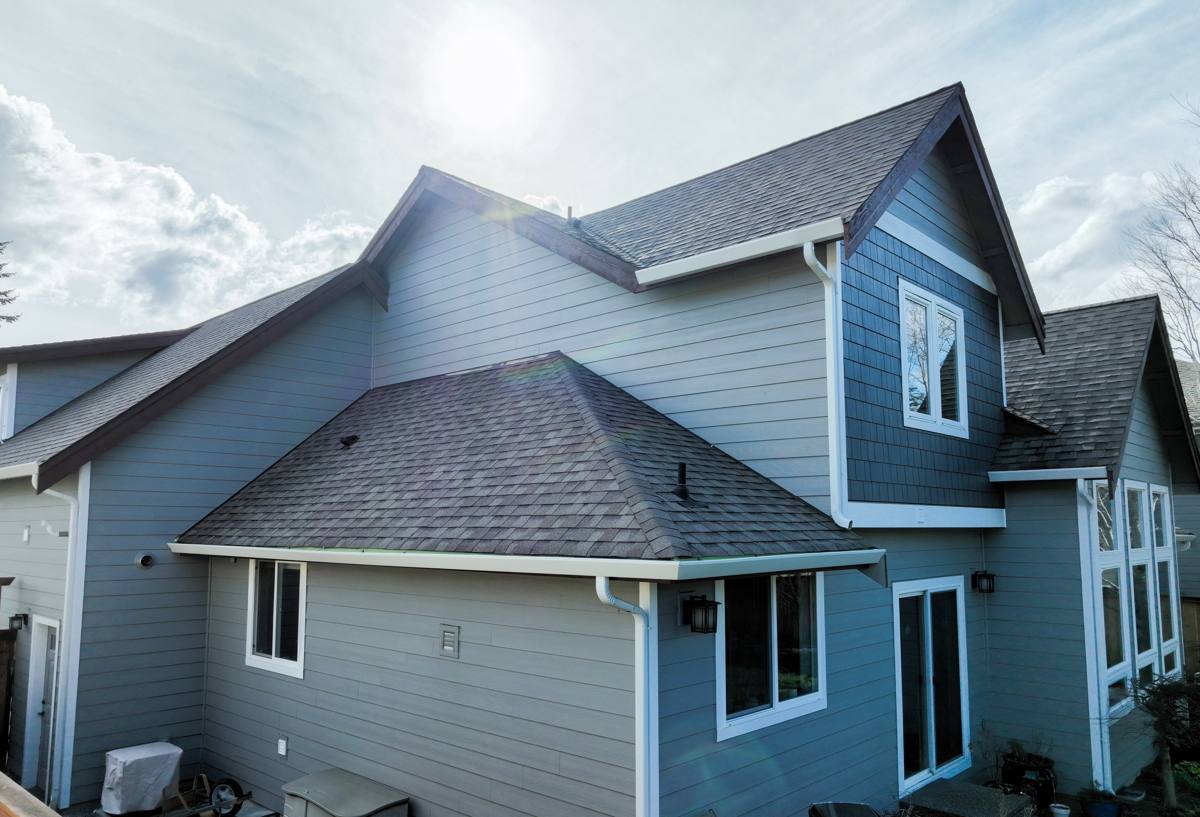
How We Approach Window Work Out Here
We don't sell window jobs off a general script. A house at higher elevation with heavy tree cover needs a different look than a house on an open lot, even if they're both technically in the same service area. Before we talk about products or pricing, we look at how water actually moves around your specific house — where it drains, where it pools, where the sun never quite reaches.
Inspection Before Anything Else
A proper window inspection isn't just checking if the glass is foggy. We look at the condition of the sill and jamb, whether the flashing above the window is still doing its job, whether trim boards show soft spots, and whether moss or algae growth nearby is holding moisture against the frame. A window can look fine from six feet away and still have a compromised seal that's been letting water into the wall cavity for a couple of years.
Repair or Replace — An Honest Answer
Not every window needs to come out. If the frame and sill are sound and the only issue is failed seals, worn weatherstripping, or hardware that's stopped locking tight, a repair is the honest recommendation and it costs a fraction of replacement. Full replacement makes sense when the frame itself has taken on water damage, when the glass unit has failed beyond a simple seal repair, or when a homeowner is chasing real energy savings on an older single-pane or early double-pane unit. We'll tell you which situation you're in rather than defaulting to the bigger job.
Windows Rarely Fail in Isolation
One thing a local crew notices quickly: window problems and siding or roofing problems tend to show up together, because they're usually caused by the same water intrusion path. A window with a failed upper seal is often sitting under a roof edge or a piece of siding trim that's letting water track down behind it. That's why, since we handle siding, roofing, windows, and decks, we look at the whole envelope around a problem window rather than just pulling the sash and calling it done. Replacing a window under a roof edge that's still funneling water onto it just means you're back out here again in a few years.
The same logic applies to decks. A deck built into a shaded, wooded lot near Maple Falls deals with the same moss and standing-water issues as the siding and windows — ledger boards and post bases are common trouble spots we check whenever we're already on site for other work.
Choosing Window Materials for This Climate
There's no single "best" window material — the right choice depends on your budget, how exposed the window is to weather, and how much upkeep you want to take on. Here's how the common options generally compare for a wet, shaded, foothill property:
| Material | Moisture Behavior | Maintenance | Typical Lifespan |
|---|---|---|---|
| Vinyl | Doesn't absorb water or rot; seams and seals still need periodic checking | Low — occasional cleaning | 20-30 years |
| Fiberglass | Very stable in wet/dry cycling, resists warping | Low | 30-40 years |
| Wood, painted | Attractive but vulnerable to moisture if paint film fails | High — repainting and caulk checks needed regularly | Varies widely with upkeep |
| Wood, clad (exterior-protected) | Exterior cladding shields wood from direct weather | Moderate — interior wood still needs occasional attention | 25-35 years with maintenance |
In a shaded, high-moisture setting like the terrain around Maple Falls, we generally steer homeowners away from bare painted wood on north-facing or heavily shaded exposures — not because wood windows are a bad product, but because a paint film in a spot that rarely gets direct sun and dries slowly is a maintenance commitment most people underestimate. Vinyl and fiberglass hold up with far less attention in those specific spots, while wood can still make sense on sun-exposed, well-drained elevations of the same house.
What Actually Drives Project Cost
Homeowners are usually most interested in what moves the price up or down. In general terms:
| Factor | Effect on Cost |
|---|---|
| Number of windows replaced at once | Per-window cost drops with larger orders |
| Frame material and glass package | Triple-pane and specialty glass coatings add cost over standard double-pane |
| Condition of existing framing | Rotted sills or jambs add carpentry work beyond the window unit itself |
| Access and elevation | Upper-story or hard-to-reach windows take more labor and equipment |
| Trim and exterior finish work | Matching existing trim profiles or siding adds finish labor |
We give a written, itemized estimate before any work starts, so you can see exactly what's driving the number rather than a single lump figure.
Why a Local Crew Matters Here
A crew that works Whatcom County regularly knows the difference between a house on an open, well-drained lot and one tucked into the tree line near Maple Falls — and that difference changes the recommendation. It affects what flashing detail we use above a window, how aggressive we are about moss treatment on the surrounding siding and roof, and how we sequence a job around the wetter stretches of the year so materials aren't going in on a soaked substrate. A crew unfamiliar with this specific terrain is more likely to apply a generic approach that doesn't account for how much longer things stay wet up here.
Being based out of Sumas also means we're not driving in from out of the area for a warranty callback or a quick adjustment. If a window needs a follow-up visit after the first hard winter, that's a short trip, not a scheduling headache.
Our Process, Start to Finish
- On-site inspection of the windows in question, plus a look at adjacent siding, trim, and roofline for related water paths.
- Honest repair-vs-replace recommendation with the reasoning explained, not just a quote.
- Written estimate broken out by material, labor, and any carpentry or trim repair needed.
- Scheduling that accounts for weather — we avoid setting new windows into wet or actively rotted framing.
- Installation with attention to flashing and sealing details suited to a high-moisture site.
- Final walkthrough so you know what to watch for and how to maintain the work going forward.
Keeping Windows and Siding Ahead of the Weather
Between projects, a little seasonal attention goes a long way toward stretching the life of windows, siding, and roofing in a climate like this one. A quick homeowner checklist:
- Look at north- and shade-facing windows and siding each fall for moss or algae buildup and remove it before it spreads.
- Check that caulking around window frames is intact — cracked or missing caulk is an easy entry point for water.
- Keep gutters and downspouts clear so roof runoff isn't dumping directly onto siding or window trim below.
- Trim back tree limbs and brush that keep a wall or roof section shaded and slow to dry.
- Test window locks and hardware each year — hardware that won't pull the sash fully tight lets in both drafts and moisture.
- Watch for soft spots in exterior wood trim, especially at window sills and corners, and address them before they spread to the frame.
None of this requires special tools or a big time commitment, but it's the difference between a window lasting its full expected life and one needing early replacement because a small water problem went unnoticed for a few seasons.
What This Means for Your Home
If you're in Maple Falls and dealing with drafty windows, visible moss on the roof or siding, or trim that's starting to feel soft, it's worth having someone look at the whole picture rather than just the window itself. The causes are often connected, and fixing one piece without addressing the water source nearby just means the same problem resurfaces in a different spot a few years later.
We're happy to come take a look and give you a straightforward, no-pressure estimate on windows, siding, roofing, or decks — whatever's actually needed, explained plainly. Use the form below to get in touch and we'll schedule a time to come out.