 Sumas Window
 Roofing in a Border-Town Marine Climate
Homes in and around Huntingdon sit in a stretch of the Pacific Northwest where the weather doesn't do anything in half measures. Marine air off the Salish Sea and the Fraser Valley carries salt and moisture a long way inland, driving rain comes in sideways more often than straight down, and the wet season here doesn't really end for months at a stretch. That combination is hard on a roof in ways that a drier climate never tests. Shingles granulate faster, fasteners corrode sooner, and anything shaded by fir or cedar trees grows a coat of moss before most homeowners notice it's started.
A new roof installed for this area has to be built with all three of those stresses in mind from the first course of underlayment to the final ridge cap. That's a different job than installing the same roof in a dry inland climate, even though the shingle on top might look identical.
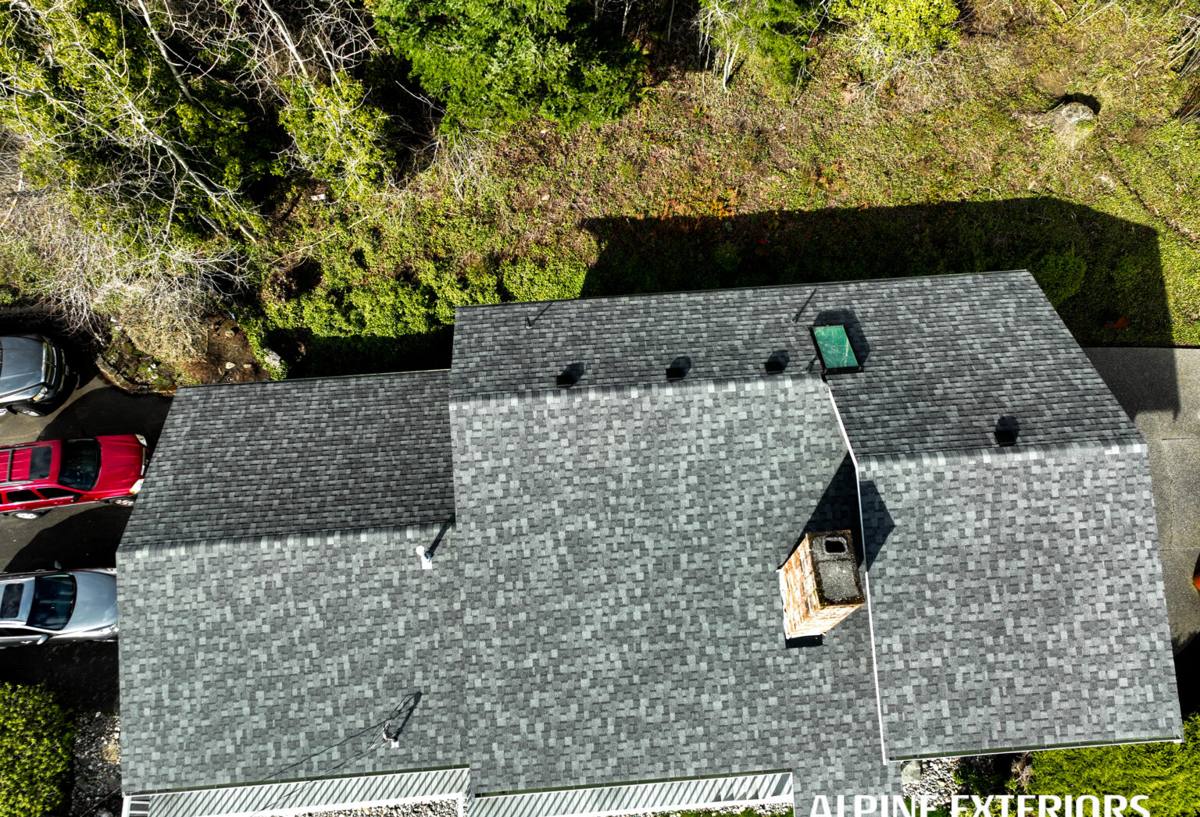
What a Correct Installation Actually Involves
"New roof" gets used loosely. A correct installation is a system, not a single layer of material, and every part of that system has a job to do against wind-driven rain and prolonged dampness.
The parts homeowners don't see
- Deck inspection and repair — every sheet of plywood or OSB gets checked once the old roofing is off. Soft, delaminated, or water-stained decking gets replaced before anything new goes down, not covered over.
- Ice-and-water shield at vulnerable points — eaves, valleys, and roof-to-wall transitions get a self-adhering waterproof membrane underneath the field underlayment, because those are the spots where driving rain and wind-blown water find a way in first.
- Synthetic underlayment across the field — a second line of defense under the shingles that resists moisture far longer than old-style felt paper.
- Flashing at every penetration and transition — chimneys, skylights, vent pipes, dormers, and sidewalls all need properly formed and lapped metal flashing, not just sealant. Sealant fails; correctly lapped flashing doesn't rely on it.
- A fastening schedule matched to local wind and rain exposure — nail placement and count matter more here than in calmer climates, because a fastener that's high or under-driven is exactly where wind-driven rain gets pushed under a shingle.
Skip any one of those steps and the roof can still look fine from the ground for a year or two. The failures show up later, as leaks at valleys and penetrations rather than in the open field of the roof — which is also why they're often blamed on "bad shingles" when the real cause was the installation underneath.
Choosing a Roofing Material for This Climate
There's no single "best" roofing material — there's a best fit for a given roof pitch, budget, and how much maintenance a homeowner wants to take on. Here's how the common options actually perform in a wet, moss-prone, salt-air environment:
| Material | Moss/algae resistance | Wind-driven rain performance | Typical maintenance | Relative cost |
|---|---|---|---|---|
| Architectural (laminate) asphalt shingle | Good with algae-resistant granules; still needs periodic cleaning | Strong when installed with proper nailing and flashing | Low — occasional debris and moss check | $$ |
| 3-tab asphalt shingle | Fair — thinner profile sheds moss less effectively | Lower wind rating than architectural shingle | Moderate — shorter service life in wet climates | $ |
| Standing-seam metal | Excellent — smooth surface sheds moss and needles | Excellent; very few penetration points | Very low | $$$$ |
| Cedar shake | Poor without diligent upkeep — natural wood retains moisture | Good if installed and maintained correctly | High — regular treatment and inspection required | $$$ |
Why we steer most Huntingdon-area homeowners toward architectural shingle or metal
Cedar shake looks great and has a long history in the Pacific Northwest, but in a climate with this much sustained dampness, it's an ongoing maintenance commitment — moss and moisture retention in wood shakes is a known trade-off, not a defect, and it's fair for a homeowner to decide that upkeep isn't for them. 3-tab shingle is the lowest upfront cost but carries a lower wind rating and shorter realistic lifespan here than architectural shingle, so the savings often don't hold up over the life of the roof. We'll install what a homeowner chooses, but we'll always walk through these trade-offs honestly before the contract is signed.
Our Installation Process
- On-site inspection and estimate — we walk the roof (not just look from the ground), check the attic for ventilation and moisture signs, and measure for an accurate material quantity.
- Written scope and material selection — pitch, valleys, penetrations, and any decking risk areas get called out up front, so there are no surprise change orders once tear-off starts.
- Full tear-off — old roofing removed down to the deck; layering a new roof over an old one is not something we do, because it traps moisture and hides deck problems.
- Deck repair as needed — any compromised sheathing is replaced before underlayment goes down.
- Ice-and-water shield and underlayment — installed at eaves, valleys, and the full field per manufacturer specification.
- Flashing, vents, and ventilation components — set and lapped correctly at every roof-to-wall and penetration point.
- Shingle or panel installation — laid to the fastening schedule appropriate for our wind and rain exposure.
- Final walkthrough — ridge, valleys, and flashing checked, site cleaned of debris and nails, and the roof reviewed with the homeowner before we consider the job done.
Ventilation and Moisture Control — the Half of the Job You Don't See
A roof that sheds rain perfectly on the outside can still fail from the inside if the attic can't breathe. Balanced intake (soffit) and exhaust (ridge or roof-mounted) ventilation keeps warm, moist attic air moving out instead of condensing against the underside of the deck. In a climate as consistently damp as ours, poor ventilation shows up as premature shingle aging from underneath, deck rot that has nothing to do with the roofing surface above it, and mold or moisture staining in the attic. Whenever we replace a roof, we check existing ventilation against the attic's actual size and correct it if it's undersized or unbalanced — it's a cheap fix to make while the roof is already open, and an expensive one to fix later.
Moss and Algae: Prevention Built Into the System, Not Bolted On
Given a long wet season and plenty of tree cover in this area, moss isn't a maybe — it's a matter of when, especially on north-facing slopes and shaded valleys. A correct installation reduces how fast it takes hold and how much damage it does before it's addressed:
- Algae-resistant shingle granules slow the biological growth that stains and eventually lifts shingle edges.
- Proper flashing and underlayment mean moss sitting on the surface doesn't automatically translate into a leak underneath.
- Keeping overhanging branches trimmed back and gutters clear reduces the moisture and organic debris that feed moss in the first place — something we'll flag during any inspection even if it's not part of the roofing scope.
Moss removal itself should always be done carefully — pressure washing a shingle roof can strip granules and shorten its life faster than the moss would have. Soft washing or hand removal, done on a normal maintenance schedule, protects the investment instead of undermining it.
What Drives the Cost of a New Roof
Two roofs of the same square footage can cost noticeably different amounts once you account for these factors:
| Cost factor | Why it matters |
|---|---|
| Roof pitch and complexity | Steep pitches, multiple valleys, and dormers take more labor and material than a simple gable roof |
| Number of tear-off layers | Removing two or three layers of old roofing costs more in labor and disposal than one |
| Deck condition | Rotted or delaminated sheathing found during tear-off adds material and labor to replace |
| Material choice | Architectural shingle, metal, and cedar shake sit at very different price points, as shown above |
| Ventilation upgrades | Adding or correcting intake/exhaust venting is a smaller cost during a full replacement than as a standalone project later |
| Access and site conditions | Steep lots, limited driveway access, or tall trees near the roofline can affect equipment and staging costs |
We provide a written estimate that breaks these out, so it's clear what's driving the number rather than a single lump figure.
Signs Your Huntingdon-Area Roof May Need Replacing Now
- Granules collecting in gutters or at downspout outlets
- Shingles that are curling, cupping, or missing at edges and ridges
- Daylight visible through the roof deck from inside the attic
- Moss or dark streaking covering more than a small section of the roof
- Soft spots underfoot when walking the roof, or sagging visible from the ground
- Leaks or water staining on interior ceilings, especially near valleys or chimneys
- A roof approaching or past 20–25 years old, regardless of visible damage
Any one of these on its own might just need a repair. Several together, or a roof that's simply reached the end of its expected life, is usually when replacement is the more honest recommendation than patching year after year.
Why Local Experience Matters Here
A roofing crew that regularly works the Huntingdon area already knows what this stretch of Whatcom County and the surrounding Fraser Valley climate does to a roof over time — where moss tends to take hold first, how much wind-driven rain a given roof slope actually sees, and what ventilation levels hold up through a full wet season rather than just looking adequate on install day. That local pattern recognition is what separates a roof that performs for its full expected life from one that starts showing problems five years in. It also means straightforward answers about permitting and inspection requirements that apply to your specific property, rather than a one-size-fits-all approach imported from a drier climate.
If your roof is showing its age or you're planning ahead rather than reacting to a leak, we're happy to take a look and give you a straightforward, no-pressure estimate — just fill out the form below.