 Sumas Window
 Deck Repair in Laurel: A Job Built Around This Valley's Weather
Laurel is one of the quieter, more rural stretches of Whatcom County that we work regularly out of Sumas, and decks out here take a specific kind of punishment from the surrounding valley climate. Long stretches of driving rain through fall and winter, humidity and fog that settle over farmland and low ground for days after a storm passes, and a moss season that runs most months of the year all land directly on a deck's flat, horizontal surfaces before they touch almost anything else on the house. A deck has no roofline or siding cladding to shield it — it sits outside year-round, absorbing whatever the weather does, with nothing standing between the wood or composite and the elements.
Repairing a deck correctly in this climate is a different job than a quick patch. It means telling the difference between a cosmetic problem and a structural one, matching repair material to what's already there when a partial fix makes sense, and being honest when it doesn't. Most of all, it means fixing whatever underlying moisture or fastener issue actually caused the damage — not just swapping out the one board that finally gave out and calling it done. This page covers what a Laurel deck typically needs, what an honest repair actually involves, and how our process works for repair calls in this part of the county.
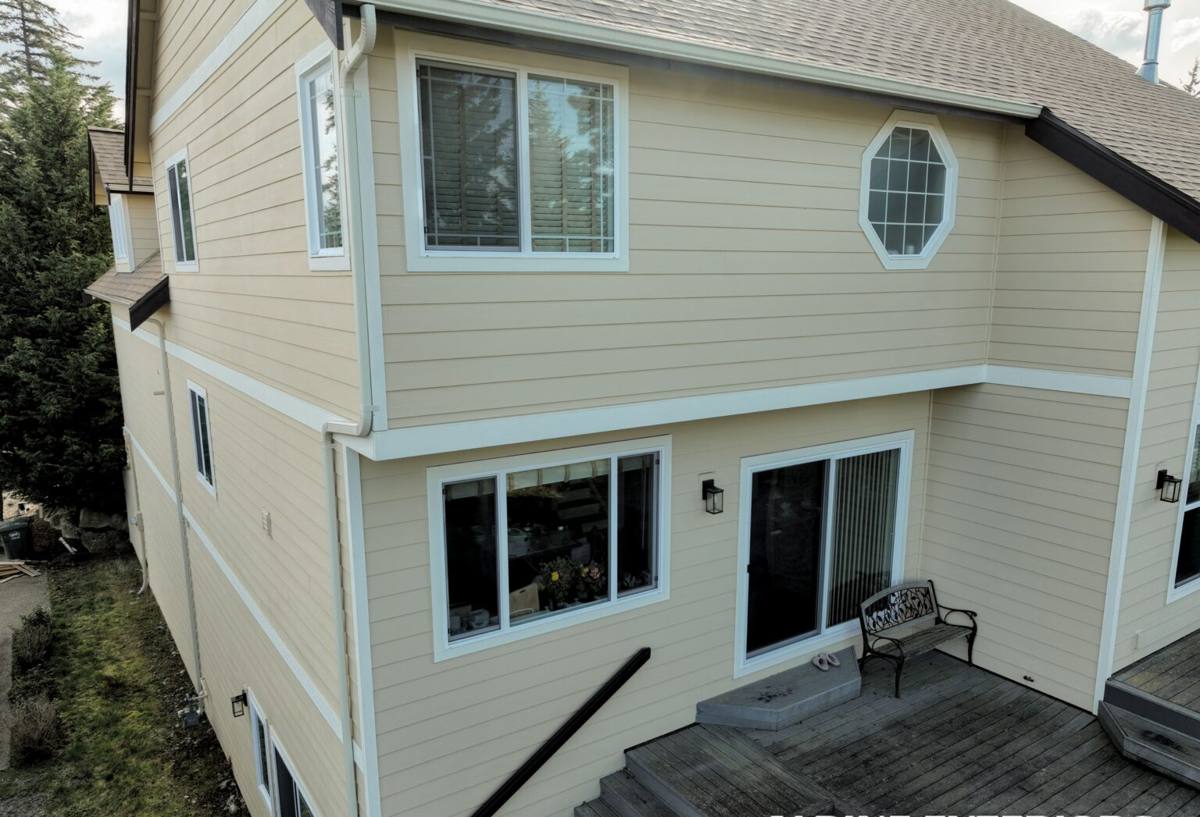
What This Climate Does to an Aging Deck
Driving Rain and the Ledger Connection
Rain in this part of Washington rarely falls straight down for long. Wind pushes it sideways into railings, under boards, and up against the ledger board where the deck attaches to the house — one of the most common places we find hidden rot on a repair call, precisely because that connection is mostly out of sight until something starts to sag, separate, or feel spongy underfoot near the house.
Valley Humidity and a Long Moss Season
Farm country like Laurel holds moisture and fog longer than higher, more open ground, and that extra dwell time works against a deck surface that's already slow to dry between storms. Moss gets a foothold on any board with even a little surface porosity, and once it's established it holds additional water against the surface underneath it, which speeds up whatever decay process was already underway rather than causing a new one on its own.
Fastener Corrosion and Winter Wind
Even well inland, this part of Whatcom County gets enough marine-influenced air moving through, combined with cold winter wind funneling down from the north, that standard fasteners and hardware corrode faster than most homeowners expect. A corroding fastener loses holding strength well before it looks obviously bad, and on a structure people walk and stand on every day, that's a safety issue first and a cosmetic one second.
Signs a Laurel Deck Needs Repair
Most deck problems give some warning before they become a real hazard. Worth checking for on a walk around the deck:
- Boards that feel soft, spongy, or spring underfoot, especially near the house or in shaded corners
- Visible gaps, splitting, or separation where the deck meets the ledger board at the house
- Rust staining around fasteners, or screws, bolts, and brackets that look visibly corroded
- Railings or posts that wobble, flex, or feel loose when pushed by hand
- Standing water or slow drainage on the surface well after rain has stopped elsewhere on the property
- Persistent moss or dark staining that returns quickly after cleaning
- Stairs that feel uneven or springy, or show gaps at the stringer connections
Repair or Replace? How We Make the Call
Not every damaged deck needs to come out entirely, and not every soft board is a sign the whole structure is in trouble. The honest answer usually depends on how far the damage has spread and whether the framing underneath is still sound.
| Condition | Repair Usually Makes Sense | Replacement Usually Makes Sense |
|---|---|---|
| Isolated soft or rotted board, sound framing beneath it | Yes — board swap | Only if damage has spread into the joists |
| Loose railing or post hardware | Yes — hardware upgrade | Rarely on its own |
| Ledger separation caught early | Yes — reflash and refasten | If the framing behind it is also compromised |
| Widespread soft or rotted joists | Rarely a lasting fix | Yes |
| Deck past its expected service life with multiple failure points | Sometimes patchable short-term | Usually more cost-effective long-term |
We give a straight recommendation on each affected area rather than a blanket answer, since a deck can easily have one section that's a clean repair candidate and another that isn't.
What an Honest Repair Involves, Component by Component
The visible decking surface gets most of the attention when homeowners think about a repair, but in this climate, the framing, fasteners, and drainage details underneath are usually what determine whether the fix actually lasts. A repair done right here includes:
- A full structural inspection of framing, the ledger connection, and posts before any surface work begins
- Matching replacement material to the existing deck where a partial repair makes sense, or an honest recommendation against a patch that won't hold up
- Corrosion-resistant fasteners and hardware on any repair, regardless of what was originally used
- Correct ledger flashing reinstalled any time that connection is opened up, since improper flashing is the most common cause we trace repeat problems back to
- Sistering or replacing damaged joists rather than resting new boards on a framing member that's already compromised
- Improved grading or airflow underneath the deck if standing moisture contributed to the original damage
Ledger Board and Flashing
This is the connection point between the deck and the house, and it's the single most common source of hidden rot we find on repair calls in this area. If the original flashing was missing, undersized, or never lapped correctly with the siding, water has likely been working into that joint for years before any surface sign shows up. A proper repair here means reflashing the connection correctly, not just resealing it with caulk and hoping it holds.
Framing and Joists
Framing rot spreads along the grain of the wood, which means the damage under a soft-feeling board is often larger than the visible soft spot suggests. We open up enough of the structure to see the actual extent before deciding whether sistering a joist — bolting a new piece of lumber alongside the damaged one — is enough, or whether that section needs to come out and be rebuilt.
Decking Surface and Fasteners
Board-level repair is usually the most visible part of the job and often the least complicated, provided the framing underneath is sound. We match new boards to the existing material where that's a reasonable option, and we upgrade to corrosion-resistant fasteners on the repaired section even if the rest of the deck was built with standard hardware.
Railings and Stairs
Loose or wobbling railings are usually a hardware or post-attachment issue rather than a sign the whole railing system needs replacing, but they're not something to leave alone — a railing that fails under load is a fall hazard, not a cosmetic annoyance. Stair stringers get the same structural scrutiny as deck framing, since they carry concentrated load at each step.
Cost Factors in a Laurel Deck Repair
| Repair Type | What Drives Cost | Climate-Specific Consideration |
|---|---|---|
| Surface board replacement | Number of boards, material match | Moss and staining return quickly if a drainage issue isn't fixed alongside it |
| Railing or hardware repair | Extent of corrosion, code compliance for the railing system | Corrosion-resistant hardware upgrade needed even for an otherwise isolated repair |
| Ledger reflashing | Accessibility, whether siding needs to be pulled back to do it right | Improper original flashing is the most common cause of repeat problems we find here |
| Framing or joist repair | Size of the affected area, access from underneath | Valley humidity means rot often spreads further than surface signs suggest |
| Full section replacement | Square footage, decking material chosen | Sometimes more cost-effective than chasing several isolated repairs over time |
Exact numbers depend on the specific deck and what we find once we're actually able to look underneath it, which is why we walk each property before giving a real estimate rather than quoting off a phone description.
Our Process
We start with a site visit and a hands-on inspection — checking the ledger connection, probing framing for soft spots, testing railings and stair connections, and looking at how water is actually draining around and under the deck. From there we give a written scope that separates what needs structural attention from what's a straightforward surface fix, so a homeowner can see exactly what they're paying for and why. If a section turns out to need full replacement rather than repair, we say so plainly instead of patching around a problem that will just resurface. Once the scope is agreed, we handle any permitting the repair triggers, then work through framing and structural fixes first, followed by decking surface, fasteners, and railing or stair work.
Keeping a Repaired Deck in Good Shape
A properly done repair still needs some routine attention in this climate to hold up for the long run:
- Rinse the surface periodically to clear moss spores, pollen, and organic debris before it works into the surface
- Keep gaps between boards clear of leaves and debris so water and airflow can move through as designed
- Check railing and stair hardware once a year, especially heading into the wet season
- Watch the ledger connection and framing underneath for any new softness, staining, or gaps
- Address small issues right away — a loose board or an early corrosion spot is a cheap fix now and a much bigger one in two winters
Why It Matters That We Already Work Laurel
A crew that mostly works closer to the coast can still repair a deck competently, but a Laurel job has its own combination of factors — valley humidity and fog that linger longer than they do on higher, more open ground, winter wind funneling down from the north, and a moss season that runs long even on well-maintained properties. Working this area regularly means we're not guessing at how those conditions have aged a specific deck; we've traced enough repeat problems back to the same handful of causes — bad ledger flashing, standard fasteners in a corrosive climate, framing that never got proper airflow underneath — to know what to check first and what's worth fixing correctly the first time rather than patching around.
If your deck in Laurel has a soft board, a wobbling railing, or you're just not sure whether it needs a repair or something more, we're happy to take a look and give you a straight, no-pressure read on what it actually needs. Reach out below for a free estimate.