 Sumas Window
 Why Goshen Homes Wear Out Siding Faster Than People Expect
Homes in the Goshen area, just outside Sumas, sit in one of the more demanding stretches of Whatcom County for exterior materials. The marine air pushing in off the Sound carries salt that settles on every north- and west-facing wall, driving rain comes in sideways during fall and winter storms instead of falling straight down, and the shaded, damp stretches of the year turn into a long moss season that can run from October well into spring. None of that is dramatic on its own, but stacked together year after year, it's exactly the combination that finds every weak point in a siding system — a gap in caulking, a fastener driven too tight, a piece of trim that was never back-primed.
Most homeowners don't notice the damage until it's already inside the wall. Siding that looks fine from the curb can be hiding soft sheathing, rot at the bottom courses, or moisture trapped behind a factory finish that never should have let water through in the first place. A siding installation done right for this specific climate is not the same job as one done for a dry inland town, and it shouldn't be treated that way.
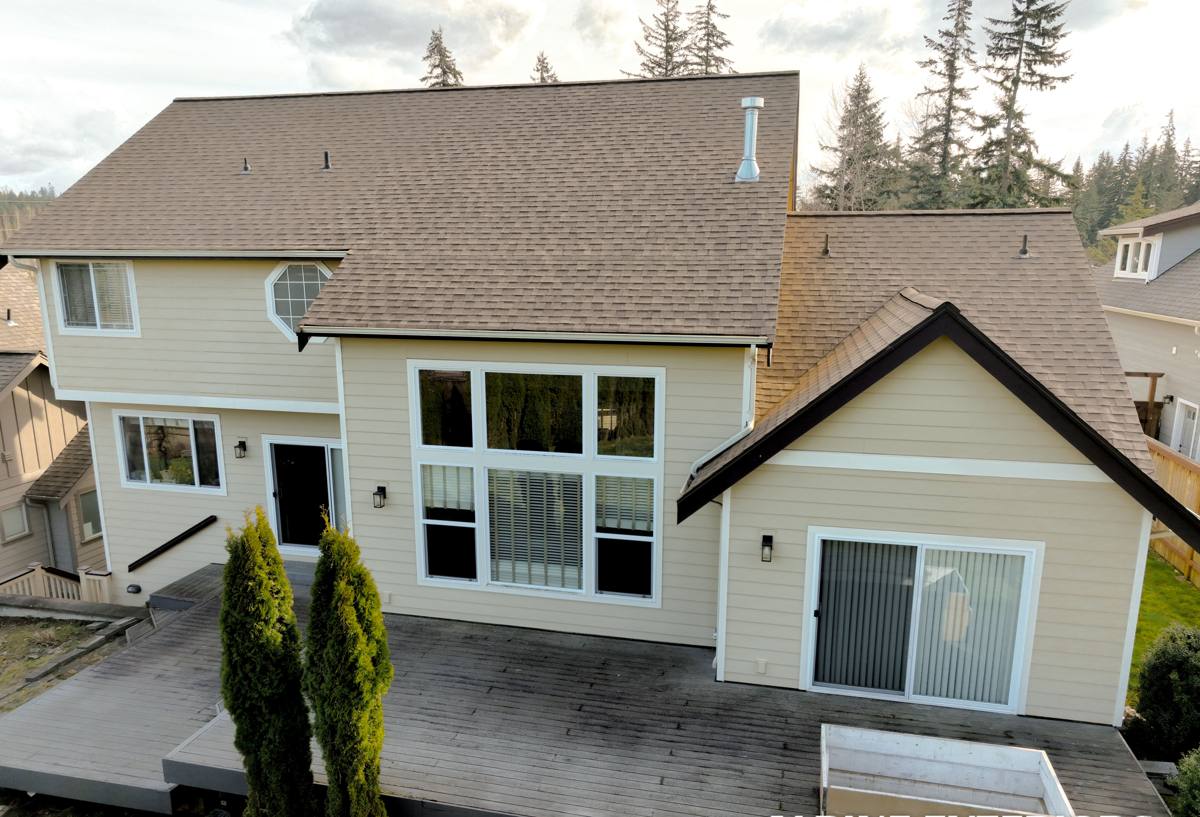
What a Correct Siding Installation Actually Involves
"Siding installation" sounds simple — remove the old material, put up the new material — but the parts that actually determine whether a wall stays dry for the next 30 years happen before a single piece of siding goes up.
The Weather-Resistive Barrier and Flashing Come First
Every wall needs a continuous drainage plane behind the siding: house wrap or building paper, lapped correctly from the bottom up, with flashing integrated at every window, door, and horizontal trim break. In a climate that gets driven rain, this layer is doing more of the real work than most people assume. If it's torn, stapled through carelessly, or missing at a transition, water gets behind the siding regardless of how good the siding itself is.
Fastening and Gaps to Manufacturer Spec
Fiber cement siding has to be fastened at the exact spacing and depth the manufacturer specifies, with the right gap at butt joints and around penetrations to allow for expansion and drainage. Fasteners driven too deep crack the board's edge and create an entry point for moisture; fasteners too shallow let the board work loose in wind. This is where a lot of installation quality is won or lost, and it's not visible once the job looks "done."
Factory Finish vs. Field-Applied Paint
A factory-applied finish is baked on under controlled conditions and backed by its own warranty. Field-painted siding depends entirely on weather conditions on the day it's painted and the skill of whoever's holding the sprayer. In a climate with this much moisture in the air, a factory finish that resists mildew and holds color without chalking is worth far more than it costs.
Why We Install Only James Hardie Fiber Cement
We standardized on James Hardie siding and don't install vinyl, LP SmartSide, or other fiber cement brands, and we're upfront about why. Hardie's HZ5 product line is engineered specifically for climates like ours — freeze-thaw cycles, sustained moisture, and wind-driven rain — rather than a general-purpose product sold everywhere. It's non-combustible, it doesn't rot or delaminate the way wood-based siding can when moisture gets trapped behind it, and the ColorPlus factory finish holds up against the mildew and moss growth that plague shaded, damp walls in this part of Whatcom County far longer than a standard painted finish. The warranty is also transferable, which matters to homeowners who plan to sell.
We're not saying every other product is unusable — we're saying that after years of doing this work in exactly this climate, this is the system we trust enough to put our name behind, and we won't install something we don't.
Signs Your Current Siding Is Already Failing
Before any installation conversation, it's worth knowing what to look for on your own walls. These are the signs we see most often on older Goshen-area homes when we do a first walk-around:
- Dark green or black staining that keeps coming back within weeks of being cleaned, especially on north-facing or shaded walls
- Soft or spongy spots when you press on the siding near the bottom courses or below windows
- Paint that's bubbling, peeling, or chalking heavily rather than fading evenly
- Visible gaps, warping, or buckling at panel seams and corners
- Musty smell or discoloration on interior walls that share an exterior wall with a moisture-prone area
- Caulk that's cracked, shrunk, or missing at trim and window edges
Any one of these on its own might be minor. Several together usually mean water has been getting behind the siding for a while, and that changes the scope of the job from a straightforward re-side to one that includes sheathing repair.
Our Process for a Goshen Siding Installation
The steps don't change much from house to house, but the details we pay closest attention to are shaped by what this climate does to a wall over time.
- Assessment and moisture check. Before quoting anything, we look at the existing siding, trim, and — where accessible — the condition of the sheathing underneath, particularly at grade level and below windows where driving rain and splash-back do the most damage.
- Tear-off and substrate inspection. Old siding comes off in sections so we can see the wall as we go, not all at once with the damage hidden until the end. Any soft or rotted sheathing gets flagged and repaired before anything new goes up — covering damaged sheathing with new siding just hides the problem for the next owner.
- Weather-resistive barrier and flashing. New house wrap and flashing get installed correctly at every penetration, window, and horizontal break, lapped to shed water the way this climate demands.
- Hardie installation to spec. Fastener spacing, gaps, and clearances follow James Hardie's published installation instructions exactly — not "close enough."
- Trim, caulking, and touch-up. Factory-finish touch-up paint is used at cut edges so the color match holds and the cut end is sealed against moisture.
- Final walkthrough. We go over the finished job with you before we consider it done, not after.
What Drives the Cost of a Siding Job in This Area
Every home is different, but the same handful of factors tend to move the price up or down on jobs in the Goshen and Sumas area. We give real numbers during an in-person estimate, but this is what to expect to discuss:
| Cost Factor | Why It Matters Here |
|---|---|
| Total square footage and wall complexity | More corners, dormers, and cutouts mean more cutting, waste, and labor time |
| Condition of the sheathing underneath | Rot or soft spots found during tear-off add repair scope that can't be known until the old siding is off |
| Siding profile chosen | Lap siding, panel siding, and shingle-style Hardie products differ in material and labor cost |
| Trim and accent work | Window trim, corner boards, and fascia detailing add time but also protect the seams most exposed to driving rain |
| Access and site conditions | Steep grades, mature landscaping, or tight setbacks common on rural Whatcom County lots can slow staging and scaffolding |
| Color and finish selection | Standard ColorPlus colors versus custom or premium finishes affect material pricing |
Why Hiring a Crew That Already Works in Goshen Matters
A siding crew that's only worked in drier inland climates tends to under-detail the parts of the job that matter most here — the flashing laps, the clearance at grade, the gap tolerances that account for a wall that stays damp longer than average. A crew that's already installed siding on homes in and around Sumas has seen what this specific combination of salt air, driving rain, and moss season does to a wall that was installed even slightly wrong, and builds in the extra care up front instead of learning it from a callback.
There's also a practical side: familiarity with Whatcom County permitting and inspection expectations, and knowing which details local building officials pay close attention to, keeps a project moving instead of stalling on paperwork.
Keeping New Siding Looking Right in This Climate
Correctly installed Hardie siding needs very little upkeep compared to wood or vinyl, but a few habits go a long way in an area with this much moisture and moss pressure:
- Rinse siding down once or twice a year, focusing on shaded north- and west-facing walls where moss and mildew take hold first
- Keep gutters clear so overflow doesn't run down the face of the siding during heavy rain
- Trim back shrubs and trees that keep a wall shaded and damp longer than the rest of the house
- Check and refresh caulking at trim joints every few years, since caulk wears out well before the siding does
- Touch up any scuffs or cut edges promptly with matching factory-finish paint to keep moisture from finding an opening
Getting Started
If your Goshen-area home has siding that's staining faster than it should, showing soft spots, or is simply old enough that you're wondering whether it's still doing its job, we're happy to come take a look. We'll give you a straight answer about what we see — no pressure, no inflated scope — and walk you through what a correctly installed James Hardie system would look like on your specific house. Use the form below to request a free estimate.