 Sumas Window
 Why Decks Wear Out Faster in Van Zandt
Van Zandt sits in the kind of Whatcom County weather pattern that's hard on any outdoor structure: long stretches of rain from fall through spring, a moss season that can run half the year in shaded yards, occasional salt-laden air moving in off the Strait, and freeze-thaw cycles that show up more often than most homeowners expect this close to the Canadian border. None of that is dramatic on its own. The problem is duration. A deck here doesn't fail because of one bad storm — it fails because it spends months at a time damp, shaded, and cool, which is exactly the environment wood rot, hardware corrosion, and moss growth need to take hold.
A deck built to a generic spec, or built fast during a dry summer without much thought to drainage and flashing, will usually look fine for a few years. Then the ledger board starts to hold moisture against the house, the joist hangers rust, the decking cups and splinters, and what looked like a solid structure turns out to be soft in half a dozen places at once. Replacing a deck the right way in this area means designing for the wet season, not the one dry month it gets built in.
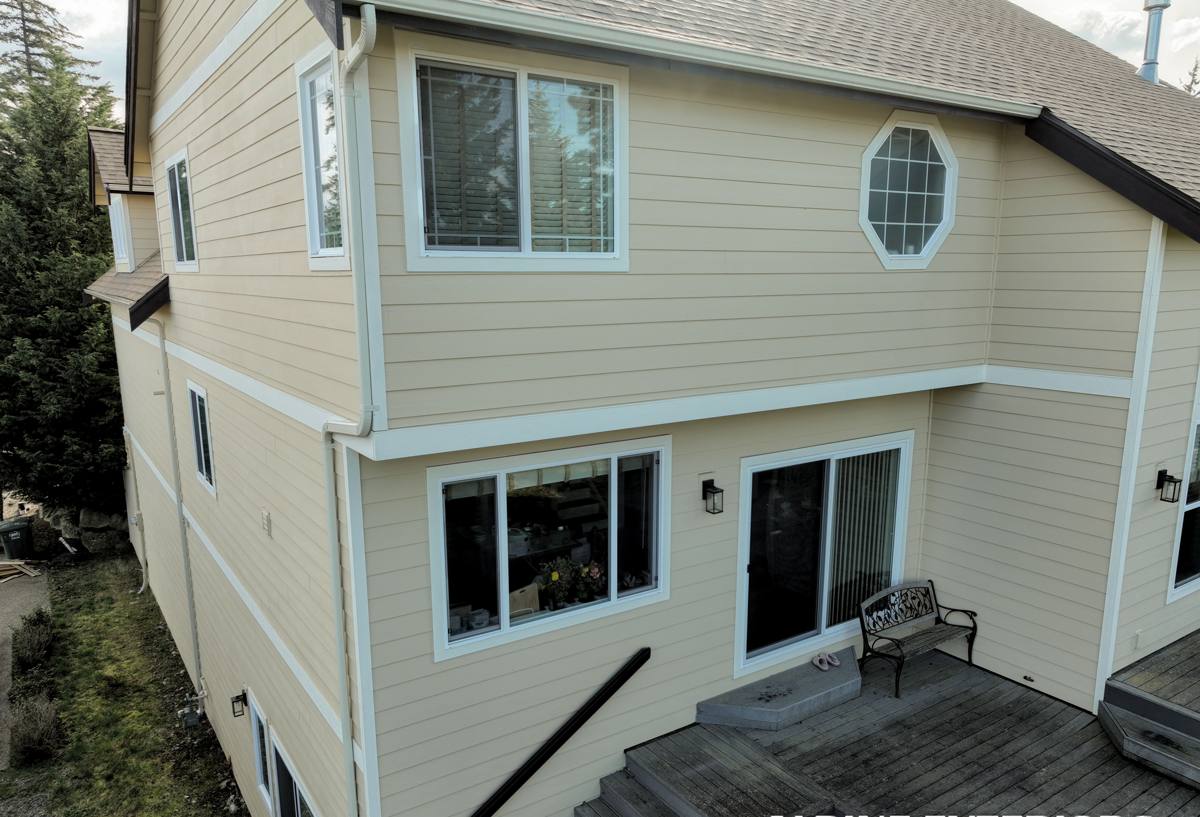
Signs Your Deck Needs Replacement, Not Just Repair
Not every tired-looking deck needs a full teardown. But there's a point where patching boards is throwing money at a structure that's already lost its integrity. Walk your deck and check for these:
- Soft, spongy, or spring-loaded boards anywhere on the surface
- Rot or dark staining where the deck meets the house (the ledger board)
- Rusted or corroded joist hangers, bolts, or nails visible underneath
- Posts that feel loose or have visible checking (deep splitting) at the base
- Railings that flex or wobble when you push on them
- Gaps between boards that have widened noticeably, or boards that have cupped
- Persistent moss or algae film that comes back within weeks of cleaning
- A deck older than 15–20 years that has never had the substructure inspected
If you're seeing two or more of these, especially anything at the ledger or in the framing, it's worth a real inspection before you spend money on cosmetic fixes.
What a Correct Deck Replacement Actually Involves
The Ledger Connection
The single most common failure point on decks in this climate is the ledger board — the piece that bolts the deck to the house. If it isn't flashed correctly, water works its way behind it and rots both the ledger and the house band board behind it, sometimes for years before it's visible. A correct replacement always includes proper flashing at this joint, not just caulk, which fails long before the deck does.
Footings and Frost
Footings need to be set below the frost line for this area, and on a lot like the ones common around Van Zandt — where drainage and soil composition can vary block to block — that sometimes means digging deeper or adding drainage gravel that a quick patch job would skip. Undersized or shallow footings are a common reason older decks develop a noticeable lean or bounce over time.
Framing and Hardware
Joists, beams, and hangers all need to be sized for the actual load and span, not just whatever was there before. In a wet climate, hardware matters as much as lumber grade — corrosion-resistant, code-rated connectors and fasteners rated for treated lumber contact are non-negotiable. Mixing incompatible metals is one of the fastest ways to get hidden corrosion that isn't visible until a board or hanger fails.
Choosing Decking Material for This Climate
There's no single "best" decking material — it depends on how much upkeep you want to do and how long you want to go between projects. Here's how the common options compare for a wet, mossy Whatcom County yard:
| Material | Upfront Cost | Maintenance | How It Handles This Climate |
|---|---|---|---|
| Pressure-treated lumber | Lowest | Annual cleaning, re-sealing every 1–2 years | Good if maintained; neglected boards trap moisture and rot faster than people expect |
| Cedar | Mid to high | Regular sealing, more sensitive to standing moisture | Naturally rot-resistant but still needs upkeep in constant shade and dampness |
| Composite / capped composite | Highest | Occasional washing, no sealing or staining | Won't rot or splinter; handles moss and moisture well, though it still needs cleaning to stay slip-resistant |
We'll walk through the honest trade-offs for your specific deck — sun exposure, how much upkeep you actually want to do, and budget — rather than pushing one product line as a default.
Railings, Stairs, and Code Requirements
Railings and guards aren't optional extras — they're structural safety items with specific code requirements around height, baluster spacing, and load capacity, and they're one of the first things a building inspector checks. A correct replacement brings the railing system up to current code even if the old deck predates it, along with proper stair stringer sizing and secure attachment at both the top and bottom of any stairway. We build these to hold up under real use, not just pass a quick visual glance.
Permits and Local Requirements
Most attached deck replacements in and around Sumas and unincorporated Whatcom County — including Van Zandt — require a building permit, particularly once the deck is elevated any real distance off grade or ties structurally into the house. Requirements and thresholds can shift, so we confirm current permitting rules before work starts rather than assume last year's numbers still apply. Skipping a required permit isn't a shortcut worth taking — it can complicate a home sale later and, more importantly, means the structural work never gets an independent inspection.
Our Process, Start to Finish
- On-site assessment — we inspect the existing deck, ledger, footings, and framing (not just the surface boards) to find out what's actually driving the failure
- Written estimate — clear scope, material options, and cost, with no pressure to decide on the spot
- Teardown and haul-away — old decking, railings, and any rotted framing removed and disposed of
- Structural rebuild — footings, framing, ledger flashing, and hardware brought up to a standard built for this climate, not just the minimum
- Decking, railing, and stairs installed — per your chosen material and layout
- Inspection and walkthrough — permit inspection where required, plus a walkthrough with you before we call it done
What Drives the Cost
Every deck is different, but these are the factors that typically move the price up or down on a replacement:
| Factor | Why It Matters |
|---|---|
| Deck size and shape | More square footage and complex layouts (multiple levels, angles) mean more material and labor |
| Framing condition | Rotted joists, beams, or a compromised ledger add repair work beyond a simple resurfacing |
| Decking material | Pressure-treated, cedar, and composite carry different material costs and installation time |
| Railing style | Basic code-compliant railing vs. custom or cable railing changes labor and material significantly |
| Height off grade | Taller decks need more substantial footings, framing, and stair runs |
| Permitting | Permit fees and required inspections are part of doing an attached deck correctly |
We'll break these out clearly in your estimate so you can see exactly where the money is going, and where there's room to adjust scope if budget is a factor.
Why Hire a Crew That Already Works Van Zandt
A deck built for a dry climate and a deck built for a Whatcom County wet season look different in the details — the flashing, the hardware, the drainage under the framing, the spacing that lets boards breathe instead of trapping moss and moisture. A crew that regularly works this specific area already knows what tends to fail first on local decks, what the current permitting process looks like for Sumas and the surrounding unincorporated county, and how the soil and drainage on lots around here typically behave. That local familiarity shows up in fewer surprises during the build and a deck that's actually built for the conditions it has to survive, not a generic spec sheet.
Being close by also matters after the job is done — if a question comes up down the road, you're not waiting on a crew that has to drive an hour each way to take a look.
If your deck is showing its age, or you just want an honest opinion on repair versus replacement, we're happy to take a look. Reach out for a free, no-pressure estimate using the form below.