 Sumas Window
 Siding Built for Goshen's Weather, Not Against It
Homes in the Goshen area, just outside Sumas, sit under some of the wettest, greenest conditions in Whatcom County. That's part of what makes this corner of Washington beautiful — and part of what makes siding fail early when it's the wrong product or the wrong install. Salt air, driving rain, and a moss season that can stretch most of the year don't just make a house look tired. They find every weak seam, every underlapped joint, and every material that wasn't built to handle sustained moisture, and they work on it slowly until something gives.
A siding replacement in Goshen isn't just a cosmetic upgrade. Done right, it's a full reset of your home's weather barrier — the layer that decides whether rain runs off or works its way in. We look at every siding job here through that lens first.
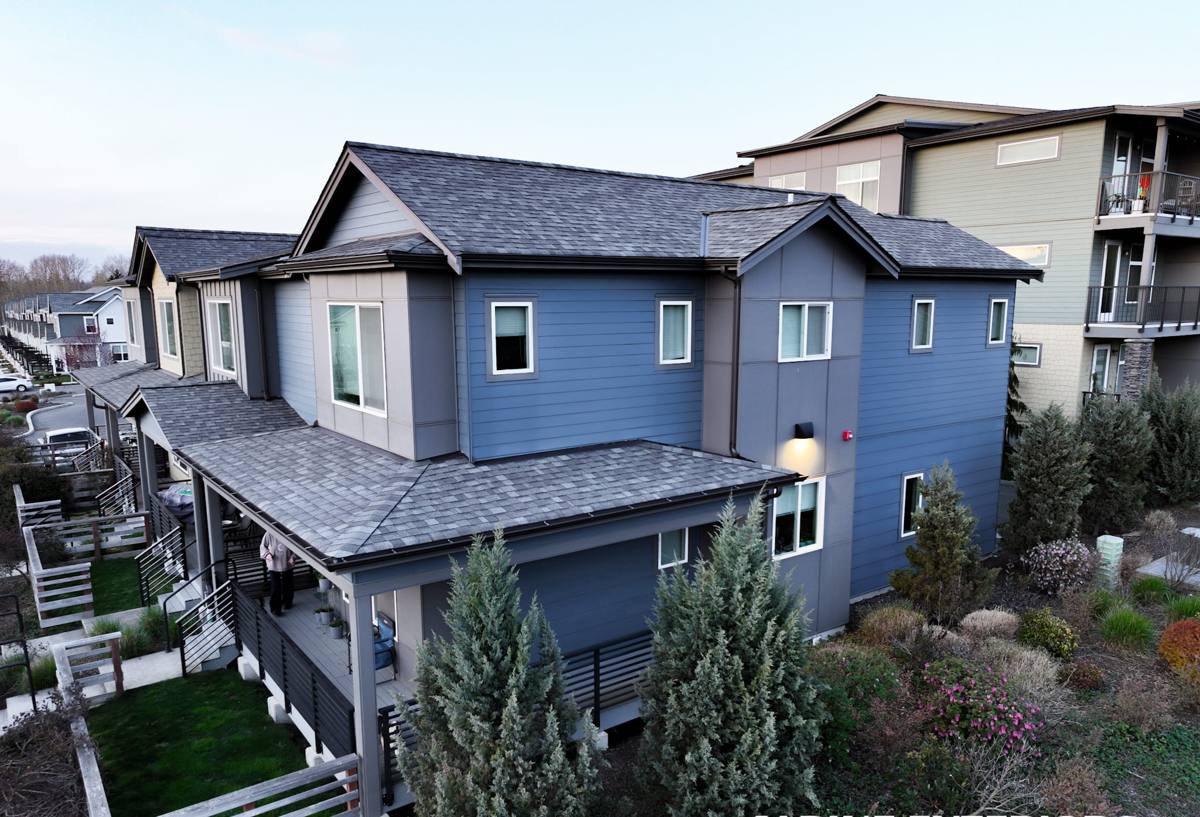
What Salt Air, Driving Rain, and Moss Season Do to Siding
Moisture Intrusion
Driving rain doesn't just wet the surface of your siding — wind-driven rain pushes water sideways into laps, seams, and fastener holes that were never designed to shed water at that angle. Over years, that moisture finds its way behind poorly lapped panels or through cracked caulk joints, and once it's behind the siding, it's working on your sheathing and framing, not just the finish.
Moss and Organic Growth
A long moss season means more than green streaks on your roof. Moss, algae, and lichen hold moisture directly against a siding surface for extended stretches, which accelerates rot in wood-based products and breaks down coatings that aren't formulated to resist it. North-facing and shaded walls — common on tree-lined Goshen lots — take the worst of it.
Salt Air and Coastal Exposure
Salt-laden air accelerates corrosion of exposed fasteners and metal flashing, and it degrades paint and finishes faster than drier inland climates. Siding and trim that aren't rated for that exposure tend to chalk, fade, and fail at the finish level years ahead of schedule, which opens the door to the moisture problems underneath.
Signs a Goshen Home Needs Siding Replacement
Most siding failures are gradual, so homeowners often live with early warning signs for a year or two before calling anyone. Here's what we tell Goshen homeowners to watch for:
- Panels that are cracked, buckled, or visibly warped, especially on rain-facing walls
- Soft or spongy spots when you press on the siding near the bottom edge or around windows
- Paint that's peeling, bubbling, or needs repainting more often than every 7-10 years
- Persistent moss, algae, or dark staining that comes back within months of cleaning
- Visible gaps opening up at seams, corners, or where siding meets trim
- A musty smell in an exterior-facing room, or interior drywall that stays slightly damp
- Rising heating bills without a clear cause, which can point to a compromised weather barrier
Any one of these can be a minor repair. Several together, especially on a home more than 20 years old, usually means the underlying material or the original install is reaching the end of its useful life.
What a Correct Siding Replacement Actually Involves
Tear-Off and Sheathing Inspection
We don't install new siding over old. A proper replacement starts with full tear-off so we can actually see the sheathing underneath — which is the only way to know if moisture has already gotten in. Any soft or rotted sheathing gets identified and replaced before anything new goes up. Skipping this step is the single most common reason a "new" siding job fails within a few years.
Weather-Resistive Barrier and Flashing
A correctly detailed weather-resistive barrier (WRB), with properly lapped and taped seams, is what actually keeps wind-driven rain out — the siding itself is the second line of defense, not the first. Flashing at windows, doors, and every horizontal trim break has to be installed to shed water down and out, not into the wall cavity. In a climate with this much driving rain, this layer matters as much as the siding you see.
Installation to Manufacturer Spec
Fastener placement, panel gaps, caulking at butt joints, and clearance from grade and roof lines all have specific requirements from the manufacturer. Installed off-spec, even a good material will trap moisture or fail early. We install to those specs on every job, not as an upsell but because it's the difference between siding that lasts and siding that doesn't.
Why We Install Only James Hardie Fiber Cement
We made a deliberate decision to install James Hardie fiber cement siding exclusively, and we turn down jobs that call for anything else. That's worth explaining rather than just stating.
Vinyl siding is affordable and low-maintenance in mild climates, but it expands and contracts significantly with temperature swings, and its seams and J-channels are exactly the kind of detail that wind-driven rain exploits over time. Wood products like cedar or primed spruce look excellent when new, but they require an ongoing maintenance commitment — recoating, caulking, and monitoring for rot — that most homeowners underestimate, and that's a real liability in a moss-heavy, high-moisture climate. Engineered wood siding like LP SmartSide has improved over the years, but it's still a wood-based substrate, which means it depends heavily on flawless installation and caulking to keep moisture out at every cut edge and seam.
James Hardie fiber cement doesn't have those failure points. It's non-combustible, it doesn't expand and contract the way vinyl does, and it's engineered specifically for climate zones like ours through Hardie's HZ10 product line, which is formulated for the Pacific Northwest's wet, moderate climate. Hardie's ColorPlus factory finish is baked on under controlled conditions and backed by a real finish warranty, which matters directly in a salt-air, high-moisture environment where field-applied paint tends to fail first. We're not saying other products don't work anywhere — we're saying that for the conditions Goshen and Whatcom County homes actually face, Hardie is the product we're willing to stand behind with our own installation.
Comparing Siding Materials for Whatcom County Homes
| Material | Moisture Behavior | Moss/Algae Resistance | Ongoing Maintenance |
|---|---|---|---|
| James Hardie fiber cement | Dimensionally stable; engineered for wet climates (HZ10) | Factory finish resists staining better than bare wood | Occasional wash; no recoating on the ColorPlus finish |
| Vinyl siding | Expands/contracts with temperature; seams vulnerable to driving rain | Can trap moisture behind panels if not ventilated | Low, but panels can crack or fade over time |
| Cedar / primed spruce | Absorbs moisture at cuts and end grain if not sealed | Prone to moss and mildew without regular treatment | Recoating and caulk maintenance every few years |
| LP SmartSide / engineered wood | Wood-based substrate; depends on sealed edges and joints | Better than raw wood, still needs finish upkeep | Periodic caulking and repainting |
Our Process, Start to Finish
- On-site assessment: We walk the exterior with you, note problem areas, and check for signs of moisture already behind the current siding.
- Written estimate: A clear scope covering tear-off, sheathing repair allowance, WRB and flashing detail, Hardie product line and color, and timeline.
- Tear-off and inspection: Old siding comes off, sheathing is inspected and repaired as needed before anything new is installed.
- Weather barrier and flashing: WRB, window and door flashing, and trim details are installed to spec before siding goes up.
- Hardie installation: Panels, fasteners, and joints installed to manufacturer specification for the HZ10 climate zone.
- Final walkthrough: We review the finished job with you, including caulking, trim, and any touch-up before we call it complete.
What Siding Replacement Costs Depend On
We don't publish flat per-square-foot pricing because it genuinely varies by home, but these are the factors that move the number most:
| Cost Factor | Why It Matters |
|---|---|
| Home size and wall complexity | More corners, gables, and dormers mean more cutting, flashing, and labor time |
| Tear-off scope | Multiple layers of old siding or rotted sheathing add demo and repair time |
| Trim and detail work | Window and door trim, fascia, and soffit work add material and labor |
| Site access | Steep lots, limited driveway access, or tight setbacks can affect staging and labor |
| Hardie product line and color | Plank profiles, panel systems, and ColorPlus color selections vary in cost |
Why Hire a Crew That Already Works Goshen
Siding installation looks similar on paper everywhere, but the details that actually matter — how much flashing overlap you need for driving rain, where moss builds up fastest on a shaded elevation, how much clearance to leave near grade given our wet ground for months at a stretch — come from doing the work repeatedly in this specific area. A crew that already knows Goshen and the broader Sumas area isn't guessing at how the weather here treats a house; they've seen it firsthand on homes like yours.
That local pattern recognition is also what keeps a job efficient. Knowing which details to get right the first time, on this climate, on this kind of housing stock, means fewer callbacks and a siding system that's actually set up to perform for decades, not just look good on installation day.
If your Goshen home is showing signs of siding wear, or you're planning ahead before it becomes a moisture problem, we're happy to take a look. Reach out for a free, no-pressure estimate using the form below.