 Sumas Window
 Everson Sits in a Tough Spot for Siding
Everson and Sumas share the same weather pattern: long stretches of driving rain off the Nooksack valley, marine-influenced air that never fully dries out between storms, and a moss season that can run from October well into spring. None of that is dramatic on its own, but it adds up fast on a home's exterior. Siding here doesn't fail because of one bad storm — it fails from years of sitting damp, freezing, thawing, and growing moss on the shaded sides of the house.
Whatcom County homes, whether they're older farmhouses on acreage or newer builds closer to town, all face the same basic exposure: north- and west-facing walls that rarely see direct sun, roof lines that dump water onto lower siding courses, and enough humidity most of the year to keep organic growth alive on any surface that can hold moisture. Siding replacement in this area isn't just a cosmetic upgrade — it's a chance to fix the moisture path that's been working against the house for years.
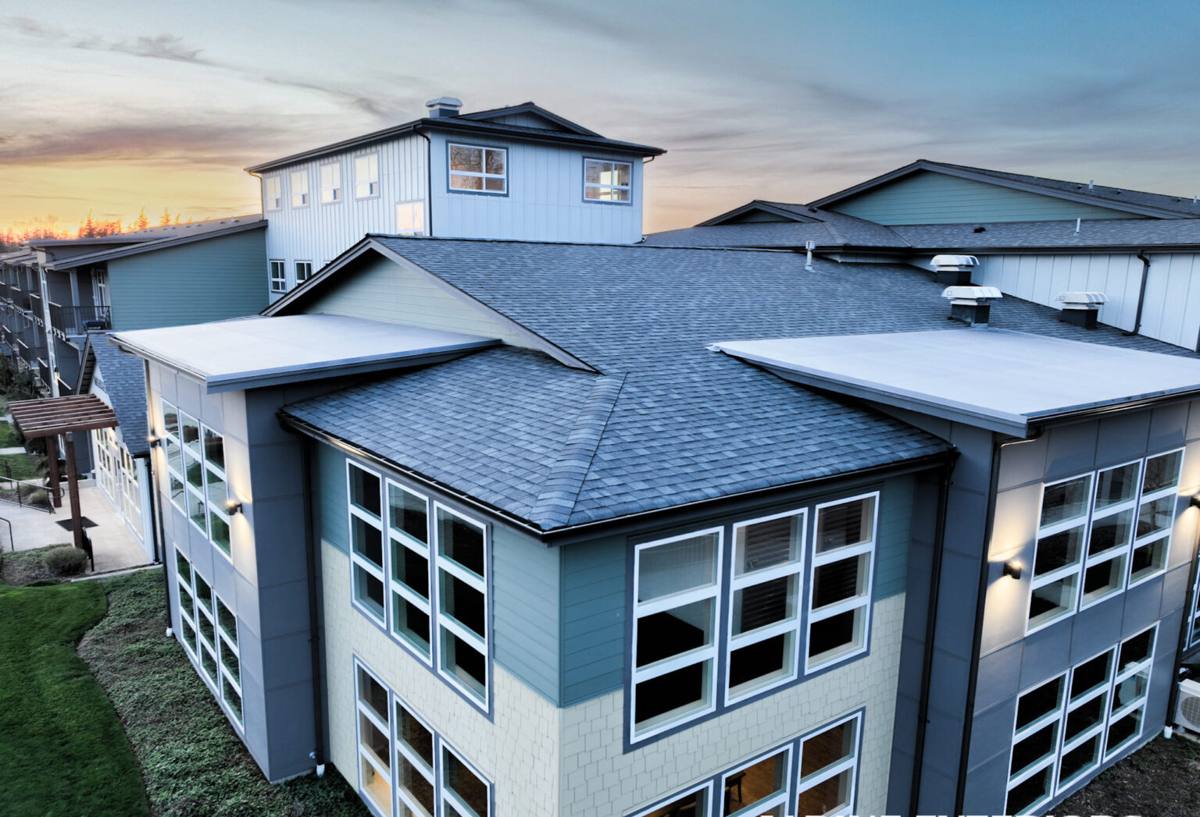
What Driving Rain and Moss Season Actually Do to Siding
A few specific failure patterns show up over and over on homes in this area:
- Bottom-course rot — the lowest few feet of siding sit closest to splashback and standing groundwater, and they're often the last place a homeowner checks.
- Moss and algae staining on shaded walls — north and west exposures stay damp longest, and moss holds moisture against the siding surface even after the rain stops.
- Freeze-thaw cracking — water that gets into seams, fastener holes, or damaged caulk lines expands when it freezes, widening the gap a little more each winter.
- Warping and delamination — engineered wood and some composite products absorb moisture at cut edges and swell, which telegraphs through paint as bubbling or a wavy panel line.
None of these are unique to any one brand of siding, but they explain why the material and the installation details matter so much more here than they would in a drier climate.
Signs Your Everson Home Needs Siding Replacement Now
Repainting or caulking can buy time, but at a certain point patching stops making sense. Look for:
- Soft or spongy spots when you press on the siding, especially near the bottom courses or under windows
- Persistent moss or dark streaking that comes right back within a season of cleaning
- Paint that's bubbling, peeling, or won't hold no matter how often it's redone
- Visible gaps, warping, or panels that have pulled away from the wall
- Rising energy bills that suggest the wall assembly behind the siding is no longer doing its job
- Siding that's original to a home built more than 20-25 years ago and has never been replaced
What a Correct Siding Replacement Job Involves
Prep and the Moisture Barrier
The siding itself gets the attention, but the work underneath it is what actually determines whether the job lasts. That means stripping old siding down to the sheathing, checking for rot or soft spots that need to be cut out and replaced, and installing a proper weather-resistant barrier with correctly lapped and taped seams. Flashing at windows, doors, and roof-to-wall transitions has to shed water outward, not funnel it behind the new siding. Skipping or rushing this step is the single biggest reason siding fails early in a climate like this one.
Installation Details That Matter
Once the wall is prepped, the details that separate a correct job from a fast one include:
- Maintaining proper clearance between siding and grade, decks, roofs, and other horizontal surfaces so water can't wick upward
- Fastening to manufacturer spec — correct fastener type, spacing, and depth — rather than whatever's fastest
- Factory-primed or factory-finished cut edges sealed in the field, since a raw cut edge is the fastest way moisture gets into any siding product
- Caulking only where the manufacturer calls for it, not as a substitute for proper flashing
Why We Install Only James Hardie Fiber Cement
We don't install vinyl, LP SmartSide, Cemplank, Allura, or primed wood siding, and that's a deliberate standard, not an oversight. Each of those products has legitimate strengths, but they each come with a trade-off — moisture sensitivity at cut edges, a maintenance schedule that's easy to fall behind on, or a warranty that doesn't hold up the way homeowners expect — that we're not willing to build a reputation on in a climate that punishes shortcuts.
James Hardie fiber cement is non-combustible, holds its factory-applied ColorPlus finish far longer than field-applied paint, and is built from a material that doesn't feed moss and algae growth the way wood-based products can. Hardie's climate-engineered product lines are formulated with the wet Pacific Northwest specifically in mind, and the transferable warranty backs that up. When we tell an Everson homeowner this is what we're putting on their house, it's because we've made the trade-off analysis ourselves and landed on the product that holds up best against exactly the conditions this area produces.
How the Common Siding Options Compare
| Material | Moss/moisture resistance | Maintenance | Typical lifespan |
|---|---|---|---|
| Vinyl | Doesn't rot, but seams and edges can trap moisture behind panels | Low, but cracks and fades over time; hard to color-match repairs | 15-25 years |
| LP SmartSide / engineered wood | Vulnerable at cut edges and joints if not sealed and maintained | Moderate to high; repainting and caulk inspection needed regularly | 15-30 years with upkeep |
| Cedar / primed spruce | Natural material; absorbs moisture and needs consistent sealing | High; refinishing on a repeating cycle | Variable, heavily maintenance-dependent |
| James Hardie fiber cement | Doesn't swell or rot; factory finish resists moss staining | Low; occasional wash, no repainting cycle for the finish | 30+ years with correct install |
Our Process for Everson Siding Replacement
- On-site assessment — we walk the whole exterior, check for hidden rot around windows, roof lines, and the lowest siding courses, and look at how water currently moves off the roof and across the walls.
- Scope and product selection — we walk through Hardie's lap, panel, and shingle options and colors so the finished look fits the home and the neighborhood.
- Tear-off and sheathing repair — old siding comes off, damaged sheathing gets replaced, not covered over.
- Weather barrier and flashing — a correctly lapped moisture barrier and properly integrated flashing go in before a single piece of new siding is hung.
- Installation to manufacturer spec — fastening, clearances, and sealed cut edges done the way Hardie's install guide requires, not shortcut.
- Final walkthrough — we go over the finished job with you before we consider it done.
What Drives the Cost of a Siding Replacement
Every home is different, but the main variables that move the price on an Everson job are usually:
- How much of the sheathing underneath is damaged and needs to be replaced before new siding can go on
- The size and complexity of the home — number of stories, gables, dormers, and trim details
- Whether it's lap siding, panel siding, or a mix, plus any shingle or accent areas
- Access — homes on larger rural lots or with obstructed sides can add setup time
- Whether trim, fascia, or soffit work is bundled into the same project
We'll walk your specific home and give you real numbers rather than a rough guess pulled from a national average — costs vary enough by house that a broad range isn't much use to you.
Why Hiring a Crew That Already Works in Everson and Sumas Matters
A siding crew that's worked on homes throughout Whatcom County already knows which walls in this area take the worst of the weather, how the moss season behaves on shaded exposures, and where past installs in this climate tend to fail first. That local pattern recognition shows up in small decisions — where to add extra flashing attention, which details not to shortcut — that a crew unfamiliar with this specific rain and moss cycle might not think twice about. It's the difference between a siding job that looks right on installation day and one that's still doing its job fifteen years later.
If your Everson or Sumas home is showing any of the wear signs above, we're happy to take a look and give you an honest read on whether it's time for full replacement or targeted repair. Reach out for a free, no-pressure estimate — there's no obligation, just a straight answer about what your home actually needs.