 Sumas Window
 Siding Installation Built for Lynden's Climate
Lynden sits close enough to the Salish Sea and the Nooksack lowlands that homes here deal with a specific combination of weather stress: salt-tinged marine air moving in off the water, long stretches of driving rain through fall and winter, and a moss season that can run eight or nine months out of the year. Any siding installed on a Lynden home has to hold up to all three at once, not just one of them. That's a different design problem than siding for a dry inland climate, and it's why we treat Lynden jobs as local work, not a generic install we'd do anywhere.
Moisture that gets behind siding and stays there is the root cause of almost every serious siding failure we see in Whatcom County. The siding material matters, but so does the water-management system underneath it — the house wrap, the flashing, the gaps and clearances that let a wall actually dry out between rain events. Get the material right and the install wrong, and you'll have problems in five years regardless of what's on the outside.
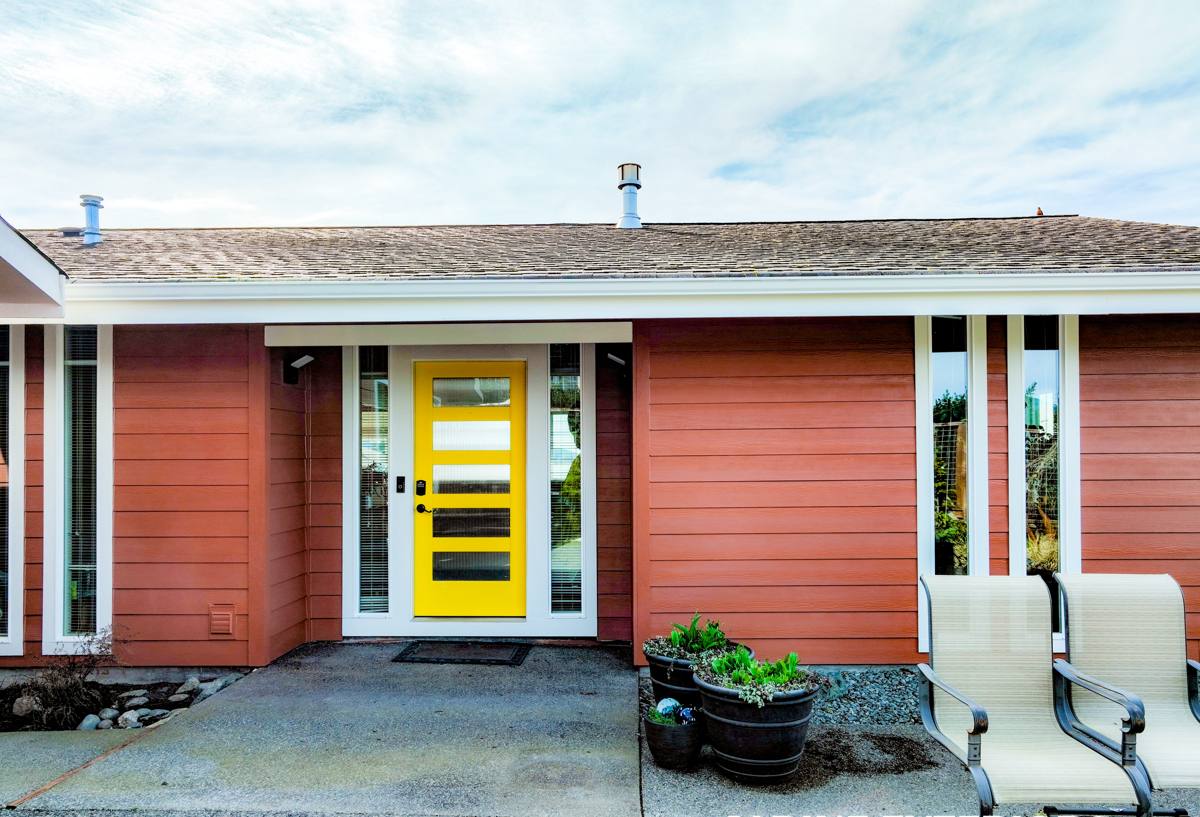
What Lynden Homes Are Up Against
Salt Air and Coastal Moisture
Whatcom County isn't oceanfront, but Lynden is close enough to Puget Sound and Georgia Strait that airborne salt and moisture reach inland with prevailing weather. Salt-laden air accelerates corrosion on fasteners, trim, and any siding product that isn't dimensionally stable when it gets wet. Over years, that shows up as swelling, soft spots, and paint failure on materials that weren't engineered for it.
Driving Rain
Wind-driven rain doesn't just wet a wall — it pushes water sideways and upward into laps, joints, and penetrations that a calm rain would never reach. Lynden gets long, wet, windy stretches through the fall and winter that put real pressure on siding overlaps, caulk joints, and window and door flashing. A siding job that isn't detailed for driving rain will eventually leak, even if it looks fine from the curb.
Moss and Sustained Dampness
North-facing walls, shaded elevations, and anything near mature trees or fences in Lynden can stay damp for days after a storm passes. That's exactly the environment moss and algae need to take hold. Moss holds moisture against the siding surface, which is bad news for any material that isn't rot- and moisture-resistant by nature, and it's a maintenance headache even on materials that are.
Why We Only Install James Hardie Fiber Cement
We install James Hardie fiber cement siding exclusively. We don't install vinyl, LP SmartSide, Cemplank, Allura, or unprimed wood siding like spruce or cedar, and that's a deliberate standard, not a limitation of what we're capable of. In a climate like Lynden's, the material choice has an outsized effect on how the whole system performs over 20, 30, or 40 years.
Fiber cement is non-combustible and dimensionally stable — it doesn't swell, warp, or rot the way wood-based products can when they take on repeated moisture. James Hardie's HZ5 product line is engineered specifically for the freeze-thaw and wet-climate conditions common to the Pacific Northwest, which matters in a place like Lynden where winter cold snaps follow weeks of saturated ground. The factory-applied ColorPlus finish is baked on under controlled conditions, which holds up better against UV and moisture cycling than field-applied paint, and it comes with its own finish warranty separate from the substrate warranty.
We've seen enough call-backs on other materials in this climate — swollen edges on wood-based composite siding, cracked and faded vinyl, caulk-dependent seams that failed after a few wet winters — that we stopped installing them. It's a professional standard we hold to, not a claim that every other product fails everywhere. In Lynden's specific mix of salt air, driving rain, and moss, fiber cement is the material that consistently performs the way homeowners expect it to.
What a Correct Siding Installation Actually Involves
The siding itself is maybe half the job. The other half is everything underneath it, and it's the part that determines whether the installation lasts.
- Removal of old siding down to the sheathing, with an inspection for rot, soft spots, or existing moisture damage before anything new goes up
- Repair or replacement of any damaged sheathing — covering over a compromised wall doesn't fix it, it just hides it
- A weather-resistive barrier (house wrap) installed correctly, lapped shingle-style so water sheds downward and out, not into the wall
- Proper flashing at every window, door, and penetration, integrated with the house wrap rather than just caulked over it
- Correct fastener placement and spacing per James Hardie's installation instructions — this is what the product warranty is actually contingent on
- Proper clearances at grade, roof lines, decks, and other siding-to-surface transitions, so water has somewhere to go and the wood behind the siding can dry
- Field-cutting and painting of any cut edges with the correct sealant, since a factory finish only protects a factory edge
James Hardie's written installation instructions are specific about laps, fastener spacing, and clearances, and for good reason: the manufacturer's warranty depends on the product being installed to those specs. A crew that treats the instructions as optional is putting the homeowner's warranty coverage at risk without necessarily telling them so.
Our Process for a Lynden Siding Project
1. On-Site Assessment
We walk the whole exterior, not just the elevation you called about. We're looking at existing moisture damage, trim condition, window and door flashing, moss buildup, and anything else that affects the scope of the job.
2. Straightforward Estimate
You get a written estimate that spells out material, prep work, and any repairs the walk-through turned up — no vague allowances that turn into surprise change orders once the old siding is off.
3. Tear-Off and Sheathing Check
Old siding comes off, and we inspect the sheathing before anything new goes on. If there's rot or water damage, we address it before it gets buried under a new wall system.
4. Weather Barrier and Flashing
This is the step that gets skipped or rushed on cut-rate jobs and the one we spend the most care on, because it's the part you can't see once the siding is up.
5. James Hardie Installation
Installed to manufacturer spec — correct fastener pattern, correct laps, correct clearances — so the product performs as engineered and the warranty stays intact.
6. Final Walk-Through
We go over the finished job with you before we consider it done, including care and maintenance basics specific to your home's exposure.
Comparing Siding Approaches for a Lynden Home
| Factor | Fiber Cement (James Hardie) | Vinyl | Wood-Based / LP-Type Composite |
|---|---|---|---|
| Moisture resistance | Dimensionally stable, doesn't rot | Resists rot but can warp/crack in temperature swings | Vulnerable to swelling and rot if moisture reaches the substrate |
| Moss/algae exposure | Doesn't feed organic growth; cleans up well | Surface growth possible, especially in seams | Sustained moisture plus organic material can accelerate decay |
| Salt air durability | Stable, factory finish holds up | Can chalk and become brittle over time | Finish and substrate both vulnerable to repeated wetting |
| Fire rating | Non-combustible | Combustible | Combustible |
| Finish longevity | Factory ColorPlus finish, separate warranty | Color molded in but can fade/chalk | Field-applied finish, depends on maintenance |
Cost Factors for a Lynden Siding Project
Every home is different, but the same variables tend to move the price on a Lynden siding job:
| Factor | How It Affects the Job |
|---|---|
| Sheathing condition | Rot or water damage found during tear-off adds repair scope before new siding can go on |
| Home size and elevation count | More square footage and more corners/penetrations mean more material and labor |
| Trim and detail work | Window trim, corner boards, and fascia detailing add time and material |
| Product line and profile | James Hardie offers multiple plank widths, textures, and panel styles at different price points |
| Access and site conditions | Steep grades, fencing, or tight setbacks affect staging and labor time |
We don't quote a per-square-foot number sight unseen — it's not honest until we've actually looked at the walls.
Why Hiring a Crew That Already Works in Lynden Matters
Whatcom County's building department, the specific exposure patterns in Lynden versus other parts of the county, and the practical realities of scheduling around fall and winter rain are all things a crew that regularly works this area already knows. That's not a marketing point — it affects real decisions on the job, like sequencing tear-off around a weather window so bare sheathing isn't sitting exposed to rain, or knowing which elevations on a Lynden lot are most likely to hold moisture and need extra attention at the flashing details.
A crew that only occasionally works in this part of Washington is learning those things on your house. A crew that works Lynden regularly already has.
Signs Your Current Siding May Be Failing
- Soft spots, bubbling, or visible swelling anywhere on the siding surface
- Persistent moss or algae staining that returns quickly after cleaning
- Paint that's peeling or bubbling rather than just fading
- Visible gaps or separation at seams, corners, or trim joints
- Musty smells or damp patches on interior walls that back up to exterior siding
- Warping or cupping, especially on south- or west-facing walls with more sun and rain exposure
Any one of these is worth a closer look before it turns into a sheathing problem underneath.
If your Lynden home's siding is showing its age, or you're planning ahead for a replacement, we'd be glad to take a look. We offer free, no-pressure estimates — we'll assess your home's specific exposure, walk you through what a correct James Hardie installation involves, and give you a straightforward number with no obligation.