 Sumas Window
 Building Decks That Actually Hold Up in Lynden
Lynden sits in the same wet, mild-winter weather system that runs through Sumas and the rest of Whatcom County — mild temperatures most of the year, but long stretches of driving rain, heavy dew, and a moss season that can run from October clear through April. A deck built to a generic spec sheet from a drier climate will look fine the first summer and start showing problems by the second or third winter: soft spots at the ledger board, black streaking on the boards, moss creeping into the joints, and fasteners bleeding rust into the wood. A deck built for this specific climate is a different job from the start — different framing details, different fastener choices, different board spacing, and a different maintenance conversation with the homeowner.
This page covers what a correct custom deck build looks like specifically for Lynden properties, not a generic national write-up. If you're comparing bids, the details below are the ones worth asking every contractor about.
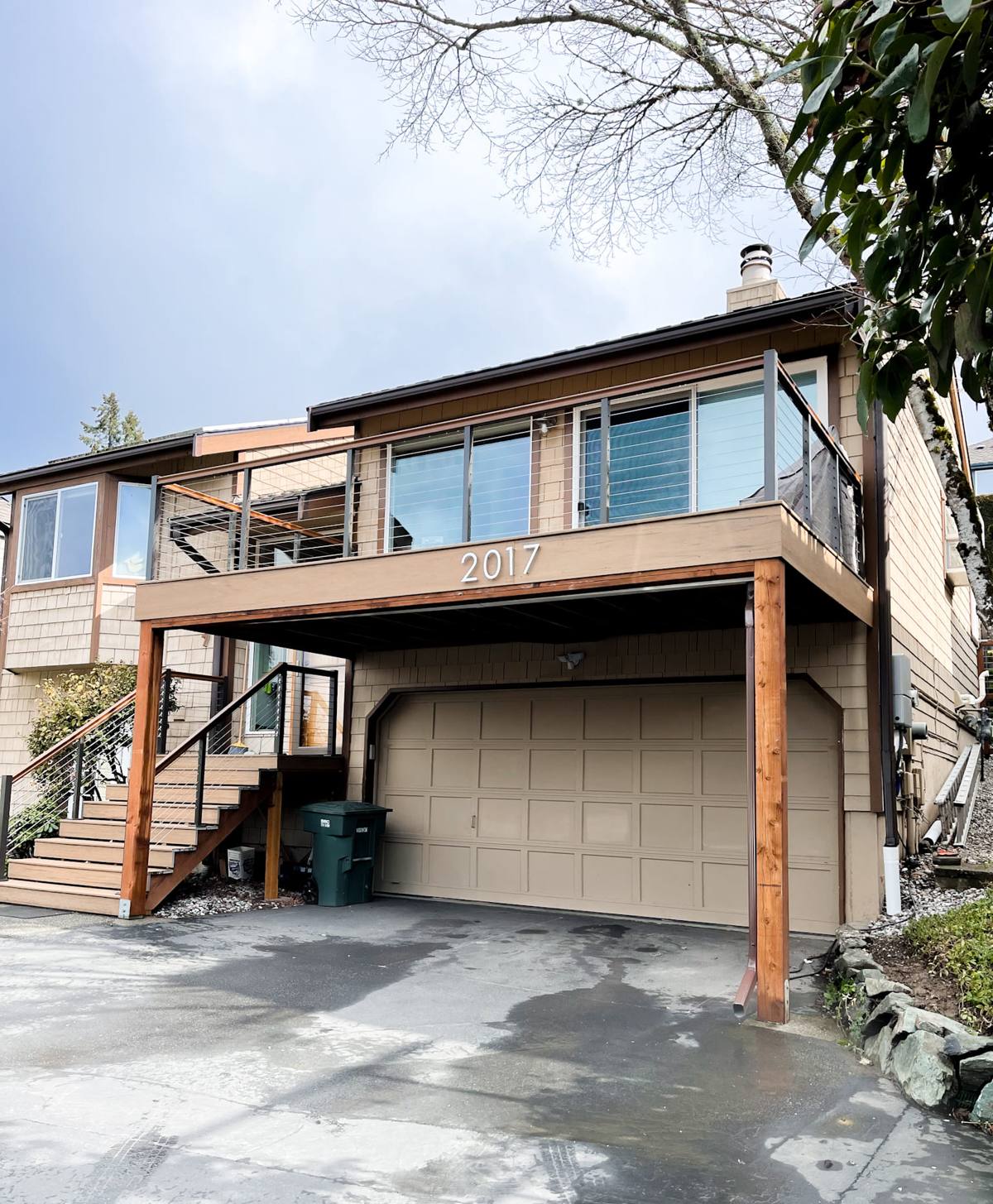
What Whatcom County Weather Does to a Deck Over Time
Three things drive almost every deck failure we see in this area, and they're all weather-related rather than a defect in any one product:
Sustained moisture, not just rain volume
It's less about how hard it rains and more about how long everything stays wet. Overcast, damp days in a row mean deck boards, framing, and hardware rarely get a full dry-out cycle. Any spot where water can pool, wick, or sit against wood — a poorly flashed ledger, a board laid tight with no drainage gap, a post base sitting in standing water — becomes the first place to fail.
Moss and algae growth
Low winter sun angles, shade from mature trees, and consistent moisture make moss and green algae almost inevitable on any north-facing or shaded deck surface in this region. Moss itself doesn't destroy decking, but it holds moisture against the board surface and turns walking surfaces slick and dangerous in the wet months. Board choice and spacing affect how much moss you'll fight long-term.
Freeze-thaw cycling
Whatcom County doesn't get deep, sustained freezes most winters, but it does get repeated freeze-thaw swings — cold snaps followed by rain and thaw. Any water that's gotten into a crack, a fastener hole, or an unsealed cut end expands when it freezes and works that damage wider each cycle. This is why end-cuts and fastener penetrations matter more here than in a drier or more stably-cold climate.
What a Correctly Built Deck Includes for This Climate
A deck that's going to hold up in Lynden's climate isn't about buying the most expensive material — it's about getting the details right that keep water from sitting where it shouldn't. The items below are non-negotiable in our process, regardless of which decking material a homeowner chooses.
- Proper ledger board flashing where the deck attaches to the house, so water is directed away from the band joist and siding rather than trapped behind it
- Post bases set above grade with a drainage path, never sitting directly in soil or a low spot that holds water
- Stainless or coated fasteners rated for exterior/ground-contact use, matched to the decking material to avoid galvanic staining
- Consistent board spacing that allows airflow and drainage underneath, rather than tight-fit boards that trap moisture
- Sealed or capped end-cuts on any wood decking, since a raw cut end is the fastest path for water to enter the board
- Joist tape or flashing on top of framing members to keep standing water off structural lumber
- Ledger and stair connections built to current code for this jurisdiction, not just "how it's always been done"
Choosing a Decking Material for Lynden's Climate
There's no single "best" decking material — it's a trade-off between upfront cost, long-term maintenance, and how much moss and moisture exposure a given deck will see. A shaded, north-facing deck under trees has different needs than an open, sun-exposed deck. Here's how the common options compare specifically against this region's conditions.
| Material | Moisture & Moss Behavior | Maintenance | Typical Lifespan Here |
|---|---|---|---|
| Pressure-treated lumber | Absorbs moisture readily; needs a real drying period and end-cut sealing to resist rot | Annual cleaning and re-sealing/staining recommended | 10-15 years with upkeep |
| Cedar | Naturally rot-resistant but still needs sealing against constant damp; shows moss on shaded boards without cleaning | Periodic sealing; regular moss/algae cleaning in shaded areas | 15-20 years with upkeep |
| Composite decking | Doesn't absorb water into the board core, but surface can still host moss/algae film if not cleaned | Occasional wash; no staining or sealing required | 25-30+ years, manufacturer-dependent |
| PVC decking | Fully moisture-resistant board material; least prone to internal rot | Lowest maintenance; occasional wash | 25-30+ years, manufacturer-dependent |
Composite and PVC cost more upfront than pressure-treated lumber, generally in the range of roughly double per square foot installed, but for a shaded or heavily rain-exposed deck the reduced maintenance burden often makes up for that difference over a decade or more. For a sunny, well-drained deck location, quality cedar or properly maintained pressure-treated lumber can still be the right call — it comes down to the site conditions and how much upkeep the homeowner wants to commit to.
Framing and Foundation Choices That Matter Locally
What's underneath a deck matters as much as the surface boards, especially in ground conditions typical of this part of Whatcom County, which can hold moisture longer than sandier or better-drained soils elsewhere in the state.
Footings
Footings need to be set to the correct frost depth and bearing requirements for this jurisdiction and inspected before backfill. Skipping or shortcutting footing depth is one of the most common causes of a deck settling or heaving unevenly after a few freeze-thaw seasons.
Framing lumber and hardware
We frame with lumber rated for the exposure and use corrosion-resistant structural connectors throughout — joist hangers, post bases, and structural screws all need to be compatible with the treated lumber and decking fasteners used, since mismatched metals can accelerate corrosion in a consistently damp environment.
Drainage under the deck
For decks close to grade or over living space, we grade and drain the area underneath so water isn't collecting and sitting against the framing. This is a detail that's easy to skip and hard to fix later without tearing into finished work.
Our Process for a Lynden Deck Build
- On-site assessment. We look at sun exposure, tree cover, drainage, grade, and how the deck will attach to the house before recommending a material or layout.
- Design and material selection. We walk through the trade-offs above with the homeowner — budget, maintenance tolerance, and how the deck will actually be used — rather than pushing a single product.
- Permitting. Deck permitting requirements vary by scope and jurisdiction; we handle the permit process so the footings, ledger attachment, and railings are inspected and up to code.
- Framing and structural work. Footings, posts, beams, and joists are set with the flashing, fastener, and drainage details covered above — this is the part of the job that determines how long the deck lasts, even though it's the least visible once finished.
- Decking, railing, and stairs. Boards are installed with proper spacing and fastening for the chosen material, followed by railing and stair construction to code.
- Final walkthrough. We go over basic care for the specific material installed — cleaning schedule, what to watch for, and when re-sealing (if applicable) makes sense.
Why a Crew That Already Works in This Area Matters
A deck contractor who mostly works drier or more southern climates will often under-detail the flashing and drainage work described above, simply because it's never bitten them before. A crew that regularly builds and repairs decks around Sumas and Lynden has already seen where decks fail in this specific weather pattern — which ledger connections leak first, which shaded corners grow moss fastest, which fastener types stain and corrode under constant damp. That local pattern recognition shows up in the framing details more than in anything visible on the finished deck.
It also matters for permitting and inspection — knowing the local jurisdiction's requirements and inspector expectations for footings, railings, and ledger attachment avoids delays that an out-of-area crew can run into.
Maintaining a Deck Once It's Built
Whatever material is chosen, a little seasonal upkeep goes a long way in this climate. Use this as a general checklist regardless of who built the deck:
- Sweep leaves and debris off the deck regularly in fall — trapped wet leaves are one of the fastest ways to grow moss and stain boards
- Wash the deck surface at least once or twice a year with a deck-safe cleaner to remove algae and moss film before it takes hold
- Check and clear any drainage gaps or gutters that direct water away from the deck structure
- Inspect fasteners and railing connections annually for rust staining or loosening
- For wood decking, re-seal or re-stain on the schedule recommended for that specific product — don't wait until it's visibly gray and weathered
- Keep an eye on the ledger board area where the deck meets the house — this is the single most common spot for hidden moisture damage
Getting Started
If you're planning a new deck or replacing an aging one in Lynden, we're happy to come take a look, walk the site with you, and talk through what will actually hold up given your yard's sun, shade, and drainage. There's no pressure and no obligation — just a straight assessment and a written estimate you can use to compare against any other bid. Reach out through the form below to get a free estimate scheduled.