 Sumas Window
 Why Lynden Siding Wears Out Faster Than Homeowners Expect
Lynden sits in a stretch of Whatcom County that takes weather seriously. Moist air moves in off the Salish Sea and pushes up the valley, driving rain sideways against west- and south-facing walls for months at a time. That same damp air, combined with shade from mature trees and the long gray stretch between fall and spring, gives moss and algae plenty of time to take hold on siding that never fully dries out. None of this is dramatic on its own, but stacked up year after year, it's exactly the combination that shortens the life of ordinary siding.
A lot of the siding on older Lynden homes was never built for this. Wood lap siding rots from the bottom edge up. Vinyl warps, fades, and lets water track behind it at the seams. Even siding that looks fine from the curb can be holding moisture against the sheathing where you can't see it. By the time paint is peeling or boards are visibly cupping, the damage underneath is usually further along than the surface suggests.
Moss and Algae Are a Moisture Problem, Not Just a Cosmetic One
Green or black staining on siding isn't just an eyesore — it's a sign that a surface is staying wet long enough for organic growth to establish itself. On siding with any wood content, that sustained moisture accelerates rot from the inside. On fiber cement with a poor factory finish, it can dull the color and shorten the life of the paint. In Whatcom County's climate, moss and algae resistance isn't optional — it's a baseline requirement for any siding you're going to live with for the next 30-plus years.
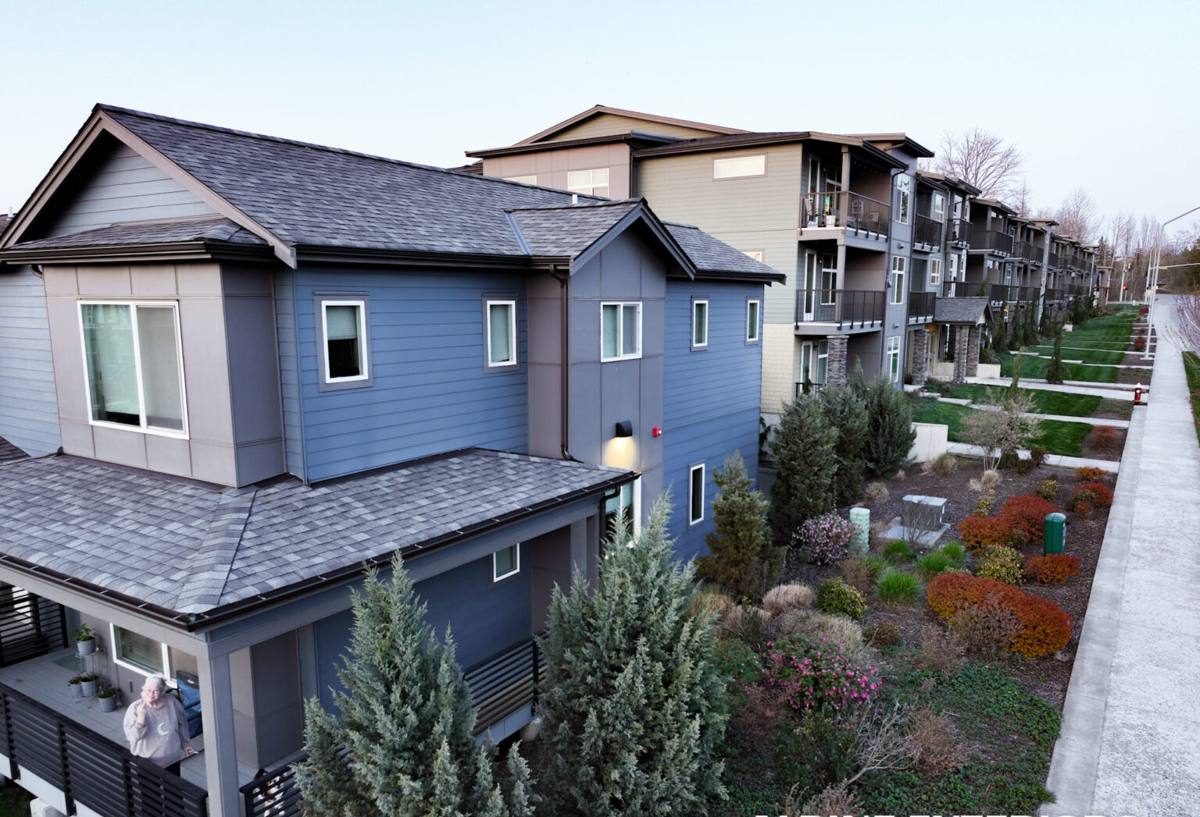
What Correct Siding Replacement Actually Involves
Siding replacement isn't just pulling off old boards and nailing up new ones. The siding itself is the last layer installed and, in a lot of ways, the least important part of keeping water out of the wall. What's underneath it does most of the real work.
Tear-Off and What's Underneath
Once the old siding comes off, we inspect the sheathing for soft spots, rot, or old water staining — problems that are invisible until the wall is opened up. Any damaged sheathing gets replaced before anything new goes on; installing new siding over compromised sheathing just hides a problem instead of fixing it. This is also the point where we correct anything the original installation got wrong, which on older Lynden homes is common.
Weather-Resistive Barrier and Flashing
A proper water-resistive barrier goes over the sheathing, lapped correctly from the bottom up so water sheds outward instead of working its way in. Flashing gets installed at every window, door, and horizontal trim transition — the spots where the vast majority of siding failures actually start. Rain doesn't need much of a gap to find its way behind siding; it needs a flashing detail that was skipped or done wrong.
Fastening and Clearances
Fastener spacing, penetration depth, and butt-joint treatment all affect how the siding performs over decades, not just how it looks on install day. We also keep proper clearance between siding and grade, decks, and roof lines — a detail that's often ignored on older homes and one of the most common causes of bottom-edge rot we see when we tear off old siding.
Why We Install Only James Hardie Fiber Cement
We don't install vinyl, LP SmartSide, primed wood, cedar, or off-brand fiber cement products like Cemplank or Allura. That's a deliberate standard, not a sales pitch, and it's worth explaining honestly.
Vinyl is inexpensive and low-maintenance in a mild climate, but it softens and can visibly warp under sustained heat and cold-cycles, and it relies on lap joints and seams that are more forgiving of installation shortcuts than they should be. Wood — cedar or primed spruce — can look excellent, but it demands a repainting and caulking schedule that most homeowners underestimate, and in a climate this wet, the maintenance window shrinks fast. Engineered wood products like LP SmartSide use a treated wood-strand core that resists moisture better than raw wood, but it's still a wood-based product at its core, with edge-swelling risk if a cut edge or seam isn't sealed and maintained.
James Hardie fiber cement solves the problem those products all share: it's non-combustible, dimensionally stable, and doesn't rot, swell, or feed pests because there's no wood fiber in it to feed on. The factory-applied ColorPlus finish is baked on under controlled conditions, which holds up to UV and moisture better than field-applied paint and comes with its own finish warranty. For a climate that includes driving rain, salt-tinged marine air, and months of moss-friendly damp, it's the product that holds its line, its color, and its warranty the longest with the least upkeep.
The Right Hardie Product Line for a Lynden Home
James Hardie engineers its siding by climate zone, and Whatcom County falls in the HZ5 zone — built to handle sustained moisture and freeze-thaw cycling rather than desert heat or hurricane humidity. That distinction matters more than most homeowners realize when they're comparing quotes.
| Hardie Product | Best Use | Why It Fits Lynden |
|---|---|---|
| HardiePlank Lap Siding | Most common wall application | Traditional lap look, engineered for HZ5 moisture and freeze-thaw exposure |
| HardiePanel Vertical Siding | Gables, accents, modern facades | Clean lines with the same moisture and impact resistance as lap siding |
| HardieShingle | Accent areas, gables, dormers | Cedar-shake look without the maintenance cedar shingles require in wet climates |
| HardieTrim | Corners, window and door trim | Matches siding expansion behavior so trim doesn't gap or crack over time |
Our Siding Replacement Process, Start to Finish
- Walkthrough and estimate: We inspect existing siding, trim, and visible problem areas, and talk through what's driving the replacement.
- Tear-off and sheathing inspection: Old siding comes off and we assess the wall underneath before anything new goes up.
- Repairs as needed: Any rotted or compromised sheathing is replaced, not covered over.
- Weather barrier and flashing: Water-resistive barrier and flashing are installed at every penetration and horizontal joint.
- Hardie installation: Siding, trim, and accent pieces are installed to manufacturer spec, including fastening and clearance requirements.
- Final walkthrough: We go over the finished job with you before we consider it done.
What Siding Replacement Costs in Lynden — and Why
Every home is different, and we'll always give you an exact number after seeing your house, but the factors below are what actually move the price up or down.
| Factor | Impact on Cost |
|---|---|
| Extent of sheathing repair needed | Hidden rot found during tear-off is the most common reason estimates adjust |
| Home size and wall complexity | More corners, dormers, and trim details mean more labor and cutting |
| Siding profile and accent choices | Mixing lap siding with shingle accents or vertical panels adds detail work |
| Story height and access | Two-story walls and steep grades require more setup and staging time |
| Trim and color selection | Custom color-matching and trim upgrades affect material cost |
Signs Your Lynden Home Needs Siding Replacement, Not Just Patching
- Boards that are soft, cupping, or crumbling at the bottom edge
- Persistent moss or algae staining that returns soon after cleaning
- Paint that's peeling or blistering rather than just fading
- Visible gaps at seams, corners, or trim where daylight or drafts get through
- Soft or spongy sheathing felt when pressing on the wall near the base
- Siding that's original to a home more than 25–30 years old
- Rising energy bills without a clear cause elsewhere in the home
Why Hiring a Crew That Already Works Lynden Matters
Siding installation is detail work, and the details that matter most in Whatcom County aren't the same ones that matter in a drier climate. A crew that installs siding here regularly already knows to over-build flashing details rather than follow the bare minimum, understands how much moss and algae resistance actually matters in product selection, and has seen firsthand what happens to homes where those details got skipped. That local experience shows up in fewer callbacks and siding that's still doing its job two and three decades from now.
It also matters for something more practical: scheduling around the region's weather windows. Fiber cement installation goes best with reasonably dry conditions, and a crew that works this area consistently knows how to plan a job so it isn't fighting the weather the whole way through.
If your Lynden home's siding is showing its age — or you just want an honest opinion on whether it's worth repairing versus replacing — we're happy to take a look. Request a free, no-pressure estimate using the form below and we'll walk the exterior with you and tell you straight what we'd recommend.