 Sumas Window
 Deck Building in Laurel: What Local Homes Actually Need
Laurel sits close enough to the water and low enough in elevation that decks here take a different kind of beating than decks built forty miles inland. Homeowners in this part of Whatcom County deal with salt-laden air off the Strait, long stretches of driving rain through fall and winter, and a shade-and-moisture combination that keeps moss and algae active most of the year. A deck built without those three things in mind will look fine for a season or two and then start showing problems — soft spots, black staining, loose fasteners, slick walking surfaces — well before it should.
We build decks in Laurel and the surrounding Sumas area on purpose, not as an afterthought to siding or window jobs. That means we already know which framing details hold up here, which fastener types actually resist corrosion in this air, and which decking materials are worth the extra cost versus which ones just add maintenance. This page covers what a correctly built deck involves in this specific climate, how our process works, and what to weigh before you hire anyone to build one.
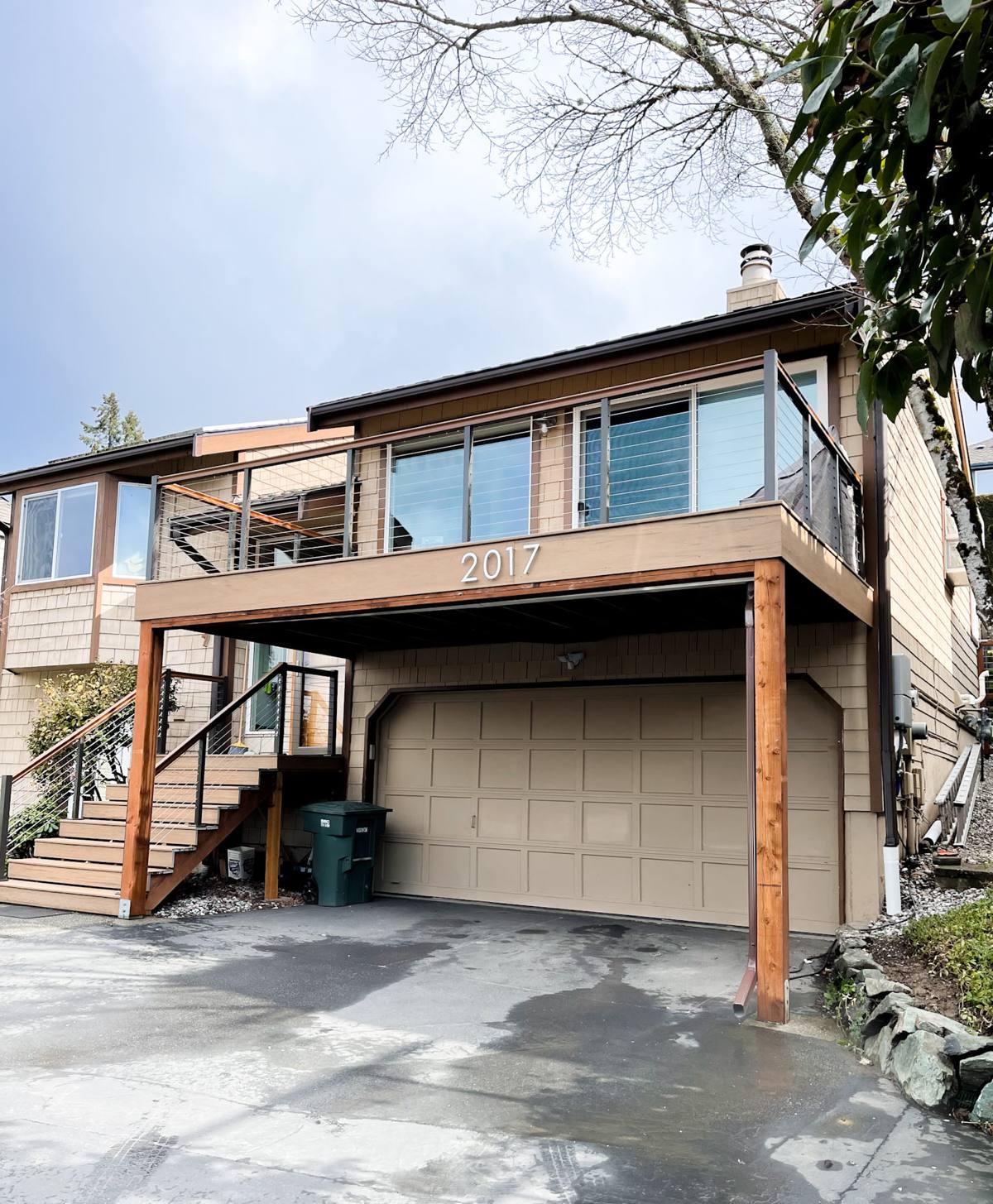
What Salt Air, Rain, and Moss Do to a Deck Over Time
Salt Air and Coastal Exposure
Even well inland of the open coast, moisture carrying salt content accelerates corrosion on anything metal — screws, joist hangers, bolts, railing brackets. Standard zinc-coated fasteners can start rusting within a few years in this environment. Once a fastener corrodes, it loses holding strength long before the rust is visible on the surface, which is how a railing post that looked solid last year suddenly wiggles this spring.
Driving Rain
Whatcom County rain doesn't just fall straight down — wind-driven rain gets pushed sideways into ledger boards, under railing caps, and into any gap where end grain is exposed. Wood absorbs water fastest through end grain and through any spot where a protective coating has worn through. Repeated wetting and drying cycles are what actually break decking down, more than any single storm.
Moss and Shade
Mature trees and cloud cover mean a lot of Laurel properties have shaded or partially shaded outdoor spaces. Shade keeps deck boards damp longer after rain, and damp wood is exactly what moss and algae need to establish. Once moss takes hold in the grain of a board or in the gaps between boards, it holds moisture against the wood constantly, which speeds up rot and also makes the surface genuinely slippery underfoot.
Choosing the Right Decking Material for This Climate
There's no single "best" decking material — there's a best material for a given budget, look, and tolerance for maintenance. Here's how the common options actually perform in a wet, shaded, salt-air environment like Laurel's:
| Material | Moisture Behavior Here | Maintenance Needed | Typical Lifespan |
|---|---|---|---|
| Pressure-treated pine | Absorbs water readily if coating isn't maintained; prone to checking and warping | Re-stain or seal every 1-2 years | 10-15 years with upkeep |
| Cedar | Naturally rot-resistant, but still needs sealing to resist moss and graying | Clean and re-oil/seal annually | 15-20 years with upkeep |
| Composite (capped) | Doesn't absorb water into the core; resists moss better than wood but surfaces can still get slick | Periodic wash-down, no staining or sealing | 25-30 years |
| PVC decking | Fully impervious to moisture absorption | Occasional wash-down | 25-30+ years |
Composite and PVC cost more up front but remove the recurring sealing work that wood demands in a climate this wet. Cedar is a reasonable middle ground if you want a natural look and are willing to keep up with annual maintenance. We'll walk through the honest tradeoffs for your specific yard, sun exposure, and budget rather than pushing one product.
What a Correctly Built Deck Involves
Footings and Framing
Everything above ground depends on what's below it. Footings need to be sized and set to local frost depth and soil conditions, and framing lumber should be rated for ground contact where it's close to grade. Undersized or shallow footings are one of the most common causes of a deck that develops a soft bounce or noticeable sag within a few years.
Ledger Board Attachment and Flashing
The ledger board — where the deck attaches to the house — is the single most common failure point on decks in wet climates. It has to be bolted (not just nailed) into solid framing, and it needs proper flashing that directs water away from the house wall rather than letting it wick behind the siding. A poorly flashed ledger is a slow, hidden path for water into the house structure itself, which is a much bigger repair than the deck.
Fasteners and Hardware
In a salt-air environment, we spec stainless steel or high-grade coated fasteners and structural hardware rated for coastal exposure, not the cheapest galvanized option. It costs more per box but it's the difference between hardware that's still tight in fifteen years and hardware that's rusting through in five.
Decking Attachment and Spacing
Board spacing has to account for the material's expansion and contraction and allow water to actually drain through rather than pool on the surface. Hidden fastener systems give a cleaner look and eliminate exposed screw heads (a common rust point), but they need to be installed to the manufacturer's exact spacing and clip spec or the boards can shift over time.
Our Process, Start to Finish
- On-site walkthrough: We look at your yard's grade, sun/shade pattern, existing structure (if replacing a deck), and how you actually plan to use the space.
- Material and layout discussion: We go over decking options, railing style, and layout, with honest cost and maintenance tradeoffs for each.
- Written estimate: A clear scope and price before any work starts — no surprise change orders for things we could have caught up front.
- Permitting: We handle the permit application and inspections required for the project.
- Demolition (if replacing): Old decking and framing removed and hauled off, with the ledger and framing inspected for hidden rot before we build over it.
- Framing and footings: Built to span and load requirements, not just "what's always worked."
- Decking, railing, and finish work: Installed to the fastener spacing and flashing details covered above.
- Final walkthrough: We go over the finished deck with you and cover any maintenance specific to the material you chose.
Maintaining a Deck in a Wet, Shaded Climate
Whatever material you choose, a small amount of regular upkeep goes a long way toward avoiding early repairs in this climate:
- Sweep leaves and debris off the deck surface regularly — trapped organic matter holds moisture and feeds moss growth
- Rinse or lightly scrub visible moss and algae before it gets established in the wood grain
- Check railing posts and stair connections once a year for any looseness, which can signal fastener corrosion
- Keep gutters and downspouts near the deck clear so runoff isn't dumping directly onto or under the structure
- Re-seal or re-stain wood decking on the schedule the product calls for — skipping a cycle in this climate shows up fast
- Trim back overhanging branches where possible to reduce shade and speed up drying after rain
Permits and Local Code Considerations
Most new deck construction and many deck replacements in Whatcom County require a building permit, particularly for structures attached to the house or built above a certain height off grade. Requirements can also touch on guardrail height, baluster spacing, and stair geometry. We handle the permit process as part of the job so you're not the one tracking down inspections — it's a normal part of building a deck correctly, not an extra hurdle.
What Affects the Cost of a Deck Project
| Factor | Why It Matters |
|---|---|
| Size and shape | More square footage and complex layouts (multi-level, angles) increase material and labor |
| Decking material | Composite and PVC cost more upfront than wood but reduce long-term maintenance spend |
| Height off grade | Taller decks need more substantial framing, footings, and often stairs and additional railing |
| Site access | Difficult access for equipment or materials adds labor time |
| Railing style | Cable, glass, and custom railing systems cost more than standard baluster railing |
| Demolition | Removing and hauling off an existing deck adds cost versus building on a clear site |
We give a real, written number based on your specific project rather than a rough range that changes once we're on site — the walkthrough is where we nail that down.
Why Hiring a Crew That Already Works in Laurel Matters
A deck built to a generic spec sheet, without accounting for the moisture and salt exposure specific to this part of Whatcom County, is the deck that needs its railing hardware replaced in year six and its ledger inspected for hidden rot in year ten. Crews that already work in Laurel and Sumas know this climate isn't the same as building a deck in a dry inland town, and they build accordingly — from footing depth to fastener grade to how much slope to build into the decking surface for drainage. That local knowledge doesn't show up on day one; it shows up in year eight, when the deck is still solid instead of starting its first round of repairs.
If you're planning a new deck or need to replace one that's showing its age, we're happy to come take a look and put together a free, no-pressure estimate — just fill out the form below.