 Sumas Window
 Storm Damage Roof Repair for Abbotsford, BC — From a Crew That Already Works This Corner of the Border
When a windstorm or a hard rain event moves through the Fraser Valley and rolls south toward the Sumas border crossing, it doesn't stop at the line to check passports. Abbotsford, BC homes and homes on the Washington side of that same weather system take the same wind-driven rain, the same gusts off open farmland, and the same long wet stretch that keeps roofs soggy for days after the storm has technically passed. We're based in Sumas, Whatcom County, and Abbotsford is close enough that it's part of our regular service area, not a special trip. That matters when a storm hits and you need someone who already knows what these roofs are dealing with.
This page is specifically about storm damage roof repair for Abbotsford, BC properties — not a general roofing overview. If a recent storm left you with missing shingles, a leak, or debris damage, here's what that actually involves and what a correct repair looks like.
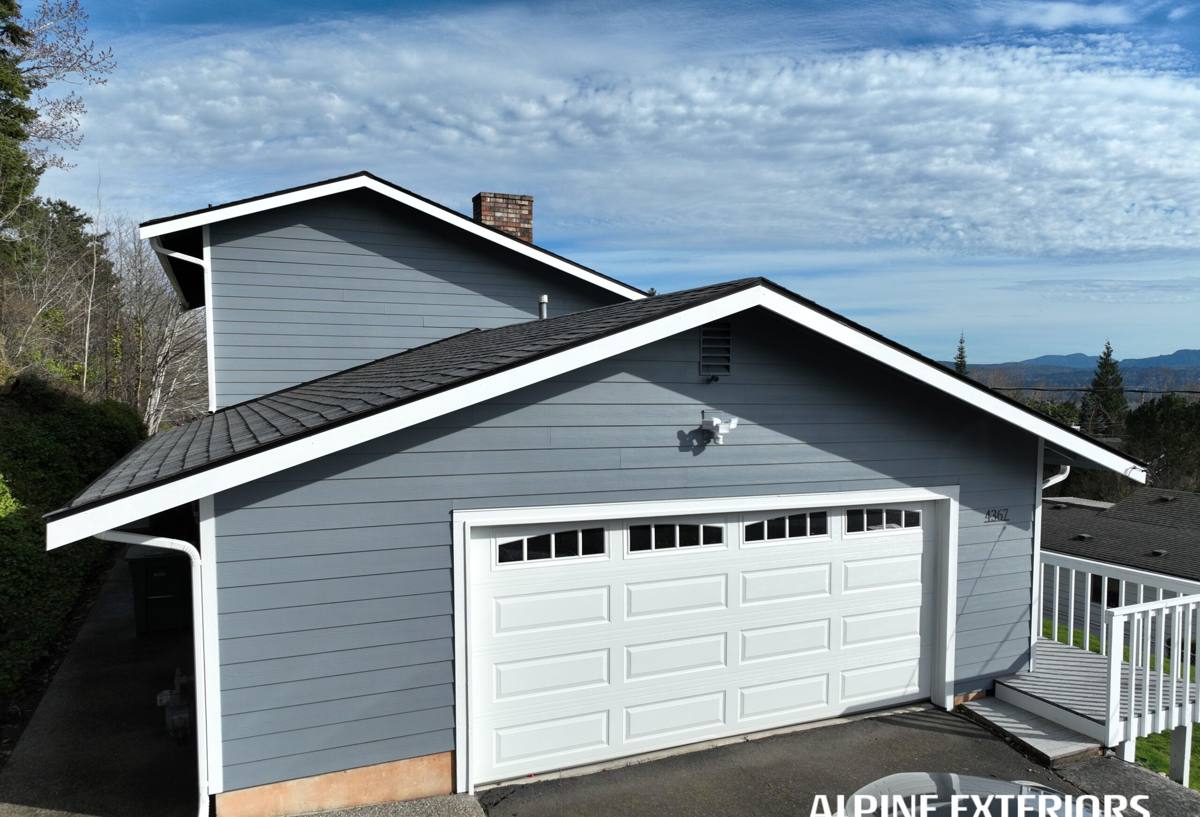
What Abbotsford Roofs Deal With Each Storm Season
The regional climate here isn't dramatic in any one event, it's relentless over time. Salt air carried inland, driving rain that hits roofs at an angle instead of straight down, and a moss season that can run most of the year all wear on roofing systems in ways that show up as storm damage when a hard wind finally exploits a weak spot.
Wind and Driving Rain
Most of what we see after a storm isn't a roof that failed outright — it's a roof that had a small existing weakness (a lifted shingle tab, aging sealant, a flashing edge that had started to pull) and the wind found it. Driving rain then pushes water sideways under shingles that would shed a normal vertical rain just fine.
Moss and Prolonged Damp
A long moss season means roofs in this area rarely get a full dry-out period. Moss holds moisture against the roofing material, and that moisture works into any gap a storm has opened up. It also adds weight and can lift shingle edges just enough for wind to grab. Storm damage and moss damage are often the same repair call — the storm just made the existing problem visible.
Signs Your Roof Took Storm Damage
Not all storm damage is obvious from the ground. Some of it only shows up as a stain on a ceiling weeks later. Here's what we tell Abbotsford-area homeowners to check after a windstorm or heavy rain event:
- Shingles that are cracked, curled, creased, or missing entirely — check the ground and gutters, not just the roof, since torn-off pieces land nearby
- Granules collecting in gutters or at downspout outlets (a sign of impact or wind abrasion on shingle surfaces)
- Flashing that looks bent, lifted, or separated around chimneys, vents, and roof-to-wall joints
- New or worsening stains on interior ceilings or upper walls, especially near exterior corners
- Sagging or soft spots you can see from the ground, particularly along valleys or low-slope sections
- Debris — branches, siding pieces, neighboring roofing material — resting on the roof surface
- Gutters pulled loose or overflowing in a way that suggests blockage or a bent section
- Daylight visible through the roof deck from inside an attic space
If you see two or more of these after a storm, it's worth having someone look before the next rain, not after.
Common Storm Damage We See Locally
The type of damage usually points to how urgent the repair is. This is a general guide, not a diagnosis — every roof needs an actual look before we can say what's happening.
| Damage Type | Typical Cause Here | Usual Fix | Urgency |
|---|---|---|---|
| Lifted or missing shingle tabs | Wind catching an edge that already had weak sealant | Re-seal or replace affected shingles, matched to existing material | Moderate — can worsen fast in the next storm |
| Flashing separation | Wind flex plus age around chimneys, skylights, vents | Re-secure or replace flashing, renew sealant | High — direct path for water intrusion |
| Granule loss / abrasion | Wind-blown debris or hail-adjacent impact | Spot-repair worn areas; monitor for accelerated aging | Low to moderate — cosmetic now, functional later |
| Moss-related lifting | Long-term moisture holding shingle edges open, storm finishes the job | Moss removal, damaged shingle replacement, treatment to slow regrowth | Moderate — often paired with active leak |
| Active leak / water stain | Any of the above left unaddressed through a rain event | Find and repair the entry point, address interior damage separately | Urgent |
| Debris impact (branch, siding, etc.) | Wind carrying material from trees or nearby structures | Remove debris, assess deck and underlayment for puncture | Urgent if deck is compromised |
What a Correct Storm Damage Repair Actually Involves
Storm damage repair done right is more than swapping out the shingles you can see from the driveway. A rushed repair that only patches the visible spot tends to leak again at the next storm, just from a slightly different angle.
Emergency Stabilization First
If there's an active leak or exposed deck, the first priority is getting the roof watertight — a tarp or temporary cover — before anything else. This isn't the permanent fix, it's what keeps a bad situation from becoming a much more expensive one while a proper repair is scheduled and materials are sourced.
A Full Look, Not Just the Obvious Spot
Wind damage rarely stays confined to one shingle. We check the surrounding field, the flashing at every penetration on that roof plane, the ridge and valleys, and the attic side if it's accessible. A storm strong enough to do visible damage in one spot is usually strong enough to have stressed fasteners and seals nearby that haven't failed yet.
Matching Materials and Proper Flashing Work
Shingle color and profile drift over the years, so an exact match isn't always possible — we'll tell you honestly how close we can get before starting, rather than surprising you afterward. Flashing gets re-bent or replaced to the correct profile and properly integrated with the surrounding shingles, not just caulked over. Caulk-only fixes are a common shortcut that fails within a season or two in this climate; we don't do that as a substitute for proper flashing work.
Our Process, Start to Finish
- Call or request an estimate. Tell us what you're seeing — missing shingles, a leak, storm debris — and roughly how urgent it feels.
- On-site inspection. We look at the whole roof plane involved, not just the reported spot, and check attic access if available.
- Honest scope and estimate. You get a plain explanation of what's damaged, what's causing it, and what it will take to fix — no pressure to add unrelated work.
- Stabilize if needed. Active leaks get temporary protection immediately, regardless of when the full repair is scheduled.
- Repair. Damaged material is removed, deck condition checked underneath, and new material and flashing installed to match the existing roof as closely as practical.
- Cleanup and walk-through. Debris and old material hauled off, and we show you what was done before we consider the job finished.
Insurance, Documentation, and Working Cross-Border
Many storm repairs on the Canadian side involve a homeowner's insurance claim. We're not insurance adjusters and won't tell you how your policy handles a claim — that's a conversation for your insurer or broker. What we can do is give you a clear, itemized description of the damage and the repair, with photos from the inspection, that you can hand to whoever needs it. Being straightforward about what's storm-caused versus what's pre-existing wear matters for that process, and we'd rather tell you the honest difference than inflate a claim.
Working across the border adds a little logistics — scheduling around crossing times, making sure materials and equipment are accounted for — but it's a routine part of how we operate, not something that slows a repair down or adds a markup you wouldn't see on a Sumas job.
Why a Crew That Already Works Abbotsford, BC Matters
After a storm, response time matters more than almost anything else — a roof that sits open to weather for an extra week accumulates damage a lot faster than one that gets tarped the same day. A crew that already routes through Abbotsford regularly can get to you faster than one dispatching a special trip across the border for a single job. We also see enough roofs in this specific area — same wind patterns, same moss pressure, same rain angle — to recognize storm damage patterns quickly instead of treating every roof as a blank slate. That familiarity shows up as fewer surprises mid-repair and a more accurate first estimate.
After the Repair: Keeping the Next Storm From Doing the Same Damage
A repair fixes what the storm broke. A little maintenance afterward keeps the next storm from finding the same weak point, or a new one nearby.
- Clear gutters and downspouts before the fall rains build up, so water isn't backing up under roof edges
- Have moss addressed on a schedule rather than waiting until it's visibly thick — thin moss is far cheaper to manage than established growth
- Trim back branches that overhang the roof, since they're a repeat source of wind-driven impact damage
- After any severe wind event, do a quick ground-level visual check even if nothing seems obviously wrong
- Keep a record of any prior repairs and their dates — it helps us and your insurer tell storm damage apart from gradual wear later
If a recent storm left your Abbotsford, BC roof with missing shingles, a leak, or damage you're not sure how to read, we're glad to take a look. Request a free, no-pressure estimate using the form below and we'll tell you honestly what we find.