 Sumas Window
 How Ferndale's Climate Wears Down Windows
Homes in this part of Whatcom County take a different kind of weathering than houses further inland. Salt-laden air off the nearby water works into window frames, hardware, and seals in ways that many manufacturers never really design for. Add driving rain that comes in sideways during winter storms, plus a moss season that can stretch from October well into spring, and it's easy to see why window failures around here tend to show up earlier than the brochure would suggest — especially on older homes that still have their original windows.
Salt Air and Coastal Exposure
Salt air is corrosive to metal hardware — hinges, locks, balance systems, and screen frames all take a hit over time. On older aluminum-frame windows especially, we regularly see pitting and stiff, hard-to-operate hardware well before the glass itself has failed. Vinyl and fiberglass frames handle salt exposure better than bare aluminum, but the hardware inside any window is still exposed, which is why hardware quality and finish matter as much as frame material out here.
Driving Rain and Wind-Driven Moisture
Storms in this region don't always fall straight down. Wind-driven rain pushes water sideways into any gap in the flashing, trim, or sealant, and it will find a poorly installed window faster than almost any other kind of exterior work. Most of the window failures we get called out to look at aren't glass or frame problems at all — they're water intrusion problems caused by flashing or sealant that was never installed correctly in the first place.
A Long Moss and Mildew Season
Moss and mildew need moisture and shade to establish, and the tree cover here combined with a wet season that runs many months a year gives them plenty of both. On windows, that shows up as black mildew streaking on sills, moss creeping into corner joints, and wood trim that stays damp long enough to start softening. None of that is cosmetic only — sustained moisture at a window's edges is exactly what leads to rot in the surrounding framing.
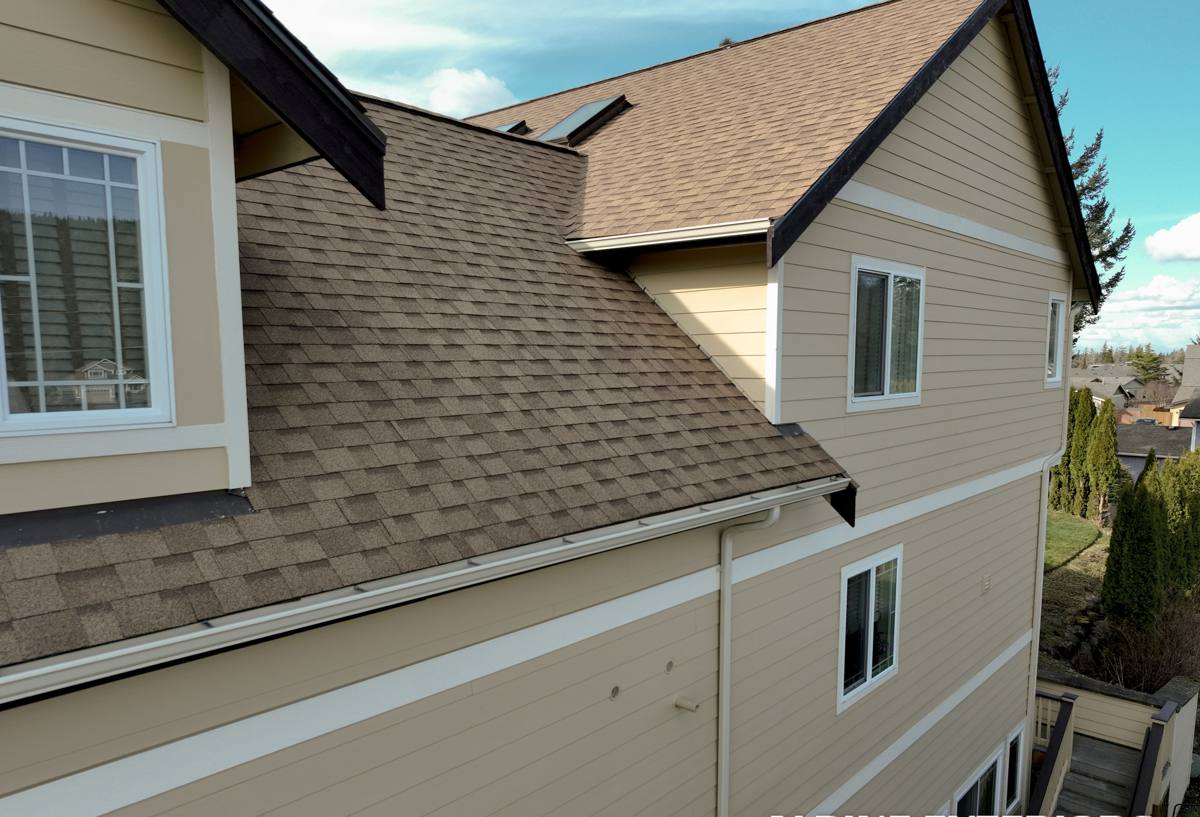
Signs Your Windows Need Replacing, Not Just Repair
Not every window problem calls for full replacement — some can be repaired. But certain signs point clearly toward replacement, especially once moisture has gotten past the glass into the surrounding wall:
- Fogging or a visible haze between panes of double- or triple-glazed glass, which means the seal has failed and can't be repaired
- Soft or spongy wood at the sill, jamb, or surrounding trim
- Windows that are difficult to open, close, or lock, especially after damp weather
- Visible daylight, drafts, or whistling around the frame during windy weather
- Peeling paint or bubbling finish on interior trim near the window, often a sign of moisture working its way inward
- Noticeably higher heating bills compared to similar homes nearby
- Persistent condensation on the inside of the glass during cold, wet stretches
If you're seeing more than one or two of these, it's worth having the windows looked at before the next wet season sets in rather than waiting for a failure in the middle of winter.
What a Correct Window Replacement Job Actually Involves
Window replacement looks simple from the outside — old window out, new window in — but the steps that happen at the rough opening are what determine whether the new window lasts fifteen years or fails again in five.
Removal and a Real Structural Check
Once the old window is out, that's the one chance to actually see the condition of the framing underneath. We check the sill, jack studs, and header for rot or soft wood before anything new goes in. Covering up compromised framing with a brand-new window is one of the most common shortcuts we see, and it's the reason some "new" windows fail again within just a few years.
Flashing and Water Management
This is the step that matters most in a coastal, high-rainfall climate. Flashing has to be layered correctly — sill pan first, then side flashing, then head flashing — so that any water that does get behind the trim is directed back out, not trapped against the framing. Skipping or shortcutting flashing is the single biggest reason window installations fail early in wet Pacific Northwest climates, regardless of how good the window itself is.
Insulation and Air Sealing
The gap between the new window frame and the rough opening needs to be sealed with the right amount of low-expansion foam or backer rod and sealant — not stuffed with fiberglass insulation alone, which does nothing to stop air or moisture movement. Done right, this step is what actually delivers the draft reduction and energy savings homeowners are usually replacing windows for in the first place.
Exterior Sealant and Trim Detail
The visible bead of sealant around the trim is the last line of defense, not the first. It has to be applied to clean, dry surfaces with a sealant matched to the substrate, and it has to be inspected and refreshed over the years — caulk alone was never designed to be a home's only defense against wind-driven rain.
Choosing the Right Window Materials for This Climate
There's no single "best" window material for every home, but some perform more predictably than others in a marine, high-moisture climate. Here's how the common options compare for homes dealing with salt air, wind-driven rain, and a long wet season:
| Frame Material | Moisture Behavior | Maintenance | Our Take for This Climate |
|---|---|---|---|
| Vinyl | Won't rot or corrode; handles damp climates well | Low — occasional cleaning | Good value; quality varies widely between manufacturers |
| Fiberglass | Very stable in moisture and temperature swings | Low | Strong long-term option; higher upfront cost |
| Wood (unclad) | Attractive but vulnerable to rot without diligent upkeep | High — regular painting and sealing | We steer homeowners toward clad options over bare wood exteriors here |
| Wood-Clad | Exterior clad layer protects the wood core from weather | Moderate | Good look with better weather resistance than bare wood |
| Aluminum | Conducts cold and is prone to pitting near salt air | Moderate | Generally not our recommendation for coastal exposure |
Our standard is to fit the material to the exposure of the specific wall — a window on the weather side of the house, facing prevailing wind and rain, deserves a more moisture-tolerant frame than one tucked under a covered porch on the leeward side. That kind of wall-by-wall judgment matters more than any single "best" product on a shelf.
Our Process, Start to Finish
- On-site assessment: We look at every window being considered, not just the ones you called about, and check the condition of the surrounding trim and framing.
- Honest recommendation: We'll tell you plainly which windows need replacement now, which can wait, and which just need a repair or better maintenance.
- Written estimate: Clear pricing by window, material, and any framing repair that's needed — no vague allowances.
- Scheduling around the weather: Openings are only exposed for a short window during install; we plan around the forecast rather than fighting it.
- Installation: Proper removal, structural check, flashing, insulation, and sealant — done in that order, every time.
- Final walkthrough: We test operation, check seals, and walk the job with you before we call it finished.
What Window Replacement Costs Around Here
Every home is different, but the factors that move the price are consistent. The ranges homeowners typically ask about apply to a standard single window replacement, installed, and shift depending on the specifics below:
| Factor | Why It Matters |
|---|---|
| Window size and type (single-hung, casement, slider, picture) | Larger and operable windows cost more than fixed units of the same size |
| Frame material | Vinyl is generally the most affordable; fiberglass and wood-clad cost more upfront |
| Framing condition | Rot or soft wood found at removal adds carpentry time before the new window can go in |
| Glass package | Double vs. triple pane, and low-E or tempered glass, change the price per unit |
| Number of windows | Whole-house replacements typically bring a lower per-window cost than one-off swaps |
| Access and height | Second-story or hard-to-reach windows take more labor time |
We'll walk through each of these with you during the estimate so the number you get reflects your actual home, not a generic average pulled from an online calculator.
Why a Crew That Already Works in Ferndale Makes a Difference
Window replacement done well depends on understanding how a specific house sits relative to weather exposure — which walls take the worst of the wind-driven rain, how much shade keeps trim damp longer, and how a long moss season affects sills and cladding over the years. A crew that regularly works Whatcom County homes has already seen how these houses age under these exact conditions, and builds the install accordingly: heavier flashing detail on exposed walls, hardware chosen with salt air in mind, and sealant schedules that account for how many wet months this area actually gets. That kind of local pattern recognition is hard to substitute with a crew passing through from outside the region, no matter how skilled they are in a drier climate.
Keeping New Windows Performing Through the Wet Season
A correctly installed window still benefits from basic upkeep in this climate:
- Clear moss and debris from sills and tracks before it holds moisture against the frame
- Inspect exterior sealant annually and re-caulk any cracked or separated beads before winter rains arrive
- Clean hardware and tracks periodically to keep salt-laden grit from stiffening moving parts
- Check interior trim each fall for early signs of moisture — soft spots or discoloration are easier to fix caught early
- Keep gutters and downspouts clear so runoff isn't sheeting down over window heads during heavy storms
If your Ferndale home has windows showing any of the signs above, or if you're simply ready to stop fighting drafts and fogged glass through another wet season, we're happy to come take a look. We offer free, no-pressure estimates — use the form below to get started.