 Sumas Window
 Why Laurel Windows Wear Differently Than You'd Expect
Laurel sits in the part of Whatcom County where marine-influenced air, wind-driven rain, and long stretches of overcast, damp weather are just part of the year. That combination is harder on window systems than most homeowners realize. It's not one dramatic storm that causes trouble — it's the slow, repeated cycle of moisture getting into places it shouldn't, sitting there because the air never quite dries things out, and working on seals, wood, and hardware month after month.
Wind-driven rain and window seals
When rain comes in sideways instead of straight down, it tests parts of a window that a calm rain never touches — the top corners of the frame, the joint where the frame meets the siding, and any gap in the flashing. A window that's been caulked shut instead of properly flashed can look fine for years and then start leaking the first time a real wind event lines up with a heavy rain. Salt-tinged air moving in off the Sound corrodes exposed hardware and fasteners a little faster too, which is why hinge and lock hardware on older windows in this area often feels stiff or loose well before the glass itself fails.
Moss, algae, and the maintenance most owners underestimate
Whatcom County's long moss season isn't just a roof problem. Moss and algae take hold on horizontal window sills, in the corners of frames, and on any wood trim that stays damp for days at a time. Left alone, that growth holds moisture against the surface, which accelerates rot in wood components and breaks down caulking and sealant faster than a drier climate ever would. A window built and installed with this climate in mind sheds water instead of holding it, which is the single biggest factor in how long it actually lasts here.
Warning Signs Worth Taking Seriously
Most window failures in this area give some warning before they become a real problem. Homeowners in Laurel should keep an eye out for:
- Fogging or a permanent haze between panes — the seal has failed and the insulating gas or dead air space is gone
- Soft or discolored wood at the sill or bottom corners of the frame
- Drafts you can feel with your hand near the frame on a windy day
- Paint or finish that's bubbling, peeling, or chalky only around the window, not the surrounding wall
- Moss or dark streaking building up on the sill or in the frame corners year after year
- Difficulty opening, closing, or locking a window that used to operate smoothly
- Visible gaps or daylight around the frame from the interior
Any one of these on its own might not mean much. Two or three together, especially on a window that's fifteen or more years old, usually means the assembly is past the point where caulk and weatherstripping will fix it.
What a Correct Window Installation Actually Involves
Flashing and water management, not just caulk
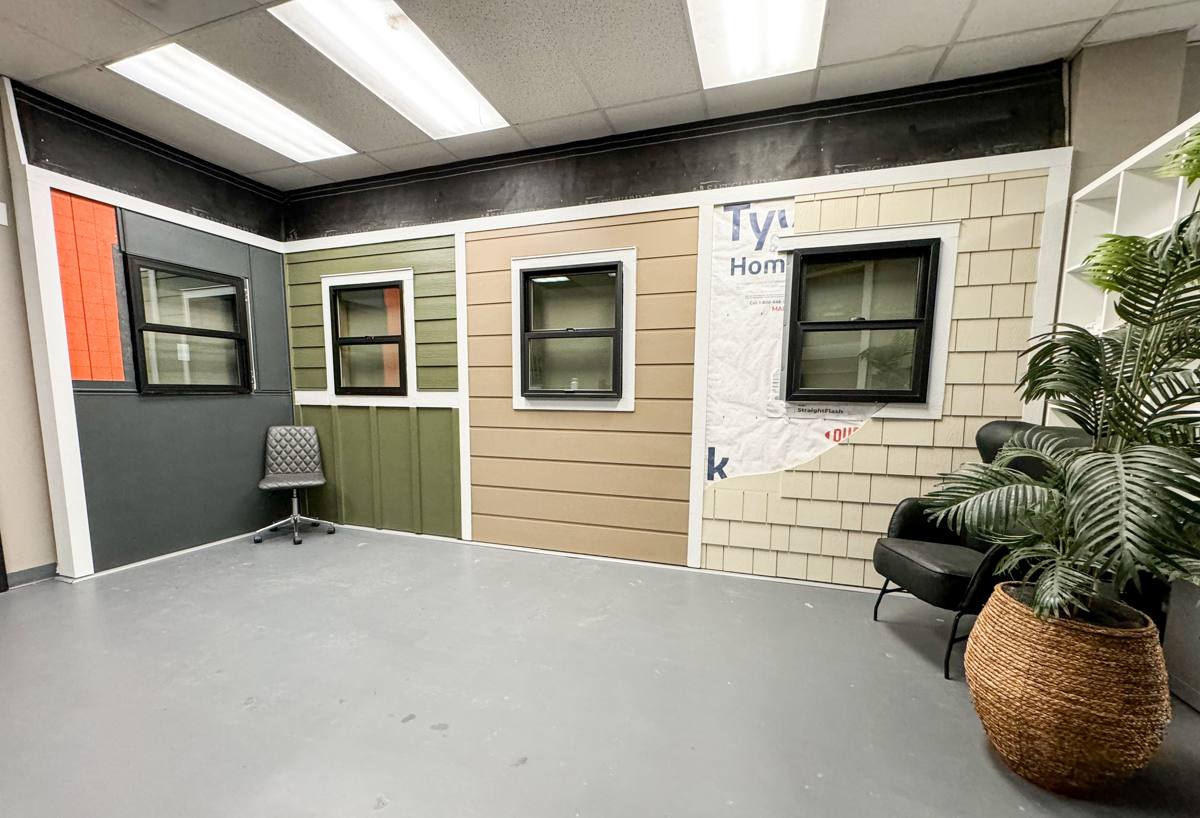
The single biggest difference between a window that holds up in this climate and one that doesn't is what happens behind the trim, not what you can see from the driveway. A correct install builds a drainage path so any water that gets past the outer seal has somewhere to go besides into the wall framing. That means flashing tape or a pan flashing at the sill, proper lapping with the house wrap or building paper above and below the window, and a sealed but not fully caulk-dependent joint at the head and jambs. Caulk is a backup layer here, not the whole plan.
Fit, shimming, and insulation at the rough opening
A window that's shimmed unevenly will bind, won't seal consistently around its full perimeter, and puts stress on the frame corners — exactly the spots that take the worst of wind-driven rain. Getting the opening square, shimming at the right points, and using a low-expansion foam or batt insulation around the frame (never packed so tight it bows the frame in) all matter more here than in a drier climate, because any small gap becomes a moisture path over time, not just a draft.
Frame Material Options for Laurel's Climate
There's no single "best" window material — the right call depends on the house, the budget, and how much upkeep you want to take on. Here's how the common options generally compare for this area's conditions:
| Material | Moisture Resistance | Maintenance | Typical Lifespan | Relative Cost |
|---|---|---|---|---|
| Vinyl | Good — won't rot, but seals and hardware still need attention | Low | 20–30 years | Lower |
| Fiberglass | Very good — stable in wet/dry cycles, resists warping | Low | 30–40+ years | Higher |
| Wood (clad exterior) | Good on the exterior face, but interior wood still needs the cladding intact | Moderate | 25–40 years with upkeep | Higher |
| Aluminum | Fair — durable but prone to condensation and corrosion near salt air unless thermally broken | Moderate | 20–30 years | Lower–Moderate |
For most Laurel homes, vinyl or fiberglass frames make the most sense simply because they don't give moss, algae, or rot anything to work with. Wood-clad windows can still be the right choice on a home where the look matters more, as long as the owner understands the cladding has to stay intact — any crack or gap in it exposes the wood underneath to exactly the conditions that cause problems fastest here.
Glass Packages Worth the Extra Cost
Glass is where a lot of homeowners underspend, because the difference isn't visible until you're living with it. A basic dual-pane window with a standard low-E coating is a reasonable baseline. Where it's worth spending more:
Argon or krypton gas fill between panes improves insulating performance and helps reduce interior condensation on cold, damp mornings — a real issue in a climate where indoor and outdoor humidity are both often high. Triple-pane glass adds real value on north-facing walls or rooms that stay cold and clammy, though it adds weight and cost that isn't always worth it on every opening in the house. Warm-edge spacers (as opposed to older aluminum spacer bars) reduce the cold spot at the edge of the glass, which is usually where condensation and eventually mold show up first on an older window.
How We Handle a Custom Window Project in Laurel
- On-site assessment — we look at the actual condition behind the trim, not just the glass, since that's where most problems in this climate start
- Precise measurement of each opening, since older homes in this area are rarely perfectly square
- Material and glass selection based on the home's exposure, orientation, and your budget — not a one-size-fits-all recommendation
- Confirming whether the scope of work requires a permit from the local building department
- Careful removal of the old window with attention to what the old flashing (or lack of it) tells us about the opening
- Installing new flashing and drainage details before the new window ever goes in
- Setting, shimming, and insulating the window correctly, then sealing the exterior with the right materials for this climate
- Interior and exterior trim finish work
- Final walkthrough so you understand how to operate and maintain the new windows
Why It Matters That We Already Work This Area
A crew that mostly works drier inland climates, or that treats every job the same regardless of region, tends to under-build the water management details that matter most here — because in a lot of places, they simply don't have to think about it as much. Working regularly in and around Laurel and the greater Sumas area means we already know what wind-driven rain does to a poorly flashed window, how fast moss takes hold on a north-facing sill, and which details are worth the extra time versus which ones are just upsells. It also means if something needs a warranty follow-up a year or two down the road, we're not driving in from out of the area to take care of it.
What Custom Windows Typically Cost
Costs vary widely based on the number of openings, frame material, glass package, whether it's a straightforward replacement in an existing opening versus a new or resized opening, and how much trim or siding work is needed to finish the job cleanly. As a broad range, homeowners in this area are usually looking at a few hundred to a couple thousand dollars per window installed, depending on those factors — with larger or custom-shaped openings running higher. The most reliable way to know what your project will actually cost is a site visit, since the condition behind the existing trim often changes the scope more than the window itself does.
Ready to Talk About Your Windows?
If your windows in Laurel are showing any of the signs above, or you're planning a custom window project and want it built to actually hold up to this area's weather, we're happy to take a look. Reach out for a free, no-pressure estimate using the form below — we'll assess the actual condition of your openings and give you a straight answer on what it'll take to do the job right.