 Sumas Window
 Why Siding Matters More in Kendall Than Most Places
Kendall sits in the Nooksack River valley at the foot of the Mount Baker foothills, close enough to the Strait of Georgia that marine air pushes inland through Whatcom County most of the year. That combination — river-bottom humidity, heavy winter rainfall, and salt-tinged coastal air — is a tough environment for exterior cladding. Homes here don't just get wet, they stay wet. Shaded lots, tree cover, and long stretches of overcast days mean siding rarely gets a full dry-out between storms, which is exactly the condition that lets moss, algae, and rot take hold.
Siding on a Kendall home isn't cosmetic. It's the barrier standing between your framing and a climate that produces mold and moisture damage faster than drier parts of the state. Materials and installation methods that work fine in eastern Washington or inland climates often fail here within a decade because they weren't built — or installed — for this kind of exposure.
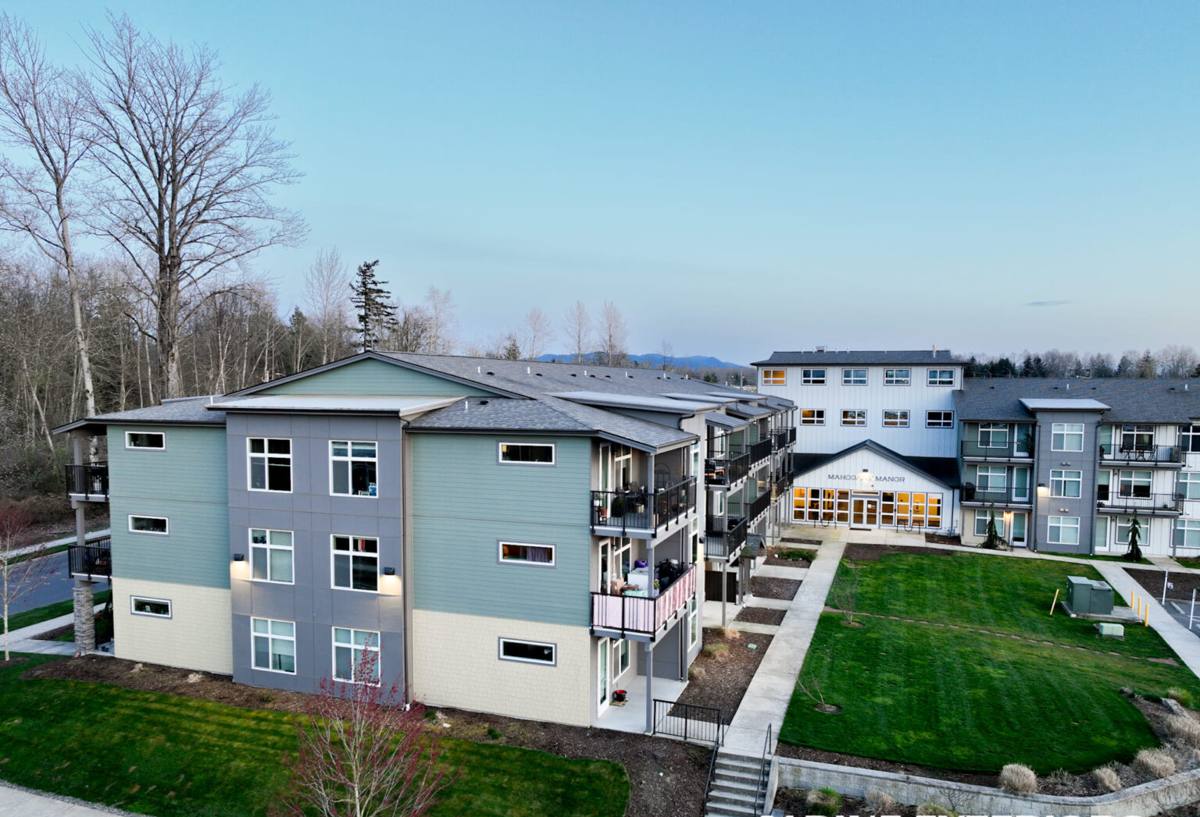
What Driving Rain and Moss Season Actually Do to Siding
Driving Rain and Wind-Driven Moisture
Whatcom County storms rarely fall straight down. Wind pushes rain sideways into wall assemblies, which means every seam, joint, and fastener penetration is a potential entry point. Siding that isn't installed with correct flashing, house wrap integration, and gap tolerances will let water behind the cladding — and once water gets behind siding, the framing and sheathing take the damage long before anyone notices a problem on the surface.
The Long Moss Season
Kendall's tree cover and valley humidity create ideal moss and algae conditions for much of the year, not just a few weeks. Moss holds moisture against a wall surface, which accelerates rot in wood-based products and can stain or degrade paint finishes on materials that aren't factory-engineered to resist it. A siding product's ability to shed moisture and resist organic growth matters as much as how it looks on installation day.
Salt-Influenced Air
Even away from the immediate coastline, salt-bearing marine air corrodes fasteners, accelerates finish breakdown, and speeds up wear on materials not built to handle it. Over years, this shows up as premature fading, chalking, or fastener staining on lower-grade siding systems.
Why We Install Only James Hardie Fiber Cement
We don't install vinyl, LP SmartSide, primed wood, or other fiber cement brands. That's a deliberate standard, not a sales pitch. Vinyl expands, contracts, and can warp under temperature swings, and it offers little defense against moisture intrusion at seams. Engineered wood products depend on flawless, uninterrupted paint and caulk maintenance to keep moisture out — a maintenance schedule that's hard to keep up with in a climate that rains as often as this one does. Once moisture gets past the surface on a wood-based product, the core material is vulnerable.
James Hardie fiber cement is non-combustible, dimensionally stable, and manufactured in climate-specific formulations. For the Pacific Northwest, Hardie's HZ5 product line is engineered for regions with significant moisture exposure and freeze-thaw cycling — which describes Whatcom County's winters well. The ColorPlus factory finish is baked on under controlled conditions, which holds color and resists the fading and chalking that field-applied paint struggles with here. It also carries one of the strongest transferable warranties in the category, which matters when you're planning to own the home for years or sell it down the line.
None of that matters, though, if the installation is wrong. Hardie siding installed without correct clearances, fastening, and flashing details can still fail — which is why installation technique is the other half of this page.
What Correct Siding Installation Actually Involves
A proper siding job is built in layers most homeowners never see once the final board goes up. Skipping or rushing any of these steps is where premature failures start — especially in a wet climate like Kendall's.
- Removal of old siding down to the sheathing, with an inspection for hidden rot, soft spots, or prior water damage before anything new goes up
- Repair or replacement of any compromised sheathing and framing found during tear-off
- A continuous, correctly lapped weather-resistive barrier (house wrap) with all seams taped
- Proper flashing at every window, door, and roof-to-wall transition — the single biggest source of hidden leaks when done wrong
- Correct fastener type, spacing, and depth per James Hardie's published installation specifications
- Manufacturer-required clearances between siding and grade, roofing, decks, and other transitions to allow drainage and airflow
- Properly caulked and sealed joints only where Hardie's specifications call for sealant — not everywhere, since over-sealing traps moisture
- Final inspection of trim, corners, and butt joints for tight, weather-tight fit
Every one of these steps is inspectable, and a contractor who's confident in their work will walk you through what's happening at each stage rather than treating it as a black box.
Signs a Kendall Home Needs New Siding
Because moisture damage in this climate often starts behind the siding before it's visible on the surface, it pays to know the early warning signs rather than waiting until damage is obvious.
| What You See | What It Usually Means |
|---|---|
| Soft or spongy spots when pressed | Moisture has reached the sheathing or framing underneath |
| Persistent moss or algae growth | The surface isn't drying between rain events — a moisture-retention risk |
| Peeling, bubbling, or chalky paint | Field-applied finish is failing, often faster than the base material |
| Visible warping, cupping, or gaps at seams | Material movement from moisture cycling, common in non-fiber-cement products |
| Rising energy bills without other cause | Compromised siding can undermine the wall assembly's insulation performance |
Our Installation Process
- On-site assessment — we walk the exterior, check for existing moisture damage, and evaluate exposure on each elevation of the home
- Product and color selection — choosing the right James Hardie line and ColorPlus finish for the home's design and sun/shade exposure
- Written estimate — a clear scope of work, materials, and timeline before anything is scheduled
- Tear-off and inspection — removing existing siding and checking sheathing and framing before covering anything back up
- Weather barrier and flashing installation — the layer that does the real waterproofing work
- Siding installation to manufacturer spec — correct fastening, clearances, and joint treatment throughout
- Final walkthrough — reviewing the completed work with the homeowner before calling the job done
Why a Crew That Already Works in Kendall Matters
Siding installation isn't one-size-fits-all, and a crew that regularly works Whatcom County homes brings judgment calls a traveling or out-of-area contractor may not think to make — how much clearance to leave given the extra rainfall, how to handle heavily shaded, moss-prone elevations differently than sun-facing ones, and how to sequence a job around a rainy stretch without cutting corners on drying time. Local crews also tend to have a working relationship with the permitting process in the county, which keeps a project moving instead of stalling on paperwork.
Just as important is accountability. A contractor based in the area, with a track record on homes near yours, has a reason to stand behind the work years down the line — not just get through the punch list and move on to the next county.
What Siding Installation Costs and Why
Every home is different, but the same factors drive cost on nearly every project. Use this as a general guide rather than a quote — an accurate number requires an actual look at your home.
| Cost Factor | Why It Matters |
|---|---|
| Home size and wall complexity | More square footage and more corners, gables, and dormers mean more material and labor |
| Extent of tear-off | Full removal of old siding costs more than installing over existing material, but is almost always the right call for a lasting result |
| Hidden sheathing or framing repair | Damage found during tear-off adds cost but prevents new siding from failing early |
| Siding profile and finish | Lap width, shingle-style panels, and trim details all affect material and labor time |
| Site access | Steep lots, tree-heavy yards, or tight setbacks slow down staging and installation |
Fiber cement generally costs more up front than vinyl and can run comparable to or somewhat above engineered wood, but it's worth weighing against the repainting, caulking, and repair costs that lower-tier products tend to accumulate over a Whatcom County winter cycle after winter cycle.
Ready for a Straight Answer on Your Kendall Home
If your siding is showing moss, soft spots, or paint failure — or you're planning ahead before those problems start — we're happy to take a look and give you an honest read on what your home actually needs. Reach out for a free, no-pressure estimate; there's no obligation, just a clear picture of your options.