 Sumas Window
 Putting windows into a new build is a different job than replacing old ones in a finished house. On a new-construction project in Kendall, the windows go in while the framing is still open, before the weather-resistive barrier is lapped and long before siding closes everything up. Whatever gets built into that opening — good or bad — is going to be covered over and hard to reach again. There's no "we'll fix it later" once trim and siding are on.
New-Construction Windows vs. Replacement Windows: What Changes
A replacement window has to work around an existing wall — it gets fit into an opening that's already flashed, sided, and trimmed, often without disturbing the exterior finish. A new-construction window is the opposite: the opening is bare framing, the house wrap or building paper isn't in place yet (or is only partway up), and the window itself becomes part of the wall's water-management system rather than something dropped into it after the fact.
That difference matters for the type of window used, how it's fastened, and the order of operations on site. New-construction windows are almost always nail-fin units — a flange around the perimeter that gets fastened directly to the sheathing and integrated with flashing tape and the weather-resistive barrier in a specific shingle-lapped sequence. Get that sequence wrong and the mistake doesn't show up on day one; it shows up two or three winters later as a stain on the drywall below a window.
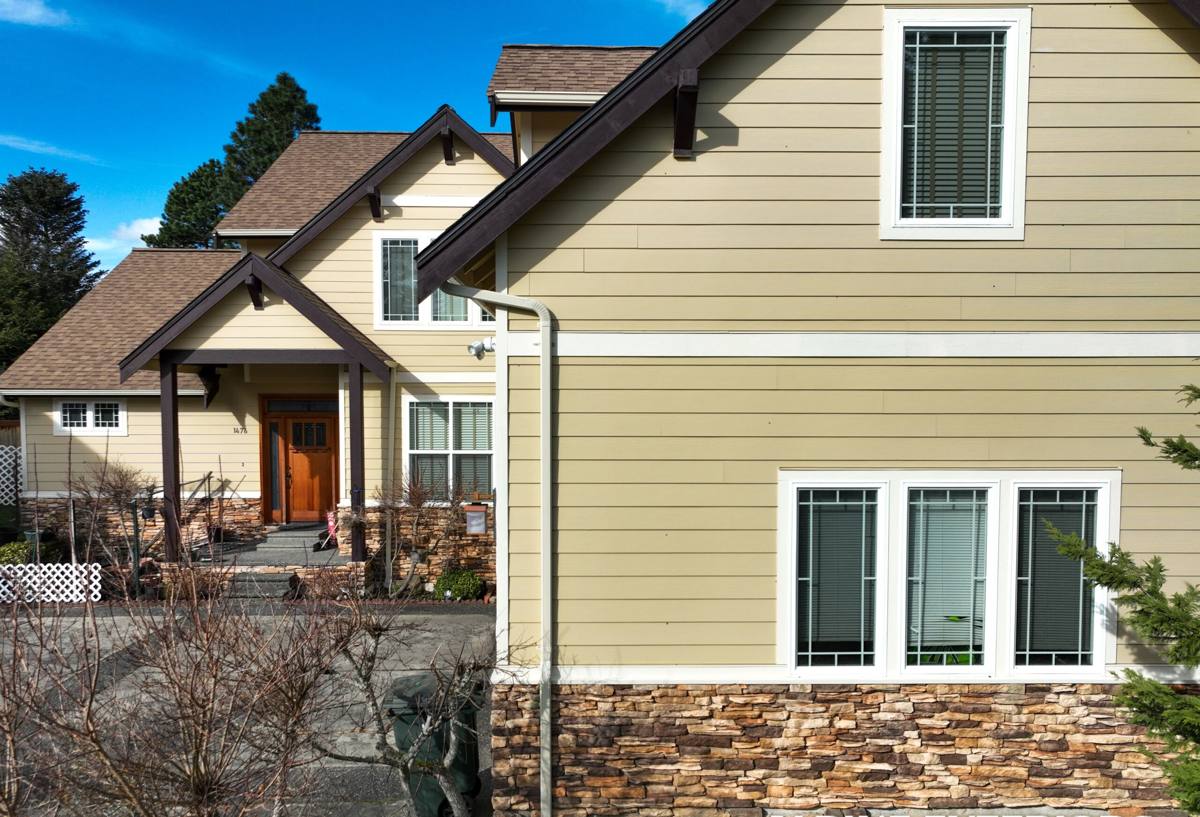
What Kendall's Climate Means for a New Window Install
Whatcom County doesn't get a light, misty version of Pacific Northwest rain — it gets sustained, wind-driven rain that comes at a wall sideways, plus a long stretch of the year where surfaces stay damp and shaded lots grow moss on anything that holds moisture. Kendall's mix of wooded, tree-covered acreage and open foothill lots means a lot of new builds sit in partial shade for much of the day, which slows drying time after every storm. That's the same general pattern that hits homes across the county, from the coastal salt air near the bay down to the wooded rural lots inland — different exposure, same underlying problem: water finds any gap and takes its time drying out once it does.
For a new build, that means the flashing details around the window — not just the window itself — are what actually keep water out over the long run. A well-built window with poor flashing will leak. A modest window with correct flashing usually won't. On a new-construction job, we control both, which is the real advantage over trying to fix a flashing mistake after the fact.
Getting the Rough Opening and Flashing Right Before Siding Goes On
The flashing sequence
Correct order matters more than any single product. In general: the sill pan goes in first to catch and direct any water that gets past the window back out, not into the framing. The window goes in on top of that, fastened through the nail fin. Then side flashing tape goes over the fin, and the weather-resistive barrier laps over the top flashing last — so water draining down the wall always sheds over the next layer down, never behind it. Skip a step, do it out of order, or use incompatible tape and sealant, and you've built a pocket that traps water instead of shedding it.
Sizing and squaring the opening
Rough openings that are framed slightly out of square or undersized force a window to be racked into place, which stresses the frame and can keep it from operating smoothly for the life of the house. We check level, plumb, and square before the window ever goes in, and we shim it correctly rather than relying on the fasteners alone to hold it true.
Meeting Washington's Energy Code From Day One
Washington's energy code sets minimum performance requirements for new-construction glazing, and those requirements get checked at inspection — it's not optional or something to sort out after the fact. Getting the U-factor and solar heat gain numbers right at the ordering stage avoids a scramble later if an inspector flags a window package that doesn't meet code for the climate zone. Kendall sits in an area with real winter heating demand, so beyond the code minimum, window performance also affects how hard the heating system has to work and how comfortable rooms near large window walls feel in January.
We also account for how the window will actually be used — a large view window on a shaded, treed lot behaves differently for heat gain and condensation than the same window on an open, sun-exposed elevation, even within the same small area.
Coordinating With Your Builder's Timeline
New-construction window installs live inside someone else's schedule — the general contractor's framing crew needs to move on, the siding crew is often waiting on us to finish, and weather delays on a Kendall job site can stack up fast during the wetter months. We order windows early enough to account for manufacturer lead times, confirm rough opening sizes against the actual framed dimensions (not just the plans) before the windows are built, and communicate directly with the builder or GC rather than leaving that coordination to chance.
A dry-in delay is one of the more common ways a new build loses time in this area — if the windows aren't in and the WRB isn't lapped correctly before a stretch of rain, framing lumber can take on moisture that costs real time to dry out before work continues.
Choosing Window Materials for a Kendall New Build
There's no single right answer for every project — budget, the home's style, and how exposed the lot is all factor in. Here's how the common frame options generally compare for a new build in this climate:
| Frame Material | Moisture & Rot Resistance | Ongoing Maintenance | Typical Fit |
|---|---|---|---|
| Vinyl | Good — won't rot, but seals and corners are what to watch over time | Low | Budget-conscious builds, rental or spec homes |
| Fiberglass | Very good — stable in temperature swings, holds up well to sustained damp exposure | Low | Custom homes, larger openings, higher-exposure elevations |
| Wood-clad | Depends heavily on correct flashing and finish upkeep on the wood interior | Higher — periodic finish maintenance | Homeowners who want a wood interior look and are willing to maintain it |
| Aluminum | Fair — prone to condensation and heat transfer without thermal breaks | Low to moderate | Limited residential use; less common for new builds in this climate |
Our general standard is to steer clients away from frame and glazing combinations that put moisture-sensitive materials in high-exposure spots without the detailing to protect them — not because any one product is bad outright, but because the maintenance burden and moisture risk on a shaded, damp Kendall lot are real trade-offs worth knowing about before you order.
Our New-Construction Installation Process
What a correct install actually includes, in practice:
- Verify rough opening dimensions against actual framing, not just the plan set, before windows are ordered
- Confirm window package meets Washington energy code for the project's climate zone
- Install sill pan flashing before the window goes in
- Set the window level, plumb, and square, shimmed correctly at all fastening points
- Fasten through the nail fin per the manufacturer's schedule — not just "enough to hold it"
- Tape and lap side and head flashing in the correct shingle-style order with the weather-resistive barrier
- Check operation (open, close, lock) before the crew leaves the opening
- Photograph flashing details before they're covered by siding, for your records
That last step matters more than people expect — once siding goes on, nobody can see what's behind it. Documentation at that stage is the only record of how the wall was actually built.
Why Hire a Crew That Already Works in Kendall
New-construction window work rewards familiarity with local conditions in a way replacement work doesn't always require. Knowing how long a framed opening can sit exposed before a Whatcom County rain system rolls through, how shaded lots around Kendall dry differently than open ones a few miles away, and how local builders typically sequence dry-in versus siding all shape decisions made on site in real time — not decisions that get made once from a spec sheet. A crew that's done this repeatedly in this area isn't guessing at how the framing will behave once the tape and flashing go on; they've seen how it plays out through an actual wet season.
It also means fewer surprises for your builder. Coordination goes faster when the window crew already understands how local GCs sequence a job and what inspectors in the area are looking for at frame and dry-in checks.
If you're building new in Kendall and want windows installed correctly the first time — proper flashing, code-compliant glazing, and a schedule that works with your builder — we're happy to take a look at your plans and walk the site. Use the form below to request a free, no-pressure estimate.