 Sumas Window
 Building a Deck That Can Actually Hold Up in Goshen
Goshen is one of the small, quieter communities around Sumas in Whatcom County, and homes out here deal with the same weather patterns that shape the whole northern Puget Sound region: long stretches of wet, gray months, moss that finds a foothold anywhere wood stays damp, and stretches of driving rain that push moisture into places a deck was never designed to handle. A deck built with the wrong materials, or built without the right details underneath the decking boards, will show it within a few seasons — soft spots, dark staining, loose railings, or boards that cup and crack. A deck built correctly for this climate will still look and perform the same way a decade from now.
This page covers what a Goshen-area deck actually needs given the local climate, what separates a correctly built deck from one that just looks fine on installation day, and how our process works from the first estimate to the final walkthrough.
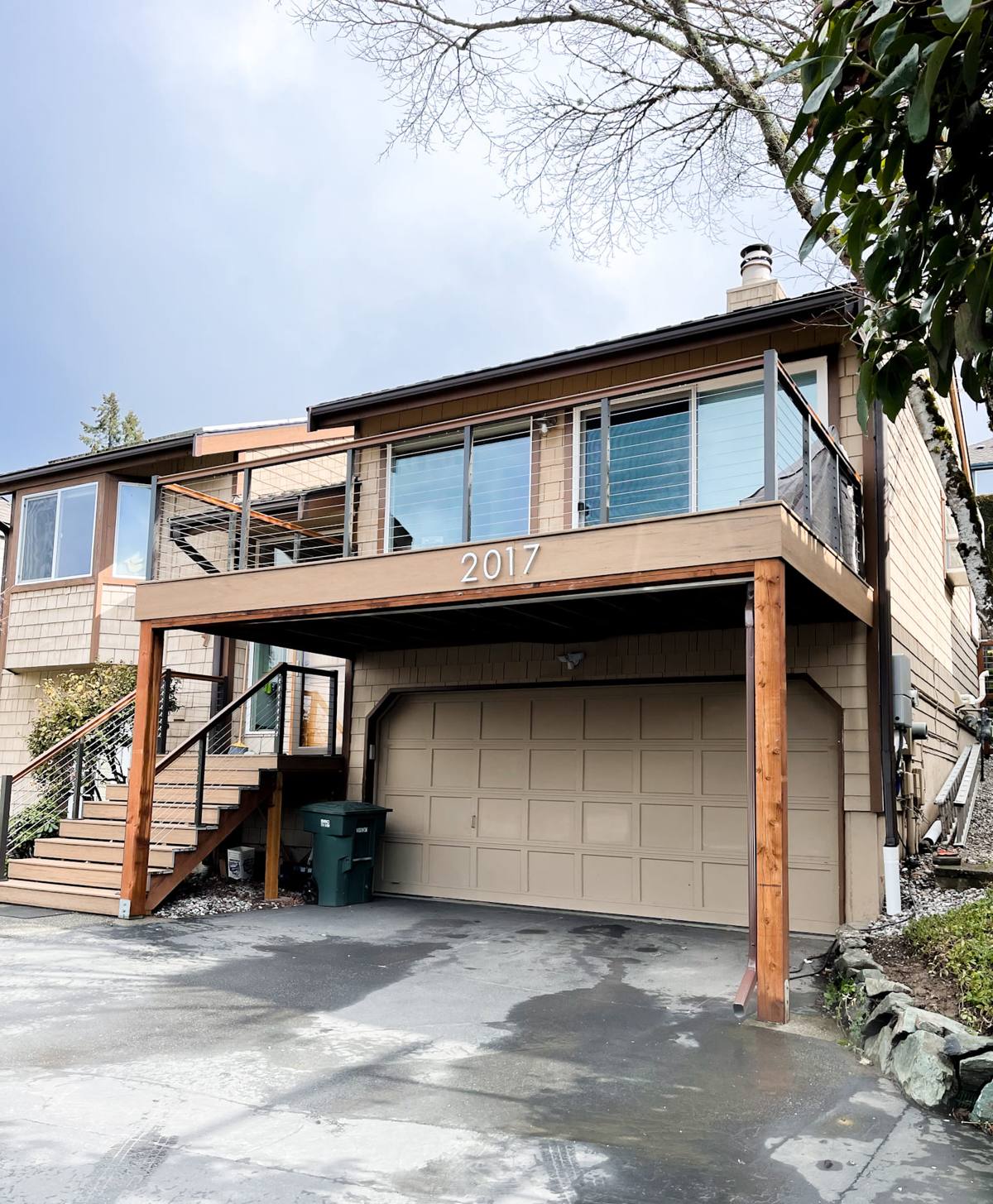
What Whatcom County Weather Does to an Outdoor Deck
Standing Moisture
Decks fail from the inside out more often than from the top down. Rain that has nowhere to drain — because boards are spaced too tight, because the substructure blocks airflow, or because a ledger board wasn't flashed correctly where it meets the house — sits against wood and fasteners far longer than it should in a climate that doesn't get long dry stretches to let things air out. That trapped moisture is what causes rot, not the rain itself.
Moss and Algae
Whatcom County's moss season runs long, and a deck surface is a prime target: horizontal, shaded by the house or trees for part of the day, and rarely bone-dry. Moss and algae aren't just cosmetic — they hold moisture against the wood surface and make boards slick and dangerous underfoot, especially on stairs. Material choice and board spacing both affect how much of a problem this becomes.
Freeze-Thaw Cycles
Whatcom County gets enough cold snaps each winter that footings and ledger connections need to be built to handle freeze-thaw movement, not just summer weather. Footings that aren't set below frost depth, or hardware that isn't rated for exterior/wet exposure, are common sources of movement and cracking a few winters into a deck's life.
Choosing a Decking Material for This Climate
There's no single "best" decking material — there's a best material for a given budget, look, and maintenance appetite. Here's how the common options actually perform in a wet, moss-prone climate like this one:
| Material | How It Handles This Climate | Maintenance | Typical Lifespan |
|---|---|---|---|
| Pressure-treated lumber | Good rot resistance when properly sealed and detailed; needs correct fasteners to avoid corrosion | Re-seal or stain every 1-3 years | 15-20+ years if maintained |
| Cedar | Naturally rot- and insect-resistant, ages to a gray patina; still needs sealing to slow moisture cycling | Sealant/stain every 1-2 years | 15-20 years with upkeep |
| Composite decking | Doesn't rot or splinter; some early-generation composites held moisture and grew mold in shaded, damp spots — newer capped composites handle this far better | Periodic washing, no staining/sealing | 25-30 year manufacturer warranties, common |
| PVC decking | Fully moisture-proof board material; performs consistently in shade and standing dampness | Occasional washing | Long warranties, premium price point |
For homes in and around Goshen with mature trees or shaded yards — common on lots with tree cover throughout Whatcom County — we lean toward capped composite or PVC boards for anyone who wants to spend less time maintaining the surface. For homeowners who want a natural wood look and don't mind the upkeep, cedar remains a solid, honest choice as long as it's detailed and sealed correctly from the start.
Why We're Careful With Budget Composite Products
Not all composite decking is built the same. Older or lower-tier composite boards can absorb moisture at cut ends and in shaded, poorly ventilated areas, which is exactly the condition a lot of Whatcom County yards create. Our standard is to spec composite and PVC products with solid moisture-performance track records and proper installation details — end caps, ventilation gaps, and correct fastener spacing — rather than the cheapest board on the shelf. That's a maintenance and longevity call, not a knock on composite decking as a category.
What a Correctly Built Deck Requires Below the Surface
The decking boards are the part everyone sees, but the structure underneath is what determines whether the deck is still safe and solid in ten years. In this climate, a few details matter more than they would in a dry region:
- Footings set to the correct depth — footings that aren't deep enough for local frost conditions can heave or settle unevenly over time.
- Ledger board flashing — where a deck attaches to the house, correct flashing keeps water from working its way behind siding and into the rim joist, which is one of the most common sources of hidden rot on attached decks.
- Joist tape or a moisture barrier on top of framing — a thin strip of self-adhering flashing over each joist keeps water from pooling in fastener holes and wicking into the wood grain.
- Corrosion-rated fasteners and hardware — modern pressure-treated lumber uses chemicals that corrode standard galvanized steel faster than older lumber did; hot-dip galvanized or stainless fasteners and structural connectors are the correct match.
- Proper board spacing and airflow underneath — a deck that's low to the ground or boxed in on the sides needs enough ventilation underneath to let the framing dry out between rain events.
Skipping any one of these doesn't show up on day one. It shows up two, five, or eight years later as soft framing, rusted hardware staining the boards, or a ledger connection that's pulled away from the house.
Our Deck Building Process
Every property is different, but the sequence we follow stays consistent:
- On-site assessment — we look at the grade, drainage, sun/shade exposure, and how the deck will attach to the house before recommending a design or material.
- Design and material selection — we walk through decking, railing, and structural options with honest pros, cons, and cost differences for your specific site.
- Permitting — we handle the permit application and coordinate any required inspections with the local building department.
- Footings and framing — footings are set to proper depth, framing is built with corrosion-rated hardware, and the ledger connection is flashed correctly before anything else goes on.
- Decking, railing, and stairs — boards are laid with correct spacing for drainage and expansion, and railings and stairs are built to current code for height and baluster spacing.
- Final walkthrough — we go over the finished deck with you, including what maintenance it needs and when.
Permits and Code Considerations Near Sumas
Most new decks, and many deck replacements or expansions, require a permit and an inspection — the exact thresholds depend on deck height, size, and attachment method, and can differ between the City of Sumas and unincorporated Whatcom County areas like Goshen. Setback requirements from property lines also vary by lot and zoning. Rather than guess at rules that change by parcel, we pull the specifics for your address before we finalize a design, and we handle the permit paperwork and inspection scheduling as part of the build. Skipping permitting on a deck that requires one can create real problems later — at resale, with insurance, or if the structure is ever questioned after a storm or code enforcement visit.
Deck Maintenance Checklist for This Climate
Whatever material you choose, a small amount of seasonal maintenance goes a long way in a climate with this much moss and rain. A simple yearly routine:
- Sweep debris and leaves off the surface and out from between boards before fall rains start — trapped organic matter is what feeds moss.
- Check and clean gutters and downspouts near the deck so runoff isn't draining directly onto or under it.
- Look at the ledger board connection where the deck meets the house for any gaps, staining, or soft wood.
- Wash the surface at least once a year to knock back algae and moss before it gets established.
- Re-seal wood decking on the manufacturer's recommended schedule — don't wait until it's visibly gray and dry.
- Check railings and stair connections for movement or loose hardware, especially after winter storms.
- Confirm underdeck ventilation isn't blocked by stored items, plants, or added skirting that seals off airflow.
Why Hire a Crew That Already Works in Goshen and Sumas
A contractor based somewhere else can build a technically fine deck in ideal conditions, but building for this specific climate is a different skill — knowing which fastener and flashing details actually matter here, which decking products hold up on shaded northern Whatcom County lots, and how local permitting and inspection actually works isn't something you learn from a manual. It comes from building decks in this weather, on this kind of lot, year after year. That local experience is what keeps a deck from becoming a warranty call in three years instead of a solid part of the house for decades.
We also know that a deck near Sumas has to deal with the same driving rain, long moss season, and freeze-thaw cycles as the rest of the region — which is exactly why we don't cut corners on flashing, fasteners, or footing depth just to save a day on the schedule.
Get a Free, No-Pressure Estimate
If you're planning a new deck, replacing an aging one, or just want an honest read on whether your current deck is holding up the way it should, we're glad to take a look. Fill out the form below for a free estimate — no pressure, no obligation, just a straight answer about what your project actually needs.