 Sumas Window
 What Bellingham's Climate Actually Does to Siding
Bellingham sits on Bellingham Bay in the Salish Sea, which means homes here deal with a combination most inland Washington towns never see: salt-laden air off the water, long stretches of driving rain carried in on marine weather systems, and a moss season that can run most of the year in shaded, north-facing exposures. None of these factors is dramatic on its own. Together, over ten or fifteen years, they're exactly what separates siding that still looks good from siding that's swelling, staining, or rotting at the seams.
Salt air is corrosive to exposed metal fasteners and trim, and it accelerates the breakdown of lower-grade paint films. Driving rain doesn't just fall straight down here — wind off the bay pushes it sideways into wall assemblies, which means every seam, lap, and penetration is a potential entry point if it wasn't detailed correctly. And moss, once established on a north or east wall that doesn't get much sun, holds moisture against the siding surface far longer than an open, south-facing wall ever would. Whatcom County's damp, mild winters give moss ideal growing conditions for months at a stretch.
Why Fiber Cement Fits This Climate
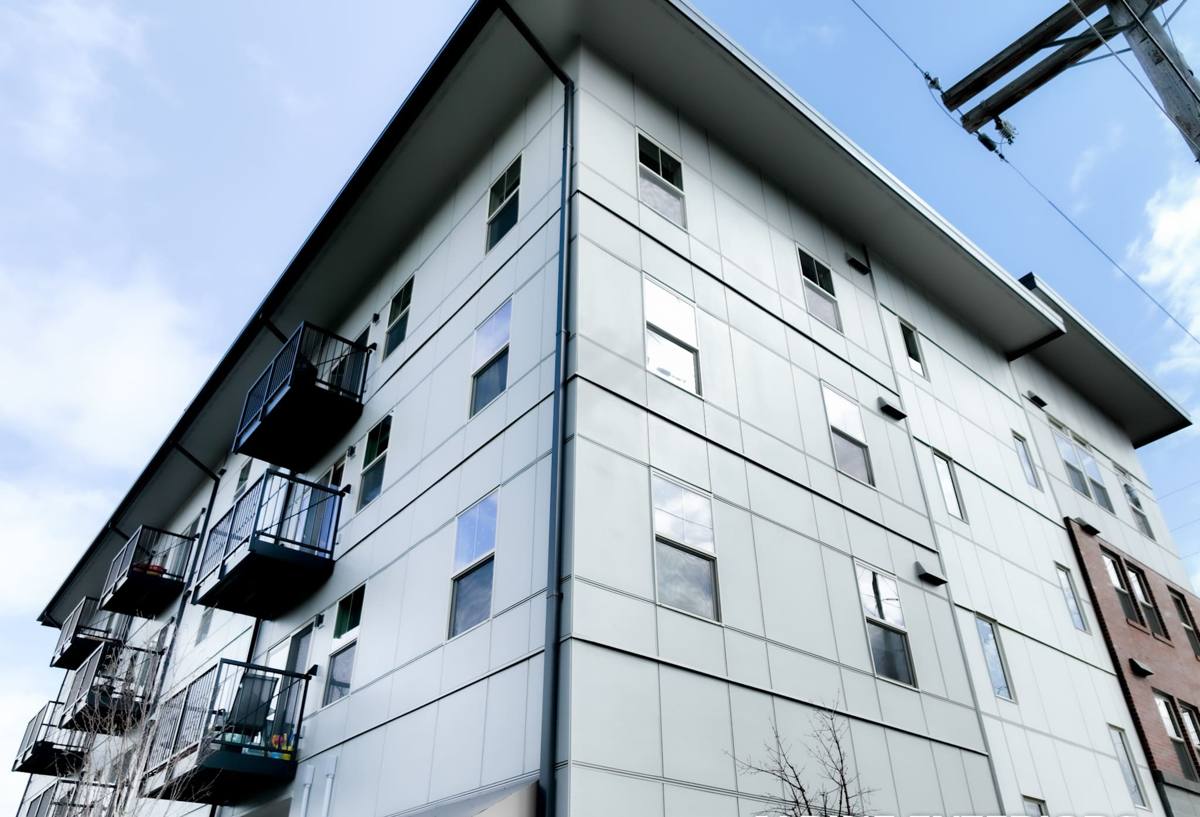
Fiber cement siding is made from cement, sand, and cellulose fiber, pressed and cured into boards that don't absorb water the way wood-based products do and don't degrade under UV and salt exposure the way vinyl can. It's dimensionally stable, so it doesn't expand and contract with humidity swings the way wood siding does — which matters a lot in a climate that goes from soaked to humid to soaked again for most of the year. It's also non-combustible, which isn't a Bellingham-specific concern the way it is further inland near wildfire zones, but it's still a real, permanent advantage over wood or wood-composite products.
None of that means fiber cement is maintenance-free. It still needs to be installed with the right clearances, caulked at the right joints, and painted or refinished on a normal cycle. What it means is that when it's installed correctly, it gives Bellingham homeowners a much wider margin for error against the specific conditions this area throws at a wall — rain, humidity, and salt — than most of the alternatives.
Why We Only Install James Hardie
We install James Hardie fiber cement exclusively. We don't install LP SmartSide, vinyl, Cemplank, Allura, primed spruce, or cedar, and we think homeowners deserve an honest explanation of why, not just a brand preference.
- LP SmartSide is a wood-strand product with a resin binder, not fiber cement. It performs reasonably well when detailed perfectly, but any lapse in edge sealing or flashing gives moisture a wood-based substrate to work into — a bigger risk in a climate this wet than in drier parts of the state.
- Vinyl siding is affordable and low-maintenance in the sense that it doesn't need painting, but it's a thin plastic product that can warp in direct sun, crack in cold snaps, and doesn't hold up visually to salt-air exposure the way a factory-finished fiber cement product does. It also can't be painted to refresh its look — once it fades, it fades for good.
- Cemplank and Allura are both legitimate fiber cement manufacturers, and we're not claiming otherwise. Our reason for standardizing on Hardie is warranty structure, factory finish consistency, and product-line engineering specific to different climate zones — details covered below — not a claim that competing fiber cement is unsafe or defective.
- Primed spruce and cedar are real wood, and real wood in a climate with Bellingham's rainfall and humidity is a long-term maintenance commitment: repainting on a tight cycle, watching for rot at end grain and joints, and accepting that insects and moisture will eventually find any gap in the finish.
Our position isn't that these products are garbage. It's that after weighing installation sensitivity, long-term maintenance burden, and how each product actually behaves in a marine, high-rainfall climate, James Hardie is what we're willing to put our name behind and warranty.
What Correct Installation Involves in Bellingham
Fiber cement siding fails almost exclusively at the installation level, not the product level. The board itself is engineered to last decades. What determines whether it actually does is whether the crew respected the manufacturer's spacing, fastening, and flashing requirements — and in a wet coastal climate, those details matter more than they would somewhere dry.
The details that matter most here
- Weather-resistive barrier and flashing: Every window, door, and penetration needs proper flashing integrated with the house wrap before siding goes up. This is what actually keeps driving rain out — the siding is the second line of defense, not the first.
- Clearances: Hardie specifies minimum gaps between siding and roof lines, decks, and grade. Skipping these clearances is one of the most common causes of moisture damage we see on homes that had siding installed by a crew unfamiliar with the product.
- Fastening schedule: Correct nail or screw placement, depth, and spacing keeps boards secure without over-driving fasteners, which can crack the material or compromise its water resistance at the fastener head.
- Caulking and joint treatment: Butt joints and trim intersections need to be sealed with a product rated for the application — not just any exterior caulk — and given the humidity here, joints that aren't sealed correctly stay damp longer than they would in a drier climate.
- Factory-primed cut edges: Any field-cut edge needs to be primed or sealed before installation. An unsealed cut edge is a moisture entry point, and it's an easy detail to skip if a crew is moving fast.
Product Line: Matching HZ Engineering to This Climate
James Hardie engineers its HZ (HardieZone) product lines for different climate exposures, and this is one of the concrete reasons we standardized on the brand rather than a competing fiber cement product. Whatcom County's marine climate — high humidity, heavy rainfall, moderate temperature swings — points toward the HZ5 line, engineered for wetter, more temperate regions, as opposed to the HZ10 line built for hotter, drier, freeze-heavy climates. Getting this match right at the specification stage isn't cosmetic — it affects how the product's moisture and thermal performance actually holds up over the years.
| Factor | Why It Matters in Bellingham |
|---|---|
| HZ5 climate engineering | Formulated for high-humidity, high-rainfall regions rather than hot/dry or freeze-dominant climates |
| ColorPlus factory finish | Baked-on finish resists fading and chipping better than field-applied paint exposed to salt air and UV |
| Fiber cement composition | Doesn't absorb and swell with moisture the way wood-based siding does in a wet climate |
| Non-combustible core | Permanent material advantage over wood and wood-composite alternatives |
Our Process for a Bellingham Siding Project
We approach every siding job the same way, whether it's a full re-side or a repair on an existing Hardie installation.
- Walkthrough and assessment: We look at the existing siding, sheathing, and moisture barrier condition, note problem areas — north-facing walls with moss buildup, low-clearance spots near grade or decks — and talk through what the home actually needs.
- Product and finish selection: We help homeowners choose profile, plank width, and ColorPlus finish, and confirm the correct HZ climate specification for the home's exposure.
- Prep and moisture barrier: Old siding removal (when needed), sheathing inspection and repair, and installation of a weather-resistive barrier with correctly integrated flashing at every opening.
- Installation to manufacturer spec: Fastening schedule, clearances, joint sealing, and cut-edge treatment all done to Hardie's published installation guidelines — not shortcuts that happen to look fine on install day.
- Final inspection and cleanup: A walk-through with the homeowner, site cleanup, and warranty registration paperwork.
What Drives Cost on a Bellingham Siding Job
| Cost Factor | Why It Varies |
|---|---|
| Existing wall condition | Rot or moisture damage found under old siding adds sheathing repair before new siding can go on |
| Home size and wall complexity | More corners, gables, and window trim mean more labor and cut-edge sealing |
| Siding profile and finish | Lap width, texture, and ColorPlus color selection affect material cost |
| Removal vs. tear-off scope | Full removal of old siding costs more than installing over adequately prepared sheathing, where that's appropriate |
| Trim and accessory work | Corner boards, window trim, and fascia detailing add scope beyond flat wall coverage |
We give homeowners a real number after seeing the home, not a phone estimate — too much of the cost depends on what's actually happening under the existing siding.
Living With Fiber Cement Siding in This Climate
Correctly installed Hardie siding is low-maintenance, not no-maintenance. In Bellingham's climate, that mostly means staying ahead of moss and mildew on shaded walls, keeping gutters clear so runoff isn't sheeting down the siding face, and doing a periodic rinse-down rather than letting organic growth sit and hold moisture against the surface for months. ColorPlus finishes hold their color far longer than field-applied paint, but repainting is still possible down the road if a homeowner wants to change the color, unlike vinyl.
- Rinse siding annually, especially on north- and east-facing walls prone to moss
- Keep gutters and downspouts clear so water isn't running down the wall face
- Trim back vegetation and tree cover that keeps shaded walls perpetually damp
- Inspect caulked joints every few years and re-seal any that have cracked or pulled away
- Watch for any staining or soft spots near grade, decks, or roof lines — early signs of a clearance or flashing issue
Why a Crew That Already Works Bellingham Matters
A lot of siding problems we get called out to repair weren't caused by bad material — they were caused by a crew that installed the product the same way they would in a dry inland climate, without adjusting for what Whatcom County's rain and humidity actually demand. A contractor who works this area regularly already knows which wall exposures need extra attention for moss, how local moisture patterns tend to find weak flashing details, and what the correct HZ specification is for this climate without having to look it up. That familiarity shows up in fewer callbacks and siding that's still doing its job fifteen years later.
Questions worth asking any siding contractor
- Are you a certified James Hardie installer, and can you explain your fastening and clearance approach?
- How do you handle flashing at windows, doors, and penetrations before siding goes up?
- What HZ climate specification do you use for homes in this area, and why?
- How do you treat field-cut edges before installation?
- What does your warranty cover, and is it backed by the manufacturer or just your own labor guarantee?
If your Bellingham home's siding is aging, showing moss staining, or you're planning ahead for a replacement, we're happy to walk the property, look at what's actually going on, and give you a straight, no-pressure estimate — no obligation, just an honest read on what the home needs.