 Sumas Window
 Ferndale Decks Face a Different Kind of Wear
A deck built the same way in Spokane or Boise won't hold up the same way in Ferndale. Whatcom County sits close enough to Bellingham Bay and the Strait of Georgia that homes here deal with a steady mix of salt-tinged air, long stretches of driving rain, and shaded, damp yards where moss and algae take hold fast. None of that is dramatic on its own, but stacked together over years, it's exactly the combination that finds every shortcut in a deck build.
We're not describing a worst-case scenario — this is just normal weather for this part of the county. A deck built for Ferndale has to be built assuming it will spend months of the year wet, will see freeze-thaw cycles in the framing, and will collect moss and organic debris no matter how often it's swept. The good news is that none of this is hard to design around, as long as it's accounted for from the footings up rather than patched in after the fact.
Salt Air and Metal Fasteners
Homes closer to the water pick up airborne salt that settles on exposed metal — screw heads, joist hangers, railing brackets, bolts. Over time, ordinary galvanized fasteners can start to corrode and stain the decking around them, especially where water sits after a rain. It's a slow problem, which is exactly why it gets missed: nothing looks wrong for the first couple of years.
Moss, Shade, and Standing Water
Ferndale has plenty of tree cover and overcast stretches, and decks tucked under eaves or trees dry out slowly. Moss and algae don't just look bad — they hold moisture against the decking surface and make boards slippery, which matters on stairs and near doorways. A deck with good airflow underneath and proper board spacing sheds this a lot better than one built tight to the ground with no ventilation.
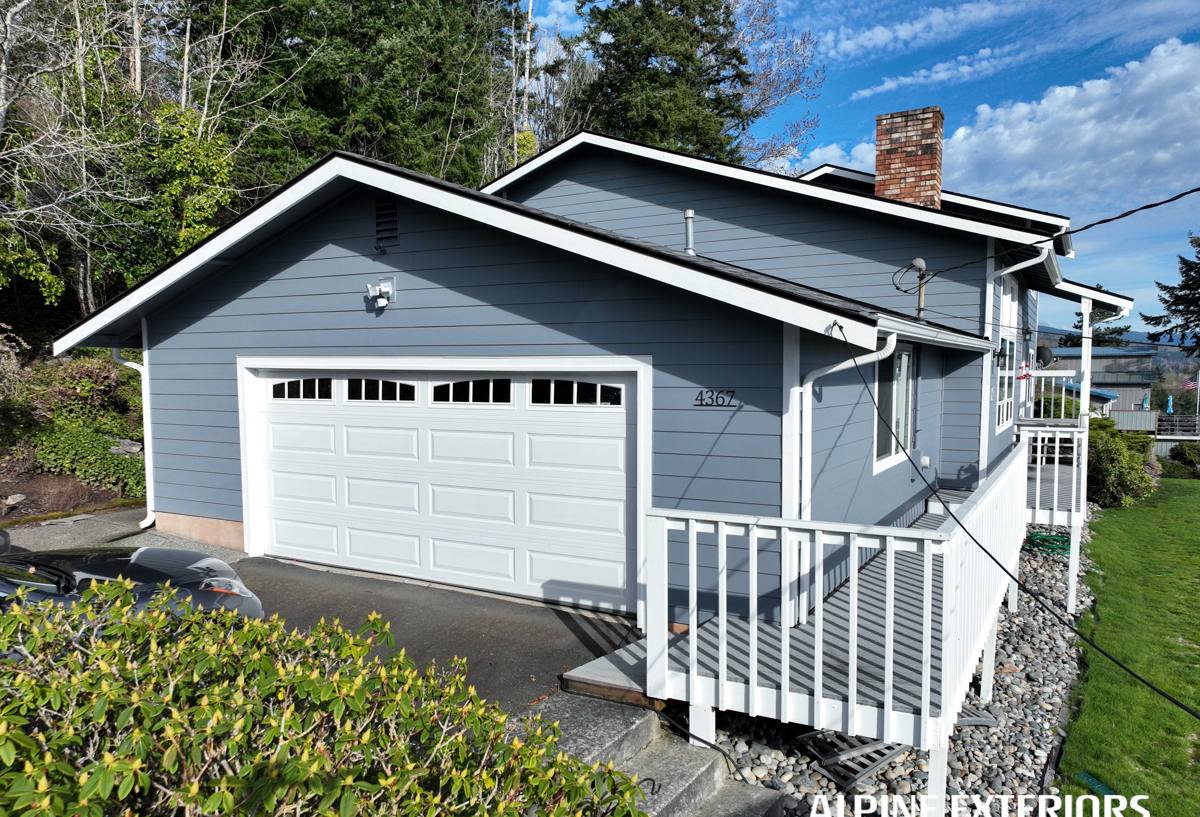
What a Correctly Built Deck Includes Here
A deck is a simple structure on paper — posts, beams, joists, decking — but the details that keep it solid for decades are mostly invisible once the project is done. In this climate, we pay close attention to a few things that get skipped on rushed jobs.
Footings and Frost Depth
Footings need to be dug to the depth required for the site and soil conditions, not just deep enough to look right. Whatcom County soil holds water longer than sandier ground, and a footing poured too shallow or without proper drainage around it can shift over a few wet winters. This is foundational work — literally — and it's not something to guess at.
Ledger Attachment and Flashing
Where a deck attaches to the house is the single most common source of rot and structural failure we see on older decks in this area. If the ledger board isn't properly flashed to shed water away from the house sheathing, water works its way behind the siding and into the rim joist over time — often invisibly, until there's a soft spot or a sag. Correct flashing at this joint is not optional in a climate that sees this much sustained rain.
Joist Spacing and Board Selection
Tighter joist spacing and correctly rated fasteners matter more with composite and PVC decking than with solid wood, since these materials can behave differently across temperature swings. Manufacturer installation specs exist for a reason, and skipping them is one of the most common ways a deck ends up with visible waviness or squeaking within a few years.
Choosing Decking Material for This Climate
There's no single "best" decking material — the right choice depends on how much maintenance a homeowner wants to do, budget, and how shaded or exposed the site is. Here's how the common options actually perform in a wet, moss-prone climate like Ferndale's.
| Material | How It Handles Local Conditions | Maintenance | General Notes |
|---|---|---|---|
| Pressure-treated wood | Handles moisture well when sealed and maintained; can hold moss in shaded spots if not cleaned | Needs re-staining or sealing every couple of years | Lowest upfront cost; most sensitive to skipped maintenance |
| Cedar | Naturally rot-resistant, ages well in wet climates, but softer surface | Periodic sealing to maintain color and resist weathering | Popular for its look; more of an investment than treated wood |
| Composite decking | Resists rot and moisture absorption well; some boards can stay slightly damp in deep shade | Occasional washing; no staining or sealing | Higher upfront cost, lower long-term upkeep |
| PVC / vinyl decking | Fully resists moisture absorption; performs well in wet, shaded areas | Washing only | Highest upfront cost of the common options |
We'll walk through these trade-offs honestly during an estimate rather than pushing whichever product has the best margin. A shaded, moss-prone lot and a sun-exposed one call for different recommendations even on the same street.
Fasteners, Hardware, and the Details That Get Skipped
This is where a lot of decks quietly fail early, and it's rarely visible until something moves. Our standard on Ferndale jobs is straightforward:
- Stainless steel or coated fasteners rated for ground contact and corrosion resistance, not bare galvanized hardware, on any deck within reach of coastal air
- Joist hangers and structural connectors matched to the fastener type — mixing metals accelerates corrosion at the joint
- Proper flashing and a drainage gap at every ledger-to-house connection
- Post bases that keep wood off standing water rather than buried or set flush to grade
- Adequate under-deck clearance and airflow so the structure can actually dry out between rain events
None of this is unusual or high-end — it's just doing the joint and hardware work correctly the first time, which costs little more than doing it wrong and saves the homeowner a rebuild a decade sooner than necessary.
How We Approach a Ferndale Deck Project
The process is the same whether it's a small ground-level deck or a larger multi-level structure — the site conditions just change what we're watching for.
- Site visit and assessment. We look at drainage, sun/shade exposure, soil conditions, and how the deck will attach to the house.
- Design and material discussion. We talk through decking material, railing style, and layout based on how the homeowner actually uses the space and how much upkeep they want long-term.
- Permitting. Deck projects in Whatcom County typically require a permit depending on size and height — we handle this as part of the project rather than leaving it to the homeowner.
- Footings, framing, and flashing. This is the stage that determines how the deck ages, and it's where we spend the most care.
- Decking, railing, and finish work. Fastener placement and board spacing are set with drainage and moss resistance in mind, not just appearance.
- Final walkthrough. We go over basic care so the deck holds up the way it's built to.
Permits and Local Considerations
Most decks attached to a house, or built above a certain height, require a building permit in Whatcom County — the exact thresholds depend on the specifics of the project and the site. Setback requirements from property lines also come into play, particularly on smaller in-town lots. We handle the permit process as a standard part of the job rather than treating it as an add-on, since an unpermitted deck can create real problems later if a home is sold or insured.
Keeping a Ferndale Deck Looking and Performing Its Best
Even a well-built deck needs some ongoing attention in this climate. A short seasonal routine goes a long way:
- Sweep debris and standing leaves off the deck surface regularly, especially in fall
- Rinse or lightly scrub moss and algae buildup before it gets slick, particularly on stairs and shaded corners
- Check that gaps between boards stay clear so water can drain rather than pool
- Inspect ledger flashing and visible fasteners once a year for early rust staining or gaps
- Re-seal or re-stain wood decking on the schedule the product calls for — don't wait for visible graying to start
- Confirm under-deck ventilation isn't blocked by stored items or overgrown landscaping
None of this takes much time, but skipping it is how a well-built deck ends up needing early repairs, and how a poorly built one fails outright.
Why Local Experience Actually Matters Here
A deck contractor who mostly works drier inland climates will often build a technically sound deck that still struggles in Ferndale, simply because the assumptions about moisture, drainage, and hardware are calibrated for a different environment. Working this area regularly means knowing which lots hold water longest, which fastener specs actually hold up near the water, and which details homeowners in this part of Whatcom County ask about because they've seen a neighbor's deck fail early. That familiarity shows up in the choices made before the first post is ever set, not just in the finished look.
If you're planning a new deck or replacing one that's showing its age, we're happy to take a look and talk through what makes sense for your property. Reach out for a free, no-pressure estimate — the form below gets you started.