 Sumas Window
 Siding Built for Deming's Weather, Not Just Its Curb Appeal
Deming sits in a stretch of Whatcom County where the Nooksack Valley funnels weather straight off the coast and up against the foothills. Homes here don't get a mild, dry summer to recover between wet seasons the way some parts of the state do. Instead they get long stretches of low-intensity, driving rain, heavy dew and fog that keeps siding damp overnight, and a moss and algae season that can run eight or nine months out of the year. Add in salt-laden air working its way up the valley from the Sound, and you have a climate that's genuinely hard on exterior materials — harder than most manufacturers' glossy brochures account for.
We replace siding in Deming on a regular basis, and the failure patterns we see are consistent: swollen bottom edges on wood-based products, caulk joints that gave up years before the siding did, paint that chalked and faded on the west and south exposures, and moss colonies that took hold in shaded, north-facing walls near tree lines and never let go. A correct siding replacement here isn't just about picking a color and nailing up new boards — it's about choosing a material and installation approach that actually holds up to this specific combination of moisture, temperature swing, and biological growth.
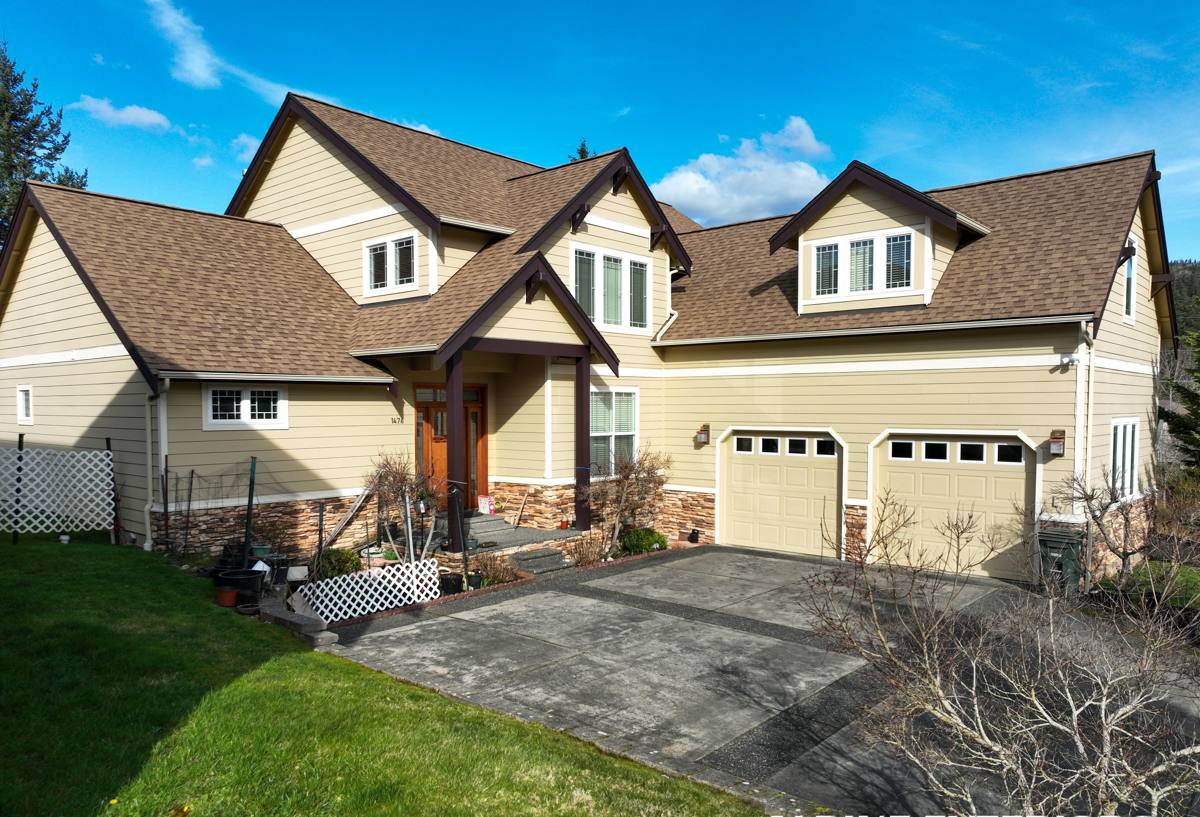
What Deming's Climate Actually Does to Siding
Moisture That Doesn't Dry Out Fast
Coastal-influenced valleys like this one see rain that's less about downpours and more about duration — days of steady, driving moisture followed by damp, overcast conditions that slow drying time. Any siding product that absorbs water, or any installation with poor drainage detailing, stays wet longer here than it would in a drier climate. That extended moisture exposure is what drives rot, delamination, and paint failure over time.
Moss and Algae Season
Shaded exposures, tree cover, and persistent damp conditions make Deming a strong environment for moss and algae growth on exterior surfaces. Once organic growth establishes itself on a porous or textured surface, it holds moisture against the substrate and accelerates whatever deterioration is already happening underneath. Siding that can't be pressure-washed or scrubbed without damaging the surface becomes a maintenance headache fast.
Salt Air Working Inland
Whatcom County isn't oceanfront, but air movement off the Sound carries salt further inland than most homeowners expect, especially at elevation or in open valley corridors. Salt exposure accelerates corrosion on fasteners, flashing, and any metal trim components, and it can affect the long-term performance of factory finishes that weren't engineered with that exposure in mind.
Freeze-Thaw and Temperature Swing
Winters in this part of the county bring real cold snaps between milder stretches. Materials that swell when wet and shrink when they dry — repeated over years of freeze-thaw cycling — develop cracking, warping, and joint failure well ahead of their expected service life.
What a Correct Siding Replacement Involves
Ripping off old siding and nailing up new panels is not a siding replacement — it's a siding swap, and it's how a lot of premature failures get built right back into a home. A proper job in this climate addresses what's underneath the siding as much as the siding itself.
- Full tear-off and substrate inspection: every wall gets checked for sheathing rot, soft spots, and prior water damage before anything new goes up.
- Weather-resistive barrier replacement: a correctly lapped and sealed house wrap or building paper system, not a patched-over old one.
- Rainscreen or drainage gap detailing: a small air gap behind the siding lets incidental moisture drain and dry instead of sitting against the wall assembly — this matters more here than in drier climates.
- Flashing at every penetration: windows, doors, hose bibs, vents, and light fixtures all need correctly lapped flashing so water is directed out, not behind the siding.
- Corrosion-resistant fasteners and trim hardware: given the salt exposure in this corridor, fastener selection isn't a place to cut corners.
- Manufacturer-spec installation: correct nailing patterns, clearances off grade and roofing, and joint treatment — all of which directly affect whether a warranty is honored later.
Skip any one of these steps and the new siding is fighting the same moisture problems the old siding lost to, just with a fresh coat of color on top.
Why We Install Only James Hardie Fiber Cement
We don't install vinyl, LP SmartSide, primed spruce, cedar, or other fiber cement brands. That's a deliberate standard, not a lack of options. In a climate like Deming's, the trade-offs of those products show up faster and cost more to deal with than most homeowners expect when they're comparing sticker prices.
Vinyl
Vinyl is inexpensive and low-maintenance in mild, dry climates, but it's a plastic product that expands and contracts significantly with temperature swings, and it doesn't stand up well to sustained UV and moisture exposure over decades. It can also become brittle in cold snaps, and once it's damaged, exact color matches for repairs get harder to find as product lines age out.
Wood-Based and Engineered Wood Siding
Cedar and primed spruce look great fresh off the truck, but they're organic materials in a climate that stays damp for long stretches. That combination is exactly what invites rot, checking, and moss colonization over time, and it means a real, recurring maintenance commitment — refinishing, caulking, and spot repairs — that most homeowners underestimate when they buy. Engineered wood products like LP SmartSide improved on solid wood's dimensional stability, but they're still wood-fiber-based and rely heavily on intact factory coatings and correct field sealing at every cut edge to keep moisture out over the long run.
Other Fiber Cement Brands
Products like Cemplank and Allura are also fiber cement and share Hardie's basic moisture and fire resistance advantages. Where we've drawn the line is consistency of finish quality, engineered product lines matched to specific climates, and the strength and clarity of the transferable warranty — factors that matter over a 30-plus-year siding life, not just at installation.
Why Hardie
James Hardie fiber cement is non-combustible, doesn't absorb water the way wood-based products do, and holds its shape through freeze-thaw and wet-dry cycling far better than vinyl or engineered wood. The ColorPlus factory finish is baked on under controlled conditions, which gives it more consistent, longer-lasting color performance than field-applied paint — a real advantage on shaded, moss-prone walls where finishes take a beating. Hardie also engineers specific HZ5 product formulations for regions with heavy moisture exposure, which is a meaningful match for a valley climate like Deming's. Backed by a strong transferable warranty and a long, proven installed track record, it's the product we're willing to put our name behind.
How We Approach a Deming Project
- On-site assessment: we walk the exterior, check current siding and substrate condition, and look specifically for moisture damage, moss buildup, and problem exposures (typically north- and west-facing walls here).
- Scope and estimate: a clear, itemized plan covering tear-off, substrate repair if needed, weather barrier, flashing, and the Hardie product line and color that fits the home.
- Tear-off and repair: old siding comes off, damaged sheathing gets addressed before anything new goes on.
- Weather barrier and drainage detailing: correctly lapped house wrap and a drainage gap where the wall assembly calls for it.
- Installation to manufacturer spec: proper fastening, clearances, and joint treatment so the warranty stands behind the work.
- Final walkthrough: we go over the finished exterior with the homeowner before calling the job done.
Why Local Experience in Deming Matters
A crew that's replaced siding elsewhere in the Pacific Northwest can still get Deming wrong. This valley's combination of persistent damp, heavy shade in places, and salt-tinged air moving up from the Sound is specific enough that generic installation practices leave gaps. We already know which exposures in this area tend to hold moisture longest, where moss takes hold first, and how to detail flashing and drainage so the new siding is actually working with the climate instead of just tolerating it. That local pattern recognition is the difference between a siding job that looks good for one season and one that performs for decades.
Cost Factors for Deming Siding Replacement
Every home is different, but the same variables tend to drive cost up or down on Deming projects. Rather than quote a number that won't mean much without seeing your home, here's what actually moves the estimate:
| Factor | Why It Matters |
|---|---|
| Substrate condition | Rot or water damage found during tear-off adds repair scope before new siding can go on |
| Home size and wall complexity | More corners, dormers, and trim detail mean more labor and material |
| Siding profile and color | Lap width, texture, and ColorPlus finish selection affect material cost |
| Current siding type | Some tear-offs (especially old wood or stucco) are more labor-intensive than others |
| Access and site conditions | Tree cover, slope, and staging space around the home affect labor time |
| Trim and flashing scope | Full trim replacement and correct flashing at penetrations add cost but are not optional for a durable install |
Signs Your Deming Home Needs Siding Replacement Now
- Soft or spongy spots when you press on the siding, especially near the bottom courses
- Persistent moss or algae growth that returns quickly after cleaning
- Paint that's peeling, bubbling, or chalking heavily on one or more exposures
- Visible gaps, warping, or separation at siding joints and corners
- Rising energy bills that suggest the wall assembly behind the siding is compromised
- Interior signs of moisture — stains, musty smell, or damage near exterior walls
If your home is showing more than one of these signs, it's worth having someone look at the substrate, not just the surface.
If you're weighing a siding replacement for a home in Deming, we're happy to take a look and walk you through what we'd actually recommend — no pressure, no obligation. Request a free estimate below and we'll get back to you with straight answers.