 Sumas Window
 Why Decks in Maple Falls Wear Out Faster Than the Manuals Say
Every deck manufacturer publishes a lifespan number, and almost none of them account for what a deck actually faces in this part of Whatcom County. Between the driving rain that blows in off the marine air near the coast and settles into the lowlands, and a moss season that can run nine or ten months out of the year here, decks in Maple Falls take on moisture in ways that decks in drier climates never do. Wood doesn't just get wet and dry out on a normal cycle — it stays damp longer, moss and algae take hold on shaded boards, and that constant moisture works its way into joints, fastener holes, and ledger connections long before the surface looks bad.
We've replaced enough decks around Sumas and the surrounding area to know the failure pattern by heart: the decking looks rough first, but the real damage is almost always underneath — at the ledger board, the joist hangers, and the footings — where nobody looks until something gives.
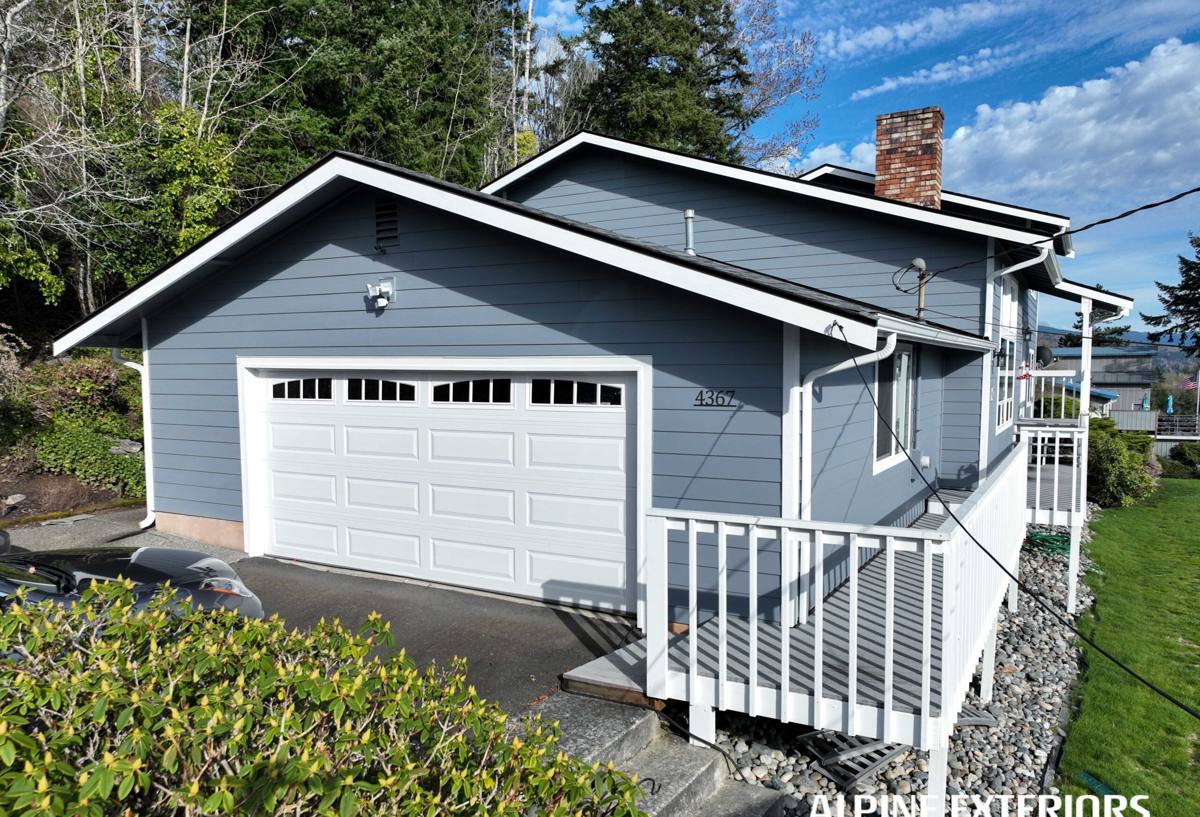
Where Maple Falls Decks Actually Fail
The Ledger Board Connection
The ledger board — where the deck attaches to the house — is the single most common failure point on wood decks in wet climates, and it's almost never visible until the deck is pulled apart. If the original builder skipped proper flashing, or used the wrong fastener type, water gets trapped between the ledger and the house sheathing and rots both from the inside out. This is also the connection responsible for most of the serious deck-collapse incidents reported around the country, which is exactly why we treat it as the first thing we inspect, not the last.
Moss, Algae, and Trapped Moisture
A long moss season doesn't just make boards slippery — moss and algae hold water against the wood surface far longer than open air would, accelerating rot on horizontal deck boards and on the tops of joists where debris collects. Decks with tight board spacing, poor airflow underneath, or heavy tree cover nearby show this first.
Fasteners and Hardware
Standard galvanized fasteners and hardware corrode faster in consistently damp, acidic wood environments than most homeowners expect, especially with treated lumber. Once a fastener starts to corrode, it loses holding strength quietly — you won't see it from the top of the deck.
What a Correct Deck Replacement Actually Involves
A deck replacement done right is a structural project, not a cosmetic one. Swapping old boards for new ones without addressing what's underneath just resets the clock on the same failure pattern. Here's what we check and correct on every full replacement:
- Ledger board flashing — proper metal flashing and a moisture barrier between the ledger and the house, not caulk alone
- Ledger fasteners — structural lag screws or through-bolts sized and spaced to code, not deck screws
- Footings — condition, depth, and frost line compliance; undersized or shifted footings get addressed before anything else
- Joist hangers and framing hardware — corrosion-resistant hardware rated for treated lumber contact
- Joist spacing and span — matched to the decking material's actual span rating, not the old spacing
- Drainage and airflow underneath the deck — grading and ventilation so water doesn't pool under the structure
- Guardrail and stair framing — rebuilt to current structural standards, not just re-skinned
Skipping any one of these means the new decking will look great for a season or two while the same underlying problem keeps working.
Choosing the Right Decking Material
There's no single "best" decking material — there's the right material for how the deck is used, how much maintenance the owner wants to do, and what budget makes sense. Given the moisture and moss conditions common in this area, we walk every homeowner through the real trade-offs rather than pushing one product.
| Material | Moisture/Moss Resistance | Maintenance | Typical Lifespan | Cost Tier |
|---|---|---|---|---|
| Pressure-treated lumber | Good if sealed regularly; moss can take hold in shaded areas | Annual cleaning and re-sealing recommended | 15–20 years with upkeep | Lowest |
| Cedar | Naturally rot-resistant but still absorbs moisture over time | Periodic sealing/staining to maintain appearance and resistance | 15–25 years with upkeep | Mid |
| Composite decking | Doesn't absorb moisture the way wood does; less prone to moss staining | Occasional washing; no sealing or staining required | 25–30+ years (manufacturer warranty dependent) | Higher upfront |
| PVC/capped polymer | Fully moisture-resistant surface | Lowest maintenance of the group | 25–30+ years | Highest upfront |
We're upfront about the trade-offs on every material: composite and PVC cost more up front but remove the annual maintenance burden that real wood carries in a climate like this. Wood costs less initially but only performs as advertised if someone actually keeps up with sealing and cleaning. Neither choice is wrong — it depends on whether you'd rather pay once or maintain over time.
Permits, Guardrails, and Code Requirements
Deck replacements involving structural framing changes typically require a building permit through the local jurisdiction, and elevated decks have specific requirements around guardrail height, baluster spacing, and stair rise/run that get inspected. We handle the permit process as part of the job rather than leaving it to the homeowner to sort out, and we build to the current code requirements even when we're replacing a deck that was originally built under older standards. This matters most on decks with any significant height off the ground, where guardrail and footing requirements are strictest.
Signs Your Deck Needs Replacement, Not Repair
Not every deck problem means a full tear-off. But there's a point where patching individual boards costs more over time than doing the job once, correctly. Watch for:
- Soft or spongy spots anywhere in the decking, especially near the house
- Visible gaps, rust streaks, or movement at the ledger board connection
- Persistent moss or dark staining that comes back within weeks of cleaning
- Wobble in the railing posts or noticeable give when leaning on the railing
- Fasteners that are rusted, backing out, or leaving dark stains around the screw heads
- A deck more than 15–20 years old that has never had the substructure inspected
If you're seeing two or more of these, it's worth having someone look at the framing before deciding between repair and full replacement.
Our Process for a Deck Replacement
We keep the process straightforward and communicate what we find at each stage, since most of the real decisions on a deck project happen after we can see the framing:
- On-site assessment — we check the ledger connection, footings, and framing condition before quoting anything, since these drive most of the real cost
- Material walkthrough — we go over decking and railing options based on your budget and how much maintenance you want to take on
- Permit handling — we pull the required permits for structural work so you're not managing that process
- Tear-off and structural correction — old decking, framing issues, and ledger problems get addressed before any new material goes down
- Installation — decking, railing, and stairs installed to current code and manufacturer spacing requirements
- Final walkthrough — we go over the finished deck and basic care with you before calling the job done
Why a Crew That Already Works in Maple Falls Makes a Difference
A deck replacement crew that mostly works in drier parts of the state will build to a generic standard. A crew that works this end of Whatcom County regularly builds with the driving rain, the moss, and the moisture load in mind by default — flashing details, fastener choices, and drainage planning that account for how this climate actually treats a structure over years, not just how it looks on installation day. That's less about brand names and more about habits: checking the ledger every time, never assuming the old footings are fine, and choosing hardware rated for the moisture conditions this area actually sees.
Keeping a New Deck Performing Long-Term
Whatever material you choose, a few habits make a real difference in this climate:
- Sweep debris off the deck regularly, especially in fall — trapped leaves hold moisture against the boards
- Keep gutters and downspouts clear so runoff isn't draining directly onto or under the deck
- Address moss as soon as it appears rather than letting it establish
- Check the ledger area and any visible framing once a year for early signs of moisture damage
- Re-seal wood decking on the schedule the product actually calls for, not "when it starts looking gray"
If you're weighing a deck replacement in Maple Falls or anywhere around Sumas, we're happy to come take a look and give you an honest read on what's actually going on underneath — no pressure, no obligation. Fill out the form below and we'll get an estimate scheduled.