 Sumas Window
 Deck Repair in Kendall: Built for What This Climate Actually Does
Kendall sits in the foothill country outside Sumas, where the tree cover is heavier, the ground stays damp longer into the season, and decks get less direct sun than they would closer to open farmland. That combination is hard on outdoor structures. Moisture-laden marine air moves inland off the Salish Sea and settles into these low, wooded pockets of Whatcom County, and it doesn't clear out the way it does in drier parts of the state. Add driving rain off the foothills and a moss season that can run from early fall through late spring, and a deck here ages differently than the same deck would in a sunnier neighborhood twenty minutes away.
We repair decks all over the Sumas and Kendall area, and the failure patterns are consistent: ledger boards that trap water against the house, joists that stay wet under decking that never fully dries, and fasteners that corrode faster than homeowners expect. This page is about fixing those problems correctly — not just patching what's visible, but addressing why it failed in the first place.
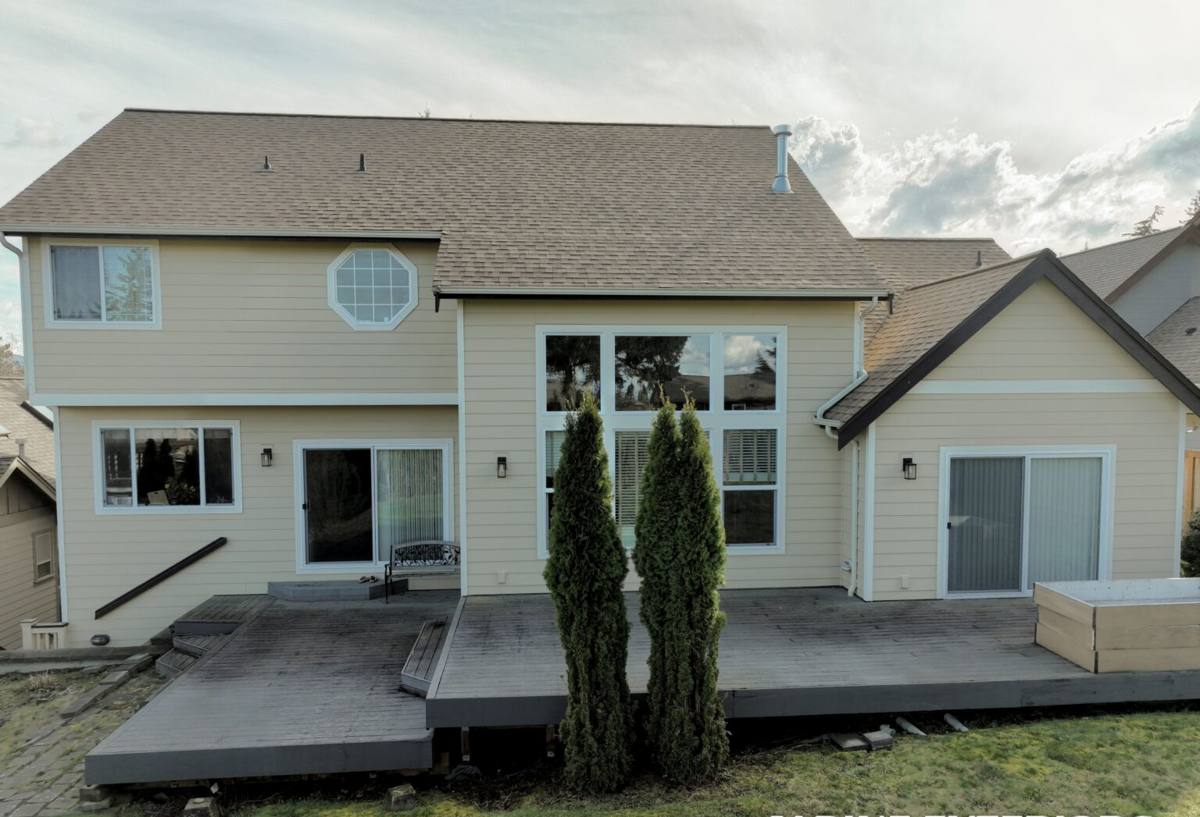
Signs a Kendall Deck Needs Repair
Most deck problems don't show up as one dramatic failure. They show up as small signals that get ignored for a season or two until the damage spreads. Here's what we look for, and what you should too:
- Soft or spongy spots when you walk the deck surface, especially near the house or along the rim joist
- Green or black staining that comes back within weeks of cleaning it off
- Nail heads popping up or screws that spin freely without biting into wood
- Gaps opening between the deck and the house siding or trim
- Railings that flex or feel loose when you lean on them
- A musty smell coming from underneath the deck, particularly after a few dry days
- Visible rust bleeding from fasteners or metal hardware onto the decking
Any one of these on its own might just need attention. Several together usually mean water has been getting into the structure for a while, which is common on decks that sit in shade for most of the day.
Where the Damage Usually Starts
On the decks we've worked on in this area, the ledger board — the piece that attaches the deck to the house — is the single most common failure point. It's also one of the least visible, because it's covered by decking above and often by skirting or landscaping below. If flashing wasn't installed correctly when the deck was built, or if it's degraded over the years, water runs behind it every time it rains and never fully dries out between storms. Joists directly under high-traffic areas or under planters and hot tubs are the next most common trouble spots.
What a Correct Deck Repair Actually Involves
A repair that just replaces the boards you can see, without checking what's underneath, tends to fail again within a couple of years in this climate. A repair that holds up starts with an honest look at the structure, not just the surface.
Structural Inspection
We check the ledger connection and flashing, probe joists and beams for soft wood, check post bases for standing water or rot at ground contact, and test railings and stair stringers for movement. This is the part homeowners can't always assess themselves, since most of it is hidden.
Fastener and Hardware Condition
Corroded fasteners are a bigger deal than they look. Once a nail or screw loses its grip, the board around it starts to work loose with every step, which enlarges the hole and lets in more water. We replace fasteners with hardware rated for exterior and ground-contact use, matched to the metal in any structural connectors already in place, so we're not mixing metals that react against each other.
Flashing and Water Management
If the ledger flashing is missing, damaged, or was never properly integrated with the house's water-resistive barrier, we address that as part of the repair — not as an optional add-on. This is the piece that determines whether the fix lasts five years or fifteen.
Decking, Joists, and Framing
We replace only what's actually compromised, sistering new lumber to weakened joists where the rest of the frame is sound, rather than defaulting to a full tear-off when it isn't needed. Where an entire section has failed, we say so plainly and explain why.
Repair or Replace? What Actually Drives That Decision
Homeowners often assume a deck with visible damage needs full replacement. Sometimes that's true. Often it isn't. The table below covers the main factors we weigh when giving an honest recommendation.
| Factor | Favors Repair | Favors Replacement |
|---|---|---|
| Framing condition | Ledger, joists, and posts are structurally sound | Multiple joists or the ledger are soft or rotted |
| Age of the deck | Under 15-20 years, built to code | Older deck with outdated framing or connections |
| Extent of damage | Isolated boards, railings, or fasteners | Damage spread across most of the surface or structure |
| Original construction quality | Proper flashing and hardware were used originally | No flashing, undersized framing, or poor original build |
| Budget priorities | Extending usable life at lower cost now | Wanting a longer-term reset and possible layout change |
Cost for deck repair in this area typically runs from a few hundred dollars for isolated board and fastener work up to several thousand for ledger, flashing, and framing repairs on a larger deck. We give you real numbers after inspecting the deck in person — general ranges online rarely reflect what's actually going on under your specific structure.
Our Repair Process for Kendall Homes
- On-site inspection. We walk the full deck, check underneath where access allows, and probe suspect areas rather than guessing from the surface.
- Written scope and estimate. You get a clear breakdown of what's failing, what we recommend fixing, and what it costs — no vague line items.
- Structural repairs first. Ledger, flashing, joists, and posts get addressed before any cosmetic work, since surface repairs over a compromised frame don't hold.
- Fastener and hardware replacement. Anything corroded or undersized gets swapped for exterior-rated hardware appropriate to the load it carries.
- Decking and railing repair or replacement. We match existing material where reasonable, or discuss options if the original material is discontinued or a poor long-term fit.
- Final walkthrough. We check the repair for level, secure attachment, and proper drainage before calling the job done.
Materials: What We Use and Why
Wood decking is still common in Kendall and holds up fine when it's properly maintained — sealed or stained on a regular schedule and kept clear of standing debris. Composite decking sheds water differently and doesn't need refinishing, but it isn't maintenance-free; debris and moss buildup on composite in shaded areas need regular cleaning too, since the surface texture holds moisture longer than it looks like it would. We're upfront about that trade-off rather than presenting either material as a fix-it-and-forget-it option.
For framing repairs, we use pressure-treated lumber rated for ground contact where it's within a few inches of soil or in a chronically damp area, standard treated lumber elsewhere, and stainless or hot-dip galvanized fasteners sized to the connection. Mixing incompatible metals accelerates corrosion, so hardware selection isn't an afterthought — it's part of the repair plan from the start.
Moss, Mold, and Seasonal Maintenance
Even a correctly repaired deck needs some upkeep in a climate like this one. Moss doesn't just look bad — it holds moisture against the decking surface and makes boards slick underfoot, which is a real fall hazard on stairs and ramps. A short seasonal routine goes a long way:
- Sweep leaves and needles off the deck regularly through fall, especially in shaded corners
- Clean visible moss or algae before it spreads, using a deck-safe cleaner rather than a pressure washer set too aggressively
- Check that gaps between boards aren't packed with debris that traps water
- Inspect the ledger area and any spots where the deck meets the house once or twice a year
- Reseal or restain wood decking on the schedule the product calls for — don't wait until it looks obviously weathered
- Clear gutters and downspouts near the deck so runoff isn't draining directly onto or under it
None of this replaces a proper repair when something's actually failed structurally, but it buys real time between repairs and helps you catch problems while they're still small.
Why a Crew That Already Works in Kendall Matters
Deck problems in this part of Whatcom County follow patterns tied to the terrain and tree cover — which sides of a house stay damp longest, which decks sit low enough to catch runoff, how fast moss comes back in a shaded yard versus an open one. A crew that repairs decks across Sumas and the surrounding foothill areas has already seen how those conditions play out over years, not just in a single inspection. That matters when the decision is whether a joist needs sistering or full replacement, or whether flashing was ever installed correctly in the first place. We're not guessing based on a textbook climate zone — we're basing the recommendation on what actually happens to decks in this specific area.
If your deck in Kendall has soft spots, loose railings, recurring moss, or you just want an honest read on its condition before winter rains set in, we're glad to take a look. Estimates are free, there's no pressure to sign anything on the spot, and you'll get a straight answer about what needs fixing now versus what can wait.