 Sumas Window
 Decks Built for How Laurel Actually Weathers
Laurel sits in the Whatcom County countryside near Sumas, close enough to the border and the foothills that its weather runs wetter and cooler than a lot of homeowners expect when they're planning an outdoor deck. Between valley rain, long stretches of overcast humidity, and a moss season that can run most of the year, a deck built here has to work harder than the same deck would in a drier climate. We build decks for Laurel homes with that reality in mind from the first design conversation, not as an afterthought once the boards are already down.
This page is about custom decks specifically for the Laurel area — what the local conditions demand, what a properly built deck actually involves under the surface, and how we run the job from first call to final walkthrough.
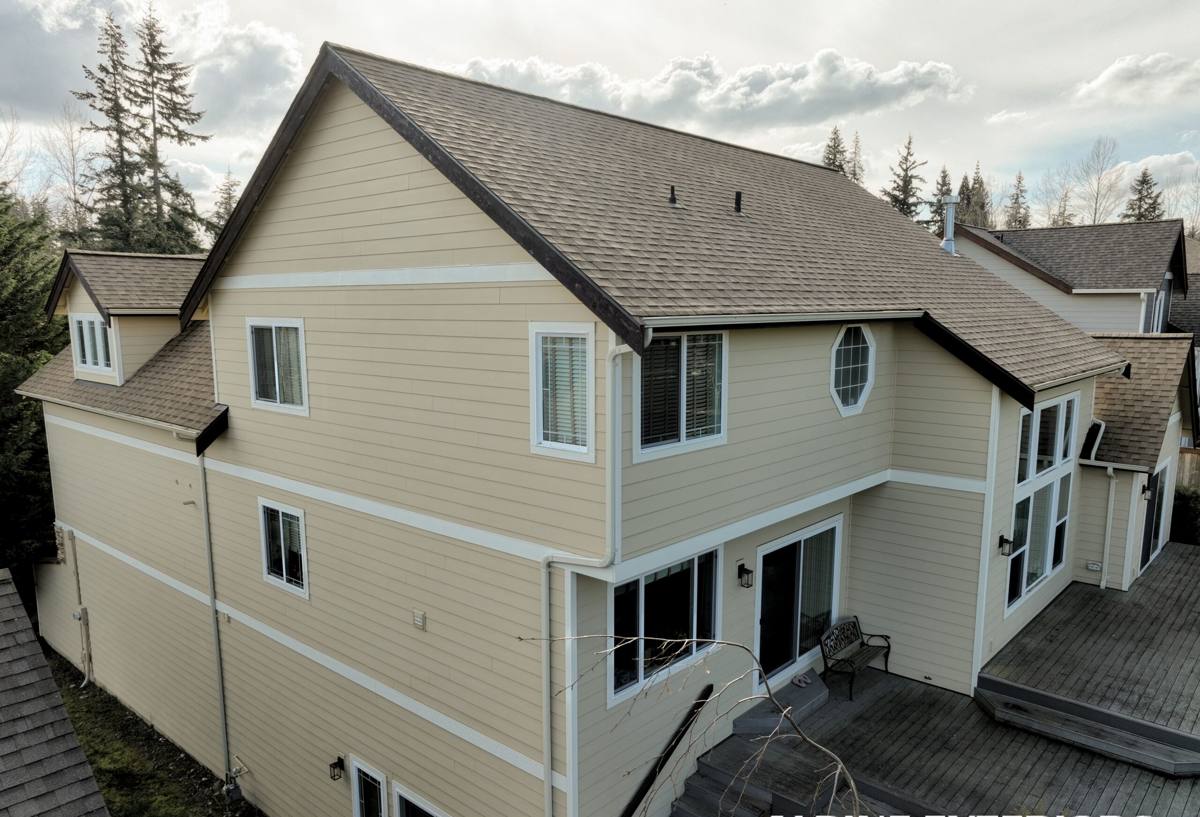
What This Climate Does to an Outdoor Deck
Most deck failures we get called out to inspect aren't dramatic — they're slow. Water finds a weak spot, sits there through a wet winter, and by the time it shows on the surface, the damage underneath is already done. A few things drive that in Laurel specifically:
Standing Moisture and Slow Rot
Whatcom County doesn't get hard, sustained downpours as often as it gets long stretches of drizzle and fog. That kind of moisture is worse for a deck than a heavy rain, because it doesn't run off — it sits in joints, fastener holes, and anywhere two boards meet. Untreated or poorly sealed wood absorbs it slowly over months, and rot sets in from the inside before it's visible from above.
Moss, Algae, and Surface Buildup
The same conditions that keep lawns green through winter also grow moss on deck boards, especially anywhere shaded or slow to dry — under railings, along the house wall, near overhanging trees. Beyond looking bad, a mossy deck surface holds moisture against the wood and gets slick and dangerous underfoot.
Coastal Moisture Meets Valley Cold
Laurel gets the combination of moisture moving in off the coast and the colder snaps that settle into the valley in winter. That mix of salt-tinged air, driving rain, and the occasional freeze cycle is hard on fasteners and connectors in particular — untreated or poorly coated hardware corrodes faster here than it would somewhere drier or milder.
Choosing Decking Material for a Laurel Home
There's no single "right" material for every deck — it depends on budget, how much upkeep you want to do, and how the deck will be used. Here's how the common options actually perform in this climate, honestly:
| Material | Upfront Cost | Maintenance | How It Handles This Climate |
|---|---|---|---|
| Pressure-treated lumber | Lowest | Needs re-sealing every 1-2 years | Good rot resistance when properly treated, but demands regular upkeep or moss and graying set in fast |
| Cedar | Mid-range | Needs sealing/staining regularly | Naturally resists rot better than most softwoods, but still needs consistent maintenance to keep moisture out |
| Composite decking | Higher | Low — occasional washing | Won't rot or need sealing, but requires correct spacing and drainage below to avoid trapped moisture and mold on the underside |
| PVC/capped composite | Highest | Lowest | Best moisture resistance of the common options, strongest warranty structure, but the highest material cost |
We're upfront with homeowners about trade-offs rather than pushing one product. Wood costs less to install but costs you time and money over the years in sealing and repair. Composite and PVC cost more upfront but shift that cost away from ongoing maintenance — which matters more in a climate that punishes neglected wood as quickly as this one does.
What's Underneath Matters More Than What's On Top
A deck that looks good on day one and a deck that's still solid in ten years are built differently below the surface — and that's where most corner-cutting happens, because it's invisible once the job is done.
Footings Set to Local Frost Depth
Footings that aren't set deep enough can shift as the ground freezes and thaws through a Whatcom County winter, which throws off the whole structure over time. We size and set footings to the depth the local building department requires for this area, not a generic minimum.
Ledger Board Flashing
Where a deck attaches to the house, the ledger board is the single most common source of hidden water damage — including damage to the house's siding and framing behind it, not just the deck. Proper flashing directs water away from that connection instead of letting it wick into the wall. This is a step that's easy to skip and expensive to fix later, and it's non-negotiable on every deck we attach to a house.
Drainage and Slope
Deck surfaces should have a slight slope away from the house so water sheds instead of pooling. Joist tape over the framing adds another layer of protection against the moisture that inevitably gets past the surface boards over time.
Fasteners and Connectors
In a climate with this much moisture exposure, we use corrosion-resistant fasteners and structural connectors rated for exterior, coastal-influenced conditions — not standard hardware that's fine in a dry climate but starts rusting and weakening within a few seasons here.
Railings, Stairs, and Code Requirements
Guardrail height, baluster spacing, and stair requirements are set by the building code your local jurisdiction enforces, and they exist for real safety reasons — a deck that's out of compliance is a liability whether or not it ever gets inspected. We build to current code requirements as a baseline, and we handle the permit and inspection process rather than leaving that on the homeowner.
Beyond the code minimums, railing material matters in this climate too. Wood railings need the same upkeep as wood decking. Metal railings should be a finish that resists corrosion in damp, salt-influenced air — not just standard powder coat that looks fine in the showroom but chips and rusts within a few winters outdoors here.
What Drives the Cost of a Custom Deck
Every deck is priced around the specifics of the project, but the same handful of factors move the number up or down on nearly every job:
| Factor | Why It Matters |
|---|---|
| Size and shape | More square footage and multiple levels or angles increase material and labor |
| Material choice | Pressure-treated wood costs the least upfront; composite and PVC cost more but need far less upkeep |
| Height off grade | Taller decks need deeper footings, more framing, and stairs — all of which add cost |
| Railing style | Basic wood or metal balusters cost less than glass panels or cable rail systems |
| Site access and ground condition | Sloped or hard-to-reach lots take more time to prep and build on |
Because of how much these factors vary, we don't quote a number until we've actually seen the site. What we can say honestly is that a well-built custom deck for a typical Laurel-area home is a meaningful investment — and the material and framing decisions made upfront are what determine whether it's still solid in fifteen years or needs major repair in five.
How We Handle a Laurel Deck Project
- Site visit and conversation. We look at the ground, the house's siding and framing at the attachment point, drainage patterns, and sun/shade exposure before talking materials.
- Design and material selection. We walk through the trade-offs above based on your budget and how you actually plan to use the space.
- Permitting. We handle the permit application and coordinate the required inspections with the local building department.
- Build. Footings, framing, flashing, and decking, in that order, with the structural work done right before anything decorative goes on.
- Walkthrough. We go over the finished deck with you, including what maintenance it needs and how often, before we consider the job done.
Keeping a Laurel-Area Deck Solid Through the Seasons
Even a well-built deck needs some ongoing attention in this climate. A short seasonal routine goes a long way toward avoiding the slow, hidden damage that's common here:
- Sweep debris and standing leaves off the surface regularly through fall — trapped organic matter holds moisture against the boards
- Wash down moss and algae buildup at least once a year, more often on shaded sections
- Check and re-seal wood decking on the schedule appropriate to that wood species — don't wait until it looks gray and dry
- Inspect the ledger board flashing and the area where the deck meets the house once a year for any sign of water staining
- Check railings and stair connections for looseness, especially after a hard winter freeze-thaw stretch
- Clear gaps between boards so water and debris can drain through instead of pooling on the surface
Why a Crew That Already Works in Laurel Matters
A deck built to a generic set of assumptions doesn't hold up the same way here as it would somewhere drier. We work in Sumas and the surrounding Whatcom County communities regularly, which means we already know how the local building department handles deck permits, what the soil and drainage tend to look like on lots in this area, and which details actually matter once a deck has been through a few of this region's wet winters. That's not something you get from a crew passing through for a single project — it comes from building and maintaining decks in this exact climate over and over.
If you're planning a new deck or replacing one that's showing its age, we're glad to come take a look and talk through what makes sense for your home and budget. Fill out the form below for a free, no-pressure estimate.