 Sumas Window
 Why Siding in Custer Takes a Different Kind of Beating
Custer sits in the part of Whatcom County where the weather off the water meets the weather rolling down from the foothills, and homes here deal with a longer, wetter version of what the rest of the Pacific Northwest gets. Salt-laden air moves inland off the Strait of Georgia and Semiahmoo Bay, driving rain comes in sideways for months at a stretch, and the shaded, damp conditions that follow keep moss and algae active on north- and west-facing walls almost year-round. None of that is dramatic on its own, but siding doesn't fail from one storm — it fails from thousands of small moisture cycles that most homeowners never see happening.
That combination is exactly why siding repair calls out here look different from repair calls in a drier inland county. We're not usually chasing a single obvious problem. We're chasing the slow accumulation of trapped moisture behind trim, softened caulk joints, and organic growth that's been quietly holding water against the wall for a season or two longer than it should have.
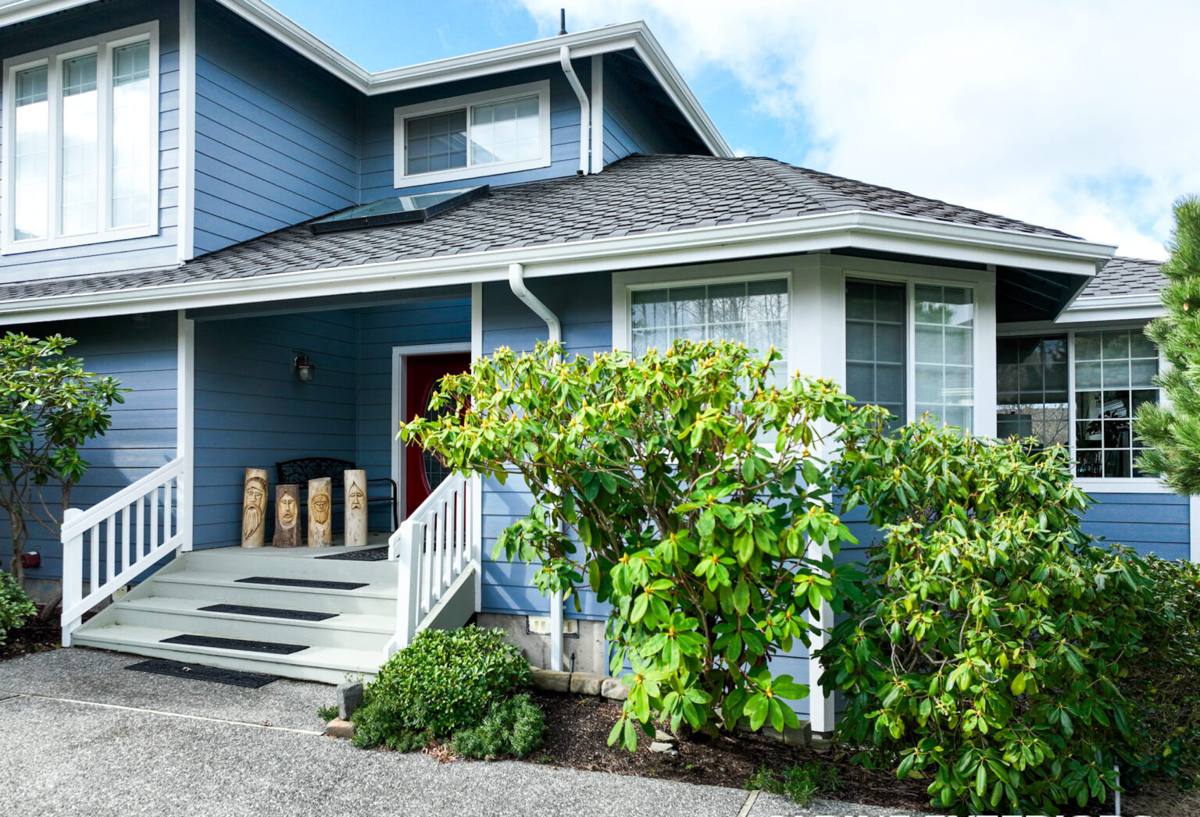
What Actually Goes Wrong With Siding Around Custer
Moisture Intrusion at Trim and Seams
The most common failure point isn't the siding panel itself — it's the transitions. Corner boards, window trim, and butt joints between panels are where water finds a way in if the flashing or caulking wasn' t detailed correctly the first time. Once moisture gets behind the siding, it can sit there for a long time before it shows up as a visible problem, which is why a lot of the repairs we do involve pulling material that looks fine on the surface but is compromised underneath.
Moss, Algae, and Staining
Shaded walls, overhanging trees, and the extended damp season mean moss and algae get a real foothold on siding surfaces that don't dry out quickly between rain events. On some materials this is cosmetic. On others — particularly wood-based products — sustained moisture and organic growth soften the substrate over time and turn a cleaning problem into a repair problem.
Impact and Fastener Damage
Cracked or dented panels from yard debris, ladders, or general wear happen everywhere, but repairing them correctly out here means more than swapping the panel. It means re-checking the water-resistive barrier and flashing underneath before anything new goes back on, because a quick patch over compromised underlayment just relocates the problem a few years down the road.
Failed Caulk and Sealant Joints
UV exposure and constant wet-dry cycling break down sealants faster than most homeowners expect. Once a joint fails, it's not just an appearance issue — it's an open path for water, and it's one of the most common things we find during a siding inspection that started as a call about something else entirely.
Repair vs. Replace: How We Make the Call
Not every damaged section needs to come off the wall, and not every home needs a full re-side. The honest answer depends on how far the moisture has traveled and how much of the siding system is still sound. Here's roughly how we sort it:
| Condition Found | Typical Approach |
|---|---|
| Isolated crack or impact damage, sheathing dry underneath | Spot repair — replace the damaged section, re-flash, re-caulk |
| Failed caulk joints, surface moss/algae, no trapped moisture | Reseal and clean; no panel replacement needed |
| Soft or discolored sheathing behind trim in one or two areas | Localized tear-out and repair, including underlayment |
| Widespread moisture damage, multiple elevations affected | Full or partial re-side recommended |
| Original material is wood-based or a discontinued product with no color match available | Section replacement in kind where possible, re-side discussed if matching isn't realistic |
We tell homeowners the same thing every time: if a repair will genuinely hold, we recommend the repair. We don't upsell a re-side because it's more profitable — we recommend it when the alternative is patching over a problem that's going to resurface.
Why We Only Repair and Replace With James Hardie Fiber Cement
When a repair does require new material — whether it's a single section or a full elevation — we install James Hardie fiber cement, and that's the only siding product we put on a house. We don't install vinyl, LP SmartSide, Cemplank, Allura, primed spruce, or cedar, and it's worth explaining why, especially in a climate like Custer's.
Fiber cement is non-combustible and doesn't rely on paint or a factory coating to keep moisture out of the substrate the way wood-based products do. James Hardie's ColorPlus finish is baked on at the factory rather than field-applied, which matters directly for repair work: it holds color and resists the fade and chalking that make it hard to blend a repaired section into existing siding a few years after installation. Hardie also builds region-specific HZ product lines engineered for exactly the wet, humid conditions Western Washington deals with — that's not marketing, it's a real formulation difference aimed at moisture performance.
Vinyl can crack in cold snaps and warp under heat, and it can't be repainted to match if a section is discontinued. Wood-based and OSB-composite products depend heavily on maintaining an intact factory coating — once that coating is breached by an impact or a poorly sealed joint, moisture gets into the substrate itself, and in a climate with this much sustained dampness, that's a slow but real risk. We're not saying those products can't work anywhere. We're saying that after years of doing repair and replacement work in exactly this climate, fiber cement is what holds up with the least amount of long-term maintenance and callback risk, and that's the standard we hold every job to.
Quick Comparison
| Factor | James Hardie Fiber Cement | Vinyl | Wood-Based / OSB Composite |
|---|---|---|---|
| Moisture resistance | Engineered for wet climates (HZ5 line) | Doesn't absorb, but seams/joints can trap water behind it | Depends on intact factory coating |
| Fire performance | Non-combustible | Combustible | Combustible |
| Color stability | Factory-baked ColorPlus finish | Can fade, hard to match discontinued colors | Field-painted; recoat cycle required |
| Repair section matching | Strong, consistent color match available | Limited once discontinued | Requires repainting to blend |
| Warranty structure | Long, transferable manufacturer warranty | Varies by manufacturer | Varies, often shorter |
What a Correct Siding Repair Actually Involves
A repair that's done right in this climate isn't just about matching the panel profile and color. Every repair we do includes:
- Removing enough surrounding material to see the actual extent of moisture or damage, not just the visible spot
- Inspecting the water-resistive barrier and sheathing underneath before anything new goes on
- Correcting flashing details at windows, corners, and butt joints — this is where most future failures start if it's skipped
- Using fastening and clearance practices that match James Hardie's installation specifications, including proper ground and roofline clearance
- Matching ColorPlus finish where possible, or field-finishing to spec when an exact match isn't available
- Re-sealing joints with sealants rated for the exposure the section actually gets
Skipping any of those steps is how a five-year-old "repair" turns into a bigger repair later. It's also the difference between a patch and an actual fix.
Our Process for Custer Repair Calls
Because we already work this area regularly, most repair jobs move through a simple sequence:
- On-site inspection. We look at the damaged area and the surrounding siding, not just the spot the homeowner called about — hidden moisture rarely stays in one place.
- Honest scope. We tell you plainly whether it's a spot repair, a larger section, or something that points toward a bigger conversation about the whole elevation.
- Written estimate. Clear pricing, clear materials, no surprise scope creep once we open the wall.
- Repair to spec. Flashing, barrier, and fastening corrected as part of the job, not treated as extras.
- Cleanup and walkthrough. We show you what we found and what we did about it.
Why a Crew That Already Works Sumas and Custer Matters
Siding repair is one of those trades where local familiarity actually changes the outcome. A crew that regularly works Whatcom County homes has already seen how moisture moves through walls in this specific climate — the north-facing moss buildup, the wind-driven rain patterns off the flatter ground near the border, the way trapped water shows up first at trim before it's visible on the panel face. That's not something you can fully substitute with general siding experience from a drier region.
There's also a practical side to it: a repair that's diagnosed wrong or rushed by a crew unfamiliar with the area's moisture load tends to resurface within a couple of seasons. Being based nearby means we can respond to repair calls quickly, revisit a job if something needs a second look, and stand behind the work without a homeowner waiting weeks for a crew to come back through the area.
What Siding Repair Typically Costs
Repair pricing depends on scope, but here are the general factors that move the number, without invented figures:
| Factor | Why It Matters |
|---|---|
| Extent of hidden moisture damage | Determines how much sheathing and barrier needs replacing, not just siding |
| Number of elevations affected | One wall vs. multiple changes both material and labor scope |
| Access and height | Second-story and steep-grade sections take longer and need more equipment |
| Color matching needs | Older ColorPlus colors may need special ordering or field finishing |
| Trim and flashing condition | Corner boards and window trim often need attention alongside the siding itself |
We always give a written estimate after seeing the actual damage in person — anything else is a guess, and guesses lead to change orders nobody wants.
A Simple Checklist Before You Call
- Note which side of the house the damage is on (north/west-facing walls in shaded spots usually show moss and moisture issues first)
- Check whether trim boards near the damage feel soft or look discolored
- Look for cracked or missing caulk at seams and corners
- Note how long the damage has been visible — longer exposure usually means deeper moisture travel
- Have your siding's approximate installation age ready, if known, since it affects color-matching options
If you're seeing damage, staining, or soft spots on your siding anywhere in the Custer or Sumas area, we're happy to take a look and give you a straight answer about what it actually needs — no pressure, no inflated scope. Reach out through the form below to schedule a free estimate.