 Sumas Window
 Why Custer Homes Are Hard on Siding
Custer sits close enough to tidewater that salt-laden air reaches houses that never see the beach, and it sits squarely in the path of the driving rain systems that move through Whatcom County most of the year. That combination is harder on exterior cladding than most homeowners realize. Salt air accelerates corrosion on fasteners, trim, and any exposed metal flashing. Driving rain — rain that comes in sideways instead of straight down — pushes water into laps, seams, and butt joints that would stay dry in a calmer climate. And the long stretch of overcast, wet months in between gives moss, algae, and mildew plenty of time to take hold on north- and west-facing walls that don't get much sun or airflow.
None of this means siding is doomed here. It means the margin for error in the product and the installation is smaller than it would be in a drier part of the country. A siding job that would hold up fine in Arizona can fail in five years in Custer if the flashing details, fastener spacing, or clearances are wrong. That's the lens we look through on every job in this area — not "will this look good on day one" but "will this still be doing its job in year fifteen."
What "Moss Season" Actually Does to a House
Moss doesn't just look bad. Once it establishes on a wall, it holds moisture against the surface far longer than open air would, which is exactly the condition that rots wood-based siding, blisters paint, and — on any product with exposed raw edges — starts breaking down the material itself. In Custer's climate, moss season isn't a once-a-decade nuisance; it's an annual cycle that starts in fall and doesn't fully let go until late spring. Siding that resists moisture absorption and sheds water cleanly handles that cycle far better than siding that wicks it up.
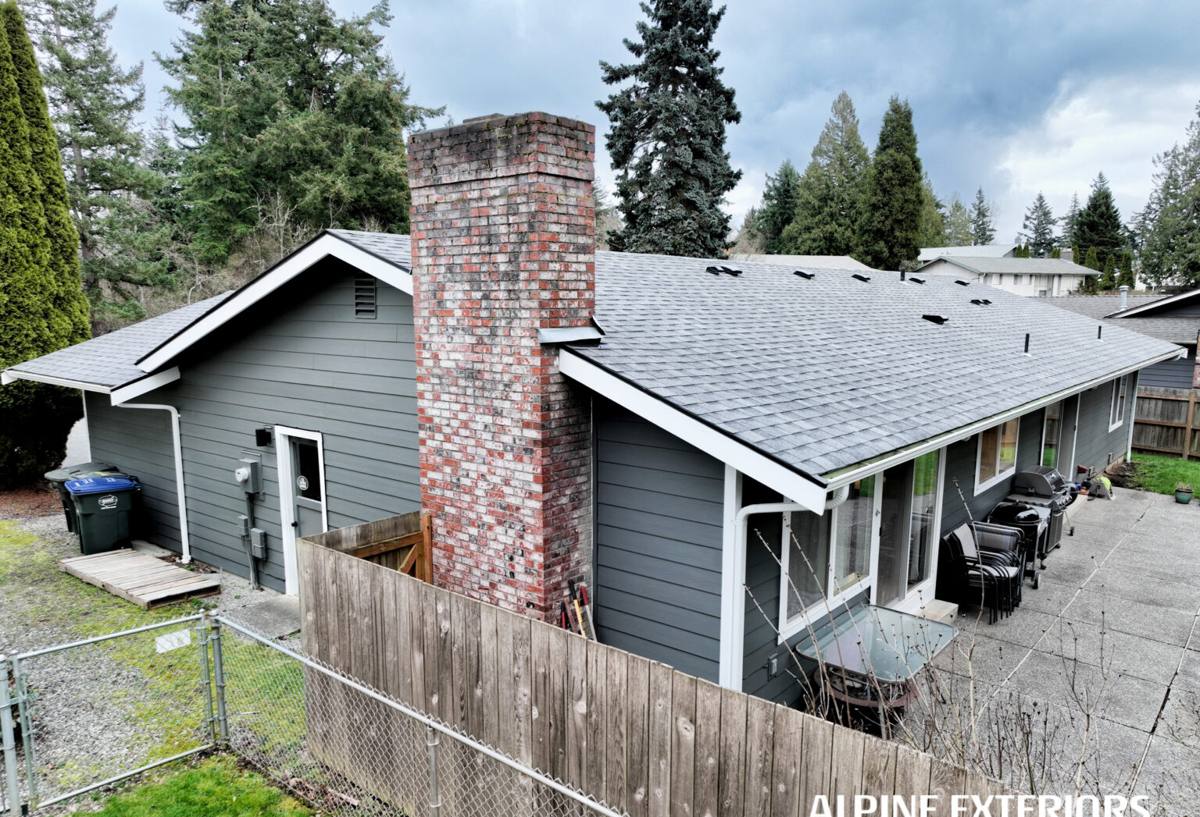
What a Correct Siding Installation Actually Involves
"Siding installation" sounds simple — pull off the old stuff, put up the new stuff — but the parts that determine whether a job lasts are mostly things you can't see once it's done. A correct installation in this climate means getting the following right, in order:
- Substrate inspection: checking the sheathing underneath for rot or soft spots before anything new goes up — covering a hidden problem guarantees a callback later.
- Weather-resistive barrier: a continuous, properly lapped house wrap or building paper that manages bulk water even if some gets past the siding itself.
- Flashing at every penetration: windows, doors, hose bibs, vents, and deck ledgers all need flashing detailed so water sheds outward, not into the wall cavity.
- Correct fastening: the right fastener type, length, and spacing for the specific siding product — under-fastening causes squeaks and blow-off in wind, over-fastening cracks fiber cement.
- Proper clearances: gaps at grade, roof lines, and decks so siding never sits in standing water or trapped moisture.
- Caulking and sealant only where specified: modern fiber cement systems are engineered to shed water through overlap, not through caulk — over-caulking traps moisture instead of releasing it.
Skip or rush any one of these steps and the siding can look perfect for a year or two before problems show up — usually right where you can't easily see them, at inside corners, behind trim, or low on the wall near grade.
Why We Install Only James Hardie Fiber Cement
We made a deliberate decision to install one siding system — James Hardie fiber cement — and not vinyl, not LP SmartSide, not primed wood, not other fiber cement brands. That's not a marketing position, it's a maintenance and durability call based on what actually holds up in this climate.
Fiber cement is non-combustible, doesn't feed moss the way wood-based products can, and doesn't soften or warp in sustained moisture the way engineered wood siding can if a seam ever opens up. James Hardie specifically engineers its HZ5 product line for the Pacific Northwest's wet climate, which matters more here than in drier regions. The factory-applied ColorPlus finish is baked on under controlled conditions rather than field-painted, which means better adhesion and a longer color life in a climate that's hard on paint. And because it's one manufacturer's system installed to their spec, the warranty coverage is straightforward instead of a patchwork of "if" clauses.
We're not going to tell you every other siding product is junk — plenty of them have real strengths. But we won't put our name on a job with a product we don't believe holds up to Custer's salt air, driving rain, and moss cycle over the long haul. Hardie is what we've standardized on because it's what we're confident will still be doing its job well past year fifteen.
Our Installation Process
The steps don't change much from house to house, but the details we watch for do, based on what we've seen in Whatcom County's climate specifically.
- On-site assessment: we walk the exterior, check the sheathing and existing weather barrier where accessible, and look specifically at north- and west-facing walls for moss buildup and moisture staining.
- Tear-off and substrate repair: old siding comes off in sections, any compromised sheathing gets replaced before we move forward, and we don't cover a problem to save a day of labor.
- Weather barrier and flashing: a continuous, correctly lapped barrier goes on with flashing integrated at every window, door, and penetration — this is the step that actually protects the wall assembly, more than the siding itself.
- Hardie installation to manufacturer spec: correct fastener type and placement, proper starter strips, and clearances held at grade, roofline, and any trim intersections.
- Finish detailing: trim, corners, and any factory-finish touch-up done to keep the ColorPlus finish looking uniform.
- Final walk-through: we go over the finished job with the homeowner, point out anything worth knowing for future maintenance, and clean up the site fully.
Signs Your Custer Home's Siding Needs Attention
Because of how gradually siding failure shows itself here, a lot of homeowners live with a problem for years before addressing it. Watch for these signs, especially on walls that face away from the sun:
- Visible moss or dark streaking that keeps coming back after cleaning
- Soft or spongy spots when you press on the siding, especially near the bottom courses
- Paint that's peeling, bubbling, or chalking heavily in patches
- Gaps opening up at seams, corners, or where siding meets trim
- Warping, buckling, or panels that no longer sit flat against the wall
- Rising energy bills with no other explanation, which can point to a compromised weather barrier
- Interior signs — musty smell, peeling interior paint, or staining on walls that back up to exterior siding
Any one of these on its own isn't necessarily an emergency, but two or more together, especially on an older wood-based or vinyl-clad home, usually means it's worth having someone look at the wall assembly, not just the surface.
Cost Factors for a Custer Siding Installation
Every house is different, so we won't pretend to quote a number here — but the factors that move the price are consistent, and knowing them helps you evaluate any estimate you get.
| Factor | Why It Affects Cost |
|---|---|
| Tear-off scope | Full removal of old siding down to sheathing costs more than installing over a sound existing surface, but it's the only way to catch hidden rot |
| Substrate condition | Sheathing repair or replacement adds material and labor, and it's not always visible until old siding comes off |
| Wall complexity | Dormers, multiple gables, and lots of window and door trim take more time per square foot than a plain flat wall |
| Siding profile and accessories | Lap width, trim style, and corner treatments all have different material and labor costs |
| House height and access | Two-story walls, steep grades, or limited equipment access add labor time |
| Existing moisture damage | Discovering rot or mold behind old siding means remediation before new siding can go up |
Why a Crew That Already Works Custer Matters
Siding installation isn't just a product and a set of tools — it's judgment calls made on-site, and those calls are better informed by local experience. A crew that's worked houses throughout Whatcom County already knows which wall orientations tend to hold moss the longest, how much clearance to build in for the amount of driving rain this area gets, and what the salt air does to fasteners and flashing over time if the wrong grade is used. That's knowledge you build by doing the work here repeatedly, not by reading a manufacturer's install guide once.
There's also a practical side: a local crew based near Sumas can get to a Custer job site without a long haul, follow up quickly if you have a question after the install, and is still going to be a phone call away in five or ten years if you ever need warranty support. That matters more with siding than with almost any other exterior project, because problems with siding installation rarely show up on day one — they show up in year three or five, after a few full moss seasons have tested the work.
Questions Worth Asking Any Siding Contractor Before You Hire
- Are you licensed and insured to work in Washington, and can you provide proof?
- Do you install to the manufacturer's written specifications, including fastener schedule and clearances?
- Who inspects the sheathing before new siding goes on, and what happens if they find damage?
- What does your warranty cover, and is it backed by you, the manufacturer, or both?
- Can you explain how you'll handle flashing at windows, doors, and penetrations before work starts?
Living With Hardie Siding After Installation
One advantage of fiber cement in this climate is how little upkeep it demands compared to wood-based or vinyl alternatives. It doesn't need repainting on the schedule that field-painted wood does, and it doesn't degrade the way some engineered wood products can if moisture gets behind a seam. That said, "low maintenance" isn't "no maintenance," especially with Custer's moss season working against you every year.
A periodic soft wash to clear moss and algae buildup before it gets a foothold, keeping gutters clear so water isn't sheeting down the wall face, and trimming back vegetation that keeps a wall shaded and damp all go a long way toward getting the full lifespan out of the installation. None of this requires much time or money — it's mostly about not letting a small buildup turn into a multi-year problem.
If your Custer home's siding is showing its age, or you're planning ahead before the next wet season sets in, we're happy to take a look and walk you through what we'd recommend and why — no pressure, no obligation. Reach out through the form below to schedule a free estimate.