 Sumas Window
 Composite Decking for Bellingham Homes
Bellingham sits close enough to the water and the hills that a deck here takes a beating most inland decks never see. Salt-laden air off Bellingham Bay, long stretches of driving rain through fall and winter, and a moss season that can run half the year all work against wood decking in particular. Composite decking was built to shrug off exactly that combination, but only when it's specified and installed correctly for this climate. We're a Sumas-based crew that works Whatcom County regularly, including Bellingham, and this page covers what a composite deck actually needs to hold up here — not just what a manufacturer's brochure says.
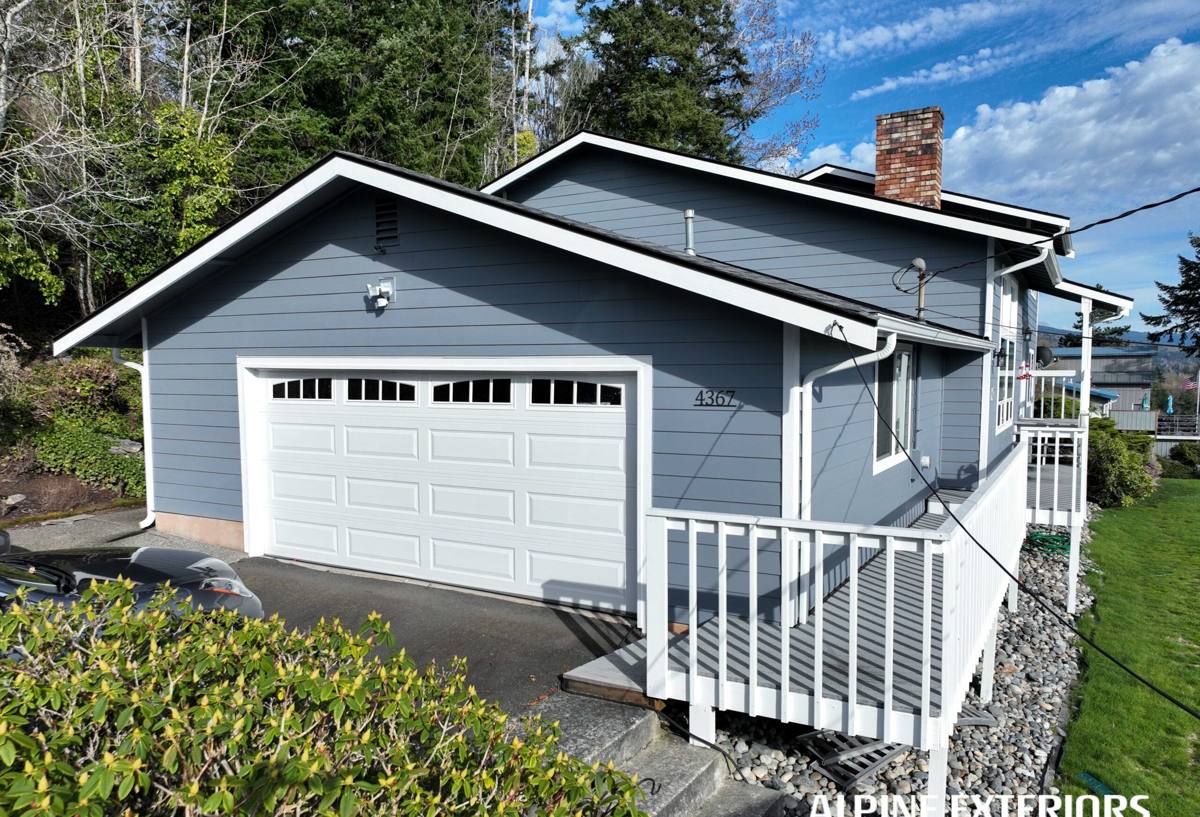
Why the Local Climate Matters More Than the Brand Name
Composite decking is marketed as low-maintenance everywhere, but "low-maintenance" means something different in a dry climate than it does in Whatcom County. Three local conditions drive most of the decisions we make on a Bellingham composite deck job:
Salt Air and Moisture Cycling
Homes closer to the bay see airborne salt settle on every exterior surface, including decking, railings, and fasteners. Composite boards themselves don't corrode, but the hardware holding them down can if it isn't rated for coastal exposure. We spec stainless or coated fasteners and hidden clip systems designed for marine-adjacent environments, not the general-purpose hardware that gets used inland.
Driving Rain and Drainage
Whatcom County rain doesn't fall straight down — wind-driven rain gets under railings, into ledger connections, and between boards. A deck that isn't framed with proper slope and gapping will trap water in the substructure even if the surface boards are fully synthetic. Substructure rot underneath a composite deck is one of the most common failures we see on older installs, and it's almost always a drainage and flashing problem, not a decking material problem.
Moss and Algae Growth
Shaded yards, tree cover, and months of damp weather mean moss and algae find a foothold on nearly any exterior surface in this area, decking included. Composite boards resist rot, but the cheaper board formulations can still grow a surface film in shaded, poorly ventilated spots. Board selection and airflow underneath the deck both affect how much moss pressure a deck sees over time.
What a Correct Composite Deck Install Actually Involves
A lot of deck problems in this region trace back to shortcuts taken during framing, not the decking material itself. Here's what we consider non-negotiable on a Bellingham job:
- Pressure-treated or coated framing rated for ground contact where applicable, with joist tape over every joist to stop water intrusion into the wood substructure
- Proper slope away from the house (typically a slight pitch, not perfectly flat) so standing water doesn't pool on the surface or back up against the ledger
- Correct board gapping for expansion and contraction — composite moves with temperature swings, and gapping that's too tight causes buckling
- Ledger board flashing that actually sheds water away from the house rim joist, since ledger rot is one of the most common structural failures on older decks
- Hidden fastener or clip systems suited to coastal-adjacent hardware exposure
- Adequate under-deck ventilation, especially on decks close to grade or shaded by trees, to reduce moss and mildew buildup
None of this shows up when you're just looking at the finished surface, which is exactly why so many composite decks that look fine in year one develop soft spots, rail wobble, or moss streaking by year three or four.
Composite vs. Other Decking Options for This Climate
We get asked fairly often why we lean toward composite for Bellingham jobs over wood or other alternatives. Here's the honest comparison, including where wood still makes sense:
| Factor | Composite | Pressure-Treated Wood | Cedar |
|---|---|---|---|
| Moisture/rot resistance | High — core resists rot; hardware is the weak point | Moderate — treated but still absorbs water over time | Moderate — naturally rot-resistant but not indefinite |
| Moss/algae resistance | Good on quality boards; some surface film in deep shade | Poor — porous surface holds moisture and organic growth | Fair — better than treated pine, still needs cleaning |
| Maintenance | Occasional washing; no staining or sealing | Annual sealing/staining recommended | Periodic oiling to maintain color and protection |
| Upfront cost | Higher material cost | Lowest material cost | Mid-to-high material cost |
| Long-term cost | Lower — minimal recurring maintenance spend | Higher over 15-20 years with sealing and repairs | Moderate — depends on upkeep discipline |
| Appearance over time | Consistent color, resists graying | Grays and roughens without maintenance | Grays naturally unless maintained |
Wood isn't a bad choice everywhere — some homeowners like the look and don't mind the upkeep. But given the rain and moss pressure specific to this area, most Bellingham homeowners who go composite are doing it to get off the annual sealing treadmill, and that's a reasonable trade if the upfront cost works for the budget.
What Drives the Cost of a Composite Deck Here
Every job is different, but these are the main variables that move the price on a Bellingham composite deck:
| Cost Factor | Why It Matters |
|---|---|
| Board tier | Entry-level capped composite vs. premium boards affects both price and long-term moss/fade resistance |
| Substructure condition | Replacing rotted framing on an existing deck adds cost but is not optional for a durable rebuild |
| Deck size and shape | Complex angles, multiple levels, or wraparound designs increase labor and material waste |
| Railing system | Composite or metal railing systems cost more than basic wood rail but match the low-maintenance goal |
| Site access | Sloped lots or limited equipment access near the water can add labor time |
| Fastener and hardware spec | Coastal-rated hardware costs more than standard-grade but avoids early corrosion issues |
Rather than quote a number that doesn't mean much without seeing the site, we walk every deck in person before giving a price — that's the only way to account for existing framing condition and drainage.
Our Process for a Bellingham Deck Project
We keep the process straightforward because most homeowners just want to know what to expect and when:
- On-site assessment — we look at the existing structure (if there is one), grading, drainage path, and sun/shade exposure to understand moss and moisture risk for that specific yard
- Material and layout selection — we walk through board tiers, color options, and railing choices based on your budget and how much moss/algae exposure the site has
- Framing and substructure work — this is where we replace any compromised joists, add joist tape, and set proper drainage slope before a single composite board goes down
- Decking, fastening, and railing install — hidden fastener systems, correct gapping, and coastal-appropriate hardware throughout
- Final walkthrough — we check gap consistency, railing stability, and drainage flow with you before calling the job done
A Practical Pre-Project Checklist
Before you get quotes from anyone, it helps to know what you're looking at:
- Is the current deck (if replacing one) showing soft spots, rail wobble, or staining near the ledger board?
- Does water pool anywhere on the surface after rain, or drain freely off the edges?
- Is the deck shaded most of the day, and does moss or algae already show up on nearby surfaces like fences or walkways?
- How close is the property to the water, and has salt exposure been a visible issue on other exterior metal (railings, hinges, outdoor fixtures)?
- What's the realistic budget range, and is minimizing future maintenance a priority over upfront cost?
Why It Matters That We Already Work in This Area
A deck built for Spokane's dry summers or a subdivision in a low-moss inland climate doesn't need the same drainage and hardware attention a Bellingham deck does. We're based in Sumas and work Whatcom County regularly, so the framing and fastener decisions above aren't theoretical for us — they're what we deal with on every coastal-adjacent job. A crew that mainly works drier, inland regions may not default to coastal-rated hardware or the ventilation detailing that keeps moss pressure down here, simply because it's never been necessary for their usual jobs. That's not a knock on their skill — it's just a different climate problem, and it's worth asking any contractor directly how many decks they've built in this specific area.
Maintenance After Install
Composite decking cuts maintenance dramatically compared to wood, but "no maintenance" isn't quite accurate here. A periodic rinse or light wash — more often in shaded, moss-prone spots — keeps organic buildup from getting a foothold. Checking that gutters and downspouts near the deck are directing water away rather than onto the deck surface also matters more in a region that gets this much annual rainfall. Beyond that, composite boards don't need staining, sealing, or sanding, which is the main reason people choose it here in the first place.
If you're weighing a new composite deck or replacing an aging wood one, we're happy to come take a look and walk you through what your specific yard needs — no pressure, no obligation. Use the form below to request a free estimate.