 Sumas Window
 Deming's Weather Is Hard on Decks — Here's Why
Deming sits in the Nooksack Valley corridor of Whatcom County, and homes out here get a steady diet of driving rain, marine air moving in off the Sound, and long stretches of shade under fir and cedar canopy. That combination is rough on an outdoor structure. A deck that's built to a generic spec — the kind you'd see in a drier inland climate — starts showing problems within a few seasons out here: soft spots at the ledger, black streaking on the boards, rust bleeding through fastener heads, and railings that wobble because the posts were never properly isolated from standing moisture.
None of that is inevitable. It's almost always a sign the deck was built without accounting for what this part of Whatcom County actually does to lumber, hardware, and connections year-round. Building it right the first time costs a little more up front in material and labor and saves years of premature repair.
Driving Rain and Ground Contact
Wind-driven rain in this valley doesn't just fall straight down — it gets pushed sideways into ledger boards, under railing caps, and into any gap where flashing was skipped or done half-heartedly. Combined with damp ground for much of the year, any wood-to-wood or wood-to-soil contact point becomes a rot starting line if it isn't detailed correctly.
Moss, Shade, and Slow Drying
A long moss season is part of life here, and decks in shaded yards or under tree cover stay damp far longer after a storm than a deck out in open sun would. Moss and algae hold moisture against the decking surface, which accelerates wood decay and makes composite and wood surfaces alike more slippery underfoot if the boards aren't spaced and finished with drainage in mind.
Freeze-Thaw and Footing Movement
Whatcom County gets enough freeze-thaw cycling in winter that footings poured too shallow, or without proper drainage around them, can heave slightly over a few years. That shows up as a deck that's suddenly out of level or a stair stringer that's pulled away from the landing.
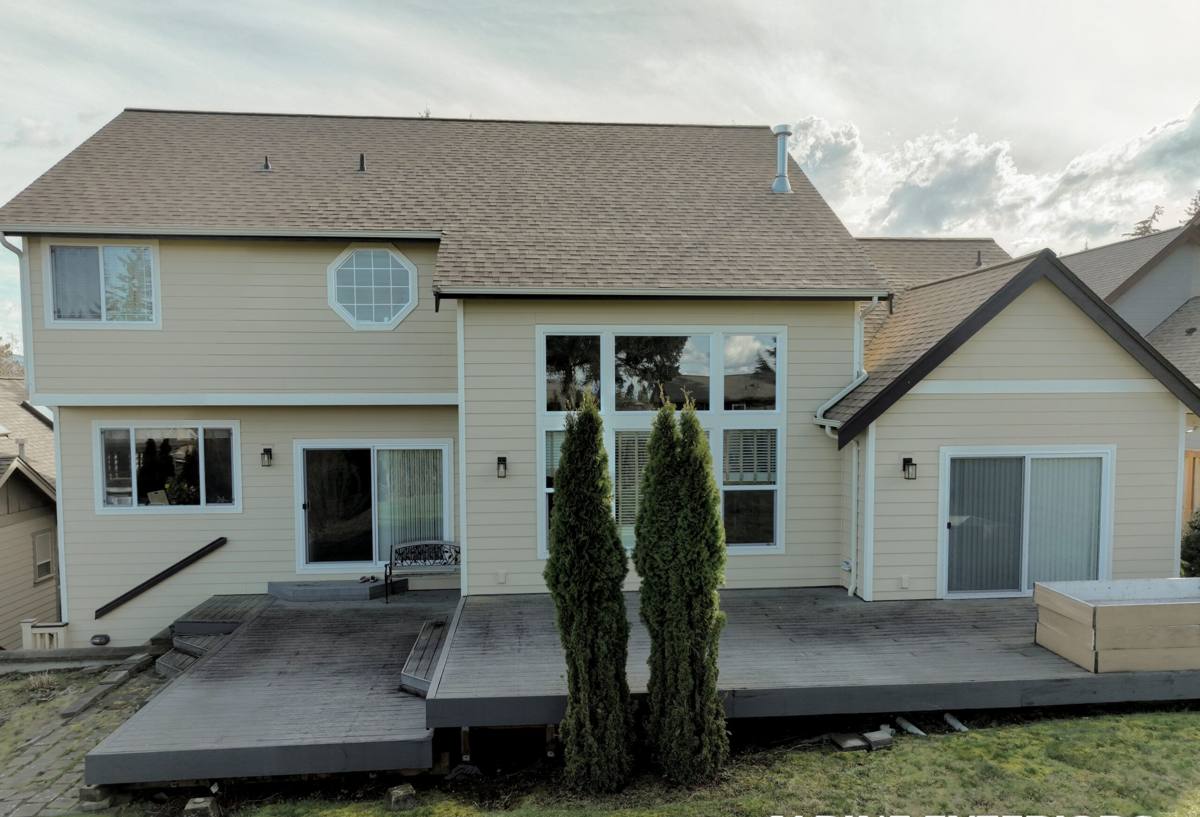
What a Correct Deck Build Actually Involves
A deck is only as good as what's underneath and behind the decking boards. Most of the failures we get called out to inspect trace back to shortcuts in three places: footings, ledger attachment, and framing hardware.
Footings Sized for Local Frost Depth
Footings need to be poured below the frost line and sized to the load they're actually carrying, not just to whatever hole was easiest to dig. Undersized or shallow footings are the single most common reason an older deck in this area starts to sag or lean.
Ledger Attachment and Flashing
Where the deck ties into the house is the single highest-risk point for water intrusion. That connection needs proper structural fasteners (not just nails), a code-compliant flashing detail that sheds water out and away from the house sheathing, and a gap or drainage path so water doesn't sit trapped between the ledger and the siding. Skipping or rushing this step is how you get hidden rot behind the wall, which is a far more expensive fix than the deck itself.
Joist Hardware and Spacing
Galvanized or stainless joist hangers, correctly nailed with the fasteners the hardware manufacturer specifies (not whatever's in the nail gun), and joist spacing tightened up for whatever decking material is going on top. Composite decking, for example, often calls for tighter joist spacing than solid wood to prevent flexing and long-term sagging.
Decking Material Choices for This Climate
There's no single "best" decking material — it's a trade-off between upfront cost, maintenance commitment, and how the material actually behaves in a wet, mossy, shaded climate like Deming's.
| Material | Upfront Cost | Maintenance | How It Handles This Climate |
|---|---|---|---|
| Pressure-treated fir/pine | Lowest | Annual cleaning + re-staining every 2-3 years | Affordable, but needs consistent upkeep to resist moss staining and checking |
| Cedar | Mid | Periodic oiling to hold color and grain | Naturally decay-resistant, ages gracefully, but softer and more prone to surface wear |
| Composite decking | Higher | Occasional washing, no staining/sealing | Very stable in wet conditions, but low-end composites can still trap surface moisture and grow algae in heavy shade |
| PVC decking | Highest | Lowest — mostly just washing | Fully synthetic, most resistant to moisture and moss, but least "natural" look and priciest option |
We don't push one material on every job. A sunny, open backyard in Deming can get years out of a well-maintained wood deck. A heavily shaded, north-facing spot under tree cover is usually better served by composite or PVC, where the maintenance burden of constant moss cleaning and re-staining just isn't realistic for most homeowners.
Railings, Fasteners, and Hardware
Hardware is where a lot of decks quietly fail years before the structure itself would. In a coastal-influenced, high-moisture climate, standard zinc-coated fasteners can corrode faster than they would inland, especially where they're exposed to standing water or salt-laden air. We spec stainless or heavy hot-dip galvanized fasteners and connectors at every exposed and structural connection point, not just where it's visible.
Railing posts get the same scrutiny. A post bolted directly through untreated framing without any isolation from moisture is a common source of the soft, spongy railings we see on older Deming decks. Proper post-to-frame connections use structural screws or through-bolts rated for exterior use, with a barrier between the hardware and any end-grain wood that would otherwise wick water.
Our Deck Building Process
- On-site assessment — we look at sun exposure, drainage, tree cover, and how the deck will tie into the existing structure before recommending materials.
- Design and material selection — sized and specified for the load, span, and climate exposure of your specific spot, not a generic template.
- Permitting — we handle the paperwork with the relevant local building department so the structure is inspected and code-compliant.
- Footings and framing — poured to proper depth, framed with corrosion-resistant hardware throughout.
- Decking, railing, and finish work — installed with drainage gaps and fastening patterns matched to the material.
- Final walkthrough — we go over basic maintenance expectations for the material you chose before we consider the job done.
Permits and Local Considerations
Most decks above a certain height or attached to the home require a permit in Whatcom County, and inspection requirements can vary depending on whether the deck is attached or freestanding, and its size and height above grade. We pull and manage the permit as part of the job so you're not chasing down county requirements yourself, and so the structural work — footings, ledger, framing — gets inspected and signed off before it's covered up by decking.
Maintenance Checklist for Deming Homeowners
Whatever material you choose, a few habits go a long way toward getting the full lifespan out of a deck in this climate:
- Sweep debris and standing leaves off the surface regularly, especially in fall and through moss season
- Rinse or gently pressure-wash moss and algae buildup before it stains or gets slick
- Check the ledger flashing and the gap between the deck and the house siding once a year for gaps or debris buildup
- Inspect railing posts and stair connections for any looseness, especially after winter storms
- Re-stain or re-oil wood decking on the schedule the product calls for — don't wait until it's visibly gray and worn
- Keep gutters and downspouts near the deck clear so runoff isn't dumping directly onto the structure
Why Hire a Crew That Already Works in Deming
A deck built by a crew unfamiliar with Whatcom County's rain patterns, soil drainage, and moss exposure tends to be built to a spec that works fine somewhere drier — and then underperforms here. A crew that already works this area knows which corners of a yard stay damp longest, which fastener grade actually holds up against the marine air and driving rain we get most of the year, and how the local permitting process actually runs. That familiarity shows up in fewer callbacks and a deck that's still solid a decade in, not just at the final walkthrough.
If you're planning a new deck or replacing an aging one in Deming, we're happy to come take a look and talk through what your specific yard and sun exposure call for. There's no pressure and no cost to get a straight answer and a written estimate — just fill out the form below and we'll set up a time to walk the site with you.