 Sumas Window
 Why Blaine's Climate Is Tougher on Siding Than It Looks
Blaine sits right on the water, at the edge of Semiahmoo Bay and Drayton Harbor, which means homes here deal with a combination of stresses that inland Whatcom County properties simply don't face. Salt-laden air moves off the bay and settles on exterior surfaces year-round, accelerating corrosion of fasteners, trim, and any material that isn't built to handle it. Add in driving rain that comes sideways off the water during winter storms, and a long, damp moss season that can stretch from October through May, and you have an environment that will find every weak point in a siding system within a few years, not a few decades.
We're based just up the road in Sumas, and we've worked enough properties along this stretch of the border — from the drier inland valleys near Sumas out to the coastal exposure in Blaine — to know that "siding" isn't one job. What holds up on a sheltered inland lot can fail early on a bay-facing wall in Blaine. That's the whole reason this page exists: fiber cement siding done right for Blaine is a different job than fiber cement siding done right for Sumas proper, even though the material and the crew are the same.
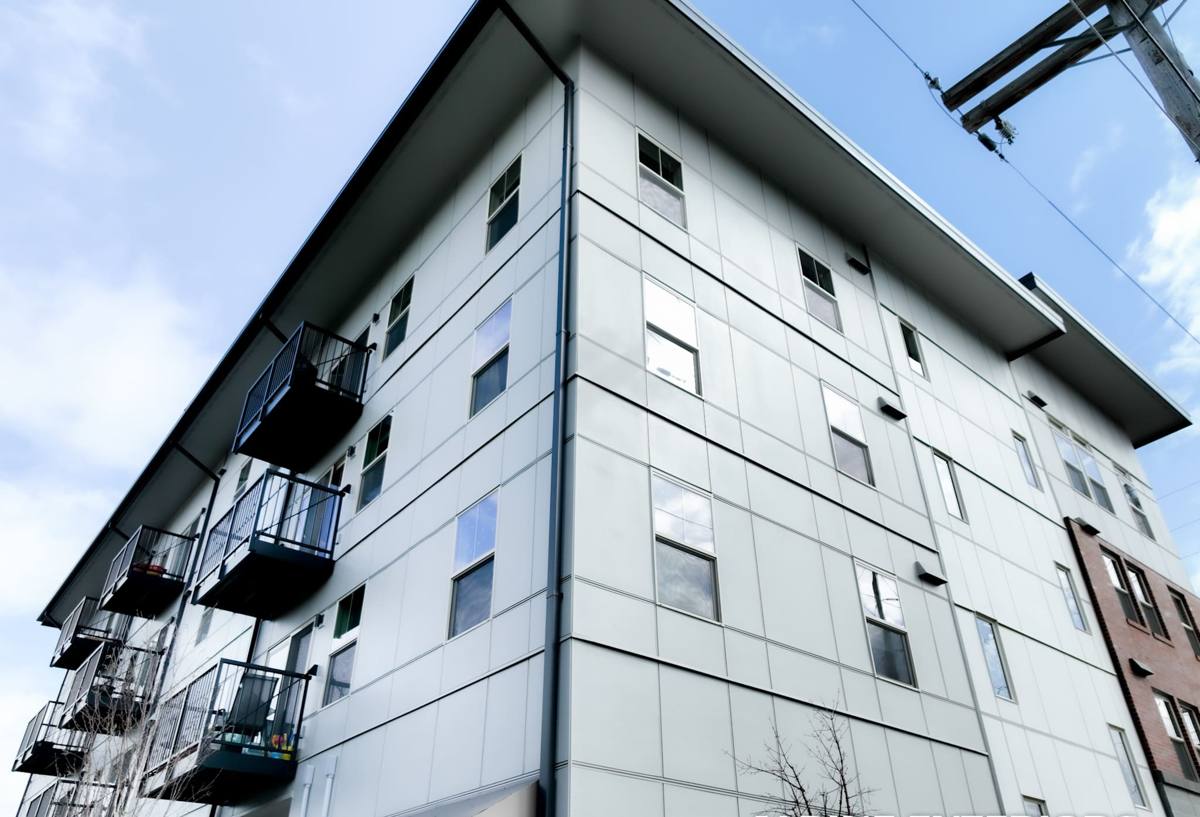
What Blaine Homes Actually Need From Their Siding
Moisture Management First
Driving rain doesn't just wet a wall — it pushes water sideways and upward under laps, around penetrations, and behind trim if the drainage plane isn't built correctly. Fiber cement itself is dimensionally stable and doesn't rot, but the assembly behind it (weather-resistive barrier, flashing, drainage gap, fastener sealing) is what actually keeps a Blaine home dry. A siding job here has to treat water management as the primary design problem, not an afterthought.
Salt-Air Resistance
Salt air corrodes standard steel fasteners, cheap trim coil, and unprotected cut edges over time. It also breaks down paint film faster than an inland environment would, which is part of why we specify factory-applied finishes rather than field-painted siding wherever possible — a factory finish cures under controlled conditions and resists the fading and chalking that salt exposure speeds up.
Moss and Organic Growth Control
Blaine's moss season is long because the combination of shade, moisture, and mild temperatures rarely lets a wall fully dry out for months at a time. Moss and algae hold moisture against the siding surface, and on the wrong material that trapped moisture becomes a real problem. Fiber cement doesn't feed mold or absorb moisture into its core the way wood-based products do, but detailing still matters — siding installed too close to grade, roof lines, or landscaping will stay damp longer and needs to be planned around, not just installed and hoped for.
Why We Only Install James Hardie Fiber Cement
We don't install vinyl siding, LP SmartSide, Cemplank, Allura, primed spruce, or cedar. That's not a marketing line — it's a standard we hold because of what we've seen these products do in exactly this kind of coastal, wet, moss-prone environment.
- Vinyl expands, contracts, and can warp in temperature swings, and it's a poor match for a climate that demands a tight, well-flashed water management system — vinyl's loose-hung panel design relies on gaps that don't hold up as well against driving rain.
- LP SmartSide and other engineered wood products use a wood-strand core. Wood-strand cores are more moisture-sensitive at cut edges and joints than fiber cement, which matters a great deal in a place where walls stay wet for extended stretches every winter.
- Cemplank and Allura are fiber cement products from other manufacturers. Our standard isn't that fiber cement as a category is wrong — it's that we've built our installation training, warranty relationships, and product knowledge around one system, and we'd rather be genuine experts in one product than average installers across several.
- Primed spruce and cedar are real wood, and real wood needs ongoing maintenance — repainting, caulking, moisture monitoring — that only gets harder in a salt-air, high-moss environment. Homeowners who want a low-maintenance, non-combustible, long-term exterior are better served by a manufactured product engineered for exactly this exposure.
James Hardie fiber cement is non-combustible, holds a factory ColorPlus finish that's baked and cured for UV and weather resistance, and is manufactured in climate-specific HZ (HardieZone) formulations built for wet, humid regions like ours. For Blaine specifically, that engineering difference is not a small detail — it's the difference between siding that looks tired in eight years and siding that still looks correct in twenty-five.
Choosing the Right Hardie Product for a Bay-Facing Home
Not every Hardie profile or line is the right call for every wall. For Blaine we typically walk homeowners through a few decisions:
| Consideration | Why it matters in Blaine |
|---|---|
| HardiePlank lap vs. HardiePanel vertical | Lap siding sheds driving rain well when installed with correct overlap; vertical panel siding needs careful batten and flashing detail to perform the same way on exposed elevations |
| ColorPlus factory finish vs. field paint | Factory finish resists salt-air fading and chalking better and comes with its own finish warranty; field-painted cut edges need sealing at every cut |
| Smooth vs. woodgrain texture | Both perform identically for moisture resistance; texture is purely an appearance choice, though smooth texture shows less visual buildup from airborne salt residue between washings |
| Trim and fascia material | Matching Hardie trim (rather than mixed materials) keeps expansion rates consistent and avoids galvanic or moisture mismatches at joints |
What a Correct Installation Involves
The material is only half the job. In our experience, most siding failures we're called out to inspect trace back to installation shortcuts, not product failure. A correct fiber cement installation in a coastal Whatcom County environment includes:
- A continuous, properly lapped weather-resistive barrier behind the siding, with all penetrations flashed before a single plank goes up
- Correct fastener spacing and type — stainless or coated fasteners rated for the exposure, not whatever is cheapest
- Proper clearance at grade, roof lines, and decks so the bottom edge of the siding never sits in standing water or constant shade-dampness
- Caulked and sealed joints only where the manufacturer specifies — over-caulking traps moisture just as badly as under-caulking
- Correct nailing pattern and blind-nailing where visible fasteners would compromise the finish or the water path
- Butt joints staggered and flashed, not just butted and caulked
Skipping any one of these doesn't show up on day one. It shows up three to five winters later as staining, buckling, or moisture intrusion behind the wall — which is a far more expensive repair than doing the detail correctly the first time.
Our Process, Start to Finish
- On-site inspection. We look at existing siding condition, wall orientation relative to wind and rain exposure, moss and moisture staining patterns, and any trim or flashing issues already present.
- Product and detail plan. We recommend the Hardie profile, texture, and finish that fits the home and the specific exposure of each elevation — a bay-facing wall and a sheltered side wall don't always need the same detailing.
- Written estimate. Clear scope, product specification, and timeline, with no surprise substitutions later.
- Prep and tear-off. Removal of failing siding, repair of any water-damaged sheathing found underneath (a common discovery once old siding comes off), and correction of any existing flashing problems.
- Weather barrier and flashing install. This is the step that determines how the house performs in year ten, not year one — we don't rush it.
- Siding installation. Installed to Hardie's published fastening and clearance specifications, not shortcuts common on lower-bid jobs.
- Final inspection and cleanup. Walkthrough with the homeowner before we consider the job complete.
What Affects Cost on a Blaine Project
Every home is different, but the factors that move the price on a Blaine fiber cement job tend to be the same handful:
| Cost Factor | Local Impact |
|---|---|
| Existing wall condition | Water-damaged sheathing found during tear-off (more common on older bay-facing homes) adds repair scope |
| Home size and elevation count | More linear footage and more corners/penetrations means more flashing detail work |
| Product line and finish | ColorPlus factory finish costs more upfront than field-painted but reduces repainting cycles over the life of the siding |
| Trim and accessory scope | Full trim replacement to match new siding vs. reusing sound existing trim |
| Access and site conditions | Waterfront lots, retaining walls, and limited equipment access can add labor time |
We give every Blaine homeowner a written, itemized estimate rather than a lump-sum number, so it's clear what's driving the cost.
Living With Fiber Cement Siding in a Moss-Prone, Salt-Air Environment
Fiber cement is genuinely low-maintenance compared to wood siding, but "low-maintenance" isn't "no-maintenance" anywhere near the water. A few habits keep a Blaine installation performing the way it's designed to:
- Rinse siding surfaces once or twice a year to clear salt residue and organic buildup before moss gets a foothold
- Keep gutters and downspouts clear so overflow doesn't run down wall surfaces during heavy rain events
- Trim back vegetation and landscaping that shades siding and keeps it damp longer than it should stay
- Check caulking at trim joints and penetrations every couple of years — caulk is the one component that wears out before the siding does
- Address any moss growth on adjacent roofing promptly, since roof runoff carries moss spores and organic debris directly onto siding below
Why It Matters That We Already Work in Blaine
Siding crews that mostly work inland don't always think about wind-driven rain exposure, salt-air fastener corrosion, or how long a shaded wall stays wet in this specific corner of Whatcom County. We already work this stretch of the border area regularly, which means we're not guessing at how a bay-facing elevation behaves differently from a sheltered one, or what detailing holds up through a full Pacific Northwest coastal winter. That local pattern recognition — knowing which walls need extra flashing attention and which moss-prone spots need a maintenance conversation up front — is the difference between a siding job that's installed correctly on paper and one that's actually built for where it sits.
If you're weighing a siding replacement or new construction siding for a home in Blaine, we're happy to walk the property, look at your specific exposure, and put together a straightforward, no-pressure estimate using the form below.