 Sumas Window
 Siding That Has to Earn Its Keep in Bellingham
Bellingham sits close enough to the water, and gets enough sustained wet weather through the fall, winter, and spring, that siding here does a harder job than siding in drier parts of the state. Salt-tinged air off the bay, driving rain that comes in sideways during a real storm, and a moss season that can stretch for months all work on a wall system at the same time. A siding product and an installation that would be perfectly fine somewhere drier can start showing problems within a few years here. This page is about one product, in one specific area we already work: James Hardie fiber cement siding for Bellingham-area homes, installed by a crew based nearby in Sumas that already understands what this climate does to a house.
Why We're Naming This Area Specifically
Every neighborhood in Whatcom County gets a version of the same weather, but exposure varies block to block — proximity to open water, tree cover, sun exposure on north-facing walls, and how much wind a particular lot catches all change how hard the siding works. A crew that has already run jobs in and around Bellingham has a feel for which walls need extra attention before the first nail goes in, instead of learning it homeowner by homeowner.
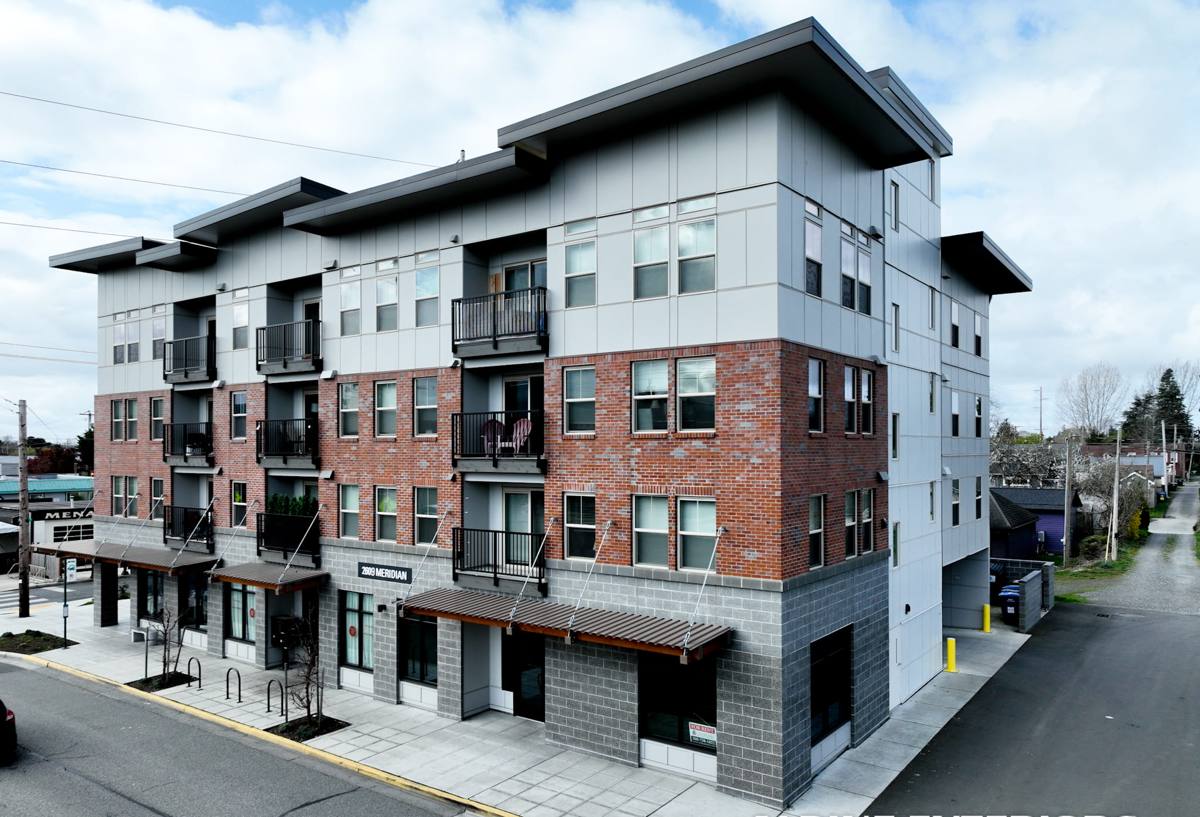
What Salt Air, Driving Rain, and Moss Actually Do to a Wall
These three things don't act independently — they compound each other, and understanding how helps explain why some siding choices hold up here and others don't.
Moisture Cycling
Wood-based and poorly sealed siding products absorb moisture during the wet months and dry out (partially) during the occasional dry stretch. That swell-and-shrink cycle stresses paint film, opens hairline gaps at seams, and eventually lets water in behind the cladding. Fiber cement resists this because it's dimensionally stable — it doesn't swell and shrink with moisture the way wood or wood-based composites do.
Salt-Laden Air
Airborne salt accelerates corrosion on fasteners, flashing, and any exposed metal trim, and it can be harder on certain paint chemistries than plain rainwater. It's a slow, cumulative effect — not something that shows up in year one, but something that separates siding systems that were built for the coast from siding systems that weren't.
Moss, Algae, and Prolonged Dampness
A long, cool, wet season means north-facing and shaded walls can stay damp for extended stretches. That's exactly the environment moss and algae need to take hold. Once organic growth establishes on a wall, it holds moisture against the surface even longer, which is bad for paint film, bad for any exposed fastener heads, and bad for whatever's underneath the cladding if water is finding a way in.
Why We Install Only James Hardie Fiber Cement
We don't install LP SmartSide, vinyl siding, Cemplank, Allura, primed spruce, or cedar. That's a deliberate standard, not a sales pitch, and it's worth explaining honestly. Each of those products has real strengths — cedar looks great, vinyl is inexpensive, engineered wood panels install fast. But every one of them asks a homeowner in this climate to accept a trade-off we don't think is worth making: ongoing paint or stain maintenance, vulnerability to moisture at cut edges and seams, or a warranty structure that doesn't hold up as well over decades of coastal Pacific Northwest weather.
James Hardie fiber cement is cement, sand, and cellulose fiber. It doesn't rot, it isn't attractive to insects, and it's non-combustible — which matters given how dry late-summer stretches can get even in a generally wet region. Hardie also engineers specific product lines for specific climates.
HZ5 Climate Engineering
Hardie's HZ5 formulation is built for regions with sustained damp weather and freeze-thaw cycling — which describes western Washington well. It's engineered to resist moisture-related damage better than a one-size-fits-all fiber cement product would. Getting the right climate designation matters as much as getting fiber cement at all.
ColorPlus Factory Finish
Most of what we install uses Hardie's ColorPlus finish — a baked-on, factory-applied color coat rather than a coat of paint applied on site or in a shop. It's more consistent, more UV- and moisture-resistant than field-applied paint, and it comes with its own finish warranty separate from the substrate warranty. In a climate that's hard on paint film, that's not a minor detail — it's most of the reason the siding still looks good a decade in.
What a Correct Installation Involves Here
Fiber cement siding is only as good as the wall assembly behind it. In a high-moisture climate, the install details matter more than they would somewhere dry, because there's less margin for error.
Drainage Plane and Rainscreen Gap
Correct installation includes a water-resistive barrier and, ideally, a rainscreen gap that lets any moisture that does get behind the cladding drain and dry out instead of sitting against the wall sheathing. This is one of the most commonly skipped details on lower-bid jobs, and it's one of the most consequential in a climate like this one.
Flashing at Every Penetration
Windows, doors, hose bibs, vents, and any other wall penetration need proper flashing integrated with the water-resistive barrier — not just caulk. Caulk fails; flashing sheds water by design and keeps working long after a bead of sealant has cracked.
Fastening and Gapping to Spec
Hardie publishes specific fastener types, placement, and board-gap tolerances for a reason — get them wrong and you lose warranty coverage and create long-term problems, even though the product itself is sound. Board ends need proper gaps and sealing at butt joints; face-nailing versus blind-nailing needs to match the product and exposure.
Starter Strips and Ground Clearance
Bottom courses need proper starter strip installation and adequate clearance from grade, decking, and roofing so the lowest boards aren't sitting in standing water or snow load during a wet winter.
Mistakes We Commonly See on Older Re-Sides
- No rainscreen gap, so the siding was nailed directly to the weather barrier with nowhere for incidental moisture to drain
- Caulk used in place of flashing around windows and penetrations
- Butt joints installed tight with no sealant or backer, which opens hairline gaps as boards expand and contract seasonally
- Field-painted fiber cement (instead of factory ColorPlus) failing at the coat line years earlier than the substrate itself
- Fastener heads left exposed or over-driven, creating a corrosion point in salt-influenced air
- Bottom courses installed too close to grade or a lower roof, trapping moisture and encouraging moss growth
Signs Your Siding Needs a Closer Look
Not every issue means a full re-side, but these are worth having checked out before they become bigger repairs:
- Visible moss or algae streaking, especially on north- or shade-facing walls
- Paint that's chalking, peeling, or bubbling in patches rather than fading evenly
- Soft spots, or boards that flex, near ground level or below windows
- Gaps opening up at butt joints or corner trim
- Rust staining below fastener heads or metal trim
- Interior signs — musty smell, discoloration, or soft drywall near exterior walls — that suggest moisture is getting behind the cladding
Our Process for Bellingham-Area Jobs
The steps don't change from house to house, but the details we pay attention to are shaped by what we've learned working this area already.
- On-site assessment. We look at the whole wall system, not just the visible siding — exposure, existing moisture damage, trim condition, and roofline interactions that affect water management.
- Product and color selection. We walk through Hardie's plank, panel, and shingle profiles and ColorPlus palette, matched to the home's style and to what actually holds up on this coastline.
- Tear-off and prep. Old siding comes off, sheathing gets inspected and repaired where needed, and a proper water-resistive barrier and rainscreen system go on before a single new board is hung.
- Installation to Hardie spec. Correct fastening, gapping, flashing, and starter details, done the same way whether it's an easy elevation or a complicated one.
- Final walkthrough. We go over trim, caulking, and touch-up needs with the homeowner before calling the job done.
What It Costs, and Why
We don't publish blanket per-square-foot numbers because the honest answer depends on the house, but these are the factors that actually move the price on a Bellingham-area Hardie job:
| Factor | Why It Matters |
|---|---|
| Tear-off vs. new construction | Removing and disposing of old siding, and repairing any hidden sheathing damage, adds labor before installation even starts |
| Wall complexity | Dormers, multiple gables, and lots of trim and corners take more time per square foot than a simple rectangular elevation |
| Siding profile | Lap siding, shingle-style panels, and board-and-batten each install at a different pace and price point |
| Story height and access | Second-story and steep-site work requires more scaffolding or lift time |
| Trim and color package | Custom trim details and premium ColorPlus colors cost more than standard packages |
| Moisture damage found during tear-off | Rotten sheathing or framing discovered mid-job needs to be repaired before new siding goes on, which isn't always visible during the initial estimate |
Why a Crew That Already Works This Area Matters
Siding contractors who split time across a wide territory learn the general rules of fiber cement installation, but they don't always carry a feel for how a specific area's weather behaves on a specific wall orientation. A crew based nearby in Sumas and working Whatcom County regularly already knows which elevations in the Bellingham area tend to hold moisture longest, how local permitting and inspection processes actually run, and what it takes to schedule around this region's wetter months instead of fighting them. That local familiarity doesn't replace good workmanship, but it means fewer surprises and fewer callbacks.
Living With Fiber Cement Siding Here
Once it's installed correctly, James Hardie siding is genuinely low-maintenance compared to the alternatives — but "low-maintenance" isn't "no-maintenance" in this climate. An occasional gentle wash to knock back moss and algae buildup, especially on shaded walls, keeps the ColorPlus finish looking its best. Keeping gutters clear and vegetation trimmed back from the siding reduces the sustained dampness that feeds organic growth in the first place. Beyond that, correctly installed Hardie siding is built to go a long time between anything more than that.
If you're weighing a siding replacement or repair on a Bellingham-area home, we're glad to come take a look and give you a straightforward, no-pressure estimate — no obligation, just an honest read on what your walls actually need.