 Sumas Window
 Window Replacement Built for Acme's Weather, Not a Showroom
Acme sits in the rural, wooded stretch of Whatcom County between Sumas and the foothills leading up toward Mount Baker — a beautiful place to own a home, and a tough place to own windows. The same marine-influenced weather system that soaks the whole county doesn't stop at the coastline. Driving rain, damp air that never fully dries out between storms, and a moss season that can run most of the year all work on a window from the outside in, whether that window sits three miles from salt water or thirty. If you've noticed fogging between panes, drafts around the frame, or trim that's gone soft and dark, that's not bad luck — it's what this climate does to windows that have aged past their working life.
This page covers window replacement specifically for homes in and around Acme: what the local conditions demand, what a correctly done job looks like, and how we run the project from first estimate to final walkthrough.
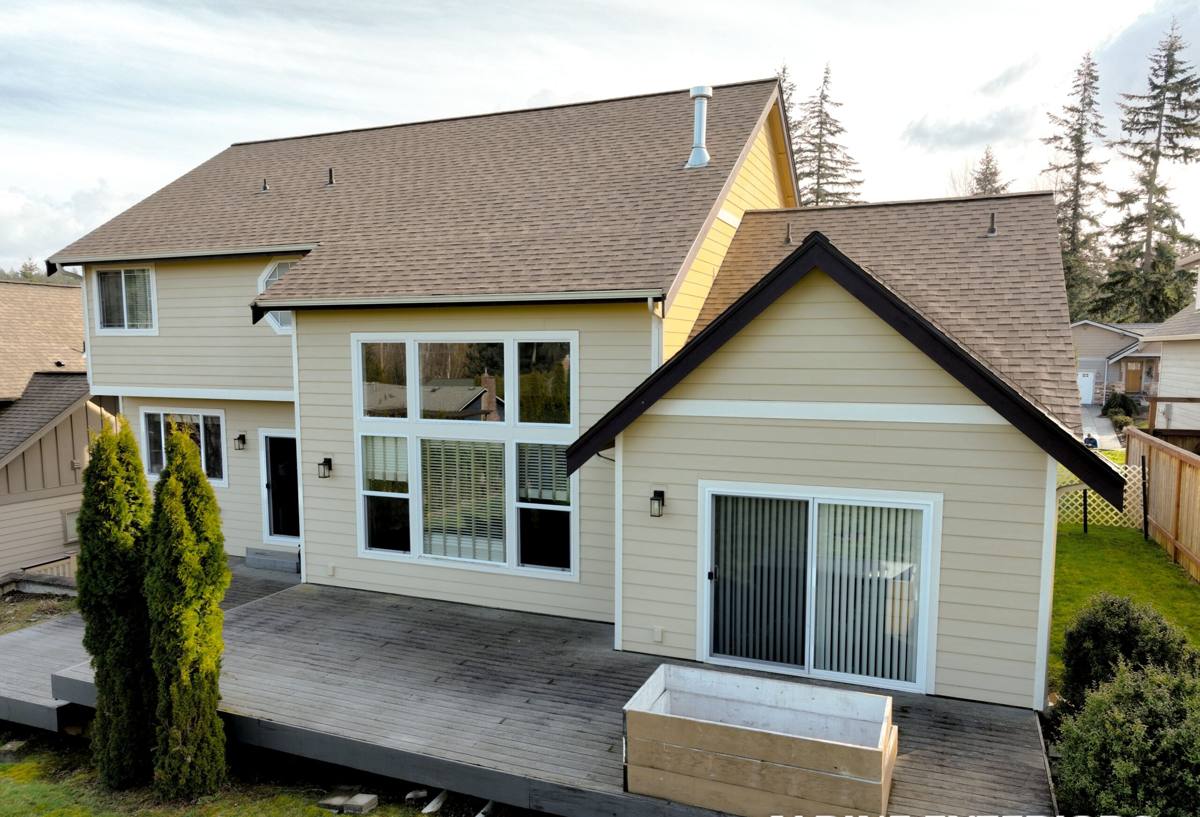
What Whatcom County's Climate Does to Windows Over Time
Every window is a system of parts — glass, seals, frame, flashing, and sealant — and in a wet climate, the weakest part fails first and takes the rest down with it. Around Acme, that usually plays out in a few predictable ways:
Seal and glazing failure
Insulated glass units rely on a sealed air or gas gap between panes. Constant humidity and temperature swings stress that seal faster than they would in a dry climate. Once it breaks, moisture gets between the panes, and no amount of cleaning fixes the fogging — the unit has to be replaced.
Frame and sill rot
Wood and wood-composite frames that aren't perfectly sealed will absorb moisture at the joints and sill first. Add the shade and moisture that a long moss season brings — moss and algae hold water against siding and trim longer than bare wood would dry on its own — and rot can set in behind paint that still looks fine from a few feet away.
Hardware and operation problems
Sashes swell in damp weather and shrink when things finally dry out, which loosens hardware, throws off the fit, and eventually makes a window hard to open, close, or lock properly.
Signs it's time to look closer
- Fogging or a milky haze between panes of double-pane glass
- Noticeable draft or cold spot at the frame even with the window latched
- Soft, spongy, or discolored wood at the sill or lower frame corners
- Paint that keeps failing in the same spot no matter how often it's redone
- Visible daylight or gap between the sash and frame
- Windows that need force to open, close, or lock
What a Correct Window Replacement Job Actually Involves
Swapping the glass and calling it done is how a lot of window jobs fail early in this climate. A replacement that's actually going to hold up around Acme needs attention at every layer, not just the window unit itself.
Full-frame versus insert replacement
There are two basic approaches, and the right one depends on the condition of what's already there:
- Insert (pocket) replacement: the new window is fit into the existing frame, which stays in place. Faster and less invasive, but only appropriate when that existing frame and the wall behind it are still sound and dry.
- Full-frame replacement: the old window, frame, and often the surrounding trim come out completely, exposing the rough opening down to the framing. This is the only honest option when there's any sign of rot, water intrusion, or a frame that's already out of square — which is common on older homes in wetter parts of the county.
We inspect the opening before quoting either approach, because recommending an insert into a wall that has hidden moisture damage just seals the problem in.
What has to happen at the opening itself
Once the old window is out, the work that actually determines how long the new one lasts happens before the new unit ever goes in:
- Checking the framing and sheathing underneath for hidden rot or soft spots and repairing them, not covering them
- Correct flashing at the sill and head so any water that reaches the opening drains back out, not into the wall
- A continuous, compatible sealant bead — not just caulk smeared around the trim afterward
- Proper shimming so the new window sits square and operates smoothly for years, not just on install day
- Insulating the gap between the window frame and rough opening without overpacking it, which can bow the frame
Any one of these done wrong is usually invisible at handoff and shows up as a leak, draft, or rot a year or two later — which is exactly the kind of callback we're trying to prevent from the start.
Choosing the Right Window for an Acme Property
Material and construction matter more here than in a dry climate, because the window is fighting moisture every day it's installed. There's no single "best" window for every house — it depends on your home's style, budget, and how much upkeep you want to take on.
| Frame Material | Moisture Behavior | Maintenance | Best Fit |
|---|---|---|---|
| Vinyl | Won't rot; handles constant moisture well | Low — occasional cleaning | Most homes wanting durability and value |
| Fiberglass | Very stable in wet, temperature-swinging conditions | Low | Homes wanting long-term performance, willing to pay more upfront |
| Wood | Needs a sound exterior finish or cladding to keep moisture out | High — regular painting/sealing | Historic or traditional homes where the look matters most |
| Wood-clad (wood interior, metal or vinyl exterior) | Good, as long as the cladding seams stay sealed | Moderate | Homes wanting a wood interior look with better outdoor durability |
| Aluminum | Conducts cold and can condense/sweat in damp climates unless thermally broken | Low | Limited use here unless thermally broken frames are specified |
For most Acme homes, we steer people toward vinyl or fiberglass for exactly the reason listed above: a frame that physically can't absorb water removes one of the biggest long-term failure points in this climate. If you love the look of real wood, that's a legitimate choice too — it just means committing to the upkeep, or choosing a clad option that gives you the wood interior without exposing bare wood to the weather outside.
Glass Packages Worth Considering in This Climate
Beyond the frame, the glass package affects both comfort and how much condensation you'll deal with on the inside during cold, damp stretches:
- Double-pane, low-E glass is the practical baseline for this region — it cuts heat loss and reduces interior condensation compared to older single or plain double-pane glass.
- Argon or krypton gas fill between panes adds a modest efficiency boost for a relatively small cost difference.
- Triple-pane is worth pricing out for rooms that run cold or face prevailing weather, though it adds cost and weight that not every frame or budget needs to carry.
- Warm-edge spacers (instead of older metal spacers) reduce the cold spot at the glass edge, which is where condensation tends to show up first.
How Our Process Works, Start to Finish
- On-site assessment: we look at the actual openings, not just count windows from a photo — checking for existing rot, settling, or drainage issues that affect the job.
- Honest scope and estimate: you get a clear breakdown of insert versus full-frame recommendations per window, material options, and a written price — no vague allowances.
- Scheduling around the weather: we plan install days with an eye on the forecast, since an open wall or rough opening needs a dry window to work in.
- Removal and inspection: old units come out carefully, and we stop to show you anything unexpected we find in the wall before covering it back up.
- Correct installation: flashing, sealant, shimming, and insulation done in the right order, every window, every time.
- Final check and walkthrough: every window gets tested for smooth operation, a square fit, and a tight seal before we call the job done.
What Drives the Cost of a Window Replacement
Every home is different, but the same handful of factors move the price up or down on nearly every job we quote in this area:
| Cost Factor | Why It Matters |
|---|---|
| Insert vs. full-frame | Full-frame costs more but is unavoidable once rot or a compromised opening is present |
| Frame material | Vinyl is typically the most budget-friendly; fiberglass and wood-clad cost more upfront |
| Glass package | Triple-pane, gas fill, and specialty coatings add cost but also add performance |
| Number and size of openings | Larger or custom-sized windows and multi-window jobs affect per-unit and labor pricing |
| Hidden repairs | Rotten framing or sheathing found once the old window is out has to be repaired before the new one goes in |
| Access and site conditions | Second-story windows, tight landscaping, or difficult access add labor time |
We'd rather flag a likely hidden-repair cost during the estimate walk than surprise you with it mid-job — if we see signs of trouble at the opening, we'll say so up front.
Why Hiring a Crew That Already Works Acme and Sumas Matters
A window installer who mainly works drier inland climates or dense urban infill isn't necessarily thinking about the same things we think about on every job out here: how long moss sits on a north-facing wall before anyone notices, how a rural property's drainage and grading affect what's happening at a sill, or how far out an install crew needs to plan around a genuinely wet forecast rather than a light one. Working Whatcom County day in and day out means we're not guessing at how a product or technique holds up here — we've seen what fails and what doesn't, and we build the job around that.
Local also means practical things: knowing county permitting expectations for exterior work, being reachable if something needs a second look after install, and not treating a rural Acme property as a hassle to get to.
Keeping New Windows Performing Once They're In
New windows still need a little seasonal attention in this climate to get their full lifespan:
- Clean weep holes and tracks a couple of times a year so water can actually drain out instead of pooling
- Wash off moss and algae buildup on nearby siding and trim before it holds moisture against the wall
- Check exterior caulk lines annually and touch up any that have cracked or pulled away
- Wipe down interior sills during cold snaps if condensation appears, and improve room ventilation if it's a recurring issue
- Test locks and hardware each season, since swelling and shrinking can affect fit over time even with a good install
If your Acme home has windows that fog, draft, stick, or just feel like they're losing the fight against the weather, we're happy to take a look and give you a straight answer about what it needs — no pressure, no upsell. Reach out for a free estimate using the form below.