 Sumas Window
 Why Abbotsford Homes Are Hard on Windows
Abbotsford sits in a corner of the Pacific Northwest where the weather doesn't do anything halfway. Winters bring long stretches of driving rain, damp air that never fully dries out, and enough moisture sitting on north- and west-facing walls to grow moss on siding, trim, and window frames. Add in the salt-tinged air that pushes inland off the coast on windy days and the freeze-thaw swings that hit in January and February, and you've got a climate that's genuinely tough on window seals, sills, and finishes.
Because Sumas sits right on the border a few minutes south, the weather system that hits Abbotsford is the same one we deal with on our side every day. That matters more than it sounds like it should — a crew that only sees this climate occasionally tends to under-detail the moisture management. A crew that lives in it year-round doesn't.
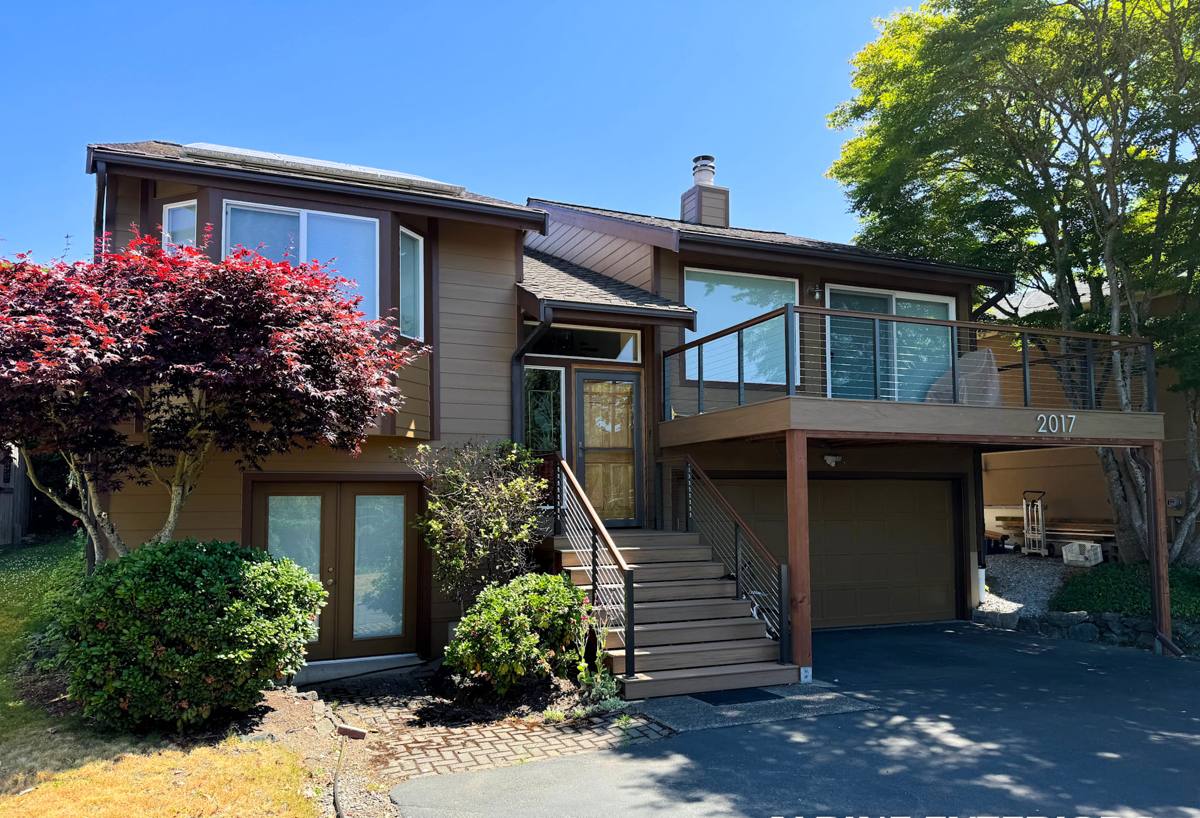
What "Custom" Actually Means for a Window Job
A lot of homeowners hear "custom windows" and assume it just means picking a nicer style. What it actually means, in a practical sense, is that the window is built or ordered to match the exact dimensions and condition of your opening — not pulled off a shelf in a stock size and forced to fit.
This matters more in older neighborhoods, where framing has settled and openings are rarely perfectly square anymore, and it matters for additions, bay windows, arched openings, or any wall where a standard size just doesn't work. Custom also means matching the window to the exposure: a window on the side of the house that takes the worst of the wind-driven rain often needs different flashing details and glazing than one on a sheltered wall, even on the same house.
When Custom Is the Right Call
- The existing opening is out of square or has settled over time
- You're replacing a non-standard shape — bay, arch, oversized picture window
- You're adding a window to a wall that didn't have one before
- The house is older and stock sizes no longer match the framing
- You want a specific look (grille pattern, frame color, trim profile) that off-the-shelf options don't offer
Signs Your Current Windows Are Losing the Fight
Damp, mossy climates don't usually kill a window overnight — they wear it down slowly, and by the time it's obvious, there's often damage behind the frame too. Here's what we look for on Abbotsford-area homes:
- Fogging or haze between the panes — the seal has failed and the gas fill is gone
- Soft, spongy, or discolored wood at the sill or frame corners
- Moss or black streaking creeping from the siding onto the window frame itself
- Condensation running down the inside of the glass through the winter months
- A draft you can feel even with the window fully latched
- Peeling paint or swollen wood trim around the opening
- Windows that stick, bind, or won't stay open on their own
Any one of these on its own might just mean the window needs attention. A few of them together, especially on a wall that faces the prevailing rain, usually means the window has been letting moisture in for a while and it's worth having someone look at what's happening behind the frame, not just at the glass.
Frame Material Comparison for This Climate
Every frame material has a place, but in a wet, moss-prone climate the trade-offs matter more than they would somewhere dry. Here's how the common options stack up for how they actually hold up here, not just how they look in a showroom.
| Frame Material | Moisture Resistance | Maintenance Needed | Best Fit |
|---|---|---|---|
| Vinyl | Very good — doesn't rot or corrode | Low — occasional cleaning | Most homes; budget-conscious replacements |
| Fiberglass | Excellent — very stable in wet/humid swings | Low | Exposed walls that take the worst rain and wind |
| Wood-clad | Good if detailed correctly, but sensitive to installation errors | Moderate to high — cladding and joints need monitoring | Character or heritage-style homes where the wood interior look matters |
| Aluminum | Fair — prone to condensation without a thermal break | Low | Commercial or specific architectural uses, less common for residential retrofits here |
We don't push wood-clad windows on every exposed wall in this climate, and that's not a knock on the product — it's that wood-clad frames are far less forgiving of small installation or maintenance gaps, and a missed detail shows up as rot years later, not right away. On a sheltered, covered porch wall, wood-clad can be a great fit. On the side of the house that takes rain straight-on, we'll usually steer you toward vinyl or fiberglass and explain why.
What a Correct Installation Actually Involves
The window itself is only part of the job. In a climate like this, the difference between a window that lasts fifteen years and one that fails in five almost always comes down to what's happening at the rough opening, not the glass.
The Details That Actually Matter
- Sill pan flashing: a sloped, waterproof pan at the bottom of the opening that catches any water that gets past the window and directs it back out, not into the wall
- Proper flashing sequence: house wrap and flashing layered so water always sheds downward and outward, shingle-style, at every seam
- Correct sealant, applied correctly: the right sealant for the substrate, placed where it manages water instead of trapping it inside the wall cavity
- Insulation around the frame: gaps packed properly so you don't get cold spots that cause interior condensation
- Level, plumb, and square setting: even a well-built window will fail early if it's installed racked or out of square
This is the part that's easy to skip and hard to see once the trim goes back on — which is exactly why it's worth asking any contractor, including us, to walk you through how they handle flashing and sealing before work starts.
Our Process, Start to Finish
- On-site assessment: we look at the actual opening, the wall assembly, and the exposure — not just take a phone measurement
- Precise measurement: because it's custom, the window is ordered to the real opening, not a catalog size
- Material and glazing selection: matched to that wall's exposure, your budget, and how the house is used
- Removal and inspection: old window comes out, and we check the framing and sill underneath for any hidden moisture damage before anything new goes in
- Flashing, install, and seal: done in the sequence described above, not shortcuts to save an hour
- Interior and exterior finish work: trim, caulking, and touch-up so the job looks finished, not patched
- Walkthrough: we show you the operation, explain care, and answer questions before we consider it done
What Drives the Cost of a Custom Window Job
| Cost Factor | Why It Matters |
|---|---|
| Opening size and shape | Non-standard or oversized openings cost more to source and install correctly |
| Frame material | Vinyl, fiberglass, and wood-clad carry different material and labor costs |
| Glazing package | Double vs. triple-pane, Low-E coatings, and gas fills affect both price and performance |
| Condition behind the old window | Hidden rot or moisture damage found during removal adds repair time before the new window goes in |
| Access | Second-story or hard-to-reach openings take more time and equipment |
| Number of openings | Doing several windows in one visit is more efficient per-window than one-offs |
We won't quote a firm number without seeing the opening — anyone who does, without at least a look at the wall and the existing window, is guessing. What we can say honestly is that the biggest cost swings usually come from what's found once the old window is out, not from the window itself.
Why a Crew That Already Works the Abbotsford Area Matters
Being based in Sumas, right at the border, means we're already dealing with the same rain, the same moss, and the same freeze-thaw swings that Abbotsford homes deal with. That's not a small thing when it comes to window work — it shapes which materials we recommend for which exposures, how we sequence flashing on a wet-season install, and how we store and acclimate materials before they go in the wall.
It also means we're used to the practical side of working across the border — coordinating schedules, understanding the paperwork and permitting differences between Whatcom County and the Abbotsford/Fraser Valley side, and making sure licensing and insurance are squared away before a crew shows up on-site. That's the kind of groundwork that should happen before a truck ever pulls into the driveway, not something you find out is missing halfway through the job.
If your windows are showing the wear this climate causes — fogged glass, soft sills, moss creeping onto the frame, or drafts you can feel — we're happy to come take a look. A free, no-pressure estimate gets you an honest read on what's actually going on with your windows and what it would take to fix it right, with no obligation to move forward. The form below is the easiest way to get that started.