 Sumas Window
 Custom Windows Built for Van Zandt's Weather
Van Zandt sits in the kind of Whatcom County weather pattern that's hard on windows: long wet winters, driving rain that comes in sideways more often than straight down, and enough shade and moisture on north- and west-facing walls to keep moss and mildew going most of the year. Homes here don't fail because owners neglected them — they fail because standard, off-the-shelf windows weren't built with this specific combination of moisture, wind-driven rain, and slow-drying shade in mind. A custom window job accounts for the actual opening, the actual wall assembly, and the actual exposure of your house, not a generic size chart.
"Custom" doesn't have to mean expensive or exotic. Most of the time it just means the window is measured, fabricated, and flashed to fit your house correctly instead of forcing your house to fit a stock size. In a climate that stays damp for months at a stretch, that precision is what keeps water out of your walls.
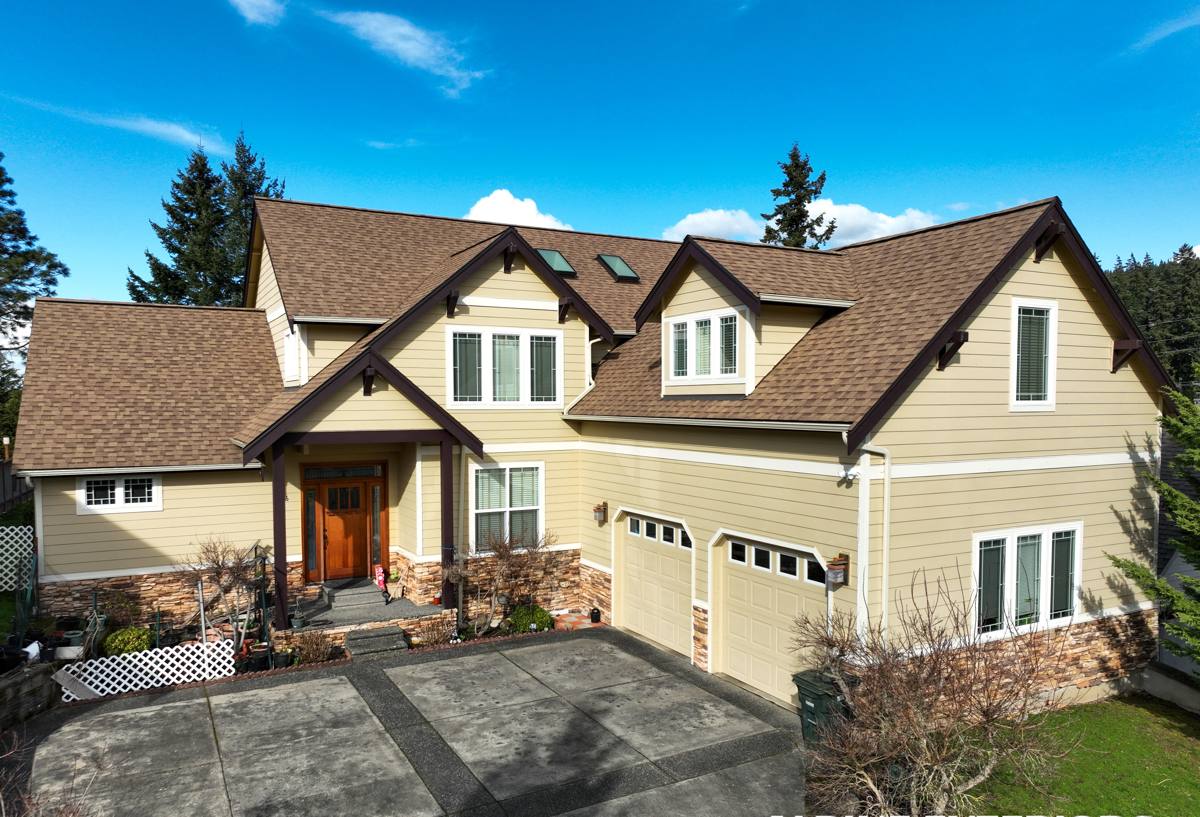
Why Custom Fabrication Matters in This Neighborhood
A lot of the housing stock around Sumas and the surrounding Whatcom County communities includes older farmhouses, additions built at different times, and homes that have settled or shifted slightly over the decades. Rough openings are rarely perfectly square, and wall depths can vary from room to room. When a contractor tries to force a stock window into an opening that's out of square, the result is gaps that get packed with extra caulk or trim instead of properly flashed and shimmed — and caulk is not a substitute for correct flashing.
Custom windows solve this at the fabrication stage. The unit is built to the actual measured opening, so the installer isn't fighting the window on install day. That matters most in wet climates, because every gap, every uneven reveal, and every spot where trim is covering a mistake instead of a properly sealed joint is a future leak path.
Situations Where Custom Sizing Is the Right Call
- Older homes with settled or slightly out-of-square openings
- Additions or remodels where the opening doesn't match a standard manufacturer size
- Replacing a single unusual window (arched, angled, or oversized) without redoing the whole elevation
- Matching sightlines and sash proportions across a home that's had windows replaced piecemeal over the years
- Homes near tree cover or shaded exposures where extra attention to drainage and flashing pays off long-term
What a Correct Installation Actually Involves
Measuring and Fabrication
We measure the rough opening in multiple places — width and height at top, middle, and bottom — because openings are rarely perfectly uniform. That data goes into the order so the window is built to fit with the correct shim space, not just "close enough." Rushing this step is the single most common reason a replacement window ends up leaking within a few years.
Flashing and Moisture Management
This is the part that matters most in a climate like ours. A window can be a great product and still leak if the flashing sequence is wrong. Correct flashing means the sill pan sheds water outward, the side flashing overlaps the sill flashing (never the reverse), and the head flashing overlaps everything below it — so water always moves down and out, never behind the housewrap. In a region where rain can come at a wall sideways for days at a time, a sill pan that doesn't actually drain is the difference between a dry wall cavity and slow, hidden rot you don't see until the drywall or trim starts telling on it.
Installation and Sealing
Windows get shimmed level, plumb, and square — not just screwed into whatever position the opening happens to hold. Fasteners go where the manufacturer specifies, insulation gets packed into the shim space without overpacking (which can bow the frame), and the interior and exterior seals are done separately with the right materials for each side. Interior air sealing and exterior water sealing are two different jobs; treating them as one is how homes end up with condensation problems even after a "successful" install.
Frame Material Comparison for This Climate
There's no single "best" window material — the right choice depends on exposure, maintenance appetite, and budget. Here's how the common options actually perform in a wet, moss-prone climate like ours:
| Material | Moisture Resistance | Maintenance | Notes for This Area |
|---|---|---|---|
| Vinyl | Good — won't rot | Low; occasional cleaning | Solid value option; quality varies a lot between manufacturers |
| Fiberglass | Excellent; very stable | Low | Handles temperature and moisture swings with minimal expansion/contraction |
| Wood (unclad) | Poor without upkeep | High — regular painting/sealing | Beautiful but demanding in a shaded, wet, moss-prone yard |
| Wood-clad (vinyl or aluminum exterior) | Good on the exterior face | Moderate | Interior wood still needs some care; cladding protects the exposed side |
| Aluminum | Fair; can condense | Low | Conducts cold, which can mean more interior condensation in our damp winters |
For homes with shaded, north- or west-facing walls where moss and moisture linger longest, we generally steer clients toward vinyl or fiberglass for those specific elevations, even if they choose wood-clad elsewhere on the house. It's not that wood is a bad product — it's that unclad wood in a slow-drying, shaded spot is a maintenance commitment most homeowners underestimate until they're repainting every few years.
Problems We See on Homes in This Area
- Moss and organic buildup at the bottom corners of sills and in exterior trim joints, which holds moisture against the frame long after the rain stops
- Failed sealant joints where caulk was used to hide a flashing mistake instead of correcting the flashing itself
- Interior condensation on older or poorly sealed frames during cold, damp stretches, which can lead to sill staining and mold if it's ignored
- Soft or spongy trim around windows on shaded walls — usually the first visible sign that water has been getting behind the casing for a while
- Sashes that stick or won't latch as older wood or vinyl frames swell and shrink with seasonal moisture changes
None of these are dramatic on day one. They're slow problems that show up as a little staining, a little stiffness, a faint musty smell near a window on a rainy week. Catching them early — or avoiding them with a correct install in the first place — is a lot cheaper than repairing rotted framing later.
Our Process
- On-site assessment. We look at the existing windows, the wall assembly where visible, and any signs of past moisture issues before recommending anything.
- Precise measurement. Every opening is measured individually — no assuming two windows on the same wall are identical.
- Material and product selection. We walk through frame material, glass package, and hardware options based on the exposure of that specific opening, not a one-size answer for the whole house.
- Fabrication and scheduling. Custom units take longer to build than stock sizes — we set expectations on lead time up front so there are no surprises.
- Removal and installation. Old windows come out carefully, the opening is inspected for hidden damage before the new unit goes in, and flashing is done in the correct sequence every time.
- Sealing and finish work. Interior and exterior sealing, trim, and cleanup — the job isn't done until the opening looks finished on both sides.
- Walkthrough. We show you how the new windows operate and what, if anything, needs occasional attention.
What Affects the Cost of a Custom Window Job
We don't publish flat pricing because two "custom window" jobs can be very different in scope. In general, cost is driven by:
| Factor | Why It Matters |
|---|---|
| Frame material | Vinyl, fiberglass, wood, and wood-clad all carry different material costs |
| Opening condition | Rot, out-of-square framing, or hidden water damage adds repair scope before the new window can go in |
| Glass package | Standard double-pane vs. upgraded low-E or triple-pane coatings changes both cost and performance |
| Size and shape | Oversized, arched, or angled units cost more to fabricate than standard rectangles |
| Number of openings | Doing several windows in one visit is typically more efficient than one-off jobs spread out over time |
| Trim and finish work | Matching existing interior trim profiles or repainting/staining adds labor |
We give straightforward, itemized estimates so you know what you're paying for — not a single lump number with no explanation behind it.
Why It Matters to Hire a Crew That Already Works This Area
A contractor who regularly works homes around Sumas and the broader Whatcom County area already knows what the local exposure does to windows over time — which elevations take the worst of the driving rain, where moss builds up fastest, and what kind of flashing detail actually holds up through a full wet season rather than just looking good on install day. That's not something you can fully substitute with a general how-to guide or a crew that mostly works drier inland climates. It shows up in small decisions: how much slope is built into a sill pan, which sealants stay flexible through temperature swings, how tight the fit needs to be around a window that's exposed to constant rain on one side of the house and almost none on the other.
It also matters for follow-up. A local crew is easy to reach if a question comes up after the install, and stands behind the workmanship on jobs they can actually come back and look at.
Simple Maintenance Checklist for Homeowners
Even a correctly installed custom window benefits from a little seasonal attention in this climate:
- Clear moss, leaves, and debris from sills and tracks a couple of times a year, especially on shaded walls
- Check exterior caulking annually for cracking or gaps, particularly after a hard winter
- Look for soft spots in exterior trim near window corners — a sign moisture may be getting behind the casing
- Wipe down interior sills if you notice condensation buildup during cold snaps, and watch for staining
- Make sure exterior grade and landscaping still slope water away from the foundation and lower window sills
- Operate each window through its full range a few times a year so hardware doesn't seize up from disuse
If you're weighing a window replacement or repair on a home in the Van Zandt area, we're happy to take a look and give you an honest read on what's actually needed — no pressure, no inflated scope. Fill out the form below for a free estimate.