 Sumas Window
 Why Siding Choice Matters More in Lynden Than It Looks Like It Should
Lynden sits in a part of Whatcom County where the weather doesn't do anything dramatic — it just doesn't let up. Long stretches of damp air, driving rain that comes in sideways off a storm front, and a moss season that can run most of the year all work on a home's exterior slowly and constantly. Siding here isn't decorative. It's the one layer standing between that weather and the wood framing, sheathing, and insulation behind it, day after day, for decades.
That's why the siding conversation in this area is different from what you'd have in a drier climate. A product that looks fine on a spec sheet can behave very differently after a few winters of Whatcom County moisture. We install James Hardie fiber cement siding exclusively, and on a page like this our job is to explain specifically what that means for a home in Lynden — not just what Hardie is in general.
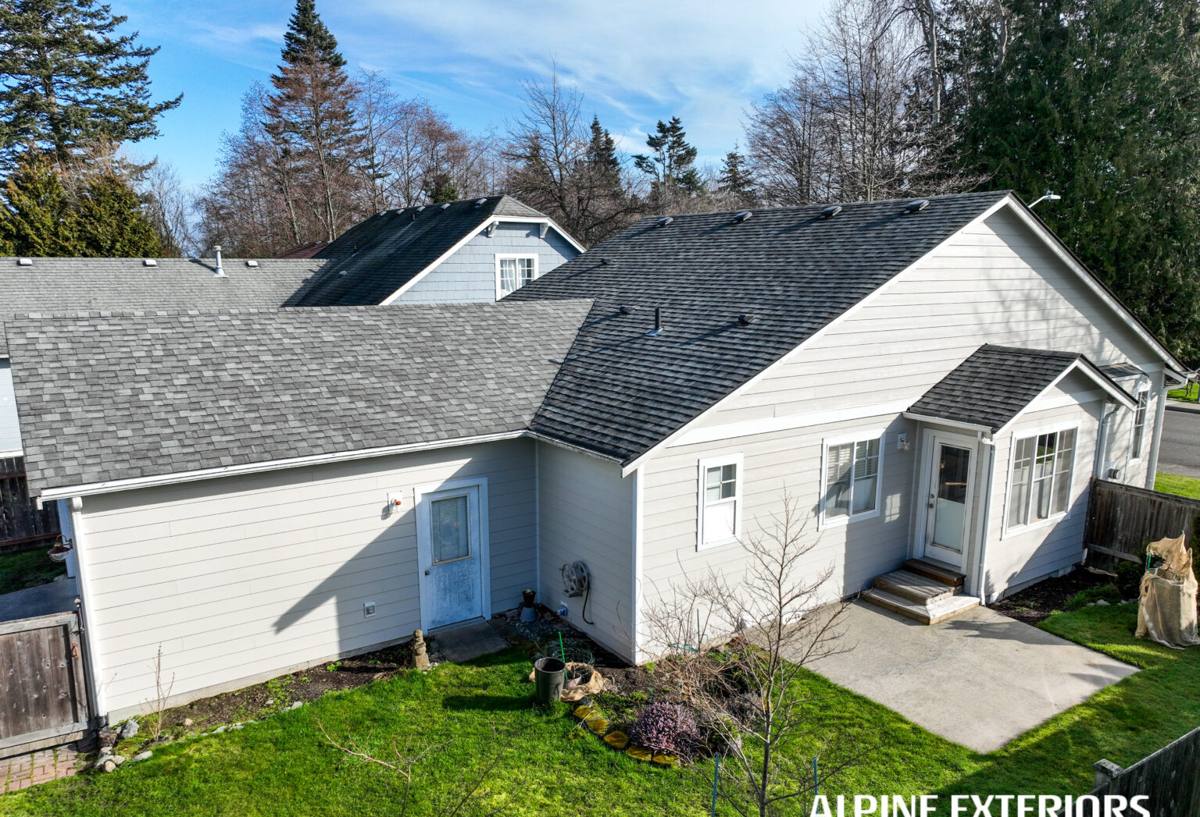
What This Climate Actually Does to Exterior Siding
Moisture is the real enemy, not temperature
Whatcom County doesn't get brutal freezes or extreme heat most years. What it gets instead is sustained moisture — fog, drizzle, and hard rain events that soak an exterior wall and then don't fully dry out before the next system rolls through. Salt-laden air moving in from the coast adds to that, accelerating corrosion on fasteners and finishes that aren't built to handle it. Any siding material that swells, wicks moisture, or holds water against the wall behind it is going to show it eventually — cupping, soft spots, paint failure, or rot at the bottom courses and around penetrations.
Moss and organic growth
A long moss season means algae and moss get a real foothold on north-facing walls, under eaves, and anywhere air doesn't move freely. Porous or textured siding surfaces give moss more to grab onto and hold moisture against, which speeds up the same deterioration process. A dense, factory-finished surface sheds that growth far more easily than a softer or more absorbent material.
Driving rain and wind-driven water
It's not just how much rain falls — it's how it hits the house. Wind-driven rain forces water sideways and upward under laps, around trim, and into any gap in the water-resistive barrier. This is where installation quality starts to matter as much as the siding product itself, which we get into below.
Why We Install James Hardie and Nothing Else
James Hardie fiber cement is engineered specifically for climates like this. It's non-combustible, dimensionally stable, and doesn't absorb water the way wood-based or wood-fiber composite siding products can. Hardie's HZ5 product line is formulated for regions with the kind of freeze-thaw and moisture cycling that Whatcom County and the broader Pacific Northwest see — it resists swelling, cracking, and moisture intrusion better than most alternatives we've evaluated.
The ColorPlus factory finish is a big part of why we standardized on Hardie. It's baked on in a controlled environment rather than field-applied, which means better adhesion and more even coverage than a job-site paint job — and it comes with its own finish warranty. In a climate that punishes exterior paint, that matters. We won't install vinyl, LP SmartSide, primed spruce, cedar, or other fiber cement brands, because we've made this the standard we're willing to put our name behind in this specific climate. That's a professional judgment call on our part, not a claim that every other product is unusable everywhere — just that Hardie is what we trust on homes in Whatcom County.
What a Correct Hardie Installation Actually Involves
The siding itself is only part of the system. Most siding failures we're called to look at in older homes weren't caused by the material — they were caused by shortcuts in the installation. In a climate this wet, the details behind the siding matter as much as the boards themselves.
- A continuous, properly lapped water-resistive barrier installed shingle-style so water drains down and out, never inward
- Correct flashing at every window, door, and penetration, integrated with the barrier — not just caulked over the top
- Proper fastener type, spacing, and depth per James Hardie's published installation instructions, using corrosion-resistant fasteners suited to a salt-air environment
- Minimum clearance from grade, decks, patios, and roof lines so siding never sits in standing water or constant splash-back
- Correct lap exposure and butt joint treatment to shed wind-driven rain instead of trapping it
- Factory-cut and sealed edges wherever field cuts are unavoidable, since a cut edge is the one place ColorPlus doesn't fully protect the board
- Caulking used only where James Hardie specifies it — not as a substitute for proper flashing
Skip any one of these and you can end up with the exact moisture problems we described above, even with the best siding material on the market. This is the part of the job that doesn't show up in a sales photo but determines whether the siding is still performing in fifteen years.
Our Process for a Lynden Siding Project
The approach doesn't change much from house to house, but the details do, depending on what's underneath the existing siding and what the home has been exposed to.
1. Inspection and assessment
We look at the current siding, the sheathing underneath where accessible, trim condition, and any signs of past moisture intrusion — soft spots, staining, moss buildup in specific areas. This tells us whether it's a straightforward re-side or whether there's sheathing repair or additional moisture-barrier work needed first.
2. Tear-off and prep
We remove the old siding down to the sheathing rather than installing over it. Covering up an existing moisture problem just hides it — it doesn't fix it, and it's the single most common cause of an early siding failure we see when we open up a wall.
3. Water management install
Barrier, flashing, and drainage details go in before a single piece of Hardie touches the wall. This is the step that determines long-term performance more than any other.
4. Siding and trim installation
Panels, lap siding, or shingle-style Hardie products go on to James Hardie's spec, with attention to the fastening and clearance details above.
5. Final walkthrough
We check caulking, touch-up needs, and clean the site before calling the job done.
What Affects the Cost of a Hardie Siding Job in Lynden
There's no honest flat number for this without seeing the house, but the factors that move the price are consistent from job to job. This is meant to help you understand where your money goes, not to promise a specific figure.
| Cost Factor | Why It Matters |
|---|---|
| Tear-off vs. covering existing siding | Full tear-off costs more up front but is the only way to inspect and fix hidden moisture damage — we don't install over compromised sheathing |
| Home size and wall complexity | Dormers, bump-outs, and multiple stories add labor, staging, and cut waste |
| Trim and detail work | Corner boards, window trim, and fascia detail take more time than plain lap runs |
| Product line and profile | Lap, panel, and shingle-style Hardie products carry different material and labor costs |
| Color and finish | Standard ColorPlus colors versus custom or premium finishes affect material pricing |
| Sheathing or framing repair | Any rot or damage found during tear-off needs to be repaired before new siding goes on |
Why a Crew That Already Works in Lynden Makes a Difference
A siding crew that regularly works Whatcom County homes has already seen how this specific climate behaves against a wall — which sides of a house take the worst wind-driven rain, where moss builds up fastest, which older construction details tend to hide moisture problems. That's not something you get from a general contractor working a region for the first time.
Local experience also means fewer surprises with permitting expectations, typical construction types in the area, and realistic scheduling around the wetter months, when timing tear-off and barrier installation matters more than usual. It's the difference between a crew executing a generic installation and one that's adjusted its process to what actually holds up here.
Maintenance: What Lynden Homeowners Should Actually Expect
One of the real advantages of a correctly installed Hardie system in this climate is how little ongoing maintenance it needs compared to wood-based sidings. It won't need repainting on the same cycle a field-painted product would, and it resists the swelling and softening that lets moss and mildew take hold. That said, "low-maintenance" isn't "no-maintenance":
- Rinse the exterior periodically to keep moss and algae from establishing, especially on shaded or north-facing walls
- Keep gutters clean and functioning so water isn't overflowing directly onto siding
- Trim back vegetation and keep mulch beds from piling up against the bottom courses
- Have caulking and trim joints checked every few years and refreshed if they've dried out or pulled away
- Address any impact damage or cracked boards promptly rather than letting water find its way in
Is It Time to Re-Side?
Some signs are obvious — visible cracking, soft or spongy spots, siding that's pulling away from the wall. Others are subtler: paint that keeps failing no matter how often it's redone, persistent moss in the same spots every year, or musty smells near exterior walls that suggest moisture is already inside the wall assembly. If any of that sounds like your home, it's worth having someone look before it becomes a bigger repair.
If you're in Lynden or elsewhere in Whatcom County and want a straight answer about your siding's condition, we're happy to take a look. Reach out for a free, no-pressure estimate using the form below.