 Sumas Window
 Deck Repair in Goshen: What This Climate Actually Does to a Deck
Goshen sits in a part of Whatcom County where a deck spends most of the year damp. Between the salt-tinged air that moves up from the Sound, driving rain off the foothills, and a moss season that can run from October clear through April, wood and even composite decking take a beating that homeowners further inland rarely deal with. A deck built anywhere else in the country might get a light once-over every couple of years. A Goshen deck needs a different level of attention, because the moisture doesn't just sit on the surface — it works its way into fastener holes, ledger connections, and the end grain of every board.
Deck repair here is less about cosmetics and more about staying ahead of what moisture does structurally. Surface graying and mildew are the visible symptoms, but the real damage usually starts underneath — in the framing, the ledger board attachment to the house, and the post bases where wood sits closest to standing water or soil contact. A correct repair addresses both: what you can see and what's happening below it.
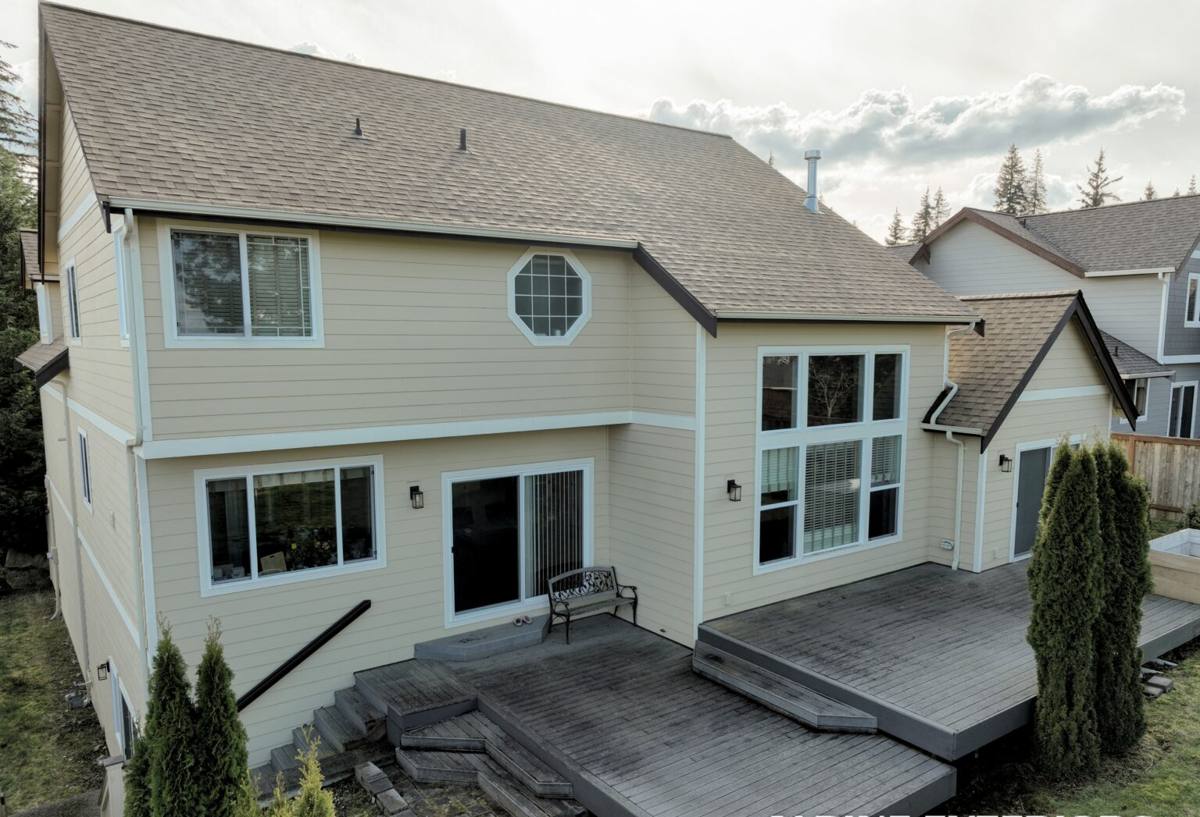
Signs a Goshen Deck Needs Repair, Not Just Cleaning
Homeowners often call us after a pressure wash or a coat of stain didn't fix what they thought was a surface problem. Here's how to tell the difference between something a cleaning solves and something that needs actual repair:
- Boards that feel spongy or flex noticeably when you walk across them
- Green or black staining that comes back within weeks of cleaning — a sign moisture is trapped underneath, not just sitting on top
- Gaps opening up between deck boards and the house, or at stair stringers
- Rust streaking from fasteners, which usually means the fastener itself is failing, not just staining the wood
- Railings that wiggle at the post connection
- Visible rot at the ends of joists, especially where they meet the ledger board or rim joist
- Moss or algae establishing in the same low spots year after year, which points to a drainage or pitch problem, not a cleaning problem
Any one of these on its own might be minor. Two or three together usually means the deck has a moisture-management issue that a repair needs to solve at the source, not just patch at the surface.
What a Correct Deck Repair Job Actually Involves
Structural Inspection First
Before any board gets replaced, a proper repair starts by checking the framing — joists, beams, posts, and especially the ledger board connection to the house. This is the part that's easy to skip and the part that matters most, because it's the connection that keeps the whole deck attached to your home. In a climate that drives this much water into a structure, we check ledger flashing and fastener condition on every repair call, not just when a homeowner mentions it.
Matching Repairs to the Existing Structure
Replacing a handful of boards on an older deck sounds simple until the new boards don't match the moisture content, thickness, or fastening pattern of what's already there. Mismatched wood expands and contracts differently, which shows up a year later as uneven boards or fasteners popping back out. A correct repair accounts for what's already in the ground and builds the fix to move the same way.
Drainage and Airflow
A huge percentage of the repeat problems we see on Goshen decks trace back to poor airflow underneath the structure or water pooling against the house. Repair work isn't complete if it replaces damaged wood but leaves the same drainage problem in place — the new material will fail on the same timeline as the old.
Our Process for Deck Repair Calls in Goshen
- On-site assessment. We look at the whole structure, not just the spot you called about — framing, ledger, posts, fasteners, and drainage.
- Honest scope. We tell you plainly whether this is a repair or whether the deck has moved past the point where repair makes financial sense.
- Material matching. We select lumber or composite that matches the existing deck's rating and fastening system, not just whatever's easiest to source that week.
- Structural work first. Framing, ledger, and post repairs happen before any cosmetic board replacement.
- Drainage check. We address any pitch, flashing, or airflow issue contributing to the original damage.
- Walkthrough. We show you what we found, what we fixed, and what to watch going forward.
Repair vs. Replace: How We Help You Decide
Not every deck problem justifies a full rebuild, and not every repair is worth doing if the underlying structure is too far gone. Here's a general breakdown of the factors that push the decision one way or the other:
| Factor | Leans Toward Repair | Leans Toward Replacement |
|---|---|---|
| Framing condition | Solid, only surface boards affected | Joists or beams show rot or soft spots |
| Ledger board | Properly flashed, attached securely | Water damage at the house connection |
| Age of deck | Under 15 years, built to a reasonable standard | Original structure decades old or undersized by today's standard |
| Extent of damage | Isolated boards or one section | Damage spread across most of the deck |
| Drainage/moisture source | Identifiable and fixable | Chronic, tied to grading or structure you can't easily change |
We'll always tell you honestly which side of this table your deck falls on. A repair that's cheaper today but ignores a framing problem just means paying for the same work twice.
Decking Materials: What We Use and Why
Repairs on an existing deck usually need to match what's already there, but when a homeowner is open to it, material choice matters a lot in this climate:
| Material | How It Handles This Climate | Trade-Off |
|---|---|---|
| Pressure-treated lumber | Handles moisture well when properly rated and sealed; the standard for framing | Needs regular sealing/staining to look good long-term |
| Cedar | Naturally moisture-resistant, ages attractively | Softer, needs periodic maintenance to prevent graying and moss |
| Composite decking | Very low maintenance, resists rot and moss buildup on the surface | Higher upfront cost; still needs proper ventilation underneath — it doesn't fix a bad drainage problem, it just hides it longer |
Our standard is to match the repair to what will hold up under real conditions here, not just what looks good on day one. That sometimes means recommending a slightly more expensive fastener or flashing detail even on a small repair, because the labor to redo it later costs more than doing it right the first time.
Why a Crew That Already Works Goshen Matters
Deck repair isn't a one-size-fits-all trade. A crew that already works this part of Whatcom County has seen how moss actually establishes on north-facing sections here, how ledger boards on homes of a certain age tend to be flashed (or not), and which drainage patterns keep showing up on repeat calls. That's not something you get from a general handyman doing a deck job once a year — it comes from doing this specific repair, in this specific climate, over and over.
It also means we're not guessing at material behavior. We know how pressure-treated lumber and composite boards actually perform through a wet Whatcom County winter versus how they're marketed to perform. That local track record is what lets us give you a straight answer on repair versus replace instead of a sales pitch.
Maintenance After the Repair: Keeping It From Coming Back
A repair is only as good as what happens after we leave. In a climate with this much rain and moss pressure, a few habits make a real difference in how long the fix lasts:
- Clear leaves and debris from between boards before they trap moisture through the wet months
- Keep gutters and downspouts directing water away from the deck structure, not onto it
- Re-seal or re-stain wood decking on the schedule the product actually calls for, not just when it looks faded
- Check the underside of the deck once a year for early rot or pest activity, especially near the ledger
- Trim back vegetation that shades sections of the deck and keeps them from drying out between rains
Questions to Ask Before You Hire Anyone for Deck Repair
Whether you call us or someone else, these are the questions that separate a contractor who understands moisture-driven deck failure from one who's just going to swap boards:
- Will you inspect the framing and ledger board, or just replace the boards I'm pointing at?
- What's causing the damage, and will this repair address that cause or just the symptom?
- What material and fastener will you use, and how does it match what's already on the deck?
- Do you carry insurance and are you comfortable putting the scope of work in writing?
- Have you worked on decks in this area before, and what do you typically find?
If a repair estimate is quick, low, and doesn't mention framing or drainage at all, that's usually a sign the scope was never actually assessed.
If you've got a soft spot, a wobbly rail, or a deck that just doesn't look or feel right anymore, we're happy to come take a look. The estimate is free, there's no pressure to move forward, and you'll get a straight answer on what's actually going on — fill out the form below to get started.