 Sumas Window
 Deck Replacement Built for the Deming Climate
Decks in and around Deming take a different kind of beating than decks in drier parts of the country. Whatcom County sits under a marine-influenced weather pattern most of the year — long stretches of steady, driving rain, heavy overnight dew even in summer, and a moss and algae season that can run eight or nine months if a deck sits in shade near trees or the river bottomland. Add the periodic marine air pushing in off the Sound, and you've got a moisture load that most decking products and most installation crews from outside the area simply aren't built to handle.
A deck replacement here isn't just "pull up the old boards and screw down new ones." Done right, it's a structural and moisture-management project. Done wrong — with the wrong fastener, the wrong flashing detail, or decking that traps water against the framing — it fails early, and it usually fails at the parts of the deck you can't see until they're already rotten.
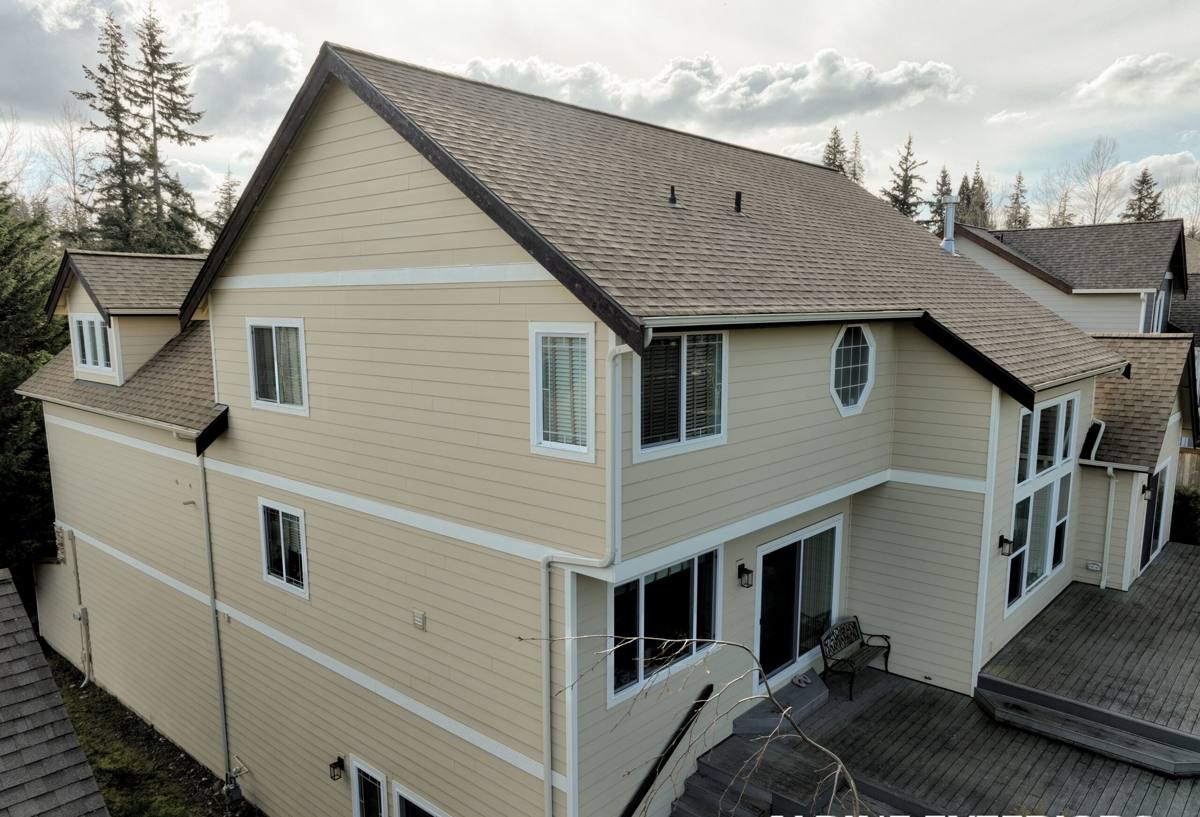
Signs a Deming Deck Needs Full Replacement, Not a Patch
Not every tired deck needs to come out. But there's a point where repair stops making sense and full replacement is the honest recommendation. We look for:
- Soft or spongy decking, especially near the house or in shaded corners where moisture sits longest
- Visible rot or dark staining at the ledger board where the deck attaches to the house
- Rusted or corroded fasteners bleeding orange streaks down the boards
- Posts that have shifted, or footings that show cracking or heaving
- Persistent moss or black algae film that keeps returning within weeks of cleaning
- Railings that flex or feel loose when leaned on
If it's just surface graying or a few loose boards on an otherwise sound frame, that's a repair. If the framing or ledger connection is compromised, replacement is the only responsible fix — patching over rotten structure just hides the problem for a season or two.
What a Correct Deck Replacement Actually Involves
The Framing Comes First
Everything above the frame is cosmetic if the frame underneath is wrong. A proper replacement starts with sizing joists and beams for the actual span and load, spacing them tight enough that the decking won't bounce or cup over time, and using pressure-treated lumber rated for ground contact where posts and footings are involved.
The Ledger Connection Is the Single Most Important Detail
Most deck failures we see in this area start at the ledger — the board that bolts the deck to the house. If that connection isn't properly flashed to shed water away from the house sheathing and rim joist, water gets behind it and rots both the deck framing and the wall structure it's attached to. This is the detail that separates a deck that lasts decades from one that's rotting again in five years, and it's also the detail that's easiest to get wrong if it's rushed.
Fasteners and Hardware
In a climate this wet, hardware matters as much as lumber. We use corrosion-resistant, code-rated joist hangers, structural screws, and fasteners matched to the treated lumber chemicals being used — mixing the wrong metal with modern treated wood accelerates corrosion and can lead to hardware failure years before the wood itself gives out.
Footings and Posts
Post footings need to be sized and set to local soil and frost conditions, not just "deep enough to look right." Undersized or shallow footings are one of the most common shortcuts on cheap deck jobs, and they show up later as a deck that rocks, settles unevenly, or separates from the house.
Choosing Decking Material for a Wet, Shaded Climate
The decking surface itself is where homeowners have the most choice — and where the wrong choice shows up fastest in a climate like this. Here's how the common options compare for a Deming-area deck:
| Material | Moisture Behavior | Maintenance | Moss/Algae Resistance |
|---|---|---|---|
| Pressure-treated wood | Absorbs and releases moisture; prone to cupping and checking if not sealed regularly | Needs cleaning and sealing every 1-2 years | Low — porous surface holds moisture and organic growth |
| Cedar | Naturally moisture- and rot-resistant but still needs finish maintenance | Periodic cleaning and re-staining | Moderate — better than treated pine but still needs upkeep in shade |
| Capped composite | Non-absorptive cap sheds water; core is protected from moisture intrusion | Occasional washing, no sealing or staining | Higher — smooth cap resists moss anchoring, though shaded areas still need occasional cleaning |
| Uncapped composite | Can absorb moisture at the surface over time, especially older formulations | Low, but can develop staining or mold in constant shade | Moderate |
We don't push one product on every job. Cedar makes sense for homeowners who want a natural look and are willing to keep up a maintenance schedule. Capped composite makes sense for a low-shade, low-maintenance deck that will sit under trees for years without regular attention. The wrong call is usually an uncapped or budget composite installed in a heavily shaded, damp spot expecting it to perform like the premium capped versions — that's a maintenance and appearance headache waiting to happen, not a product defect, just a mismatch between the material and the site.
How Our Deck Replacement Process Works
- On-site assessment — we look at the existing deck, the ledger connection, drainage around the foundation, and how much shade and moisture exposure the site actually gets through the year
- Design and material walkthrough — we talk through decking options, railing style, and layout, with honest tradeoffs for your budget and how much upkeep you want to do
- Permit and code check — deck replacements involving structural changes typically require a permit through the county; we handle that coordination
- Demo and structural inspection — full removal of the old deck surface and framing, with a real look at what condition the ledger, rim joist, and any posts are in underneath
- Framing and flashing — new joists, beams, and posts sized to code, with properly flashed ledger attachment to keep water out of the house structure
- Decking, railing, and fastening — installed per manufacturer spec if composite, with corrosion-resistant hardware throughout
- Final walkthrough — we check the deck with you before we call it done, not just hand you an invoice
Permits, Code, and Structural Realities in Whatcom County
Deck replacement isn't always a simple swap-the-boards job from a permitting standpoint. If the framing, footings, or attachment to the house is being redone — which is common on an older deck — county building code typically requires a permit and inspection. We build to that code as a baseline, not as an extra step we skip to save time. It protects you at resale, and more importantly it protects the structural connection to your house, which is not somewhere to cut corners in a climate that stays wet for most of the year.
Living With a Deck Through Whatcom County's Moss Season
Even a well-built, well-chosen deck needs some seasonal attention here. A few habits go a long way toward getting the full lifespan out of a new deck:
- Sweep leaves and debris out of corners and against the house before fall rains set in — trapped debris holds moisture against the decking and framing
- Rinse off moss and algae buildup at the start of spring before it gets a foothold for the season
- Keep gutters and downspouts near the deck clear so runoff isn't dumping directly onto the deck surface or ledger area
- Check railings and stair connections once a year for looseness — freeze-thaw cycles and constant moisture work fasteners loose over time
- If you have wood decking, don't let a sealing cycle slide more than a year or two past due — it's cheaper than replacing boards that have started to check and rot
Why It Matters That We Already Work in Deming
A deck built for a dry climate and a deck built for this one aren't the same project, even if they look identical from the driveway. Crews that don't regularly work this part of Whatcom County can get the ledger flashing, footing depth, or material choice wrong — not out of carelessness, but because they're used to conditions that don't punish those shortcuts the way ours do. We work decks in the Deming area regularly enough to know which details actually matter here: where moss takes hold fastest, which framing connections take the worst of the driving rain, and which decking products hold up under near-constant shade and damp instead of just looking good on a showroom sample.
That local familiarity also means straighter answers. We're not guessing at soil conditions or guessing at how a particular composite line handles a Pacific Northwest winter — we've already seen it on other decks in this area.
What Drives the Cost of a Deck Replacement
Every deck is different, so we won't quote a number without seeing the site, but the main cost drivers are consistent from job to job:
| Factor | Why It Matters |
|---|---|
| Deck size and shape | More square footage and more cuts around corners or curves means more material and labor |
| Decking material | Pressure-treated wood costs less upfront; cedar and composite cost more but shift the maintenance burden differently |
| Framing condition | If posts, beams, and footings are sound, only the surface needs replacing; if not, the whole structure is part of the job |
| Height and railing complexity | Taller decks and multi-level layouts need more structural work and code-compliant railing |
| Site access | Decks over slopes, near water features, or with tight equipment access take more time to build safely |
Generally speaking, a straightforward wood deck replacement costs less upfront than a composite one, but composite typically costs less over the deck's lifetime once you factor out staining and sealing every year or two. We'll walk through real numbers for your specific deck once we've seen it — we don't work off ballpark guesses for a job this dependent on site conditions.
Get a Straight Answer on Your Deming Deck
If your deck is showing soft spots, rot at the ledger, or just isn't holding up to another Whatcom County winter, we'll come take an honest look and tell you what it actually needs — repair or full replacement, and what material makes sense for how shaded and damp your particular site is. Fill out the form below for a free, no-pressure estimate.