 Sumas Window
 Building a Deck That Can Actually Handle Deming's Weather
Deming sits back in the Nooksack River valley, in the shadow of Whatcom County's timber and under a canopy that keeps a lot of the property shaded most of the year. That's part of what makes it a beautiful place to add outdoor living space. It's also exactly the kind of setting that's hardest on a deck. Wet air moves up the valley from the Sound, driving rain sits on horizontal surfaces longer than it does on a roof pitch, and shade plus moisture is a recipe for moss on anything that isn't built and finished correctly.
A deck built the way it's built in a drier climate, or built by a crew that hasn't spent real time working in Whatcom County, tends to show problems within a few years here — soft spots, black staining, rusted fasteners bleeding through the boards, moss creeping across the walking surface. A deck built for this specific area, with the right materials, the right ventilation underneath, and the right hardware, can go decades without that.
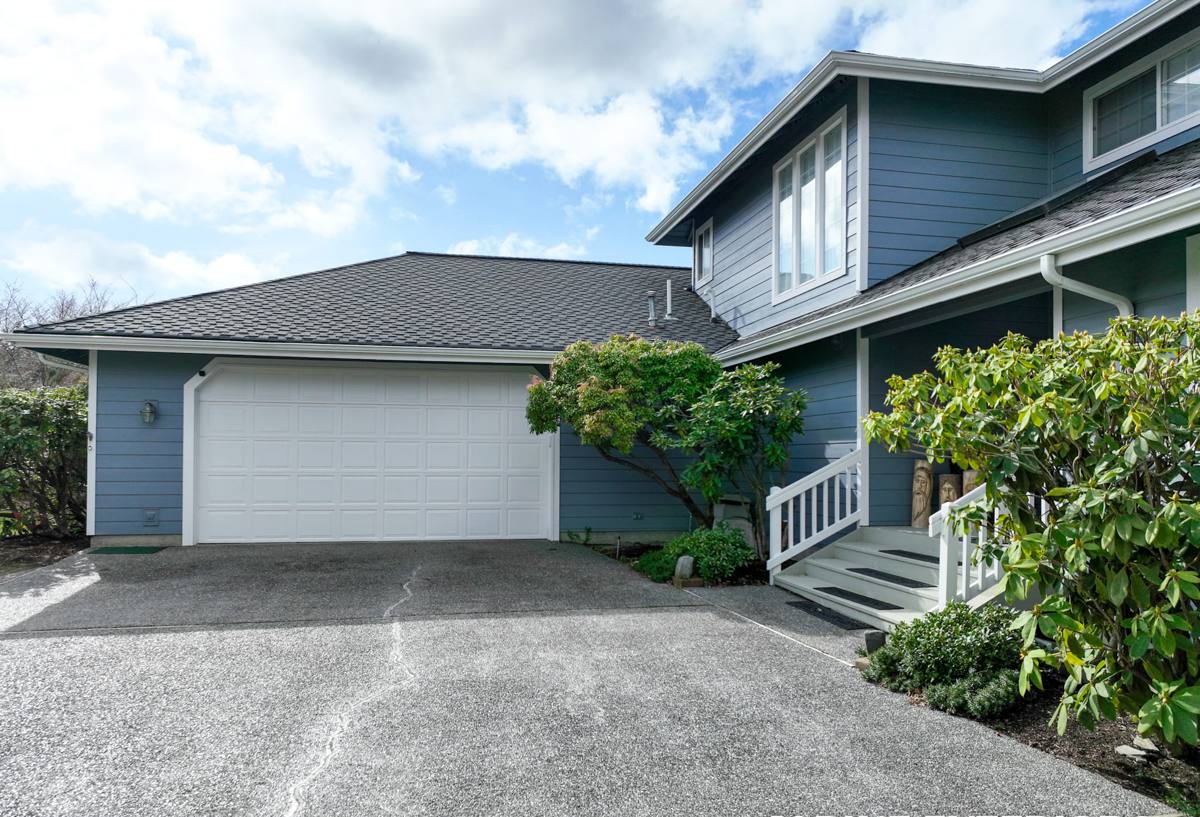
What Rain, Moss, and Marine Air Do to an Unprotected Deck
None of these problems show up on day one. They show up in year three, four, or five, once water has had time to find every gap a builder left.
Moisture that never fully dries
Deming's tree cover and river-valley humidity mean a deck surface can stay damp for days after a storm, even when the rest of the county has dried out. Wood that can't shed water and dry between rain events starts to soften, cup, and eventually rot — first at the fastener holes and board ends, then across whole boards.
Moss and algae growth
Long, mild, wet stretches of the year are ideal growing conditions for moss and algae on any deck surface that stays shaded and damp. Beyond looking bad, a moss layer holds moisture against the wood surface and turns a walking surface slick and genuinely dangerous underfoot.
Marine-influenced air and hardware corrosion
Whatcom County's proximity to Puget Sound and the Strait means the air carries more salt and moisture than an inland climate would. It travels up the river valleys, and over years it accelerates rust on the wrong grade of fasteners, joist hangers, and structural connectors — the kind of corrosion that's invisible from the top of the deck but weakens the framing underneath it.
Choosing the Right Decking Material for a Deming Property
There's no single "best" decking material — the right choice depends on how much upkeep you want to do, your budget, and how shaded and damp the specific site is.
| Material | Upfront Cost | Maintenance | Moisture/Moss Resistance | Typical Lifespan |
|---|---|---|---|---|
| Pressure-treated fir/pine | Lowest | Annual cleaning, periodic sealing | Fair — needs upkeep to perform | 10-15 years |
| Cedar | Mid | Regular cleaning and re-staining | Good naturally, better if maintained | 15-20 years |
| Composite | Mid-High | Occasional washing, no staining | Very good — won't rot, still needs cleaning to prevent surface moss | 25-30+ years |
| PVC/capped polymer | Highest | Lowest — occasional washing only | Excellent, fully moisture-sealed | 25-30+ years |
| Tropical hardwood | High | Periodic oiling to hold color | Very good, naturally dense | 25+ years |
For a shaded, wooded Deming lot, we usually steer homeowners toward composite or capped polymer decking for the main walking surface — not because wood is a bad product, but because a shaded site is going to hold moisture and grow moss on any surface regardless of species, and a low-maintenance decking product means less scrubbing and re-sealing to keep it safe underfoot. Where a homeowner wants the look and feel of real wood, cedar is still a solid choice — it just needs a realistic maintenance commitment in this climate.
What a Correctly Built Deck Actually Involves
The decking boards are the part everyone sees. Whether a deck holds up in Whatcom County's climate is decided almost entirely by what's underneath and behind them.
Ledger board and flashing
Where a deck attaches to the house, the ledger board and its flashing are the single most common failure point we find on older decks in wet climates. Water gets behind an improperly flashed ledger and rots the rim joist and sheathing behind it, sometimes for years before anyone notices from inside the house. Correct flashing detail here isn't optional in this climate — it's the difference between a deck that lasts and one that quietly damages the house it's attached to.
Framing ventilation and drainage
Joists and beams need airflow underneath to dry out between storms. That means proper spacing, joist tape or protective coating on top of the framing to shed water away from fastener holes, and grading or drainage below the deck so water doesn't pool and sit against the posts and footings.
Fastener and hardware grade
Given the marine-influenced air common across Whatcom County, we use stainless steel or hot-dip galvanized fasteners and connectors on structural hardware rather than standard coated screws — the upfront cost difference is minor, and it's cheap insurance against the kind of hidden corrosion that eventually shows up as a soft or wobbly deck.
Footings, posts, and guardrails
Footings are sized to the soil and frost conditions on the specific site, not poured to a generic minimum. Like most jurisdictions in Washington, decks in this area generally need a permit, and any deck with a walking surface more than 30 inches above grade needs code-compliant guardrails and baluster spacing. We handle the permit and inspection process as part of the job, not as an afterthought.
Our Process, From First Call to Final Walkthrough
- Site visit and consultation — we walk the property, look at grade, shade, drainage, and how the deck will tie into the house, and talk through how you actually want to use the space.
- Design and material selection — layout, size, decking and railing material, and any built-ins (benches, stairs, multiple levels) get worked out before anything is ordered.
- Permitting — we prepare and submit what's needed for the local permit and schedule required inspections so the job stays compliant from footings to final.
- Construction — footings, framing, flashing, and decking go in with the fastener and drainage details this climate requires, not just the code minimum.
- Final walkthrough — we go over the finished deck with you, cover any maintenance basics for the material you chose, and make sure you're comfortable with everything before we call it done.
Keeping a Deming Deck Looking Good Season After Season
Even the right materials and the right build benefit from a little seasonal attention, especially on a shaded lot.
- Sweep leaves and debris off the surface regularly — trapped organic matter is what feeds moss growth
- Rinse or wash the deck surface once or twice a year to keep algae and moss from establishing
- Keep gutters and downspouts directing water away from the deck structure, not onto it
- Trim back overhanging branches where possible to let more light and air reach the deck
- Re-seal or re-stain wood decking on the schedule the manufacturer recommends — don't wait until it's visibly gray
- Check railings and stair connections annually for looseness, a common early sign of fastener corrosion
Why Hire a Crew That Already Works in Deming
We know what rural Whatcom County lots require
Many Deming properties are larger, wooded lots with septic systems, wells, and longer driveways than you'd find on a typical in-town parcel. That changes where equipment can access the site, where footings can go, and how a deck should be graded to manage runoff on a sloped, treed lot.
We build for the shade, not around it
A crew that mostly works sunnier, more open sites will often spec a deck the same way regardless of setting. Working Deming regularly means designing and building with the moss season and moisture in mind from the start, not treating it as an afterthought.
We handle the local permitting
Because we work in this area regularly, we know the permitting steps a deck project in Whatcom County typically requires, and we build that timeline into the schedule up front instead of surprising you with it midway through the job.
Signs Your Current Deck Needs a Closer Look
- Boards that feel spongy, springy, or soft underfoot in any spot
- Visible moss or dark staining that comes back quickly after cleaning
- Rust streaks bleeding out from screw heads or connector plates
- A railing or stair post that wobbles or has visibly loosened
- Gaps or discoloration where the deck meets the house, near the ledger board
- Standing water or slow drying after rain, rather than water sheeting off
Any one of these is worth a look before it turns into a bigger repair — or before it becomes a safety issue.
Let's Talk About Your Deck
Whether you're planning a new deck for a Deming property or trying to figure out if an existing one is still sound, we're happy to take a look and talk through honest options — no pressure, no obligation. Use the form below to request a free estimate.