 Sumas Window
 Goshen's Deck Climate: Rain, Moss, and Marine Air
Goshen sits in the Nooksack Valley corner of Whatcom County, close enough to the Sumas border crossing that most homes here deal with the same weather pattern as the rest of northwest Washington: long, wet winters, a short dry season, and marine air that pushes inland off the Salish Sea and settles into the valley. That moist air doesn't just make things damp for a day after a storm — it keeps wood and composite surfaces wet for weeks at a stretch, which is exactly the condition moss, algae, and rot fungus need to get established.
A deck built without that pattern in mind will look fine for a season or two and then start showing problems fast — usually starting at the ledger board, the fastener heads, and any spot where two boards meet and water can sit. By the time most homeowners notice soft spots or persistent green staining, the damage is usually further along underneath than it looks on the surface.
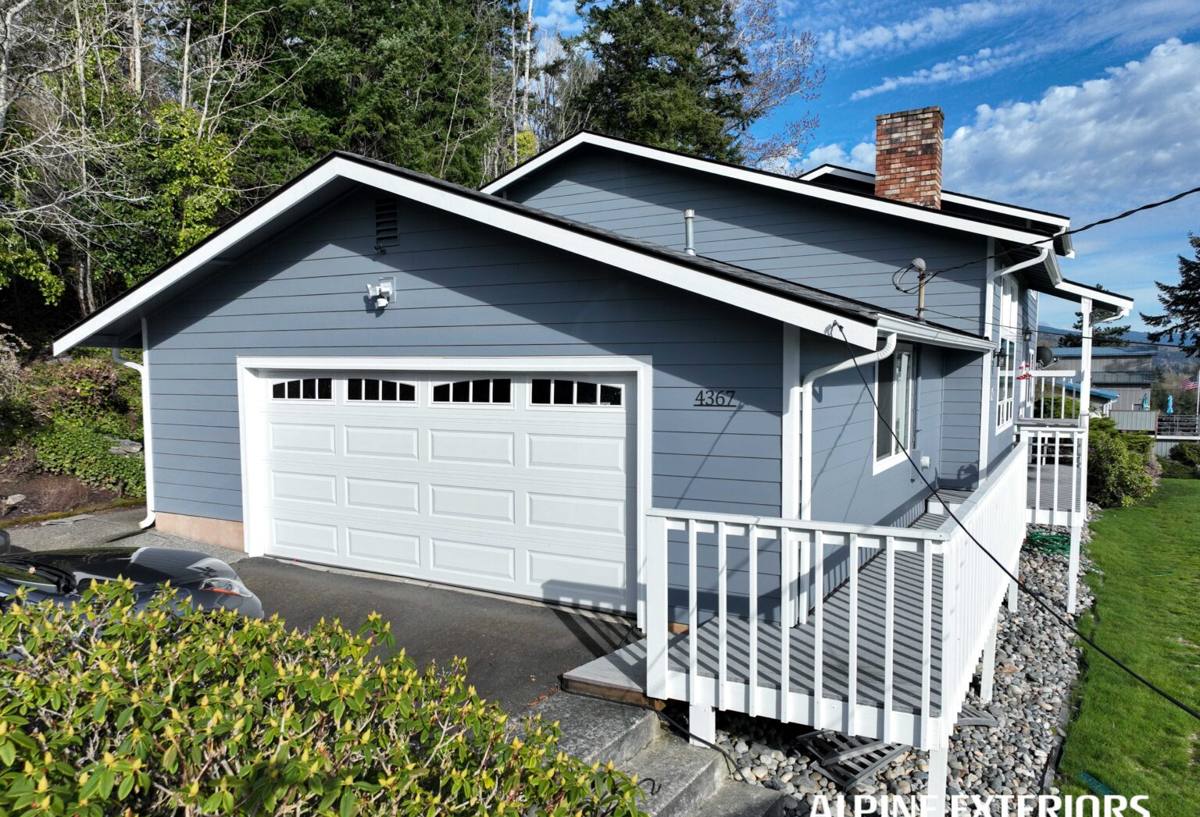
Signs Your Goshen Deck Needs Replacing, Not Patching
Not every deck problem calls for a full replacement. But there's a point where patching individual boards just delays a bigger job and spends money on a structure that's already past its useful life. Here's what we look for when we're deciding whether repair still makes sense:
- Soft, spongy decking or joists you can flex by hand or probe with a screwdriver
- Persistent moss or black-green staining that comes back within weeks of cleaning
- Rust streaking or lifted fastener heads across multiple boards, not just one or two
- Ledger board separation from the house, or gaps that widen after heavy rain
- Railings or stair stringers that feel loose or move under normal use
- A structure that's more than 15-20 years old and was never properly flashed at the ledger
If two or more of these show up, replacement is almost always the better value than continuing to chase repairs on a deck that's fighting the climate and losing.
What a Correct Deck Replacement Involves
The Structure Underneath
The decking boards are the part everyone sees, but the framing underneath is what determines whether the deck lasts. A proper replacement means new or inspected joists sized correctly for the span, joist hangers rated for outdoor exposure, and posts and footings checked against current frost depth and bearing requirements for this area. If the existing footings are undersized or set too shallow, patching new decking onto old framing just repeats the same failure a few years down the road.
Ledger Attachment and Flashing
The ledger board — where the deck attaches to the house — is the single most common failure point we see on decks in this climate. Water works its way behind an improperly flashed ledger and rots the rim joist and sheathing behind it, often invisibly until the deck starts to pull away. A correct replacement uses proper flashing, a water-resistant barrier behind the ledger, and structural fasteners sized for the load, not just deck screws.
Drainage and Airflow
Decks that sit low to the ground or have poor airflow underneath stay damp longer after every rain, which speeds up rot and keeps moss established. Where grading allows, we build in enough clearance and slope the structure slightly away from the house so water actually moves off the deck instead of pooling under it.
Decking Material Options for This Climate
Every decking material handles Whatcom County's wet, mossy conditions differently. There's no single "best" choice — it depends on your budget, how much upkeep you're willing to do, and how long you want the deck to last before it needs attention again.
| Material | Moisture & Moss Behavior | Maintenance | Typical Lifespan |
|---|---|---|---|
| Pressure-treated wood | Absorbs moisture, prone to moss/algae if not cleaned and sealed regularly | Annual cleaning, re-sealing every 1-2 years | 10-15 years with upkeep |
| Cedar | Naturally rot-resistant but still needs sealing to resist staining and moss in this climate | Sealing every 1-3 years, occasional cleaning | 15-20 years with upkeep |
| Composite decking | Sheds water well, resists rot; surface moss/algae can still form and needs occasional washing | Periodic cleaning, no sealing required | 25-30 years, varies by brand and warranty |
| PVC/capped polymer | Best moisture resistance of the group; least hospitable surface for moss buildup | Occasional cleaning only | 25-30+ years, varies by brand and warranty |
Our standard on any deck we build here is straightforward: whatever material a homeowner chooses, the structure underneath gets built to the same standard, because a good composite deck on bad framing fails just as fast as a good wood deck on bad framing. We'll walk through the honest trade-offs of each option — upfront cost, upkeep, and how it holds up to moss and driving rain — before you commit to one.
Our Deck Replacement Process, Step by Step
- On-site assessment: We inspect the existing deck, ledger, footings, and framing to see what's salvageable versus what needs full replacement.
- Written scope and estimate: You get a clear breakdown of what's being torn out, what's being rebuilt, and what materials are included — no vague allowances.
- Permitting: We handle the permit application and inspection scheduling required for structural deck work in Whatcom County.
- Demolition and disposal: The old deck comes out, including any rotted framing, and debris is hauled off site.
- Framing and ledger work: New or repaired framing goes in first, with proper ledger flashing and structural fasteners.
- Decking, railing, and stairs: Your chosen decking material, railing system, and stairs are installed to code, including guardrail height and baluster spacing.
- Final inspection and walkthrough: We confirm the work passes inspection and walk the finished deck with you before calling the job done.
Permits, Codes, and Local Considerations
Deck replacement that involves structural work — new footings, ledger reattachment, or a deck over a certain height — generally requires a permit and inspection. Guardrail height, stair rise and run, and baluster spacing are all governed by code, and inspectors here pay particular attention to ledger attachment and footing depth given how often those fail in this climate. Skipping the permit process on structural work isn't a shortcut worth taking — it can create real problems at resale and, more importantly, it skips the inspection step that catches framing mistakes before they're covered up. We pull the permits and schedule inspections as a standard part of the job, not an add-on.
Cost Factors for a Goshen Deck Replacement
Every deck is different, but the price mainly comes down to size, material choice, and how much of the existing structure needs replacing versus reusing. Rather than quote a number that won't mean much without seeing your deck, here's what actually moves the price:
| Factor | Why It Matters |
|---|---|
| Deck size and shape | More square footage and complex angles mean more material and labor |
| Decking material | Pressure-treated wood costs less upfront than composite or PVC, which cost more but need less upkeep |
| Framing condition | Rotted joists, ledger, or footings that need full replacement add cost beyond a straight decking swap |
| Height and stairs | Elevated decks with stairs and taller railings require more structural work and code compliance |
| Railing style | Basic wood railing costs less than metal, cable, or glass systems |
| Site access | Decks with difficult access for material delivery or debris removal can add labor time |
We give a firm written estimate after seeing the actual condition of your deck and framing — not a ballpark based on square footage alone, since the framing condition is often what separates a straightforward job from a more involved one.
Maintenance Checklist After Installation
A new deck built correctly for this climate still needs some basic upkeep to get its full lifespan. This is what we tell every Goshen homeowner after a replacement:
- Sweep leaves and debris off the deck regularly, especially in fall — trapped organic matter holds moisture and feeds moss
- Rinse the surface periodically to knock back algae and moss before it gets established, especially in shaded areas
- Check railing and stair connections once a year for any looseness
- For wood or cedar decking, re-seal on the schedule recommended for that product — don't wait until it's visibly graying or absorbing water
- Keep gutters and downspouts near the deck clear so runoff isn't dumping extra water onto or under the structure
- Trim back overhanging vegetation that keeps the deck surface shaded and slow to dry
Why Hire a Crew That Already Works Goshen
A deck built to a generic spec sheet, without accounting for how much rain this area actually sees and how long moss season runs, tends to show its age early. Crews that regularly work Goshen and the surrounding Sumas area already know which details matter most here — ledger flashing that actually sheds water, fastener choices that won't rust and stain the decking within a couple of seasons, and enough clearance underneath for the deck to actually dry out between storms. That local pattern recognition is the difference between a deck that needs attention again in five years and one that holds up for two or three decades.
If your deck in Goshen is showing soft spots, persistent moss, or a ledger that's starting to separate, we're happy to take a look and give you a straight assessment of whether it's a repair or a replacement — with a written estimate, no pressure, and no upsell on materials you don't need. Reach out through the form below to get a time scheduled.