 Sumas Window
 Decks Built for How Bellingham Actually Weathers
A deck in Bellingham lives a harder life than a deck in a dry climate. Between the marine air rolling in off Bellingham Bay, months of driving rain, and a moss season that seems to start earlier every year, an outdoor structure here needs to be built differently than the same deck would be built inland. We design and build custom decks for homeowners throughout the Bellingham area and greater Whatcom County, and nearly every job starts with the same question: how do we keep this thing dry, stable, and usable for the next twenty years instead of five?
That's not a rhetorical question. We've replaced a lot of decks in this area that were structurally sound in concept but failed early because they were built like they'd sit somewhere dry. Framing without proper flashing, decking with no gap for airflow, footings that trap water instead of shedding it — these are the details that separate a deck that lasts a couple decades from one that needs major repair by year eight.
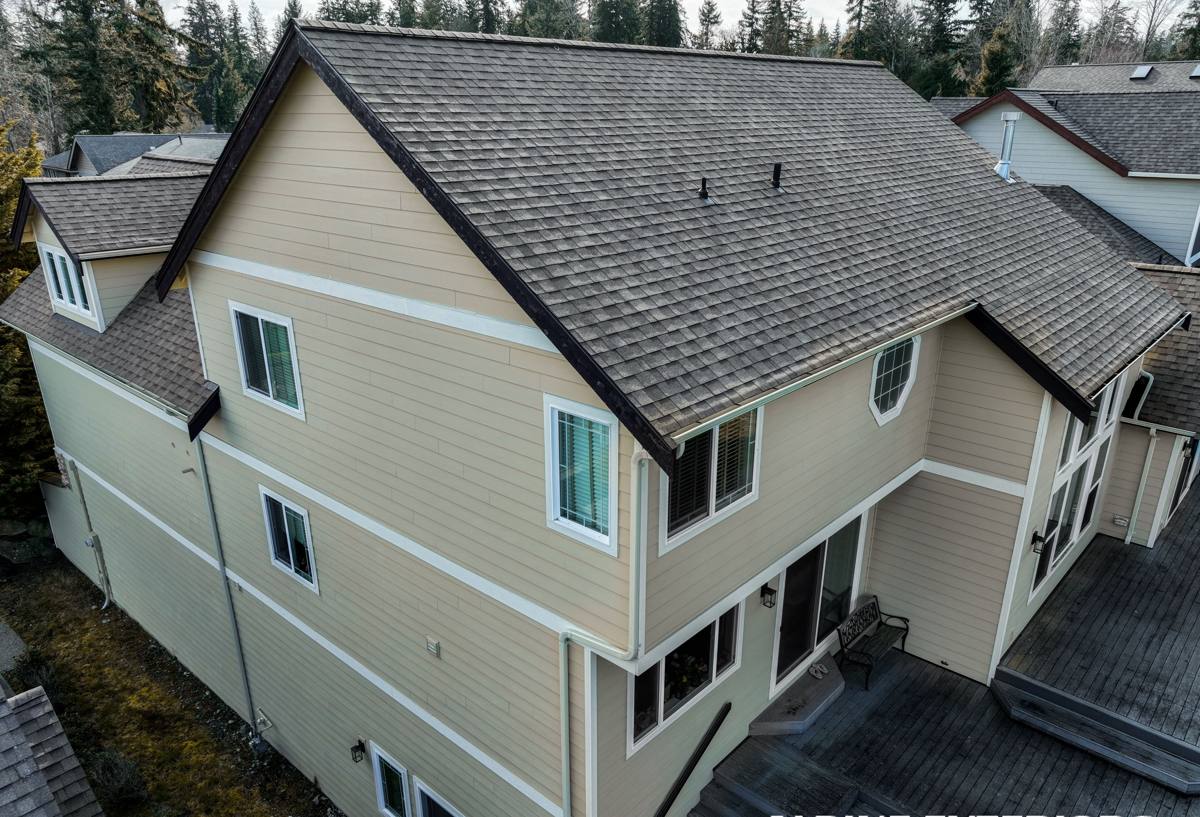
What Salt Air, Rain, and Moss Actually Do to a Deck
Salt Air and Corrosion
Homes closer to the water pick up salt-laden moisture in the air, and that moisture doesn't just sit on the surface — it works into fastener heads, joist hangers, and any exposed metal hardware. Standard galvanized fasteners can start corroding faster in this environment than most homeowners expect, which is why we spec stainless steel or heavy hot-dip galvanized hardware rated for coastal exposure on every deck we build near the bay.
Driving Rain and Water Intrusion
Bellingham doesn't just get rain — it gets rain pushed sideways by wind for days at a stretch. That means water finds its way into places a light, straight-down rain never would: behind ledger boards, under railing posts, into end-grain cuts that weren't sealed. The single most common failure point we see on older decks is the ledger board connection to the house, where water has been getting behind the flashing for years before anyone notices the rot underneath.
Moss and the Long Wet Season
Whatcom County's moss season isn't a few weeks — it's most of the year on a shaded, north-facing deck. Moss holds moisture against the decking surface constantly, which accelerates wood decay and makes composite surfaces dangerously slippery if the boards don't have enough texture or drainage gap. A deck design that ignores sun exposure and airflow is signing up for a moss problem from day one.
Designing a Deck That Actually Holds Up Here
Good design for this climate isn't about picking a fancier material — it's about getting a handful of details right that most homeowners never think to ask about.
- Ledger board flashing that directs water away from the house wall, not just a bead of caulk behind the board
- A drainage gap and slope built into the framing so water actually leaves the deck instead of pooling
- Stainless or coastal-rated fasteners and joist hangers, especially within a few miles of the water
- Post bases that keep wood off standing water, not buried in concrete that holds moisture against the post
- Decking material chosen with this specific yard's sun and shade pattern in mind, not a generic recommendation
- Railing and stair hardware rated for the same exposure as the frame — mismatched hardware is a common weak point
Footings and Frost
Whatcom County's frost depth and Bellingham's clay-heavy soils in many neighborhoods mean footings need to go deep enough and be sized correctly for the ground they're sitting in — cutting this corner is how decks start heaving or settling unevenly within a few winters. We pull permits and follow the local building department's footing requirements on every project; this isn't optional and it isn't something a homeowner can verify after the concrete is poured.
Choosing the Right Decking Material for This Climate
There's no single "best" decking material — there's the best material for a given deck's sun exposure, budget, and how much upkeep the homeowner actually wants to do. Here's how the common options hold up under Bellingham's specific conditions:
| Material | How It Handles Our Rain & Moss | Maintenance | Typical Lifespan Here |
|---|---|---|---|
| Pressure-treated wood | Needs regular sealing or it absorbs moisture and greens up with moss/algae | Annual cleaning, re-sealing every 1-2 years | 10-15 years |
| Cedar | Naturally rot-resistant but still needs sealing in shaded, damp spots | Sealing every 1-2 years, occasional board replacement | 15-20 years |
| Composite decking | Doesn't rot, but needs a textured, well-draining profile or it gets slick with moss film | Periodic washing, no sealing/staining | 25-30 years |
| PVC decking | Fully moisture-resistant, best option for constantly shaded or low-airflow areas | Occasional washing | 30+ years |
We're candid with homeowners about the trade-off: composite and PVC cost more up front, but on a shaded Bellingham lot with heavy moss exposure, the maintenance savings and moisture performance usually pay that difference back over the life of the deck. On a sunnier, open lot, a well-sealed cedar deck can still be the right call, especially if the homeowner doesn't mind the upkeep.
What a Correct Deck Build Actually Involves
1. Site Assessment
We look at drainage patterns on the lot, sun/shade exposure across the seasons, soil conditions, and how close the site is to the water for salt exposure purposes. This shapes the material and hardware recommendation before we ever talk design.
2. Design and Permitting
We draw the deck to fit the home and the site, then handle the permit submission through the relevant Whatcom County or City of Bellingham building department, whichever applies to the property. Permit requirements and inspection points differ depending on jurisdiction, and getting this wrong causes real delays.
3. Framing
This is where climate-appropriate details get built in: flashing, fastener grade, footing depth, and drainage slope. It's also the stage that's completely invisible once decking goes down, which is exactly why it needs to be done right the first time.
4. Decking, Railing, and Finish
Boards, railing, stairs, and any built-in features go in last, with attention to gaps and fastening patterns that let the deck breathe and drain.
5. Final Walkthrough and Inspection
We walk the finished deck with the homeowner and make sure it passes any required final building inspection before calling the job done.
Cost Factors for a Bellingham Deck Project
Every deck is priced on its own specifics, but the same handful of factors move the price up or down on almost every job we quote:
| Factor | Why It Matters |
|---|---|
| Size and shape | Multi-level decks, curves, and cutouts around trees or utilities add framing complexity |
| Height off the ground | Taller decks need more substantial framing, stairs, and often guardrails per code |
| Decking material | Composite and PVC cost more upfront than wood but reduce long-term maintenance |
| Site access and soil | Difficult access or poor soil conditions can add labor and footing costs |
| Railing and features | Built-in seating, custom railing, or lighting add to both material and labor cost |
| Permit and inspection requirements | Larger or higher decks typically require more inspection steps, which affects timeline more than price |
Living With a Deck Through a Whatcom County Winter
Even a well-built deck needs some seasonal attention here. A quick fall cleaning to clear leaves and debris before the wet season sets in, an occasional wash to knock back moss growth on shaded sections, and a periodic check of railing hardware for any early corrosion will keep a properly built deck performing the way it should. We tell every homeowner what their specific material needs before we hand the project over — a composite deck and a cedar deck have very different maintenance calendars, and knowing that upfront avoids surprises later.
Why Local Experience Matters on This Job
A deck built by a crew that hasn't worked in Bellingham or the surrounding Whatcom County area can still look good on the day it's finished. The difference shows up two or three winters later — in flashing that wasn't detailed for driving rain, hardware that wasn't rated for salt air, or a footing depth that didn't account for local frost and soil conditions. We work in this area regularly, we know the permitting process for both Bellingham and unincorporated Whatcom County, and we build every deck assuming it has to survive our actual weather, not a textbook version of it.
If you're planning a new deck or replacing one that's showing its age, we're happy to come take a look at your property and talk through what makes sense for your site, your budget, and Bellingham's weather. Fill out the form below for a free, no-pressure estimate.