 Sumas Window
 Custer's Climate Puts Real Demands on Siding
Custer sits close enough to the water that salt-laden marine air is a daily fact of life, not an occasional nuisance. Add in Whatcom County's long wet season, wind-driven rain that hits walls sideways instead of falling straight down, and shaded, tree-lined lots that never fully dry out, and you have one of the tougher exterior environments in western Washington for siding to survive. Homes here don't fail because owners neglected them. They fail because the siding material wasn't built for this combination of salt, moisture, and shade in the first place.
We've replaced enough siding in and around Custer to see the pattern clearly: paint that chalks and peels years ahead of schedule, seams that swell and separate, and moss and algae that colonize north-facing walls within a season or two of a cleaning. None of that is a mystery once you look at what the walls are actually exposed to.
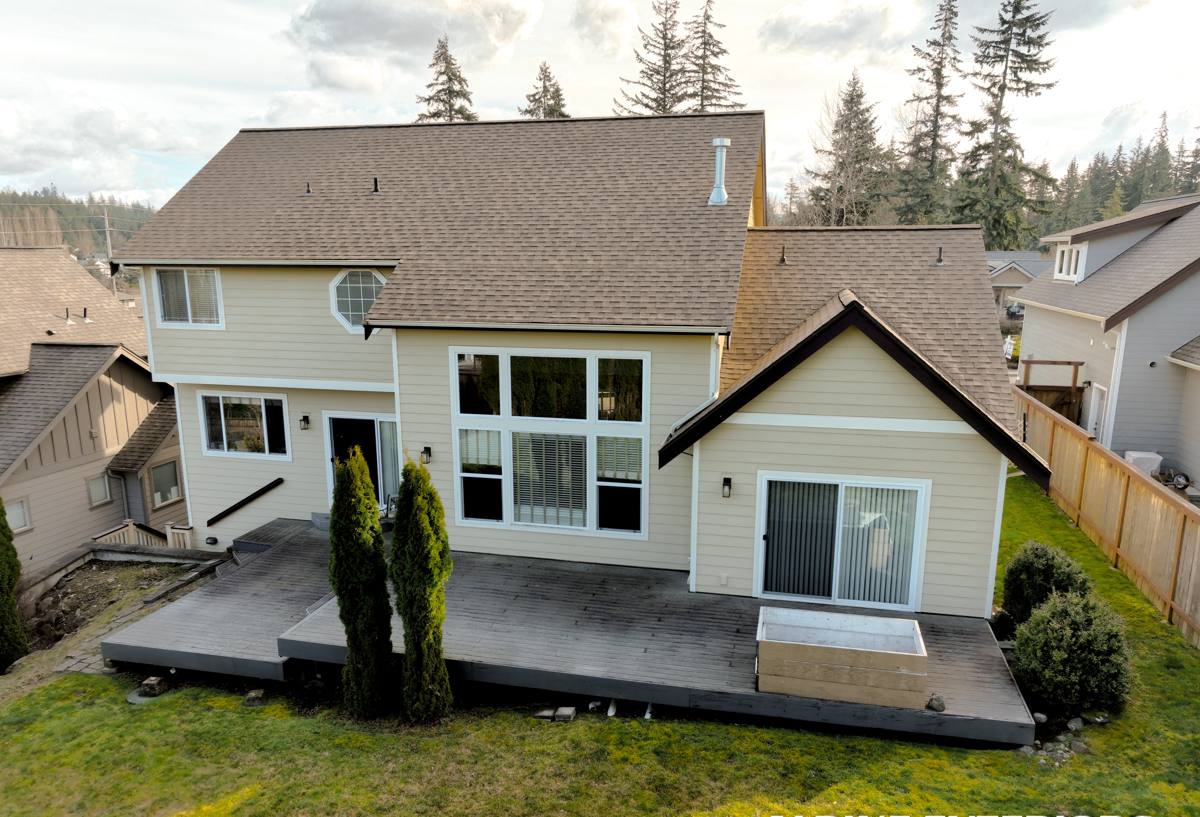
What Siding Needs to Handle Here, Not Just Look Good
A siding product that performs well in a dry inland climate can struggle badly a few miles from saltwater. Custer's exterior walls need to manage several things at once:
- Salt exposure — airborne salt accelerates the breakdown of paint films and can corrode fasteners and trim that aren't rated for it.
- Driving rain — wind off the water pushes moisture sideways into laps, seams, and butt joints that a calmer climate would never test.
- Extended dampness — long stretches of grey, humid weather mean siding doesn't get the quick dry-out time it would in a sunnier region.
- Moss and algae — a moss season that runs longer than in most of the country means anything porous or wood-based has months of standing opportunity to take root.
- Temperature swings — freeze-thaw cycles in winter stress any material that absorbs and releases moisture.
This is the honest reason we stopped installing wood-based and vinyl products years ago. It isn't that they're bad products everywhere — it's that this specific climate finds every weakness in them faster than most.
Why We Install Only James Hardie Fiber Cement
We install James Hardie fiber cement siding exclusively, and we're upfront about why. Fiber cement is made from cement, sand, and cellulose fibers — it doesn't have the organic wood content that gives moss and rot something to feed on, and it doesn't warp, swell, or delaminate the way engineered wood products can when they take on water at a cut edge or a failed seam. It's also non-combustible, which matters to insurers and to homeowners thinking about long-term risk, not just weather.
James Hardie backs its siding with a factory-applied ColorPlus finish baked on under controlled conditions, rather than field-painted after installation. That finish is engineered to resist fading and holds up better against the kind of salt-air UV and moisture cycling that breaks down field-applied paint faster than most homeowners expect. Hardie also builds region-specific product formulations — the HZ5 engineered line used in our climate zone is formulated for the Pacific Northwest's wet, moderate-temperature conditions rather than a generic national spec.
We don't install LP SmartSide, Cemplank, Allura, primed spruce, or cedar. Some of those are reasonable products in the right setting, but we've made a professional call to standardize on one system we can install to spec, warranty with confidence, and stand behind for a climate we know intimately. That's not a marketing position — it's how we decided to run a siding business in a place where the weather doesn't forgive shortcuts.
Matching the Right Hardie Products to a Custer Home
Not every Hardie product is the right fit for every wall or every home style. Part of doing this correctly is choosing the right profile and exposure for how a given wall actually gets hit by weather.
| Product | Best Use on Custer Homes | Climate Notes |
|---|---|---|
| HardiePlank lap siding | Most walls, traditional and craftsman-style homes | Widely used exposure works well with proper lap and caulk detailing to shed driving rain |
| HardiePanel vertical siding | Gables, accent walls, modern designs | Fewer horizontal seams for water to catch on exposed, wind-facing walls |
| HardieShingle siding | Accent gables, dormers, coastal-style homes | Adds texture but needs careful flashing on shaded, damp elevations prone to moss |
| HardieTrim boards | Corners, window and door trim, fascia | Non-combustible, dimensionally stable trim that won't cup or split like wood trim exposed to salt air |
North- and west-facing walls that catch the brunt of Custer's wind-driven rain and stay shaded longest usually get extra attention on flashing and caulk joints regardless of which profile is used, because that's where we see the most repeat failures in poorly installed jobs.
What a Correct Installation Actually Involves
Fiber cement performs exactly as well as the installation behind it, and Hardie's own warranty coverage assumes the manufacturer's installation instructions were followed. In a climate like this one, a few details matter more than they would somewhere drier:
Moisture management behind the siding
A weather-resistant barrier installed correctly, with proper lapping and sealed penetrations, is what actually keeps wind-driven rain from reaching the sheathing. Fiber cement is not waterproof by itself — it's the drainage plane behind it doing most of the real work.
Clearances and gaps
Hardie specifies minimum clearances from grade, roofing, decks, and horizontal surfaces. In a wet climate with a long moss season, skipping these clearances is one of the fastest ways to trap moisture against the bottom of a wall and start rot in the framing behind siding that otherwise looks fine.
Fastening
Corrosion-resistant fasteners, driven correctly (not overdriven, which cracks the material and voids warranty coverage), matter more here given salt exposure than they would inland.
Joint and seam treatment
Butt joints, corners, and trim intersections are where driving rain finds its way in. Correct flashing behind joints, and Hardie-approved caulk or joint treatment rather than a bead of general-purpose caulk, is the difference between a wall that sheds water for decades and one that starts failing at the seams within a few years.
Painted or factory-finished cut edges
Every field cut exposes raw fiber cement. Sealing cut edges with the appropriate touch-up product is a small step that's easy to skip and directly affects how well a wall resists moisture intrusion at trim lines and openings.
Our Process, Start to Finish
- On-site assessment. We look at existing siding, sheathing condition, and which elevations take the worst of the wind and rain, not just a quick measurement.
- Tear-off and inspection. Removing old siding lets us actually see the sheathing and framing underneath and catch any hidden moisture damage before it's covered up again.
- Weather-resistive barrier and flashing. This layer gets installed and detailed around every window, door, and penetration before a single piece of siding goes up.
- Hardie product installation. Panels or planks are installed to manufacturer spec — correct clearances, correct fastening, correct exposure.
- Trim, joints, and touch-up. Corners and joints get properly flashed and sealed, and any cut edges get sealed with the appropriate finish product.
- Final walkthrough and cleanup. We walk the finished job with the homeowner and make sure the site is left clean.
What Fiber Cement Siding Costs in Custer
Every home is different, and we'll only give a real number after seeing the house, but these are the factors that most affect the final price on a Custer job:
| Cost Factor | Why It Matters Here |
|---|---|
| Existing siding removal | Tear-off complexity increases if old siding or sheathing has hidden moisture damage from years of driving rain |
| Home size and wall complexity | More corners, gables, and dormers mean more trim, flashing, and labor |
| Product mix | Combining lap siding with panel accents or shingle detailing costs more than a single profile |
| Sheathing or framing repair | Moss season and long-term moisture exposure sometimes reveal rot that needs repair before new siding goes on |
| Color and finish selection | Factory ColorPlus finishes come in a range of standard colors; custom field-painting after install adds cost and reduces long-term fade resistance |
| Accessibility | Steep lots, mature landscaping, or limited access around a home affect labor time |
As a general guide, fiber cement siding projects in this region typically run in the range homeowners expect for a full-quality exterior replacement — meaningfully more than vinyl up front, but with a service life and finish durability that's built for salt air and driving rain rather than working against it.
Keeping Fiber Cement Siding Looking Right After Install
Correctly installed Hardie siding is low-maintenance, not no-maintenance. A few habits go a long way in this climate:
- Rinse siding annually, especially shaded and north-facing walls where moss and algae take hold fastest.
- Keep gutters clear so overflow doesn't run down and stain or saturate the siding face.
- Trim back landscaping so walls get airflow and sun exposure to help them dry between rain events.
- Re-caulk joints if you notice cracking or gaps, rather than waiting for water intrusion to show up as a stain or soft spot.
- Have flashing and trim intersections checked periodically, since that's where problems start even on a well-installed job.
Why It Matters That We Already Work This Area
A crew that mostly works drier, inland projects will install fiber cement siding to the letter of the manual and still get surprised by what Whatcom County's coastal-influenced weather does to a wall over a few winters. Working Custer regularly means we already know which elevations take the worst of the driving rain, how aggressively moss establishes on shaded walls here, and where salt air causes problems that a generic installation crew wouldn't think to plan around.
That local familiarity shows up in small decisions — where we add extra flashing attention, which walls get prioritized for drainage detailing, how we sequence a job around this area's wetter stretches of the year — that don't show up in a spec sheet but do show up in how the siding performs ten and twenty years down the road.
If you're weighing a siding replacement or new construction siding for a home in Custer, we're glad to take a look and give you a straightforward, no-pressure estimate — no invented urgency, just an honest read on what your home actually needs.