 Sumas Window
 Composite Decking for Laurel Homes
Laurel sits in one of the wetter corners of Whatcom County, and any deck built here has to earn its keep against months of steady rain, damp shoulder seasons, and the kind of moisture-laden marine air that never fully dries out between storms. A deck that looks great in July can be a slippery, moss-streaked liability by February if it wasn't built and finished with that reality in mind. Composite decking has become the default choice for a lot of homeowners in this area for exactly that reason — it doesn't rot, it doesn't need annual staining, and it stands up to the freeze-thaw cycling and standing moisture that wear down a wood deck over a decade or two.
This page is specifically about composite decking installed for Laurel-area properties — what the local climate demands, what a correct install actually involves, and why it matters that the crew doing the work already understands this stretch of Whatcom County rather than treating it like any other job site.
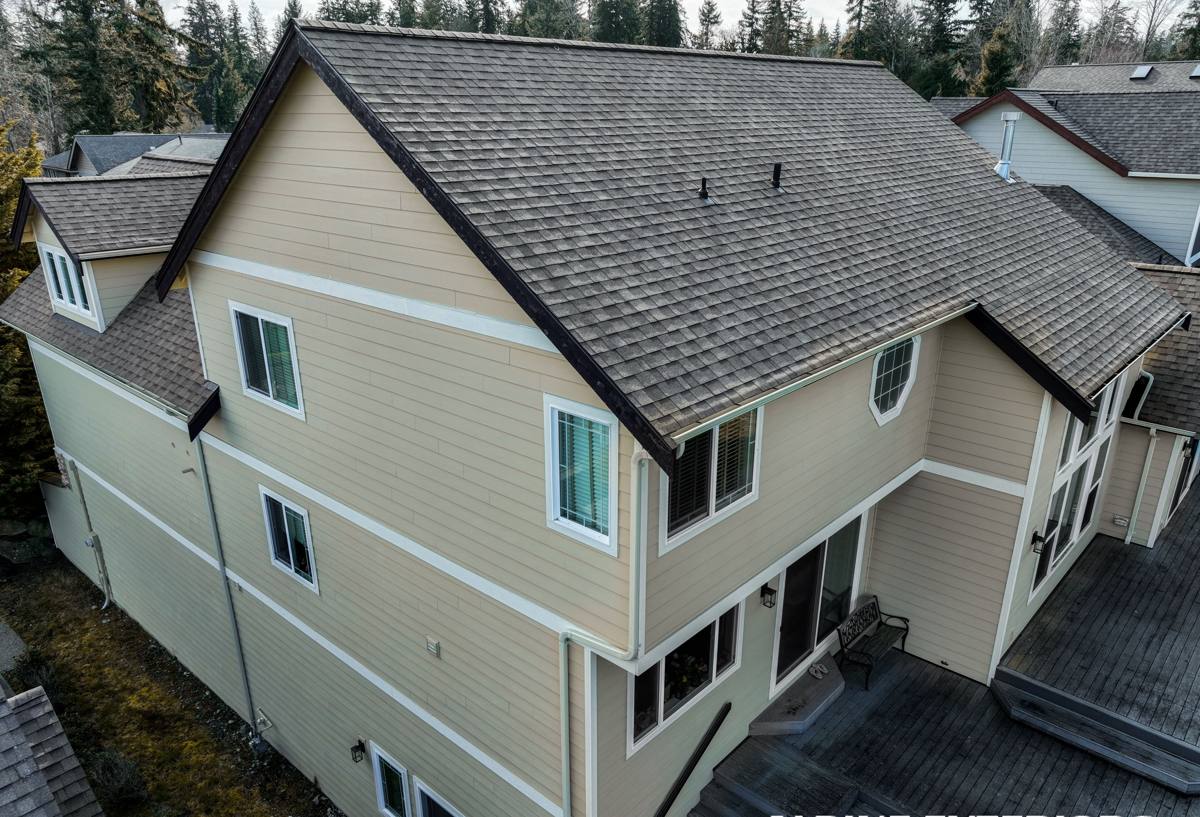
What the Local Climate Actually Does to a Deck
It's easy to underestimate how hard the Pacific Northwest is on exterior structures until you've seen a few decks fail. The combination that matters most for decking here is:
- Driving rain: wind-driven storms push water sideways, not just down, which means water finds its way under boards, into fastener holes, and behind ledger connections if those details aren't sealed correctly.
- Salt-laden air: weather systems moving inland off the water carry salt content that accelerates corrosion on hardware, fasteners, and any exposed metal railing components.
- Long moss season: shaded, north-facing, or low-airflow decks stay damp for months at a stretch, which is exactly the environment moss and algae need to take hold on a deck surface.
- Extended humidity: even on dry days, the ambient moisture in the air keeps wood decking from ever fully drying out, which is where rot, cupping, and fastener pop start.
None of this is unique to Laurel, but it's persistent here in a way that punishes shortcuts. A deck built to a generic national spec, without attention to drainage and airflow underneath, will show problems faster in this climate than it would somewhere drier.
Why Moss Is More Than a Cosmetic Problem
Moss on a deck surface isn't just unsightly — it holds moisture against the board and creates a genuinely dangerous slip hazard on stairs and walkways, especially in low morning light during fall and winter. On composite decking, moss and algae sit on the surface rather than penetrating the material the way they can with untreated wood, which makes cleanup far simpler. But the surface texture and finish of the board still matters — a board with better surface drainage channels and a consistent cap layer resists green buildup longer between cleanings than a cheaper, uncapped product.
Composite vs. Other Decking Materials
Every decking material is a set of trade-offs. Here's how the common options stack up for a wet, moss-prone climate like ours:
| Material | Moisture Behavior | Maintenance | Typical Lifespan |
|---|---|---|---|
| Pressure-treated wood | Absorbs water, prone to cupping, splitting, and rot at fastener points over time | Annual cleaning, periodic stain/seal to stay ahead of moisture damage | 10-15 years before major repair or replacement |
| Cedar or other natural wood | Better natural rot resistance than pressure-treated pine, but still absorbs moisture and grays/checks without upkeep | Regular sealing and refinishing to preserve appearance and structure | 15-20 years with consistent maintenance |
| Capped composite decking | Moisture-resistant core with a protective cap layer; doesn't absorb water or rot | Periodic surface washing; no staining or sealing required | 25-30+ year manufacturer warranties are common |
| PVC decking | Fully moisture-proof, doesn't absorb water at all | Low; surface cleaning only | Comparable to or longer than composite, at a higher material cost |
We install composite decking as our standard recommendation for most Laurel projects because it hits the best balance for this climate: strong moisture resistance, a wood-grain look homeowners still want, and a maintenance routine that's realistic for people who don't want a deck project every few summers. PVC decking is a legitimate option too, and we'll walk through it as an alternative when the budget and priorities call for it — the honest trade-off is cost and, on some product lines, a slightly less natural surface texture.
What a Correct Composite Decking Install Involves
Composite boards themselves are low-maintenance, but the substructure underneath them is still wood or steel framing, and that's where most deck failures actually start — not at the surface. A composite deck is only as good as what's built underneath it. The details that matter most in a climate like ours:
Framing and Substructure
Joists need correct spacing for the specific composite product being installed — composite boards typically require tighter joist spacing than wood decking, especially at angles or on stairs, and running composite on joist spacing designed for wood is a common cause of bounce and long-term sagging.
Drainage and Airflow Underneath
Standing moisture under a deck is one of the biggest hidden problems we see. Proper grading beneath the deck, gaps for airflow, and in some cases a drainage system under the decking surface keep the substructure from staying wet for weeks at a time during our rainy stretches.
Ledger Board Flashing
Where a deck attaches to the house, the ledger board connection is the single most common source of hidden water damage on any deck in this region. Correct flashing and waterproofing at that joint — done properly the first time — is not optional in a climate with this much driving rain.
Fastener Selection
Given the salt content in the air here, we use corrosion-resistant, coated or stainless fasteners rated for the specific composite product. Cheaper or mismatched hardware corrodes faster and can stain composite boards around the fastener head over time.
Board Spacing and Expansion Gaps
Composite boards expand and contract with temperature swings. Correct gapping at butt joints, picture-framed edges, and against the house prevents buckling and keeps water from pooling at the wrong points.
Choosing the Right Board for a Laurel Property
Not every composite board is built the same way, and the right choice depends on the specific site conditions:
- Capped composite — the cap layer resists staining, fading, and moss adhesion better than uncapped composite, which matters most on decks with less sun exposure.
- Color and heat — darker boards look great but hold more heat in direct sun and can show mineral streaking or chalking differently over time than lighter tones; we'll talk through what fits the deck's actual exposure.
- Grain pattern and texture — a more pronounced surface texture provides better slip resistance on stairs and shaded areas, which is worth prioritizing over pure appearance on a deck that stays damp for long stretches.
- Fascia and edge treatment — picture-framing the deck perimeter with a contrasting board isn't just cosmetic; it also protects the cut ends of the field boards, which are the most vulnerable point on any composite board.
Our Installation Process
The process doesn't change much site to site, but the judgment calls at each step do, based on the specific lot, existing structure, and exposure:
- On-site assessment: we look at drainage, existing structure (if it's a resurface or replacement), sun and shade exposure, and how the deck ties into the house.
- Design and material selection: board style, color, railing, and layout, sized to the actual footprint and any local permit requirements.
- Permitting: most deck work in unincorporated Whatcom County requires a permit above a certain size or height — we handle that step rather than leaving it to the homeowner to sort out.
- Demo (if replacing an existing deck): removal of old decking and inspection of the substructure underneath, since that's often where the real problems are hiding.
- Framing and structural work: joists, beams, and posts built or verified to correct spacing and, where needed, brought up to current code.
- Waterproofing and flashing: ledger board flashing, drainage detailing, and any under-deck moisture management before a single composite board goes down.
- Composite board installation: hidden or face fasteners depending on product, correct spacing, and picture-framing where specified.
- Railing, stairs, and final details: installed to code, with corrosion-resistant hardware throughout.
- Final walkthrough: we go over the deck with the homeowner and cover the basic care routine before we consider the job done.
Maintenance That Actually Matters
Composite decking is genuinely low-maintenance compared to wood, but "low-maintenance" isn't "no-maintenance," especially in a climate that keeps things damp for months. A short, honest routine keeps a composite deck looking good and prevents the moss and algae buildup that's common here:
- Sweep debris and standing leaves off the deck regularly, especially in fall — trapped organic matter holds moisture against the surface and feeds moss growth.
- Wash the deck surface a couple of times a year with a mild soap-and-water solution and a stiff (non-metal) brush, more often on shaded sections.
- Avoid pressure washing at high pressure or close range, which can damage the cap layer on some composite products — a garden hose and brush handles most buildup fine.
- Keep gutters and downspouts near the deck clear so runoff isn't dumping directly onto the deck surface or structure.
- Check railing hardware and fastener heads periodically for corrosion, especially after winter storm seasons.
- Trim back vegetation that's shading the deck and keeping it from drying out between rain events.
Why It Matters That We Already Work in Laurel
A deck built to a generic spec sheet, by a crew that's never worked this specific stretch of Whatcom County, misses details that only show up after a season or two of local weather. Knowing which sides of a lot stay shaded and damp longest, how local permitting works for unincorporated county parcels versus incorporated Sumas addresses, and which drainage details actually hold up against our driving rain isn't something you get from a manual — it comes from doing the work here repeatedly. That local familiarity shows up in fewer callbacks, fewer surprises during permitting, and a deck that's built for the conditions it will actually sit in, not a national average climate.
What a Composite Deck Project Typically Costs
Pricing depends heavily on size, structural complexity, and board selection, but the main cost drivers are worth understanding before you get quotes:
| Cost Factor | Why It Matters |
|---|---|
| Deck size and shape | Larger footprints and complex angles or multiple levels increase both material and labor |
| Substructure condition | Replacing rotted framing on an existing deck adds cost but is not optional if the structure underneath is compromised |
| Board tier | Entry-level capped composite costs less than premium capped or PVC boards, but the gap narrows once you factor in decades of avoided maintenance |
| Railing system | Composite or metal railing systems vary widely in price depending on style and code requirements |
| Site access | Difficult access, slope, or height above grade can add labor time for both demo and construction |
We'll always walk through these factors specifically for your property rather than quoting off a generic per-square-foot number, since the substructure condition and site access can move the number more than the decking material itself.
If you're weighing a new composite deck or replacing an aging wood deck in Laurel, we're happy to take a look and give you a straightforward, no-pressure estimate — just fill out the form below and we'll get in touch.