 Sumas Window
 Board & Batten Siding for Nooksack Homes
Nooksack sits in the flood plain country between Sumas and Everson, close enough to the Fraser Valley that the same weather pattern hits both sides of the border: long stretches of driving rain, a marine air mass that carries a faint salt load up the valley, and a moss season that can run from October clear through April. Board and batten siding has a real following out here because the vertical lines suit the barns, farmhouses, and newer builds that make up a lot of this area's housing stock — but the look only holds up if the material underneath is built for this specific weather, not for a drier climate somewhere else.
We install board and batten as part of our regular rotation in Nooksack, and this page is about what that job actually involves here — not a generic description of the style.
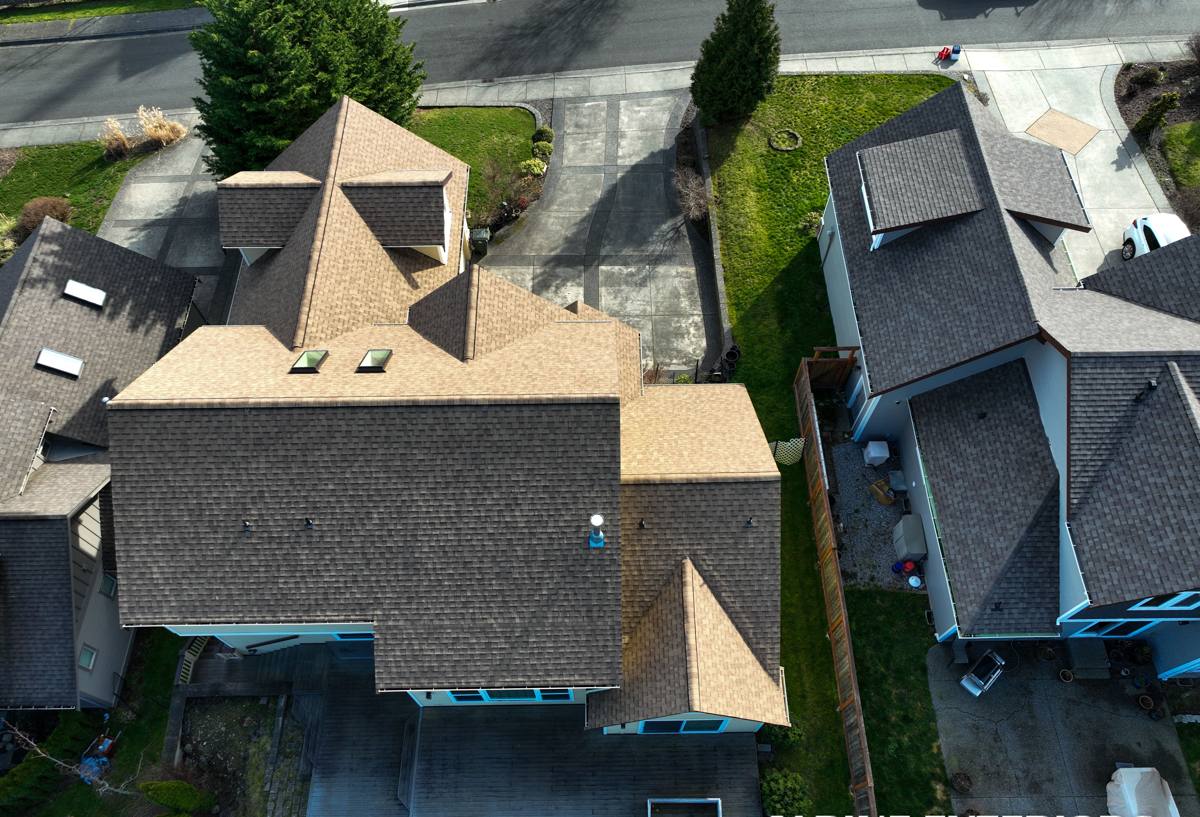
Why Nooksack's Climate Is Harder on Vertical Siding
Board and batten is inherently more joint-heavy than lap siding. Every batten strip creates a seam, and every seam is a place water can find its way behind the cladding if it's not detailed correctly. In a drier inland climate that's a minor concern. In Nooksack, where Whatcom County's rain gauge stays busy most of the year and humidity rarely drops low enough to let a wall assembly dry out fast, it's the difference between siding that lasts decades and siding that needs board replacements inside ten years.
The three things doing the damage
- Driving rain: wind-driven moisture doesn't just run down a wall, it gets pushed sideways into any gap, especially at board edges and butt joints.
- Salt-tinged air: the marine influence that reaches this far inland doesn't corrode siding the way it does at the immediate coast, but it does accelerate wear on fasteners and unprotected cut edges over time.
- Moss and organic growth: a long damp season means algae and moss get a real foothold on any surface that stays wet, and untreated or poorly finished wood-based products feed that growth instead of resisting it.
Why We Only Install James Hardie for This Application
Board and batten is sold in a lot of materials — primed wood, engineered wood like LP SmartSide, vinyl panel systems, and fiber cement. We made the call a long time ago to install only James Hardie fiber cement, and board and batten is actually one of the clearest cases for why.
Wood-based and engineered-wood board and batten depend on an intact factory coating and careful field sealing at every cut and joint to keep water out of the substrate. Once that coating is compromised — a scuff during install, a missed caulk line, years of UV and moisture cycling — the product can start absorbing water at the edges, and in a climate like Nooksack's, that absorption doesn't get much chance to fully dry out between rain events. Vinyl board and batten sheds water fine but flexes with temperature swings, which telegraphs waviness in those long vertical lines and doesn't hold paint if a homeowner ever wants a color change.
James Hardie fiber cement is cement, sand, and cellulose fiber — it doesn't have organic material for moisture or moss to feed on, it's non-combustible, and the ColorPlus factory finish is baked on with a warranty backing it, so we're not relying on field-applied paint to be the only thing standing between the substrate and the weather. That's the standard we hold every board and batten job to, including the ones in Nooksack.
What a Correct Board & Batten Install Looks Like Here
Water management comes first
Before any siding goes up, the wall needs a drainage plane — house wrap or building paper installed shingle-style, with flashing at every window, door, and horizontal transition. Board and batten's vertical seams need to land over furring strips or a rainscreen gap in a lot of cases, so water that does get behind a joint has somewhere to drain and air to dry it out, rather than sitting against the sheathing.
Fastening and joints
Battens get face-nailed or blind-nailed per Hardie's fastening schedule, with attention to nailing into framing, not just sheathing. Butt joints get flashed or backed, and any board that's field-cut gets the cut edge sealed with the appropriate primer before it goes up — this is the step that gets skipped on rush jobs and is exactly the kind of detail that determines whether a board and batten job looks right in year one and still looks right in year fifteen.
Clearances that actually get followed
Ground clearance, deck and patio clearance, and roof-to-wall flashing all matter more on a vertical profile because the boards run straight down to those transition points. We hold to Hardie's published clearance minimums rather than shaving them to make a tight lot layout work, because that's usually where the first rot problem shows up on any home in this kind of climate.
Our Process for a Nooksack Board & Batten Job
- On-site assessment: we look at current siding condition, wall assembly, existing moisture damage, and how the home's rooflines and grading will interact with a vertical profile.
- Material and layout plan: board width, batten spacing, and color selection from the Hardie ColorPlus line, matched to the home's style and to what holds up well in this specific weather.
- Tear-off and inspection: removing existing siding lets us check sheathing for hidden rot before it's covered back up — a step that's easy to skip and expensive to regret.
- Weather barrier and flashing: house wrap, window and door flashing, and rainscreen furring where the assembly calls for it.
- Install: boards and battens set to Hardie's fastening and clearance specs, cut edges primed, joints detailed.
- Final walk-through: we go over the finished job with the homeowner before we consider it done.
Why a Crew That Already Works Nooksack Matters
Board and batten detailing isn't identical from region to region. A crew that mostly installs in a dry climate will make different assumptions about drainage gaps, clearances, and caulking than a crew that installs week after week in a place where rain is the default forecast for half the year. We already know how local grading tends to run, how the moss season behaves on north-facing walls, and where driving rain off the valley tends to hit a house hardest. That's not something we have to relearn on every Nooksack job — it's baked into how we plan the layout before the first board goes up.
There's also a simple accountability piece to working local: if a detail needs a look after a hard winter, we're not a crew that has to drive in from three counties over.
Cost Factors for Board & Batten in This Area
| Factor | Why It Moves the Price |
|---|---|
| Tear-off vs. new construction | Removing old siding and dealing with any hidden rot adds labor and sometimes sheathing repair |
| Rainscreen / furring strip use | Adds material and labor but meaningfully extends life in a wet climate like Nooksack's |
| Board width and batten spacing | Wider reveals mean fewer battens but more waste on cuts; narrow spacing is more labor-intensive |
| Home height and roofline complexity | Gables, dormers, and multiple stories add cutting, flashing, and staging time |
| Color selection | Standard ColorPlus colors versus premium or custom-match options affect material cost |
| Trim and corner detail | Corner boards, window casing, and fascia work scale with the home's architectural detail |
We don't quote a job without seeing the home, but these are the variables that actually move the number, not vague per-square-foot guessing.
Signs Your Current Siding Is Losing the Fight
- Soft or spongy spots when you press on boards, especially near the bottom courses
- Persistent moss or algae growth that comes right back after cleaning
- Visible gapping or warping at batten joints
- Peeling or bubbling paint that keeps returning to the same boards
- Discoloration or staining that tracks with where rain hits hardest
- Fastener heads popping or rust streaking down from nail points
Any one of these on its own isn't necessarily an emergency, but a few of them together on a Nooksack home usually means the current siding is past the point where patching makes sense.
Get a Straight Answer on Your Nooksack Home
If you're weighing board and batten for a home in Nooksack, we're glad to come take a look and give you a straightforward read on what your walls actually need — no pressure, no inflated estimate to pad a sale. Reach out for a free estimate and we'll walk the property with you before anything gets decided.