 Sumas Window
 Blaine's Climate Is Rough on Siding — Here's Why
Homes in and around Blaine sit close to the Salish Sea, and that proximity comes with a tradeoff. The same marine air that keeps summers mild also carries salt off Boundary Bay and Semiahmoo Bay, and salt-laden moisture is one of the toughest things a home's exterior deals with. It works into seams, accelerates corrosion on fasteners and trim, and breaks down siding materials that aren't built to handle it. Add in Whatcom County's driving rain — wind-driven storms that push water sideways into wall assemblies rather than letting it run straight down — and you've got a climate that punishes any siding installed with shortcuts.
Then there's moss season, which up here isn't really a season so much as most of the year. Constant damp shade on the north and west sides of a house lets moss, algae, and mildew take hold on siding surfaces that don't shed water well or that trap moisture against the substrate. On a lot of Blaine homes, this shows up first as green-black staining, then as soft spots where moisture has finally worked its way through.
None of this means siding is doomed here — it means the material and the installation both have to be chosen for the conditions, not for a catalog photo. That's the whole basis of how we approach a siding job in this part of Whatcom County.
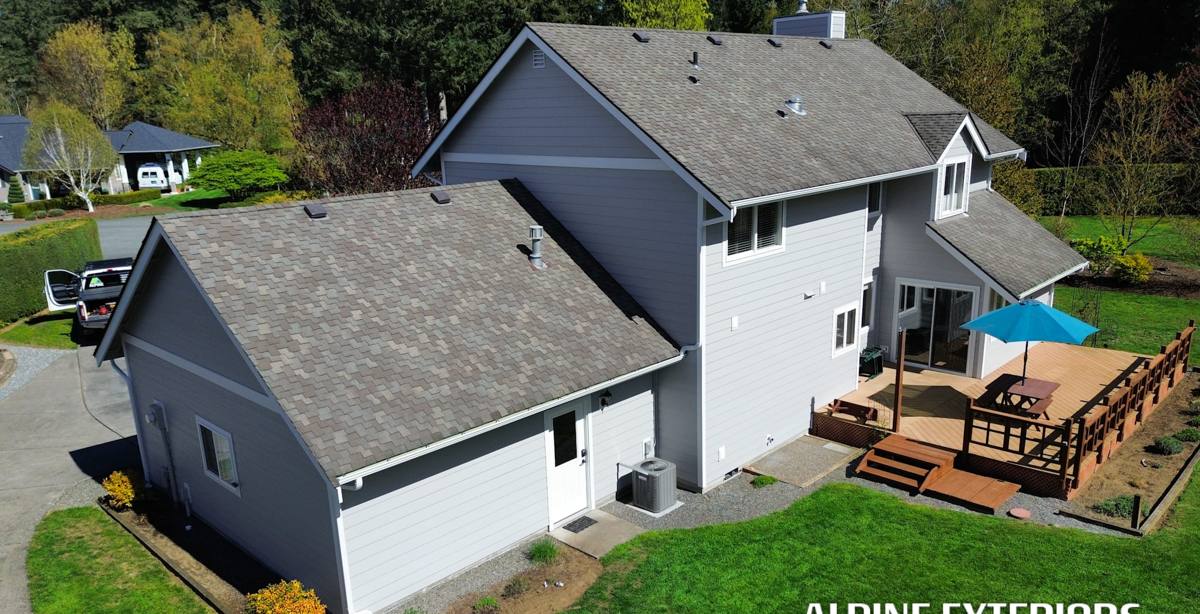
What "Correct" Siding Installation Actually Means Here
A lot of siding problems in coastal Whatcom County aren't material failures — they're installation failures. The siding itself might be fine; the water management behind it wasn't. On a house exposed to salt air and driving rain, the details matter more than they would in a drier inland climate.
Water Management Comes First
Before a single piece of siding goes up, the wall needs a properly lapped weather-resistant barrier, correctly integrated flashing at every window, door, and penetration, and a drainage plane that lets any water that gets behind the cladding find its way back out instead of sitting against the sheathing. On a home taking wind-driven rain off the water, skipping or rushing this step is how you end up with rot nobody sees until it's expensive.
Fastening and Clearances
Salt air is hard on fasteners. We use corrosion-resistant fastening appropriate to the material and follow manufacturer nailing patterns exactly — not "close enough" spacing. We also hold proper clearance at grade, decks, patios, and roof lines so siding isn't sitting in standing moisture or wicking water up from below, which is a common cause of the soft, discolored bottom courses you see on older Blaine homes.
Ventilation Behind the Cladding
A rainscreen gap or proper ventilation behind the siding lets moisture that does get in dry out instead of staying trapped against damp wood. In a climate where things rarely fully dry out between rain events, this is not optional — it's the difference between siding that lasts decades and siding that starts failing in year eight.
Why We Install Only James Hardie Fiber Cement
We don't install vinyl, LP SmartSide, primed spruce, cedar, or other fiber cement brands. That's a deliberate standard, not a sales pitch. In a climate with salt exposure, constant damp, and heavy moss pressure, the material choice determines how well all that correct installation work actually holds up over time.
James Hardie fiber cement is engineered specifically for wet, coastal climates like this one. It's non-combustible, it doesn't rot, it holds paint and factory ColorPlus finishes far longer than wood-based products, and it resists the moisture-driven swelling and delamination that shows up on engineered wood siding exposed to years of Pacific Northwest rain. It also comes in HZ5 formulations built for climates that see more moisture and temperature swings, which fits Whatcom County's coastal exposure well. We'll walk you through the specific lines and colors during your estimate — the point here is simply that everything in our process assumes Hardie, because that's the only product we've found holds up to this climate the way we expect siding to.
Signs a Blaine Home Needs Siding Attention
- Green-black staining or moss growth that returns within a season of cleaning, especially on north- and west-facing walls
- Soft or spongy spots near the bottom of walls, around window sills, or under deck ledger boards
- Paint that's peeling, bubbling, or chalking faster than it used to
- Visible gaps, warping, or buckling in siding panels or boards
- Rust streaks running down from fasteners or trim
- A musty smell in interior rooms along exterior walls
- Rising energy bills that suggest air and moisture are getting past the exterior envelope
Any one of these on its own might not mean much. Two or three together, especially on the sides of the house that take the most weather, usually means it's worth having someone look at the wall assembly, not just the surface.
Our Installation Process
1. On-Site Assessment
We look at the whole exterior, not just the areas that look bad, since moisture problems on coastal homes often start on a wall you're not watching. We check existing water management, trim condition, and any soft sheathing before we ever talk about a new install.
2. Tear-Off and Sheathing Check
Old siding comes off and we inspect the sheathing underneath. If there's rot or damage from a prior water intrusion issue, we address it before anything new goes up — covering a damaged wall with new siding just hides the problem.
3. Weather Barrier and Flashing
A new, properly lapped weather-resistant barrier goes on, with flashing detailed at every window, door, and penetration to shed water down and out, matched to how driving rain actually hits this part of Whatcom County.
4. James Hardie Installation to Spec
Panels or planks go up following manufacturer specifications for fastening, clearances, and joint treatment — no field shortcuts that would void a warranty or compromise performance.
5. Trim, Caulking, and Final Detail
Trim, corners, and penetrations get sealed and finished so water has nowhere to collect. We walk the job with you at the end and point out exactly what was done and why.
Cost Factors for Siding Installation in Blaine
| Factor | Why It Matters Here |
|---|---|
| Home size and wall complexity | More corners, dormers, and penetrations mean more flashing detail and labor time |
| Existing sheathing condition | Salt air and driving rain can hide rot behind old siding, which adds repair scope before install |
| Siding line and profile chosen | James Hardie offers lap, shingle, and panel profiles; the profile affects material and labor cost |
| Trim and accessory scope | Corner boards, window trim, and fascia work add to the total but protect the water management system |
| Access and site conditions | Slopes, tight lot lines, and proximity to neighboring structures common in coastal Blaine properties can affect staging and labor |
Every home is different, and the only way to give you a real number is to see the house. We keep quotes honest and itemized so you know what you're paying for and why.
Why It Matters to Hire a Crew That Already Works Blaine
Siding installation isn't the same job everywhere in Whatcom County. A crew used to drier inland conditions can do everything "by the book" and still under-detail the water management for a coastal wall exposed to salt spray and sideways rain. Working in Blaine and the surrounding Sumas-area coastline regularly means we already know which exposures need extra flashing attention, which wall orientations fight moss year-round, and how local permitting and inspection expectations run. That local pattern recognition is part of what keeps a siding job from becoming a callback five years later.
Keeping New Siding Performing After Install
- Rinse siding annually, especially shaded north- and west-facing walls prone to moss and algae
- Keep gutters clear so overflow doesn't run down and saturate siding at the roofline
- Trim back vegetation and tree cover that keeps walls damp and shaded
- Recaulk trim joints and penetrations if you notice cracking or separation over time
- Address any new soft spots, stains, or fastener rust early rather than waiting
James Hardie's factory ColorPlus finish is designed to reduce how much of this maintenance falls on you compared to field-painted materials, but no siding in this climate is entirely maintenance-free — a little attention twice a year goes a long way.
Get a Free, No-Pressure Estimate
If your Blaine home's siding is showing signs of wear from salt air, driving rain, or year-round moss, we're happy to take a look and walk you through what we're seeing and what it would take to fix it right. There's no obligation — just a straight assessment and an honest number. Use the form below to schedule a free estimate.