 Sumas Window
 Decks in Blaine Take a Different Kind of Beating
Blaine sits close enough to the water and the border that its decks deal with a mix most inland Whatcom County towns don't see as much of: salt-laden air off the Strait, wind-driven rain that gets up under fascia and rail caps, and a wet season that runs long enough for moss and algae to get a real foothold on every horizontal surface. A deck built with inland assumptions — standard fasteners, minimal drainage gaps, a finish schedule built for a drier climate — tends to show its age in Blaine years before it should.
We build and repair decks throughout the Sumas area and out toward Blaine, and the difference in how a deck ages here versus a few miles inland is real. This page is about what a deck actually needs to hold up in this specific stretch of Whatcom County, and what a correct build looks like from the ground up.
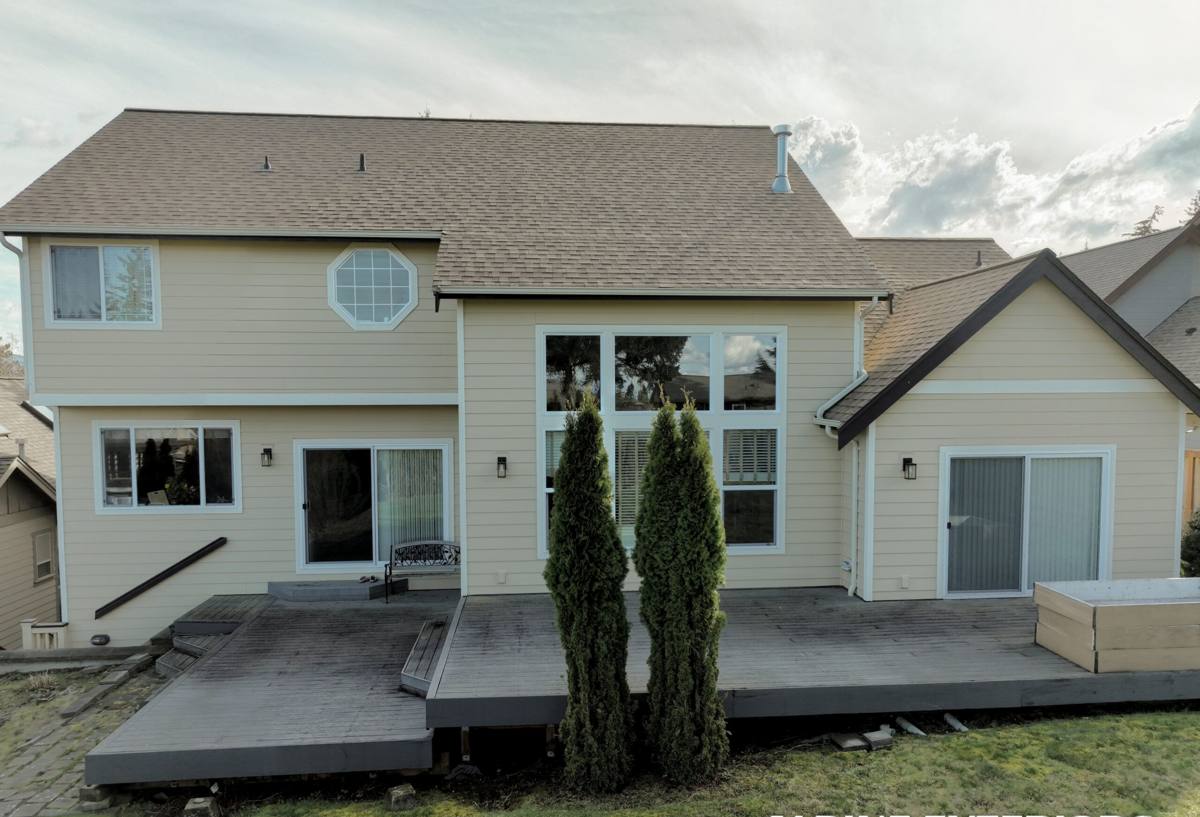
What the Local Climate Actually Does to a Deck
Salt Air and Metal Fasteners
Proximity to the water means airborne salt settles on everything, including the deck itself. Standard galvanized fasteners and hardware corrode faster here than the manufacturer's generic rating suggests. Screw heads rust and streak the decking, joist hangers weaken at the nail holes, and railing hardware seizes up. The fix isn't complicated — it's using fasteners and connectors rated for coastal exposure from the start — but it's one of the most commonly skipped details on budget deck builds.
Driving Rain and Water Intrusion
Rain in this part of Whatcom County doesn't always fall straight down. Wind pushes it sideways, which means it gets into places a dry-climate deck design doesn't account for: behind rim joists, under poorly flashed ledger boards, and into end grain on stair stringers and rail posts. Ledger board attachment to the house is the single most important flashing detail on any deck, and it's also the one most likely to be rushed.
A Long Moss Season
Moss and algae need moisture and shade, and Blaine gets a long stretch of both. On decking, that shows up as slick, dark growth in the gaps between boards and along the north side of the structure. Left alone, trapped moisture behind moss growth accelerates wood rot and can void certain composite warranties if manufacturer-recommended cleaning isn't followed. Board spacing, airflow underneath the deck, and surface texture all affect how bad this gets.
Material Choices for a Coastal Deck
There's no single "right" material for every deck — it depends on budget, how much maintenance the homeowner actually wants to do, and how exposed the site is. Here's how the common options hold up under Blaine conditions specifically.
| Material | Coastal/Moisture Behavior | Maintenance Reality | Typical Lifespan Here |
|---|---|---|---|
| Pressure-treated fir/hem-fir | Decent if fasteners and flashing are correct; end grain is the weak point | Needs re-sealing every 1-2 years in this rainfall | 15-20 years with upkeep |
| Cedar | Naturally rot-resistant, but softens with constant wet/dry cycling | Regular oil or stain to prevent graying and cupping | 15-25 years |
| Composite decking | Doesn't absorb water like wood, but surface growth still needs cleaning | Low, but not zero — moss still grows on the surface | 25-30+ years |
| PVC decking | Fully water-resistant board, best resistance to moss staining | Lowest maintenance of the group | 25-30+ years |
We don't push one material on every job. Composite and PVC cost more up front but make sense for homeowners who don't want a re-sealing schedule. Real wood, done correctly with proper fasteners and flashing, is still a sound choice for people who prefer the look and don't mind the maintenance.
Why We're Selective About What We Install
Some lower-tier composite products have a track record of moisture absorption at cut edges or fastener holes if they aren't properly capped and sealed during installation — that's an installation-sensitivity issue as much as a product one, and it's why we follow manufacturer edge-sealing specs exactly rather than treating them as optional. It's also why we're upfront with homeowners about warranty structure: some composite warranties require specific cleaning and drainage practices, and skipping them can affect coverage. We'd rather explain that up front than have someone find out the hard way.
What a Correct Deck Build Actually Involves
Foundation and Framing
Footings need to go below frost depth and bear on solid, undisturbed soil — this part of Whatcom County has enough clay and seasonal saturation that undersized or shallow footings can shift over time. Joists should be spaced to match the decking manufacturer's spec (composite often needs tighter spacing than wood), and every joist end and ledger connection should use coastal-rated hardware.
Ledger Attachment and Flashing
Where the deck meets the house is the highest-risk area for water intrusion. Correct flashing — installed in the right order relative to the house's existing weather-resistant barrier, with a drip edge to kick water away from the wall — is non-negotiable here given how much wind-driven rain the area sees.
Drainage and Airflow
Ground-level decks need enough clearance underneath for air to move and water to drain, or the framing rots from below where nobody sees it until it fails. Board gapping matters too — too tight and moss traps moisture between boards, too wide and it looks unfinished and catches debris.
Railing and Stairs
Railings take constant weather exposure on their top rail and post tops, which is where end-grain water absorption starts. Stair stringers need the same coastal-rated fasteners as the rest of the frame, since they're often the first thing to show rot from splash-back off the ground.
Our Process, Start to Finish
- Site visit and assessment — we look at sun/shade exposure, drainage slope, proximity to the water, and how the deck ties into the house.
- Material and design conversation — honest trade-offs between wood, composite, and PVC based on budget and maintenance preference, not a sales pitch toward whatever's most profitable for us.
- Permit and code check — deck height, railing requirements, and footing depth are pulled per local code before we touch a shovel.
- Framing and flashing — the structural work that determines whether the deck lasts 15 years or 30.
- Decking, railing, and finish work — installed to the manufacturer's coastal/moisture spec, not a generic install guide.
- Walkthrough and maintenance guidance — we tell you exactly what upkeep your specific material needs in this climate, in writing.
Maintenance Checklist for a Blaine Deck
- Rinse and sweep debris out of board gaps every few weeks during fall and winter to limit moss buildup
- Check fastener heads annually for rust streaking, especially near the water-facing side
- Inspect ledger board flashing where the deck meets the house for gaps or caulk failure
- Re-seal or re-stain wood decking on the schedule the product actually calls for, not "whenever it looks dry"
- Keep gutters and downspouts clear so roof runoff isn't dumping extra water onto the deck surface
- Clear vegetation and debris from underneath the deck to keep airflow moving
- Power-wash composite or PVC decking per manufacturer guidance — some warranties specify wash frequency and method
Why a Crew That Already Works Blaine Matters
A deck built to a generic national spec can still pass inspection and look good on day one — the problems show up in year three or four, once salt air has worked on the hardware and a couple of wet winters have tested the flashing. Working regularly in and around Blaine and the wider Sumas area means we're not guessing at what this climate does to a deck; we're building around it from the first footing. That includes knowing which fastener grades actually hold up here, how much board gap is right for this rainfall pattern, and where local drainage tends to cause problems on typical area lots.
It also means we're not disappearing after the final walkthrough. Whatcom County has enough licensed contractors coming and going that a homeowner calling around for warranty work a few years later can end up with nobody who remembers the job. We're local, we stand behind our own work, and we'd rather build it right the first time than get a callback.
Getting Started
If you're planning a new deck in Blaine or need an honest look at an existing one that's showing its age, we're happy to come take a look. There's no pressure and no obligation — just a straight assessment of what your project actually needs. Use the form below to request a free estimate.